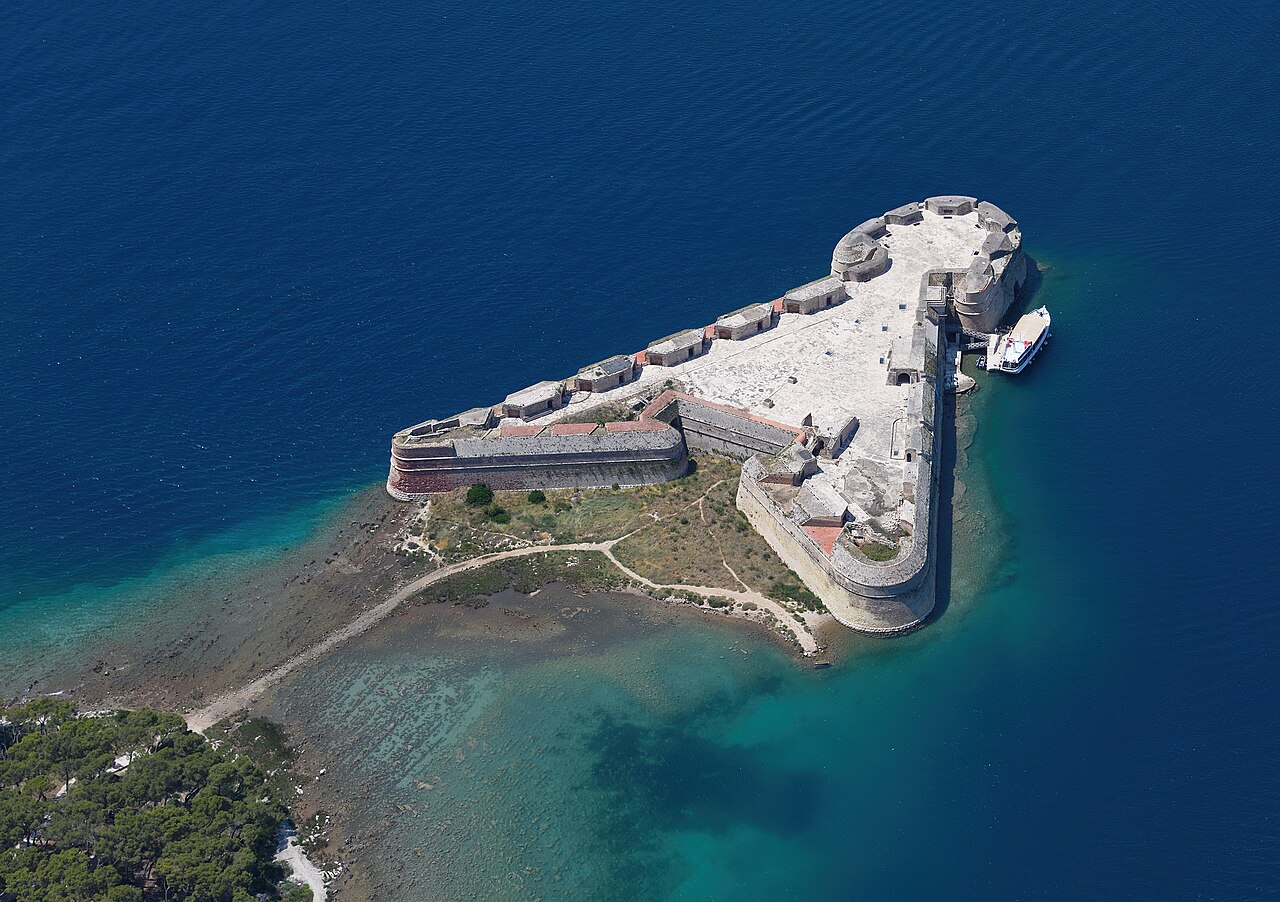
Barone Fortress
Barone Fortress, locally known as Tvrđava Barone, is a remarkable Renaissance fortress situated on Vidakuša Hill overlooking the historic town of Šibenik in Croatia. Constructed in 1646 amid the turbulent backdrop of the Cretan War (1645–1669) between the Venetian Republic and the Ottoman Empire, it played a pivotal role in the city's defense system. This fortress, along with St. John's Fortress and other fortifications, formed a comprehensive network that protected Šibenik from Ottoman invasions during the 17th century.
Historical context and strategic importance
Before Barone Fortress was built, Šibenik's defenses relied primarily on its city walls and the St. Michael's Fortress. However, by the mid-17th century, these fortifications were outdated and vulnerable to artillery attacks. The Venetian Republic, which controlled Šibenik at the time, faced increasing pressure from the Ottoman Empire during the Cretan War. The strategic location of Šibenik on the Dalmatian coast made it a critical point of defense against Ottoman expansion into Venetian territories.
Recognizing the need for stronger defenses, Venetian authorities initially hesitated to allocate funds for new fortifications. Nevertheless, the local citizens, led by Baron Christoph Martin von Degenfeld, a German officer in Venetian service, took the initiative to build the fortress themselves. This grassroots effort was crucial in the rapid construction of both Barone Fortress and St. John's Fortress, which were completed in just 58 days starting from August 1, 1646.
Architecture and fortification design
The original Barone Fortress was constructed using a dry-stone technique, reflecting the urgency of its creation. Its design is characteristic of early modern military architecture and features an irregular star-shaped layout, which was innovative for its time. This shape allowed for better defense against cannon fire and provided overlapping fields of fire for the fortress's artillery.
Northern defenses
The northern section of the fortress, known as the hornwork, includes two demi-bastions connected by a curtain wall. This area was strategically positioned for artillery defense, enabling the garrison to repel attacks effectively. The bastions were reinforced with earth mounds, which absorbed and deflected cannon fire, enhancing the fortress's resilience.
Southern section
The southern part of Barone Fortress served as the barracks and magazines, housing soldiers and storing ammunition. This separation of defensive and logistical functions was typical of Renaissance fortifications, designed to optimize both combat readiness and sustainability during sieges.
Military engagements and sieges
Barone Fortress quickly proved its military value. In October 1646, shortly after its completion, it successfully repelled an Ottoman attack. The following year, in the summer of 1647, the fortress was a key component of Šibenik's northern defense during a major Ottoman siege led by Techieli-pasha. The Ottoman force, numbering approximately 25,000 soldiers equipped with heavy artillery, laid siege to the city for nearly a month.
Despite the overwhelming odds, the defenders, utilizing the fortress's strategic position and robust design, inflicted heavy casualties on the attackers. The Ottoman army ultimately withdrew, marking a significant Venetian victory and preserving Šibenik from conquest. This siege remains one of the most notable military episodes in the fortress's history.
Later modifications and decline
In 1659, Venetian governor Antonio Bernardo initiated substantial improvements to Barone Fortress to align it with contemporary military standards. These enhancements included rebuilding the northern wall and adding cannon embrasures and military buildings within the lower parts of the fortress. The bastions and earthworks were reinforced to better withstand artillery bombardment.
After the Ottoman threat diminished towards the late 17th century, Barone Fortress gradually lost its military significance. It was abandoned and fell into disrepair over the following centuries. In the early 20th century, the City of Šibenik acquired the fortress and renamed it Subicevac. During this period, the fortress found various civilian uses, including as a restaurant, weather station, and even a disco club, reflecting the adaptive reuse of historic military structures.
Restoration and modern significance
A major restoration project was undertaken between 2014 and 2016, aimed at preserving the fortress's structural integrity and historical value. Today, Barone Fortress is well-preserved and open to visitors, featuring historical exhibits and digital displays that narrate its rich military and cultural heritage.
Visitors can enjoy panoramic views of Šibenik and the Adriatic coast from the fortress's elevated position. The site is a popular destination for tourists interested in Renaissance military architecture and the history of Venetian-Ottoman conflicts in Dalmatia. Barone Fortress stands as a testament to the resilience and strategic ingenuity of its builders and defenders, embodying an important chapter in Croatian and Mediterranean history.
Barone Fortress in the context of Šibenik fortifications
Barone Fortress is part of a larger defensive system that includes St. Michael's Fortress, St. John's Fortress, and other fortifications surrounding Šibenik. Together, these structures illustrate the evolution of military architecture from medieval to early modern periods, adapting to the changing nature of warfare and artillery technology.
The fortress's star-shaped design reflects the influence of Italian Renaissance military engineering, which emphasized angled bastions and low, thick walls to better absorb cannon fire. This design philosophy marked a significant departure from the high-walled medieval castles and contributed to the development of modern fortifications.
Frequently asked questions (FAQ)
- How do I get to Barone Fortress?
- Barone Fortress is located in Šibenik, Croatia, and can be easily reached by car or public transport. If you are coming from the center of Šibenik, it's a short walk uphill to the fortress, which offers stunning views of the city and the Adriatic Sea.
- What is the historical significance of Barone Fortress?
- Barone Fortress was built in the 17th century to defend Šibenik from the Ottoman Empire. Its strategic location and robust construction played a significant role in the military history of the region, making it an important site for understanding the historical conflicts of Croatia.
- When was Barone Fortress constructed?
- Construction of Barone Fortress began in 1650 and was completed in 1680. The fortress was designed by the renowned architect Francesco Ghetaldus and reflects the military architecture of its time, showcasing the efforts to protect the city.
- Can I explore the interiors of Barone Fortress?
- Yes, visitors can explore the interior of Barone Fortress, which includes various exhibitions and historical displays. The fortress has been well-preserved and offers insights into its military history and the architecture of the period.
- Why is Barone Fortress a popular tourist attraction?
- Barone Fortress is popular for its breathtaking panoramic views of Šibenik and the surrounding coastline. Additionally, its historical significance and well-preserved architecture attract history enthusiasts and casual visitors alike, making it a must-see when visiting the area.
- Is it possible to visit Barone Fortress year-round?
- Yes, Barone Fortress is open to visitors year-round, although opening hours may vary by season. It’s advisable to check the official website for the most current information regarding any seasonal changes in hours and accessibility.
- What are the ticket prices for Barone Fortress?
- Ticket prices for Barone Fortress are generally affordable, with discounts available for students and seniors. Children under a certain age may enter for free, making it a great family-friendly destination.
- What is the best time to visit Barone Fortress?
- The best time to visit Barone Fortress is during the spring and early fall when the weather is mild and pleasant. Visiting during these seasons allows for a comfortable exploration of the fortress and the beautiful surrounding landscapes.
- Are there any nearby attractions to Barone Fortress?
- Yes, there are several nearby attractions, including the Cathedral of St. James and the Šibenik City Museum. Visitors can easily combine their trip to Barone Fortress with these sites to enrich their experience of Šibenik's rich cultural heritage.
Information
Loading map...
Visitor reviews
No reviews yet. Been here? Write the first review and help other travelers!
Write the first reviewVisited this castle? Share your experience
Your review helps other travelers and adds first-hand knowledge to our encyclopedia.