St Mawes Castle
St Mawes Castle is a remarkable example of a 16th-century artillery fort constructed under the reign of King Henry VIII between 1540 and 1542. Located near Falmouth in Cornwall, England, the castle was a key component of the King's Device programme, a nationwide initiative designed to protect England from the threat of invasion by France and the Holy Roman Empire. Its strategic position overlooking the Carrick Roads—the expansive estuary at the mouth of the River Fal—allowed it to control one of the widest natural harbors in the world, vital for maritime traffic between the Atlantic Ocean and the Mediterranean Sea.
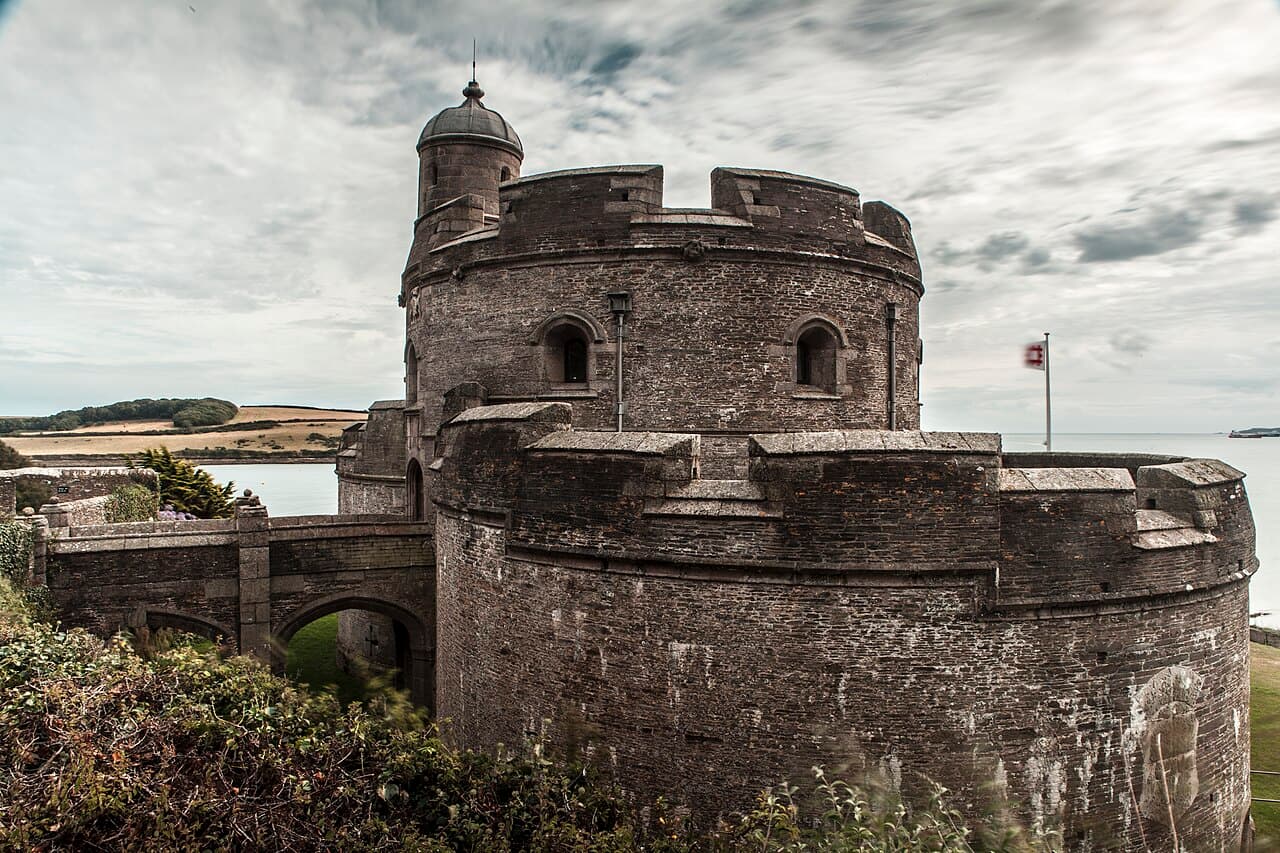
Designed by Thomas Treffry, the castle features a distinctive clover leaf layout with a central four-story circular tower surrounded by three rounded bastions. These bastions served as platforms for the castle's original armament of 19 artillery pieces, which were positioned to protect the harbor entrance and work in tandem with its sister fortress, Pendennis Castle, located across the estuary. The castle's robust construction from local slatestone rubble with granite detailing and its thick defensive walls—up to 2.4 meters thick—reflect the advanced military architecture of the Renaissance period.
Architectural design and defensive features
The castle's central tower rises approximately 13 meters tall and measures around 14 meters in diameter. It was built to house multiple floors, each serving distinct functions: the basement contained kitchens and storage, the first floor was used for garrison quarters and gunpowder storage, while the upper floors included chambers with fireplaces likely used by officers and a large gun room with multiple embrasures for artillery. The roof terrace, surrounded by a parapet, was capable of mounting additional guns and includes a 17th-century lookout turret with a domed roof that served as a navigational daymark for ships.
The three protruding bastions, each between 16 and 18 meters in diameter, were equipped with embrasures for heavy guns and swivel mounts for lighter weapons, all shielded by protective parapets. The castle's entrance was fortified with a polygonal stone gatehouse featuring defensive elements such as narrow gunloops, murder holes, and slots for a drawbridge. Access was further secured by a stone bridge spanning a rock-cut moat approximately 7.5 meters wide.
The castle is also notable for its elaborate carved decorations dating from the 16th century, including Latin inscriptions praising Henry VIII and his lineage, as well as ornamental sea monsters, gargoyles, and heraldic shields. These carvings were originally painted and designed to be visible from the water, enhancing the castle's imposing presence.
Historical significance and military use
St Mawes Castle was built as part of a broader defensive strategy during a period of heightened tension with continental powers. Alongside Pendennis Castle, it formed a defensive crossfire to protect the valuable anchorage of the Carrick Roads. During the English Civil War, the castle was held by Royalist forces loyal to King Charles I but surrendered to Parliamentary troops in 1646 without significant conflict. Its artillery was subsequently removed to support the siege of Pendennis Castle, which remained under Royalist control for a longer period.
Throughout the 18th and 19th centuries, St Mawes continued to serve military purposes, adapting to changes in warfare technology. In the early 1850s, concerns over potential conflict with France prompted the construction of new gun batteries beneath the original fortification. These batteries were equipped with the latest naval artillery of the time, transforming the castle into a modernized coastal defense installation.
Between the 1880s and 1890s, an electrically operated minefield was installed across the River Fal, controlled from St Mawes and Pendennis Castles. To complement this defense, quick-firing guns were added at St Mawes to counter faster naval threats. The castle's military role diminished after 1905 when its guns were removed, and it transitioned to a primarily non-military function.
During the Second World War, St Mawes was reactivated as a defensive site, with naval artillery and anti-aircraft guns installed to protect against German attacks. After the war, the castle ceased military operations and became a tourist attraction managed by English Heritage.
Later additions and current preservation
Beneath the main fortification lies the Grand Sea Battery, an extensive artillery complex carved into the rock in the mid-19th century. This includes two large gun platforms and a bomb-proof magazine with thick stone walls and a grass-covered roof for ammunition storage. The original 16th-century semi-circular blockhouse near the water's edge, with its thick walls and gunports, has been partially restored after being re-excavated.
Additional later features include a 12-pounder quick-firing battery from the early 20th century with concrete platforms and earth parapets, as well as an Engine House that housed power equipment for searchlights used in coastal defense. The castle grounds also contain landscaped gardens displaying Napoleonic-era smooth-bore guns arranged as a ceremonial saluting battery.
Several historic artillery pieces remain on site, including a bronze saker cannon from 1560 recovered from a nearby shipwreck. Remnants of Second World War searchlight installations also survive near the blockhouse, marking the castle's layered military history.
Visitor experience and cultural importance
Today, St Mawes Castle is recognized as one of the most complete and well-preserved examples of a Henrician bastioned fortress in England. Its combination of Renaissance military architecture, strategic coastal location, and rich historical associations make it a significant heritage site. Visitors can explore the castle's interiors, including the central tower and bastions, admire the intricate stone carvings, and enjoy panoramic views over the Carrick Roads.
Managed by English Heritage, the castle offers educational insights into Tudor military engineering and England's coastal defenses during a tumultuous period in European history. Its survival through centuries of military evolution and adaptation underscores its importance as a cultural landmark in Cornwall and the United Kingdom.
Frequently asked questions (FAQ)
- What is the historical significance of St Mawes Castle?
- St Mawes Castle, built in the 16th century, is one of the best-preserved coastal artillery forts in England. Designed by the famous architect Sir Henry Seymour, it played a crucial role in defending against potential invasions during the Tudor period, particularly from the Spanish Armada.
- When was St Mawes Castle built?
- Construction of St Mawes Castle began in 1540 and was completed in 1545. It was part of a series of coastal defenses commissioned by King Henry VIII to protect against foreign invasions and has stood the test of time as a testament to Renaissance military architecture.
- What are the opening hours for St Mawes Castle?
- St Mawes Castle is typically open to visitors throughout the year, but hours may vary by season. Generally, it opens at 10 AM and closes at 5 PM, with extended hours during the summer months. It's advisable to check the official website for any updates or seasonal variations.
- Can I purchase tickets online for St Mawes Castle?
- Yes, tickets for St Mawes Castle can be purchased online through the official English Heritage website. Buying tickets in advance is recommended, especially during peak tourist seasons, to ensure availability and save time upon arrival.
- Is St Mawes Castle accessible for visitors with mobility issues?
- St Mawes Castle has made efforts to improve accessibility, including providing ramps and pathways for easier navigation. However, due to its historic nature, some areas may still be challenging for visitors with mobility issues, so it's best to contact the castle directly for specific accessibility information.
- What is the best time to visit St Mawes Castle?
- The best time to visit St Mawes Castle is during the spring and early autumn months when the weather is generally mild, and the tourist crowds are smaller. Visiting outside of peak summer months can enhance your experience, allowing you to enjoy the stunning coastal views and historical atmosphere more comfortably.
- Are there any nearby attractions to visit after St Mawes Castle?
- Yes, there are several nearby attractions to explore, including the picturesque village of St Mawes itself and the nearby Falmouth, known for its maritime history and beautiful beaches. Additionally, the stunning landscapes of the Roseland Peninsula are perfect for hiking and enjoying nature.
- What are the ticket prices for St Mawes Castle?
- Ticket prices for St Mawes Castle vary, with discounts available for children, seniors, and families. Adult tickets are generally priced around £10, while children under five often enjoy free admission. It’s best to check the official website for the most current pricing and special offers.
Photo gallery

Information
Sources & official resources
Verify the information above using these authoritative references.
Loading map...
Visitor reviews
No reviews yet. Been here? Write the first review and help other travelers!
Write the first reviewVisited this castle? Share your experience
Your review helps other travelers and adds first-hand knowledge to our encyclopedia.