Caerhays Castle
Caerhays Castle is a distinctive semi-castellated manor house located near the village of St Michael Caerhays in Cornwall, England. Overlooking the scenic Porthluney Cove on the English Channel, the castle is celebrated not only for its architectural charm that evokes a Norman castle but also for its extensive and historically significant gardens. The estate’s gardens are home to the largest collection of magnolias in the United Kingdom and are recognized as one of four National Magnolia Collections under the auspices of the National Council for the Conservation of Plants and Gardens (Plant Heritage).
The present castle was constructed between 1807 and 1810 by John Bettesworth-Trevanion, designed by the renowned Anglo-Welsh architect John Nash. It stands on or near the site of an earlier manor house with roots reaching back to the Early Middle Ages, originally owned by the Arundell family. The manor was first recorded in 1259 as "Karihaes," with the estate passing through the Trevanion family from the late 14th century onward. The castle’s architecture deliberately imitates the style of a Norman fortress, with rough stone quarried locally and a commanding presence overlooking the coast.
Historical development and ownership
The estate’s earliest documented history begins in the 13th century, with the manor known as Karihaes in 1259. By 1379, the property had passed to the Trevanion family through marriage, marking centuries of stewardship by this lineage. Significant improvements to the manor house and gardens were made in the early 18th century by John Trevanion, enhancing the estate’s prestige.
In the early 19th century, John Bettesworth-Trevanion undertook the ambitious project of building the current castle, commissioning John Nash to create a semi-castellated country house that reflected the romanticized medieval aesthetic popular at the time. The new structure was built close to the original manor, which had itself been expanded during the reign of King Henry VIII.
Financial difficulties later forced John Bettesworth-Trevanion to flee to Paris, leading to the sale of the estate in 1854 to Michael Williams II. The castle had been empty for over a decade and required extensive repairs, which were managed by Sir William Williams and John Michael Williams. The estate remained in the Williams family, with John Charles Williams, a noted plantsman, inheriting it in 1880. He was instrumental in expanding the gardens, sponsoring plant-hunting expeditions such as those by Ernest Henry Wilson who brought back seeds from China in 1903, enriching the botanical diversity.
On 15 November 1988, Caerhays Castle and its associated buildings were granted Grade I listed status, underscoring their architectural and historical significance. The estate remains in the ownership of the Williams family, with Charles Williams as the current proprietor as of 2023. The estate also preserves a notable mineral collection linked to the family's mining heritage in Cornwall.
Architectural features and layout
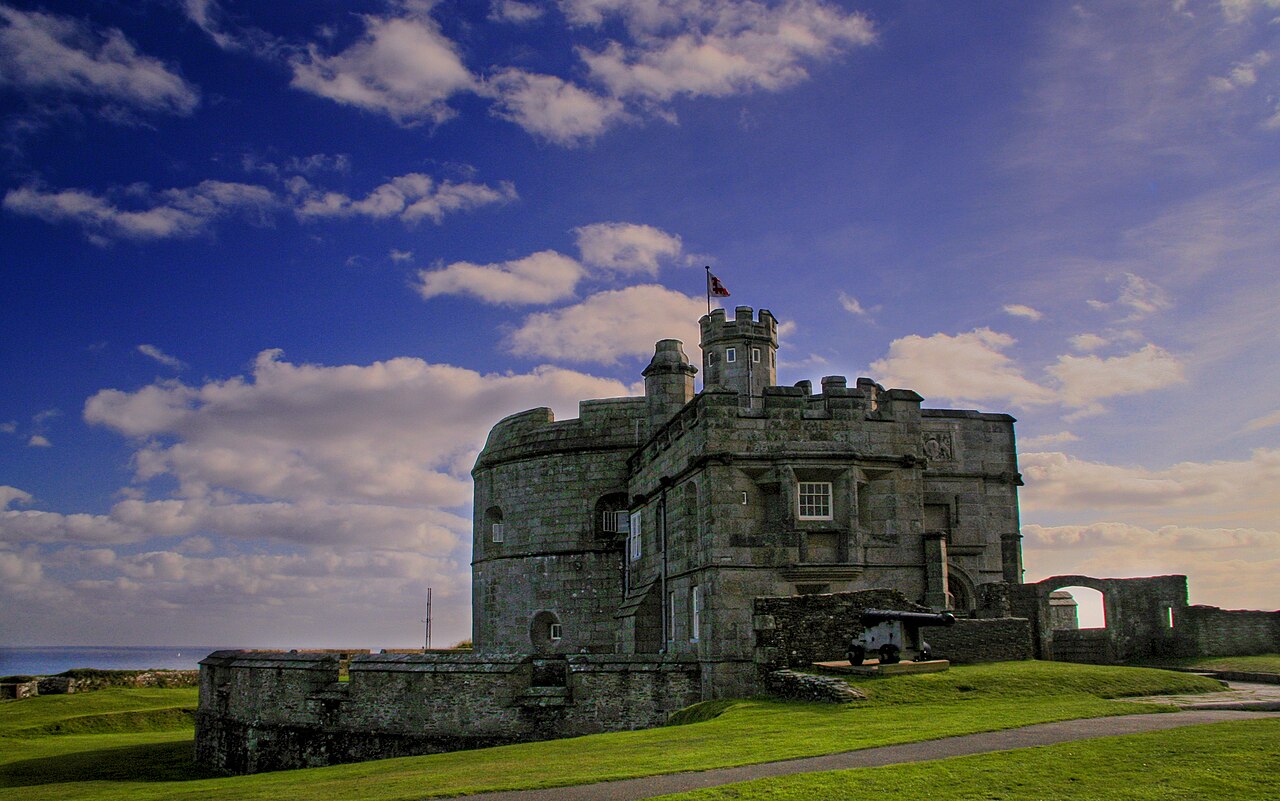
Caerhays Castle is designed in the style of a Norman castle, featuring rough-hewn stone walls quarried from the nearby area. The main façade extends approximately 49 meters (160 feet) and faces south, elevated on an embattled terrace that enhances its defensive appearance. The castle’s silhouette is defined by battlements and castellated parapets, lending it a romantic medieval character despite its 19th-century construction.
The principal living spaces are arranged along the south and east sides, connected by a large gallery that serves as a central axis. The interior is notable for its painted glass windows found in the dining room, staircase, and entrance hall, adding artistic and historic value to the interiors.
Remnants of the earlier manor house survive on the estate, including an ancient chapel and the historic Watchhouse Walk, a walkway to the sea that recalls the estate’s medieval past. These elements provide a tangible link to the castle’s layered history.
Additional Grade I listed structures on the estate include the garden walls with their gateway and folly towers to the west and east, as well as the Higher Lodge and Lower Lodge with attached screen walls at the estate’s entrance. Service buildings attached to the southwest of the castle complete the complex.
Gardens and botanical significance
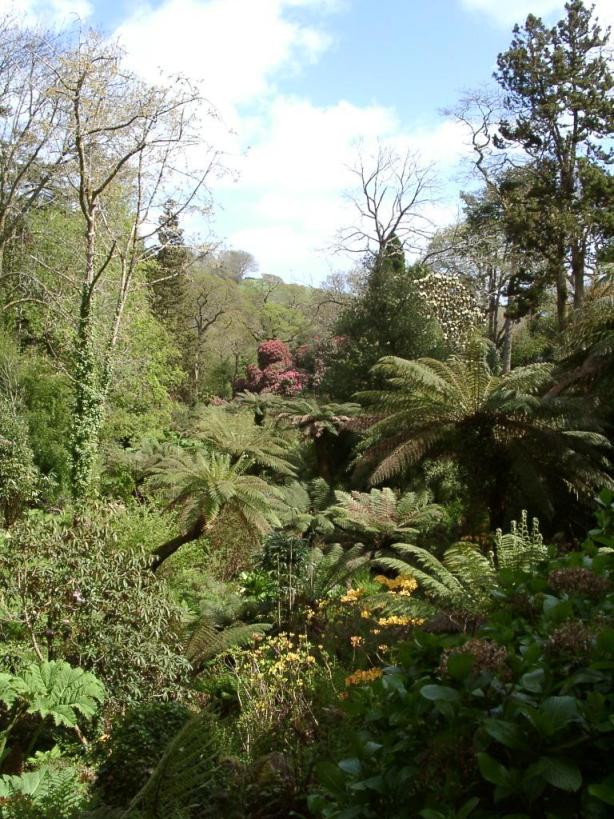
The castle gardens span nearly 120 acres (approximately 0.49 square kilometers) and are a major highlight of the estate. The grounds are traversed by four named routes: the Red, Blue, Yellow, and Green Roads, which are complemented by a network of trails, grassy paths, and steps. The gardens are home to around 600 varieties of plants, including a remarkable collection of azaleas, camellias, and rhododendrons.
By 1917, the garden’s rhododendron collection alone included over 250 species. The estate’s botanical prestige is further elevated by its status as the largest collection of magnolias in England, recognized nationally by Plant Heritage. The gardens continue to attract horticultural enthusiasts and visitors interested in rare and diverse plant species.
Cultural impact and modern use
Caerhays Castle has also played a role in popular culture and the arts. It served as a filming location for the 1979 miniseries Rebecca and the 2015 film Miss Peregrine’s Home for Peculiar Children. Additionally, the castle and its grounds are featured in the later novels of the Poldark series, contributing to its cultural resonance.
The estate remains a private residence but opens its gardens to the public during certain times of the year, allowing visitors to experience its historic architecture and botanical treasures firsthand. The castle’s combination of romantic architecture, rich history, and exceptional gardens makes it a significant heritage site in Cornwall and the United Kingdom.
Frequently asked questions (FAQ)
- What is the historical significance of Caerhays Castle?
- Caerhays Castle is a remarkable example of 19th-century architecture and was designed by the renowned architect John Nash. It has been the home of the Williams family since its construction in the 1800s and is surrounded by beautifully landscaped gardens, which are a testament to the estate's historical importance and its connection to the local heritage.
- When was Caerhays Castle built?
- Caerhays Castle was constructed between 1810 and 1819, showcasing the unique blend of Gothic and romantic architectural styles. The castle was built to replace an earlier structure and has been a family residence ever since.
- Can I visit Caerhays Castle?
- Yes, Caerhays Castle is open to the public at certain times of the year. Visitors can explore the castle and its beautiful gardens, with guided tours available to enhance the experience.
- What are the opening hours for Caerhays Castle?
- Caerhays Castle typically opens its doors to visitors from late March to late October. The exact opening hours can vary, so it is recommended to check the castle's official website for the most up-to-date information before planning your visit.
- Is it possible to access Caerhays Castle with mobility issues?
- Yes, Caerhays Castle strives to be accessible to all visitors. While some areas may have limited accessibility due to the historic nature of the building, there are provisions in place to assist guests with mobility challenges.
- What are the ticket prices for visiting Caerhays Castle?
- Ticket prices for Caerhays Castle vary depending on the season and age of the visitor. Generally, adult tickets range from £10 to £15, while discounts may be available for children and seniors, so it's a good idea to check the official website for current pricing.
- When is the best time to visit Caerhays Castle?
- The best time to visit Caerhays Castle is during the spring and summer months when the gardens are in full bloom. Additionally, the mild weather makes for a pleasant experience while exploring the grounds.
- Are there any nearby attractions to Caerhays Castle?
- Yes, there are several attractions near Caerhays Castle, including the stunning Porthluney Cove and the charming village of Mevagissey. Visitors can also explore the nearby Lost Gardens of Heligan, which offer a unique glimpse into the region's horticultural history.
Information
Website
Visit websiteSources & official resources
Verify the information above using these authoritative references.
Loading map...
Visitor reviews
No reviews yet. Been here? Write the first review and help other travelers!
Write the first reviewVisited this castle? Share your experience
Your review helps other travelers and adds first-hand knowledge to our encyclopedia.