Carn Brea Castle
Carn Brea Castle stands prominently at 750 feet above the Cornish industrial towns of Redruth, Camborne, and Pool. This remarkable site, whose name means "rocky hill" in Cornish, is steeped in over 6,000 years of human history. The hill itself is a significant archaeological location, with evidence of Neolithic settlements marked by a granite wall encircling the central outcrop. This ancient fortification, alongside discovered basic weaponry, reveals the hill's role as a strategic settlement that witnessed early conflicts and human occupation.
Neolithic heritage and legendary associations
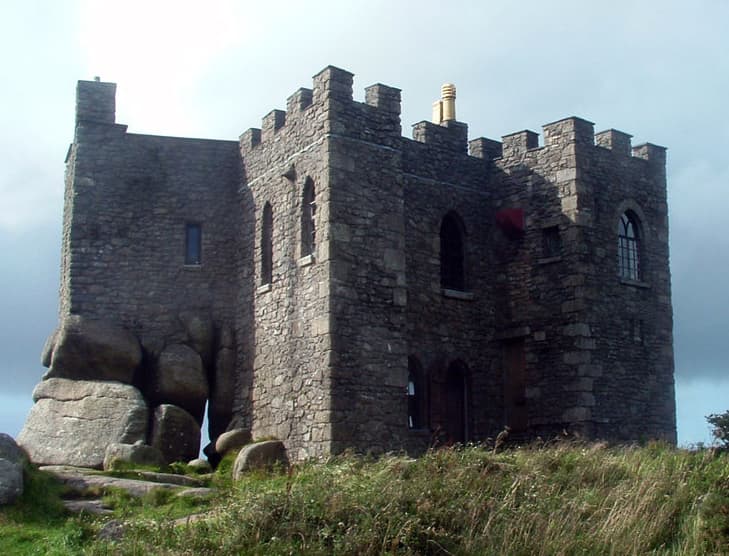
The landscape around Carn Brea is dotted with intriguing rock formations that have inspired local folklore for centuries. According to legend, a giant named John of Gaunt once inhabited the hill. This myth lives on through names given to natural granite features such as the "giant's coffin," "giant's head and hand," "giant's wheel," and "giant's cradle." One of the most evocative sites is the "giant’s seat," atop which the present-day castle stands, blending naturally with the granite outcrop beneath it.
Medieval origins and architectural evolution
The earliest known structure on the site dates back to 1379, originally believed to be a small chapel dedicated to St Michael. Historical records mention Carn Brea as a "tower castle" owned by Sir John Bassett, Knight, by 1478, indicating its use as a defensive or lookout post during the late medieval period. Antiquarian William Worcester included Carn Brea among the 32 castles on the Cornish peninsula, highlighting its medieval significance.
Transformation into an 18th-century hunting lodge
In the 18th century, the Basset family extensively remodeled the structure, transforming it into a romanticized hunting lodge designed to evoke the appearance of a medieval castle. This remodeling gave rise to the building's current status as a granite stone folly, characterized by its irregular layout with four rectangular turrets surrounding a central core of equal height. The castle features an embattled parapet, enhancing its medieval aesthetic, though its primary function was recreational rather than defensive.
The castle's foundations are uniquely integrated into the natural granite outcrop, with massive uncut boulders forming part of the base, creating the impression that the castle is melting into the landscape. The rear of the building drops steeply, emphasizing its strategic and dramatic siting.
Architectural features and style
Carn Brea Castle exemplifies the romantic ideal of medieval and gothic architecture popular in the 18th century. Although it is not a true medieval fortress, its design incorporates elements such as turrets, battlements, and the use of local granite that harmonizes with the surrounding environment. The castle’s compact size and folly status underscore its role as a picturesque hunting retreat rather than a military stronghold.
Use and preservation in modern times
Today, Carn Brea Castle is a Grade II listed building, recognized for its architectural and historical importance. It remains in private ownership and has been adapted for commercial use, notably converted into a restaurant specializing in Middle Eastern cuisine during the 1980s. This adaptive reuse has helped preserve the castle's structure while allowing public enjoyment of its unique setting and ambiance.
Historical and cultural significance
The castle and hill are emblematic of Cornwall’s rich heritage, combining prehistoric archaeology with medieval and post-medieval architecture. The site offers visitors insight into the evolution of defensive and leisure structures over centuries, from Neolithic fortifications to romantic follies. Its commanding position provides panoramic views of the surrounding towns and countryside, reinforcing its historical role as a landmark and lookout.
Visiting and exploring Carn Brea
While the castle itself is privately owned and operates as a restaurant, the surrounding hill and archaeological sites are accessible to visitors interested in Cornwall’s deep history. Walking trails and interpretive signage allow exploration of the Neolithic remains and natural rock formations that have inspired local legends. The combination of natural beauty, historic architecture, and mythic storytelling makes Carn Brea Castle a compelling destination for history enthusiasts and tourists alike.
In summary, Carn Brea Castle is a fascinating example of a late medieval structure that has been reshaped through centuries into a romantic folly. Its granite construction, integration with the natural landscape, and layered history from Neolithic times to the modern day contribute to its unique character and enduring appeal.
Frequently asked questions (FAQ)
- How do I get to Carn Brea Castle?
- Carn Brea Castle is located near Redruth in Cornwall, easily accessible by car or public transport. The nearest train station is Redruth, from where you can take a taxi or enjoy a scenic walk to the castle.
- What is the historical significance of Carn Brea Castle?
- Carn Brea Castle dates back to the 14th century and is steeped in local legend and history. It was originally built as a hunting lodge and has since served various purposes, making it a fascinating site for history enthusiasts.
- When was Carn Brea Castle built?
- Carn Brea Castle was built in 1379, showcasing medieval architectural styles. Its construction reflects the historical context of the time, providing insight into the region's feudal past.
- Can I visit Carn Brea Castle year-round?
- Yes, Carn Brea Castle is open to visitors throughout the year, though specific opening hours may vary seasonally. It's recommended to check the official website for the most accurate and up-to-date information regarding visiting times.
- Why is Carn Brea Castle a popular tourist attraction?
- Carn Brea Castle is renowned for its stunning views over the surrounding landscape and its rich history. Visitors are drawn to its unique architecture and the opportunity to explore the beautiful grounds and nearby ancient monuments.
- Is it possible to access Carn Brea Castle with a wheelchair?
- While parts of Carn Brea Castle are accessible, some areas may pose challenges for wheelchair users due to uneven terrain. It is advisable to contact the castle in advance to discuss specific accessibility needs and options available.
- What is the best time to visit Carn Brea Castle?
- The best time to visit Carn Brea Castle is during the spring and early autumn months when the weather is mild and the surrounding scenery is particularly beautiful. These seasons also tend to have fewer crowds, allowing for a more relaxed experience.
- Are there any nearby attractions to visit?
- Yes, there are several attractions near Carn Brea Castle, including the historic town of Redruth and the nearby Carn Brea ancient monument site. Visitors can also explore the beautiful Cornish coastline and enjoy various outdoor activities in the area.
- What are the ticket prices for Carn Brea Castle?
- Admission to Carn Brea Castle is generally free; however, there may be fees for guided tours or special events. It's best to check the official website for any upcoming events that may have associated costs.
- What are the opening hours for Carn Brea Castle?
- Carn Brea Castle typically opens from 10 AM to 5 PM, but hours may vary based on the season. Be sure to check the official website before your visit for the most accurate information about opening times.
Photo gallery

Information
Loading map...
Visitor reviews
No reviews yet. Been here? Write the first review and help other travelers!
Write the first reviewVisited this castle? Share your experience
Your review helps other travelers and adds first-hand knowledge to our encyclopedia.