Spitbank Fort
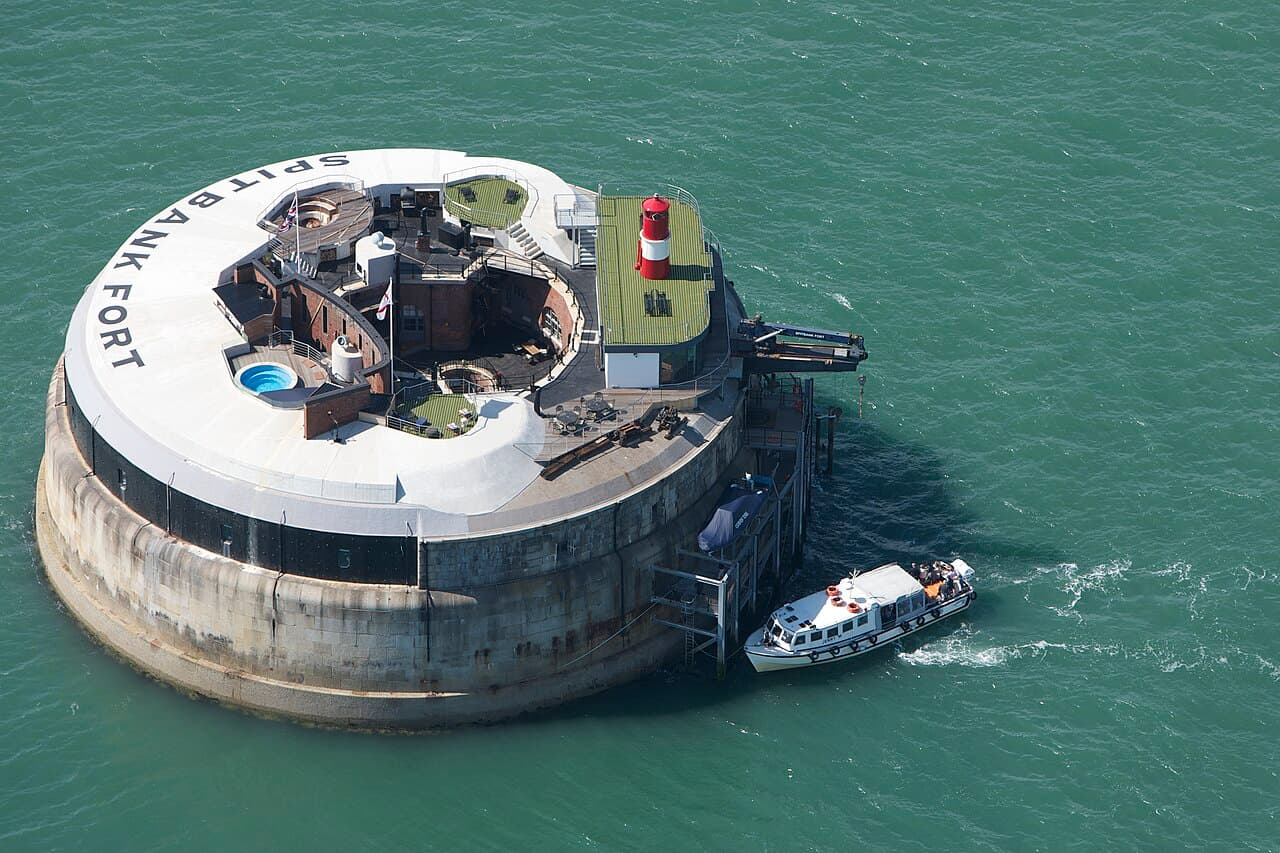
Spitbank Fort is a distinctive 19th-century bastioned fortress located in the Solent, a strait separating the Isle of Wight from mainland England. Constructed as part of the extensive coastal defenses commissioned by the 1859 Royal Commission, it was one of four sea forts built to protect the vital naval base at Portsmouth from potential French invasion during the Victorian era.
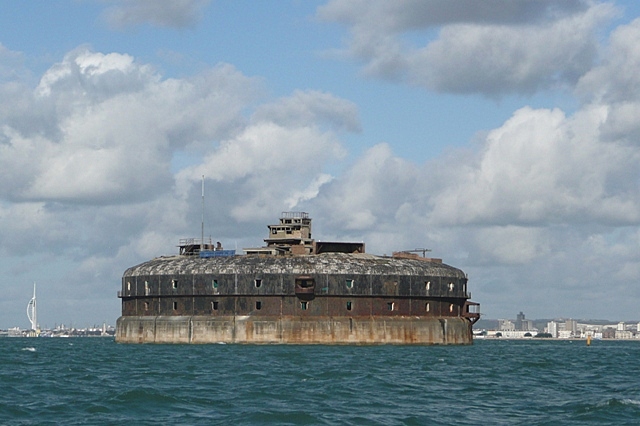
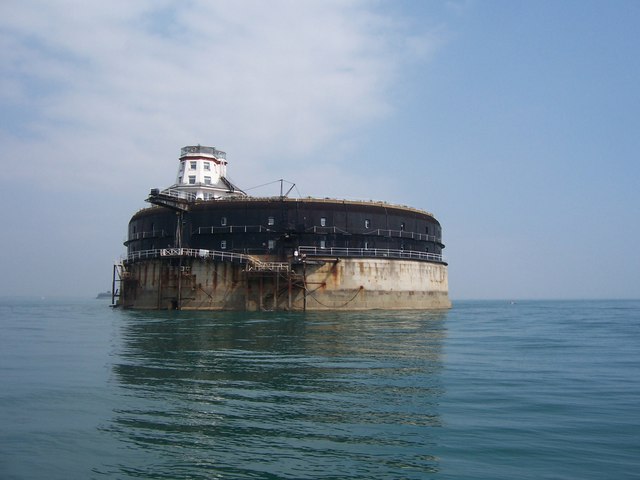
The fort's design reflects the military engineering advancements of the Modern period, specifically tailored to withstand naval assault and provide a formidable artillery platform. Built between 1861 and 1878, Spitbank Fort was strategically positioned to control the eastern approaches to Portsmouth Harbour, complementing its sister forts: Horse Sand Fort, No Man's Land Fort, and St Helens Fort.
Architectural design and features
Spitbank Fort exemplifies the bastioned fortress typology, characterized by its thick granite walls and low-profile structure designed to minimize damage from enemy fire. The fort's circular shape allowed for a 360-degree field of fire, with multiple gun emplacements arranged on the upper deck. Its robust construction included a granite and concrete base resting on a man-made foundation built on the seabed.
The fort originally housed heavy rifled muzzle-loading guns, mounted in casemates and on open gun platforms. These artillery pieces were protected by iron shields and thick masonry, enabling the fort to engage enemy ships at long range. Beneath the gun deck were magazines, living quarters, and storage rooms, all designed to support a garrison of approximately 60 men.
Historical context and military role
The impetus for Spitbank Fort's construction came from fears of a French naval threat under Napoleon III, which led to the establishment of the Palmerston Forts, named after then-Prime Minister Lord Palmerston. These forts formed a defensive ring around Portsmouth, one of Britain's most important naval dockyards.
Although never engaged in combat, Spitbank Fort served as a deterrent and a symbol of Victorian military engineering prowess. It was equipped with state-of-the-art artillery for its time and played a role in coastal defense through both World Wars, adapting to technological changes by updating its armaments and communication systems.
Post-military use and preservation
After being decommissioned in the mid-20th century, Spitbank Fort was sold into private ownership. It underwent extensive refurbishment and was transformed into a luxury hotel and event venue, attracting visitors seeking a unique historical experience. The fort's isolated location and distinctive architecture make it a remarkable example of Victorian coastal defense structures preserved for modern use.
Today, Spitbank Fort remains a well-preserved monument to Britain's maritime heritage, offering insight into the strategic military thinking of the 19th century and the evolution of coastal fortifications. Its adaptation for hospitality purposes demonstrates the potential for historic military sites to find new life in contemporary contexts.
Visitor information and accessibility
Access to Spitbank Fort is typically by boat from Portsmouth, with transfers arranged by the current owners. The fort offers a variety of accommodation options, including luxury suites and dining facilities within its historic walls. Visitors can explore the gun decks, magazines, and living quarters, experiencing firsthand the atmosphere of a Victorian sea fort.
The fort is open seasonally, with specific visiting hours and booking requirements. Due to its unique location and private ownership, prospective visitors should check availability and access details in advance. The site offers a blend of historical education and exclusive leisure, making it a distinctive destination in the United Kingdom's coastal heritage landscape.
Frequently asked questions (FAQ)
- How do I get to Spitbank Fort?
- Spitbank Fort is accessible only by boat, with transfers typically departing from Portsmouth. Visitors should arrange transportation in advance through the fort's management or associated tour operators.
- What is the historical significance of Spitbank Fort?
- Spitbank Fort was built in the 19th century as part of the Palmerston Forts to defend Portsmouth from naval threats. It represents Victorian military engineering and served as a coastal defense through both World Wars.
- Can I stay overnight at Spitbank Fort?
- Yes, Spitbank Fort has been converted into a luxury hotel offering overnight accommodation in uniquely historic surroundings. Booking in advance is essential due to limited capacity.
- Is Spitbank Fort open to the public for tours?
- The fort offers guided tours and event access during its open season, but as it is privately owned, visiting hours and availability can vary. Advance booking is recommended.
- Why was Spitbank Fort built in the Solent?
- Spitbank Fort was strategically placed in the Solent to protect the eastern approaches to Portsmouth Harbour, a critical naval base, preventing enemy ships from gaining access.
Photo gallery

Information
Current owner
Private owner
Loading map...
Visitor reviews
No reviews yet. Been here? Write the first review and help other travelers!
Write the first reviewVisited this castle? Share your experience
Your review helps other travelers and adds first-hand knowledge to our encyclopedia.