Horse Sand Fort
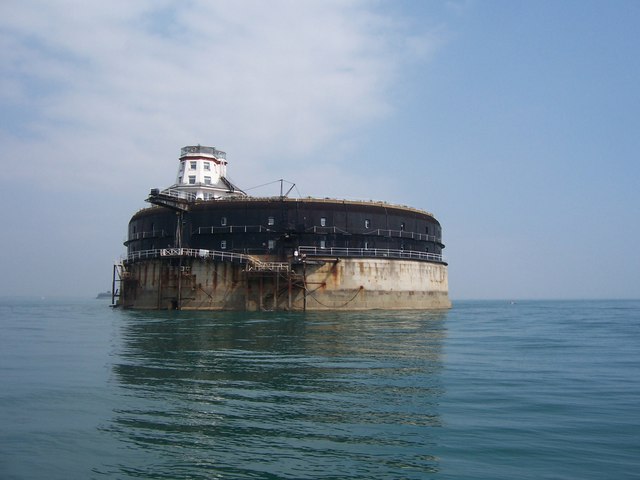
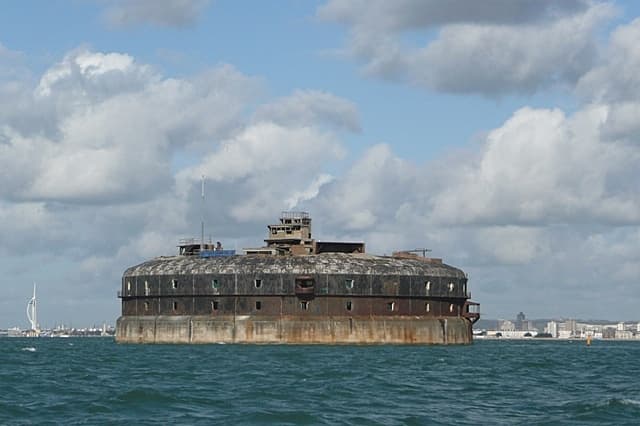
Horse Sand Fort, also known as Horse Sands Fort, is a prominent example of the Royal Commission sea forts constructed in the Solent, off the coast of Portsmouth, Hampshire, England. This imposing bastioned fortress forms part of the group known as the Palmerston Forts, a series of defensive structures commissioned in the mid-19th century to protect the vital naval base at Portsmouth from potential French invasion. The fort’s strategic location in the Solent, a tidal strait separating the Isle of Wight from mainland England, allowed it to control naval access to Portsmouth and Southampton, two critical maritime hubs.
The construction of Horse Sand Fort began in 1865 and was completed by 1880. The fort is approximately 200 feet (61 meters) in diameter and features a robust bastioned design typical of mid-19th-century military architecture. It consists of two main floors and a basement level, all protected by armour plating that encircles the entire structure, designed to withstand bombardment from naval artillery. The fort’s circular shape and thick walls were engineered to maximize defensive coverage and minimize blind spots, enabling a wide range of cannon placements on the upper decks.
Architectural design and defensive features
Structure and materials
The fort’s construction employed massive concrete and granite as primary building materials, chosen for their durability against explosive shells and harsh marine conditions. The walls are heavily reinforced, and the fort is surrounded by a deep moat filled with seawater, which served as an additional obstacle to enemy landing attempts. The armour plating was a pioneering feature for its time, reflecting advances in military engineering aimed at countering the increasing power of rifled artillery.
Armament and internal layout
Originally, the fort was equipped with a variety of heavy guns mounted on the upper level, including rifled muzzle-loading cannons arranged to provide overlapping fields of fire across the Solent. The lower floors contained magazines for ammunition storage, living quarters for the garrison, and support facilities such as kitchens and workshops. The design facilitated a self-sustaining defensive position capable of withstanding prolonged attacks.
Historical context and significance
The palmerston forts and coastal defense
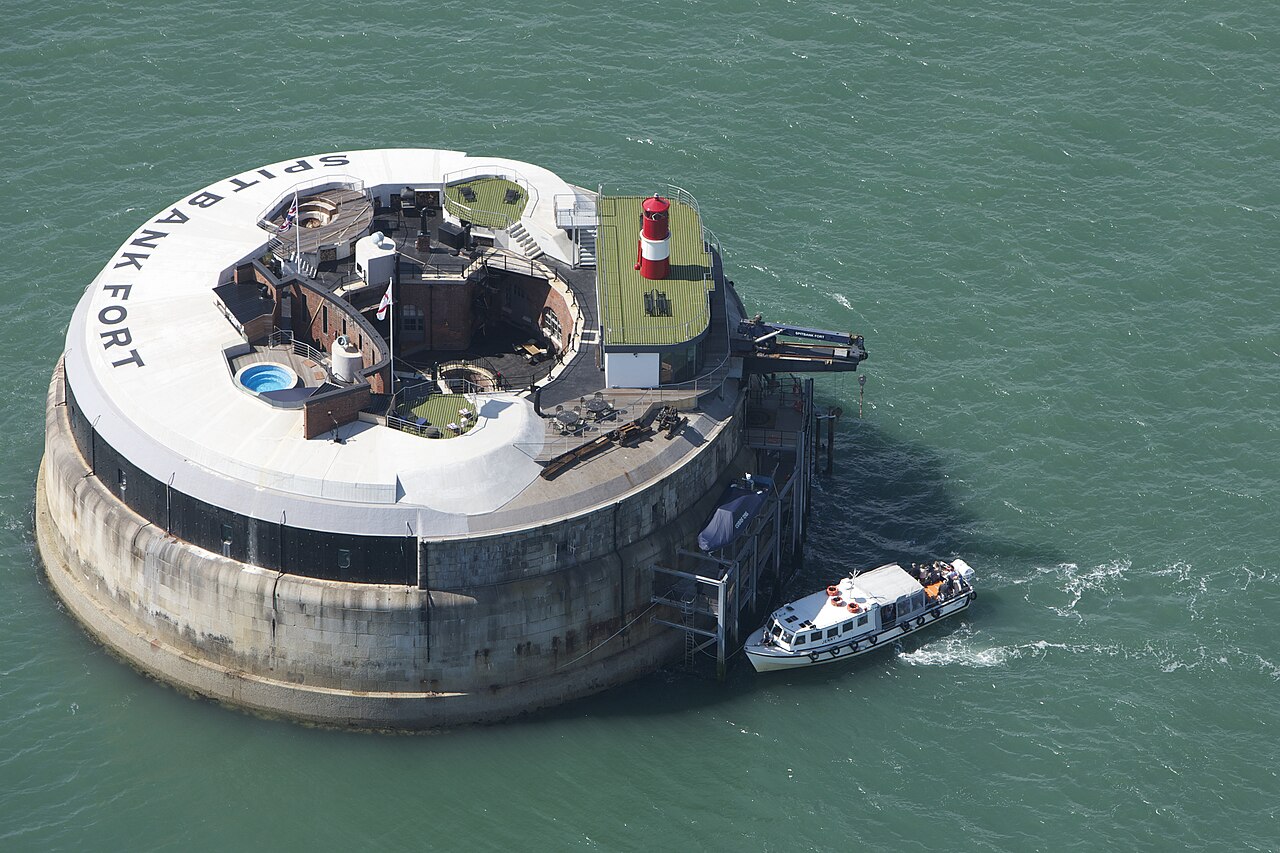
Horse Sand Fort is one of several sea forts built following the recommendations of the 1859 Royal Commission on the Defence of the United Kingdom, headed by Prime Minister Lord Palmerston. The commission responded to perceived threats from France under Napoleon III, leading to a nationwide program of fortification construction to protect key naval bases. The Solent sea forts, including Horse Sand Fort, Spitbank Fort, No Man’s Land Fort, and St Helens Fort, formed a defensive ring around Portsmouth.
Operational history
Though never engaged in active combat, Horse Sand Fort played a crucial role as a deterrent throughout its operational life. It was maintained by the Royal Engineers and later the Royal Navy, serving as a coastal artillery battery through both World Wars. The fort’s strategic importance diminished with advances in naval aviation and missile technology, leading to its decommissioning in the mid-20th century.
Current status and preservation
Today, Horse Sand Fort remains a well-preserved example of Victorian military architecture. It is privately owned and has been adapted for various uses, including as a unique venue for events and accommodation. Access to the fort is typically by boat, and it stands as a significant heritage site reflecting the evolution of coastal defense technology in the United Kingdom.
Visitor information and accessibility
Visitors interested in Horse Sand Fort can explore its robust structure and learn about its historical role in coastal defense. Due to its offshore location, visits require prior arrangement with operators who provide boat transfers. The fort offers a rare opportunity to experience a 19th-century bastioned sea fort firsthand, with tours highlighting its architectural and historical features.
Frequently asked questions (FAQ)
- How do I visit Horse Sand Fort?
- Horse Sand Fort is accessible only by boat, so visitors must arrange transport with tour operators offering trips to the fort from Portsmouth. Advance booking is recommended due to limited access.
- What was the purpose of Horse Sand Fort?
- Horse Sand Fort was built as part of the Palmerston Forts to protect the naval base at Portsmouth from potential French attacks in the 19th century. It served as a coastal artillery battery to control access through the Solent.
- When was Horse Sand Fort built?
- Construction of Horse Sand Fort began in 1865 and was completed in 1880, during the Victorian era's modernization of coastal defenses.
- Is Horse Sand Fort open to the public?
- The fort is privately owned and sometimes open for guided tours and events. Visitors should check availability and book in advance.
- What architectural style is Horse Sand Fort?
- Horse Sand Fort exemplifies Victorian military architecture with a bastioned fortress design, featuring thick concrete and granite walls and armour plating.
Photo gallery

Information
Current owner
Private owner
Loading map...
Visitor reviews
No reviews yet. Been here? Write the first review and help other travelers!
Write the first reviewVisited this castle? Share your experience
Your review helps other travelers and adds first-hand knowledge to our encyclopedia.