Sotopalacios Castle
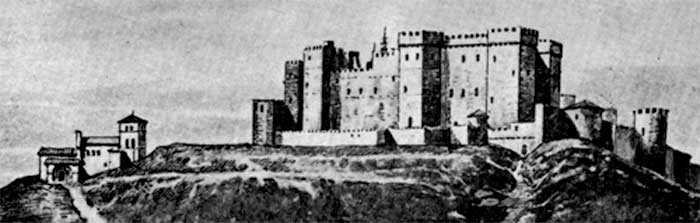
Sotopalacios Castle stands as a prominent example of late medieval military architecture in the province of Burgos, Spain. Constructed in the 14th century, this fortress exhibits a classic rectangular layout typical of the period, with square turrets anchoring each corner, providing both defensive strength and architectural balance.
Architectural design and features
The castle's design reflects the dual purpose of fortification and residential comfort. Its rectangular plan is fortified by robust corner towers, which served as vantage points for surveillance and defense against potential attackers. The square turrets are particularly notable for their imposing presence and strategic placement, allowing defenders to cover all sides of the fortress effectively.
Inside, the castle contains a series of palatial rooms arranged around a central courtyard. This courtyard likely functioned as a secure open space, facilitating daily activities while maintaining the castle's defensive integrity. The rooms surrounding the courtyard would have been used for various domestic and administrative purposes, reflecting the castle's role as both a noble residence and a military stronghold.
Historical context and significance
Built during the 14th century, Sotopalacios Castle was constructed amid the turbulent period of the late medieval era in Spain, a time marked by frequent conflicts and territorial disputes. The castle's robust defensive features illustrate the need for protection against invasions and local skirmishes. Its location in the Merindad de Río Ubierna within Burgos province placed it strategically within the Kingdom of Castile, an important medieval realm.
The castle's preservation owes much to continuous restoration efforts by its current owner, ensuring that it remains one of the largest and best-preserved fortresses in the region. These restorations have maintained the original medieval character while stabilizing the structure for future generations.
Construction techniques and materials
The castle was primarily built using locally sourced stone, a common practice in medieval fortifications to ensure durability and defense. The masonry work demonstrates the skilled craftsmanship of the period, with thick walls designed to withstand sieges. The square turrets feature crenellations and narrow arrow slits, typical defensive elements allowing archers to protect the castle while minimizing exposure.
Wooden elements such as floors and roofing would have complemented the stone structure, though many of these have likely been replaced or restored over time. The castle's layout and construction reflect the practical needs of a fortified noble residence, balancing defense with habitability.
Current condition and accessibility
Today, Sotopalacios Castle is recognized as a well-preserved late medieval fortress, thanks to the ongoing restoration work. Its condition allows visitors to appreciate the architectural and historical significance of the site. While it remains a private property, its prominence in the province of Burgos makes it a notable landmark for those interested in medieval Spanish castles.
The castle's preservation contributes to the cultural heritage of the region, offering insights into the military and residential architecture of the 14th century. Its imposing turrets and palatial rooms continue to attract attention from historians, architects, and visitors alike.
Frequently asked questions (FAQ)
- What is the historical significance of Sotopalacios Castle?
- Sotopalacios Castle dates back to the 14th century and represents a key example of late medieval military architecture in Burgos, Spain. It was built during a period of regional conflicts and served both defensive and residential purposes.
- Can visitors tour Sotopalacios Castle?
- Sotopalacios Castle is privately owned and not regularly open to the public. Visitors interested in viewing the castle should check for special events or private tours that may occasionally be available.
- What architectural features distinguish Sotopalacios Castle?
- The castle is characterized by its rectangular shape with square turrets at each corner, palatial rooms arranged around a central courtyard, and thick stone walls typical of 14th-century fortifications.
- Where is Sotopalacios Castle located?
- Sotopalacios Castle is located in the Merindad de Río Ubierna area within the province of Burgos, in the Castile and León region of Spain.
- How has Sotopalacios Castle been preserved over the years?
- The castle has been well preserved thanks to restoration efforts by its owners, which have maintained its structural integrity and medieval architectural features.
Information
Loading map...
Visitor reviews
No reviews yet. Been here? Write the first review and help other travelers!
Write the first reviewVisited this castle? Share your experience
Your review helps other travelers and adds first-hand knowledge to our encyclopedia.