Burgos Cathedral
Burgos Cathedral stands as one of the most significant Gothic monuments in Spain, with construction spanning from 1221 to 1567. This cathedral exemplifies the evolution of the Gothic architectural style through its extensive and varied features, reflecting influences from the north of France and showcasing a rich collection of art and craftsmanship. The cathedral's design is based on a Latin Cross plan with harmonious proportions measuring approximately 84 by 59 metres, emphasizing balance and grandeur.
Architectural design and Gothic elements
The cathedral's three-story elevation, vaulted ceilings, and intricate window tracery are characteristic of High Gothic architecture, closely related to contemporary French models. The transept portals are notable for their sculptural ensembles, comparable to those found in the royal domains of France, highlighting the cultural exchange between Spain and France during the medieval period. The cathedral's vaulting includes a remarkable starred vaulting in the cupola, completed in 1567 by architects Juan de Vallejo and Juan de Castañeda, which stands as a late Gothic masterpiece.
Artistic embellishments and interior features
Burgos Cathedral houses an exceptional collection of artworks, including paintings, choir stalls, reredos, tombs, and stained-glass windows. The tomb of Bishop Mauricio, made of enamelled brass, is an exquisite example of Limoges-style goldsmith work. The cathedral also features the Puerta de la Pellejería (1516) by Francisco de Colonia, ornamental grills, and the choir stalls, all representing the finest in late Gothic craftsmanship.
The chapels within the cathedral contain remarkable retables by artists such as Gil de Siloe and Diego de la Cruz, including the Constable's chapel and Saint Anne's chapel. The Renaissance period added further artistic richness with the Capilla Mayor retable created by Rodrigo and Martín de la Haya, Domingo de Berriz, and Juan de Anchieta between 1562 and 1580.
Historical development and construction phases
Construction began in the early 13th century and continued with the completion of the cloister around 1280, reflecting the French High Gothic style. After a pause of nearly two centuries, work resumed in the mid-15th century, focusing on ornate embellishments that enhanced the cathedral's splendor. The extensive building phases illustrate the cathedral's long-standing importance and the evolving architectural trends over several centuries.
Significant tombs within the cathedral commemorate notable figures such as Bishop Alonso de Cartagena, Bishop Alonso Luis Osorio de Acuña, Abbot Juan Ortega de Velasco, and the Constable Pedro Hernández de Velasco and his wife Doña Mencía de Mendoza, underscoring the cathedral's role as a burial site for prominent individuals.
Later additions and cultural significance
The cathedral continued to receive artistic attention into the 18th century, including the construction of the trascoro and chapels such as Santa Tecla. Its designation as a UNESCO World Heritage Site in 1984 recognizes its outstanding universal value and its unique status as the only Spanish cathedral listed independently.
Arco de Santa María: the historic city gate
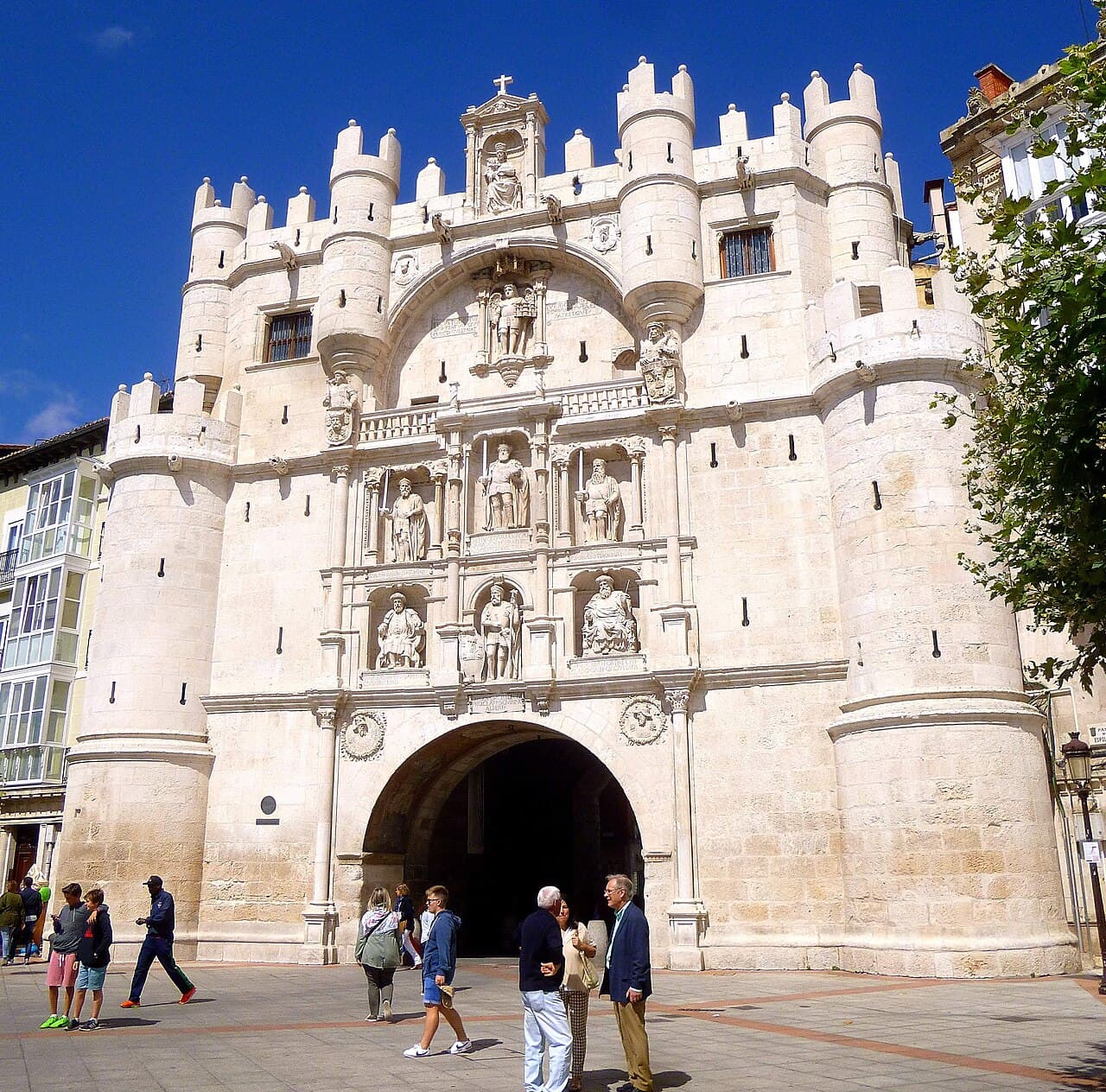
Near the cathedral stands the Arco de Santa María, one of the twelve medieval gates of Burgos. Rebuilt in the 16th century by Charles V, Holy Roman Emperor, it commemorates the city's support during the Revolt of the Comuneros. The gatehouse facade features statues of historical and legendary figures important to Burgos and Castile, including Count Fernán González, El Cid, and the mythical judges Laín Calvo and Nuño Rasura, as well as Count Diego Rodríguez Porcelos, the city's founder.
The interior of the gatehouse is accessible to the public and hosts temporary art exhibitions, including a large mural by Burgos artist José Vela Zanetti and displays of historic pharmaceutical equipment. The gate was declared a National Monument in 1943, adding to the rich heritage surrounding the cathedral.
Frequently asked questions (FAQ)
- When was Burgos Cathedral constructed?
- Construction of Burgos Cathedral began in 1221 and was completed in 1567, spanning several centuries of Gothic architectural development.
- What architectural style characterizes Burgos Cathedral?
- Burgos Cathedral is a prime example of High Gothic architecture, featuring elements influenced by northern French Gothic models.
- Is Burgos Cathedral a UNESCO World Heritage Site?
- Yes, Burgos Cathedral was declared a UNESCO World Heritage Site in 1984, recognized for its outstanding Gothic architecture and cultural significance.
- Can visitors access the Arco de Santa María?
- Yes, the Arco de Santa María gatehouse is open to the public and hosts art exhibitions, including murals and historical displays.
- What are some notable artworks inside Burgos Cathedral?
- The cathedral contains important artworks such as the Puerta de la Pellejería, choir stalls, retables by Gil de Siloe, and Renaissance additions in the Capilla Mayor.

Information
Current owner
Roman Catholic Church
Loading map...
Visitor reviews
No reviews yet. Been here? Write the first review and help other travelers!
Write the first reviewVisited this castle? Share your experience
Your review helps other travelers and adds first-hand knowledge to our encyclopedia.