Soria Castle stands as a significant high medieval hill castle located on the Cerro del Castillo hill in the city of Soria, Spain. Its strategic position overlooking the Douro River valley made it a vital defensive stronghold on the historic border between the Crowns of Aragon and Castile. The castle's origins trace back to the 12th century, during a period of intense territorial conflicts and border fortification efforts in the Iberian Peninsula.
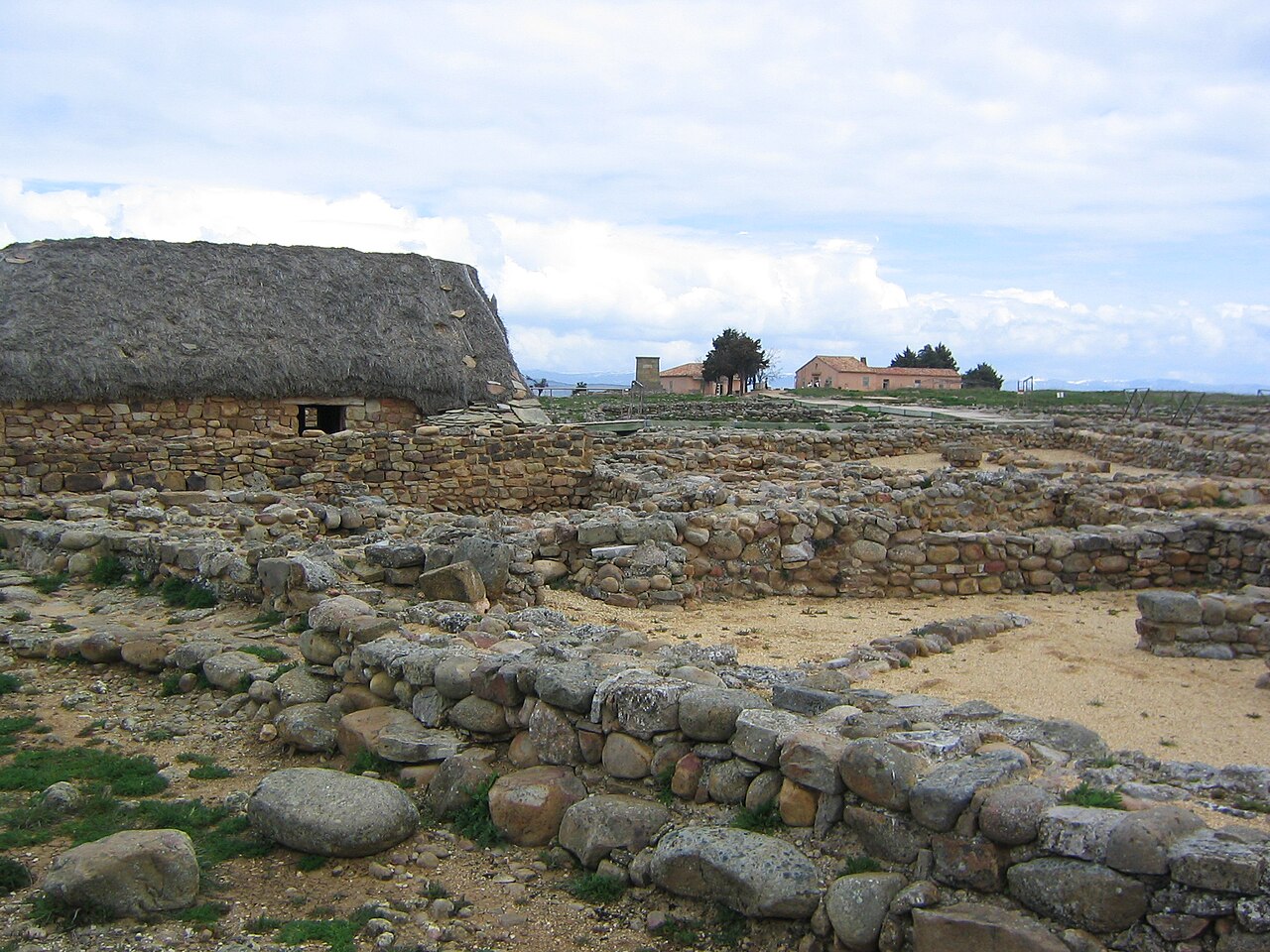
The castle's site shows evidence of human occupation since the Bronze Age, with a Celtiberian castro or hillfort predating the medieval structure. This early settlement had connections to the nearby ancient city of Numancia. Over centuries, the site transitioned through various cultural phases, including Roman and Muslim control, before becoming a key Christian frontier fortress.
Historical context and strategic importance
Following the establishment of a border in 1016 between the Kingdoms of Castile and Navarra, the site of Soria gained increased military significance. Under Muslim rule, the castle functioned primarily as a watchtower overseeing the town of Medina-Soria. The Christian reconquest in the early 12th century, led by King Alfonso I of Aragon and Queen Urraca I of León, resulted in the castle's reconstruction as a fortified stronghold to secure the frontier.
The castle's fortifications were expanded and reinforced over the following decades. Count Fernán González is traditionally credited with initial medieval construction efforts. Later, Alfonso VII added inner walls to strengthen the defenses, while Sancho IV constructed an outer wall in response to the Navarrese invasion of 1195-1196 led by Sancho VII.
Architectural features and castle layout
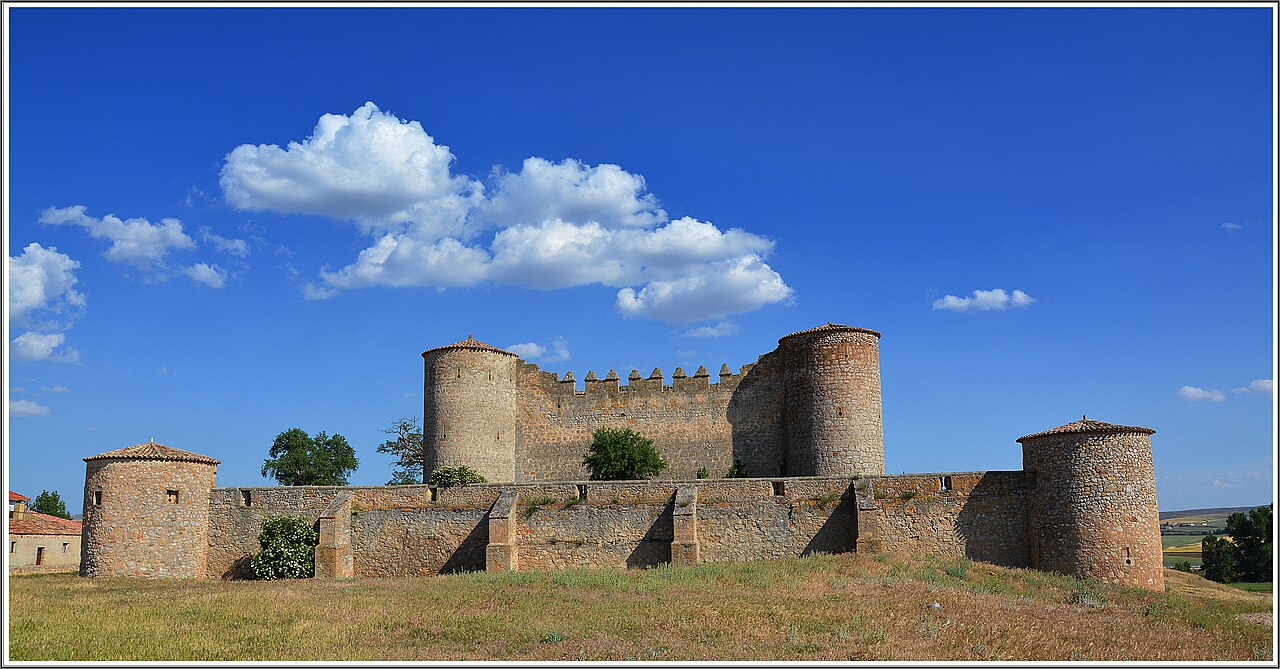
Soria Castle was designed with a slightly trapezoidal plan, encompassing four smaller corner towers and a larger main gate tower. The most fortified structure was the keep, known as the Torre del Homenaje, located on the eastern side near a large stone cistern or aljibe for water storage.
The castle's defenses included a high inner wall shaped to the hill's contours, providing a strong barrier. An outer defensive wall on the western side allowed controlled access to the main gate. By the early 19th century, this outer wall was already in partial ruin.
Within the castle grounds stood the church of San Salvador, serving as the castle chapel, which had fallen into ruin by the early 1600s. The castle precinct also included one of Soria's two Jewish quarters or aljamas, known for its vibrant intellectual and commercial activity during medieval times.
Defensive structures and surviving remains
Today, only the ruins of the keep tower and fragments of the inner and outer walls remain visible. The main gate's entrance is flanked by two partially preserved cylindrical towers. The castle's old cistern has been repurposed in modern times, including use for swimming pools.
The city walls and urban fortifications
The city of Soria was enclosed by extensive medieval stone walls covering approximately 100 hectares, with a perimeter of around 4,100 meters, comparable in scale to the ancient walls of Jerusalem. These walls were primarily constructed in the 13th century under Sancho IV, featuring cylindrical towers called cubos and six main gates alongside smaller posterns and an intermediate gate.
Of the original gates, only the San Ginés and San Agustín posterns survive and have undergone restoration. The walls along the Douro River were built using finely cut ashlar without towers, utilizing the river as a natural defense. Other sections included masonry reinforcements and towers.
Principal gates and the stone bridge
The six principal gates included Puerta del Postigo (the main city gate), Puerta de Valobos, Puerta de Santa Clara (also known as Puerta Nueva), Puerta de Rabanera, Puerta del Rosario, and Puerta de Nájera. Most were demolished in the 19th century due to decay and urban development.
Puerta del Postigo was notable for its monumental tower added in the early 1600s, featuring an imperial coat of arms and a clock tower. It was dismantled between 1865 and 1866.
The Puente de Piedra, a stone bridge over the Douro River, originally had two gate towers for toll collection; one was removed in 1851. The bridge consists of eight semicircular arches and has undergone restorations in the 17th, 18th, and 21st centuries.
Destruction and modern preservation efforts
During the Peninsular War in the early 19th century, French troops occupied the castle until 1812. To prevent further military use, Spanish General José Joaquín Durán ordered the castle's demolition following directives from the Cortes of Cádiz. The explosion destroyed much of the structure, leaving it in ruins.
Modern archaeological excavations and restoration projects, including the Soria Intramuros initiative, have sought to preserve the castle and the adjacent city walls. These efforts are supported by European and regional heritage organizations, highlighting the site's historical and cultural importance.
Nearby, the Parador Nacional Antonio Machado, a historic hotel, occupies part of the former castle grounds, integrating modern use with heritage conservation.
Frequently asked questions (FAQ)
- When was Soria Castle originally built?
- Soria Castle was originally constructed in the 12th century during the high medieval period, following the Christian reconquest of the area.
- What remains can visitors see at Soria Castle today?
- Visitors can see the ruins of the keep tower, parts of the inner and outer defensive walls, and the main gate flanked by two cylindrical towers.
- Why was Soria Castle demolished?
- The castle was demolished in 1812 by Spanish General José Joaquín Durán to prevent its use by French troops during the Peninsular War.
- Are there any notable features in the city walls of Soria?
- Yes, the city walls covered about 100 hectares with six main gates and numerous towers. Two posterns, San Ginés and San Agustín, still survive and have been restored.
- Can I see the original layout of the castle from the site?
- From the castle hill, visitors can enjoy a 360º view of Soria city and the Douro River, and see frescos in the nearby Chapel of San Saturio depicting the castle's original appearance.
Information
Loading map...
Visitor reviews
No reviews yet. Been here? Write the first review and help other travelers!
Write the first reviewVisited this castle? Share your experience
Your review helps other travelers and adds first-hand knowledge to our encyclopedia.