Numantia
Numantia is an ancient Celtiberian settlement located on the Cerro de la Muela hill near the modern municipality of Garray in Soria, Spain. This site is renowned for its significant role during the Celtiberian Wars against the Roman Republic. The ruins of Numantia represent one of the most important archaeological sites for understanding the culture and military history of the Celtiberian people in the Iberian Peninsula.
Historical context and significance
The origins of Numantia date back to the Iron Age, with settlement evidence beginning around the 3rd century BC. The city was inhabited by the Celtiberians, a group of Celtic-speaking tribes known for their warrior culture and fortified hilltop settlements. Numantia gained fame due to its prolonged resistance to Roman conquest during the Celtiberian Wars (154–133 BC).
The first serious conflict with Rome occurred in 153 BC, marking the beginning of a series of military engagements. Over the next two decades, Numantia became a symbol of Celtiberian defiance. The Roman Senate eventually assigned Scipio Aemilianus Africanus the task of subduing the city in 133 BC. After a lengthy siege, the Romans destroyed Numantia, which led to its abandonment and eventual ruin.
Archaeological remains and site features
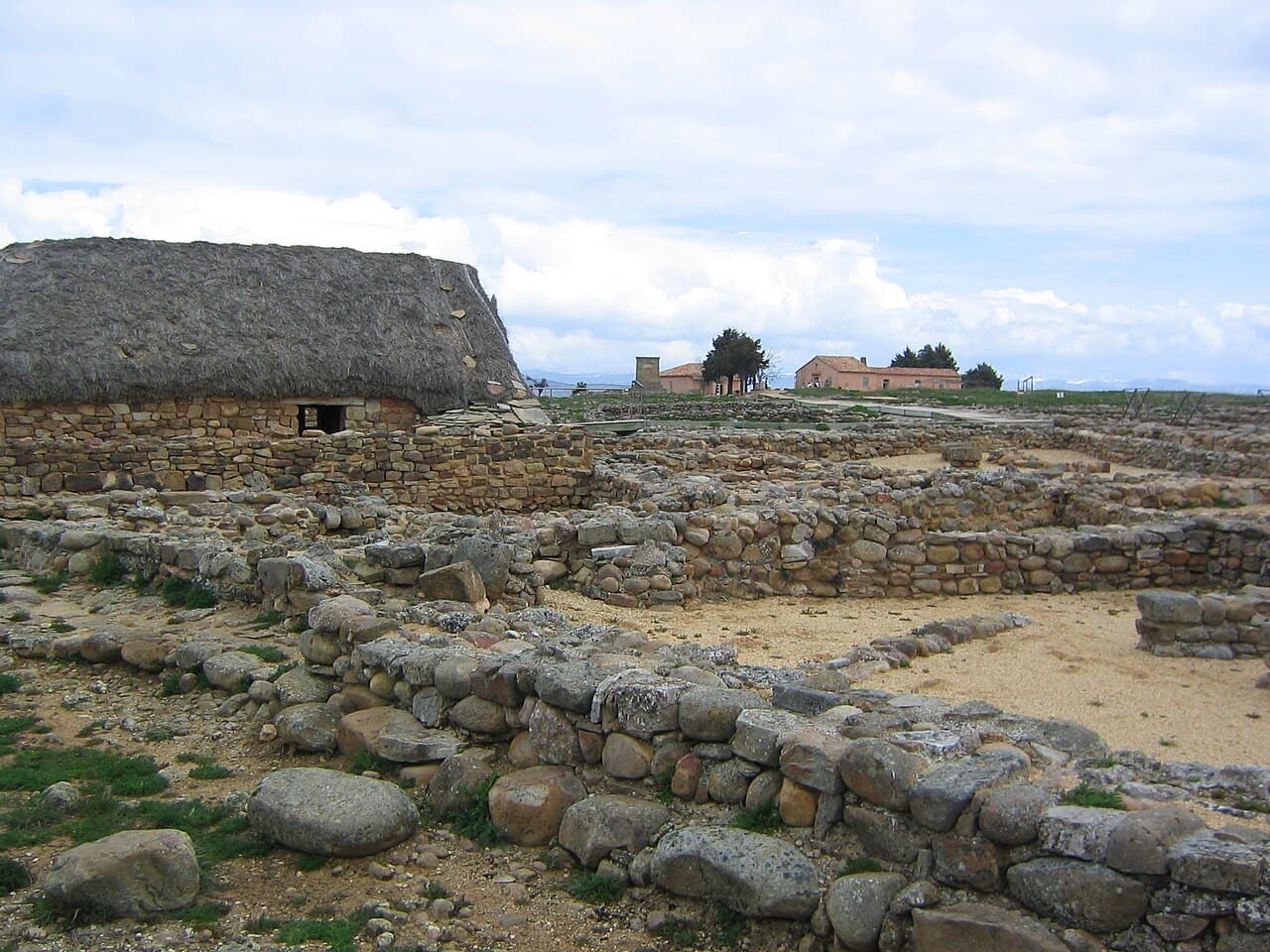
The archaeological site of Numantia includes the remains of defensive structures typical of Celtiberian hillforts. The settlement was strategically located on a hill, taking advantage of the natural elevation for defense. Excavations have uncovered remnants of stone walls, gateways, and residential buildings constructed with local materials.
The layout reveals a compact urban plan adapted to the terrain, with narrow streets and communal spaces. The fortifications include multiple lines of defense, indicating the importance of protecting the settlement from invaders. Artifacts such as pottery, tools, and weapons found at the site provide insight into the daily life and military practices of its inhabitants.
Defensive architecture
Numantia's fortifications consisted of thick stone ramparts and dry-stone walls, which were common in Celtiberian defensive architecture. The walls were designed to withstand prolonged sieges, as evidenced by the historical accounts of the Roman siege. The settlement's elevated position on the Cerro de la Muela provided natural protection, complemented by man-made defenses.
The siege of numantia
The siege of Numantia in 133 BC is one of the most famous episodes in Roman military history. Led by Scipio Aemilianus Africanus, the Roman forces encircled the city, cutting off supplies and reinforcements. The siege lasted for several months, during which the Numantines resisted fiercely despite starvation and hardship.
Ultimately, the inhabitants chose to destroy their own city rather than surrender to the Romans. This act of defiance has been remembered as a symbol of resistance and sacrifice. The fall of Numantia marked the end of major Celtiberian resistance in the region and paved the way for Roman domination of the Iberian Peninsula.
Cultural legacy and modern significance
Today, Numantia is recognized as a key archaeological site that sheds light on pre-Roman Iberian cultures and their interactions with Rome. The ruins attract scholars and visitors interested in ancient history and archaeology. Excavations have helped reconstruct aspects of Celtiberian urbanism, military strategy, and daily life.
The site is protected and managed as a cultural heritage location, with ongoing research contributing to the broader understanding of ancient European civilizations. Numantia's story continues to inspire interest in the resilience and identity of the Celtiberian people.
Frequently asked questions (FAQ)
- How do I visit Numantia archaeological site?
- Numantia is accessible to the public and is located near Garray in Soria, Spain. Visitors can explore the ruins and a small museum on site that provides historical context. It is advisable to check local tourist information for opening hours and guided tour availability.
- What is the historical importance of Numantia?
- Numantia is famous for its fierce resistance against Roman forces during the Celtiberian Wars, particularly the siege of 133 BC. It symbolizes the struggle of the Celtiberian tribes to maintain their independence from Rome.
- When was Numantia built?
- The settlement of Numantia dates back to around the 3rd century BC, during the Iron Age, as a fortified Celtiberian hillfort.
- Can I see remains of the city's defenses?
- Yes, visitors can observe the remains of the stone walls and defensive ramparts that protected Numantia. These fortifications demonstrate typical Celtiberian military architecture.
- Is there a museum at Numantia?
- Yes, there is a small archaeological museum near the site that displays artifacts recovered from Numantia, including pottery, tools, and weapons, providing insight into Celtiberian culture.
Photo gallery

Photo by Txo•Public domain
Information
Current owner
Spanish government
Loading map...
Visitor reviews
No reviews yet. Been here? Write the first review and help other travelers!
Write the first reviewVisited this castle? Share your experience
Your review helps other travelers and adds first-hand knowledge to our encyclopedia.