Sooneck Castle
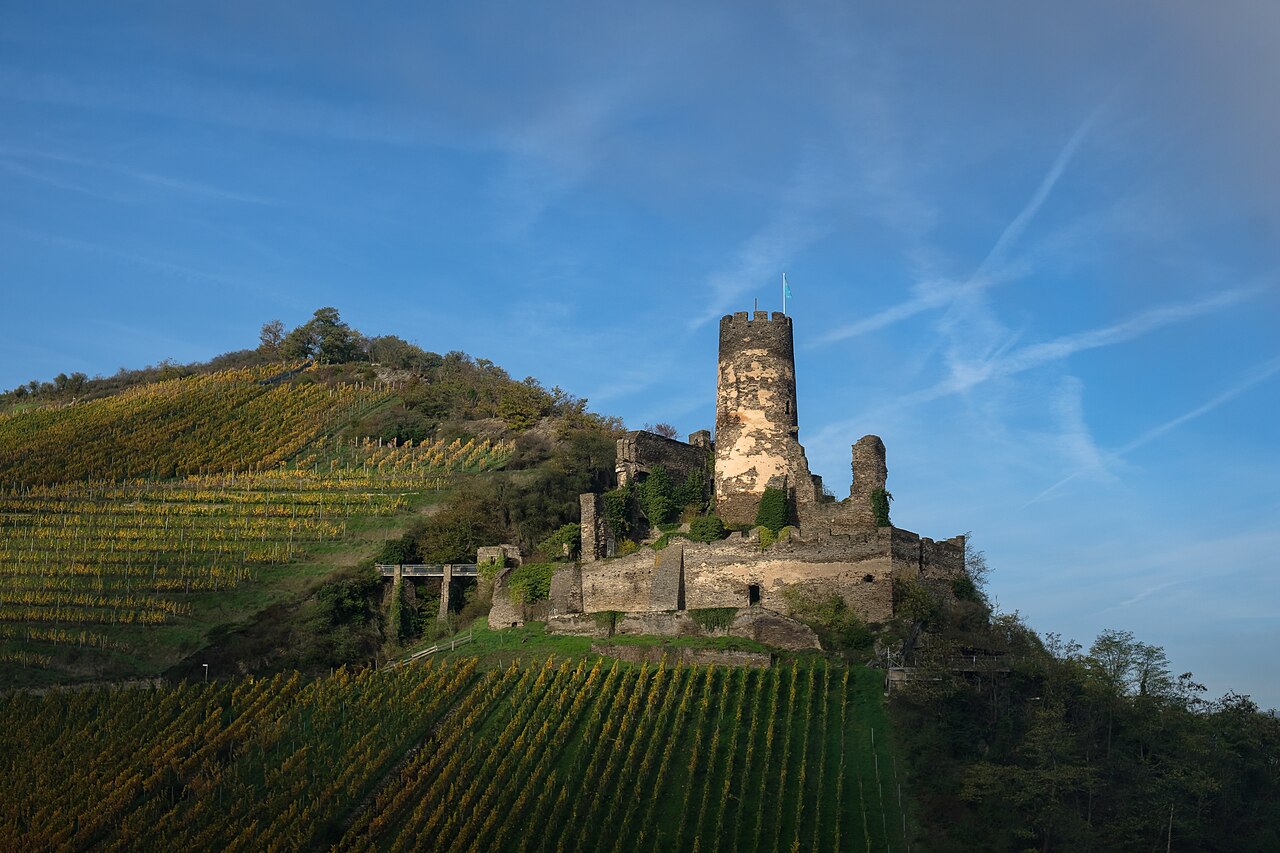
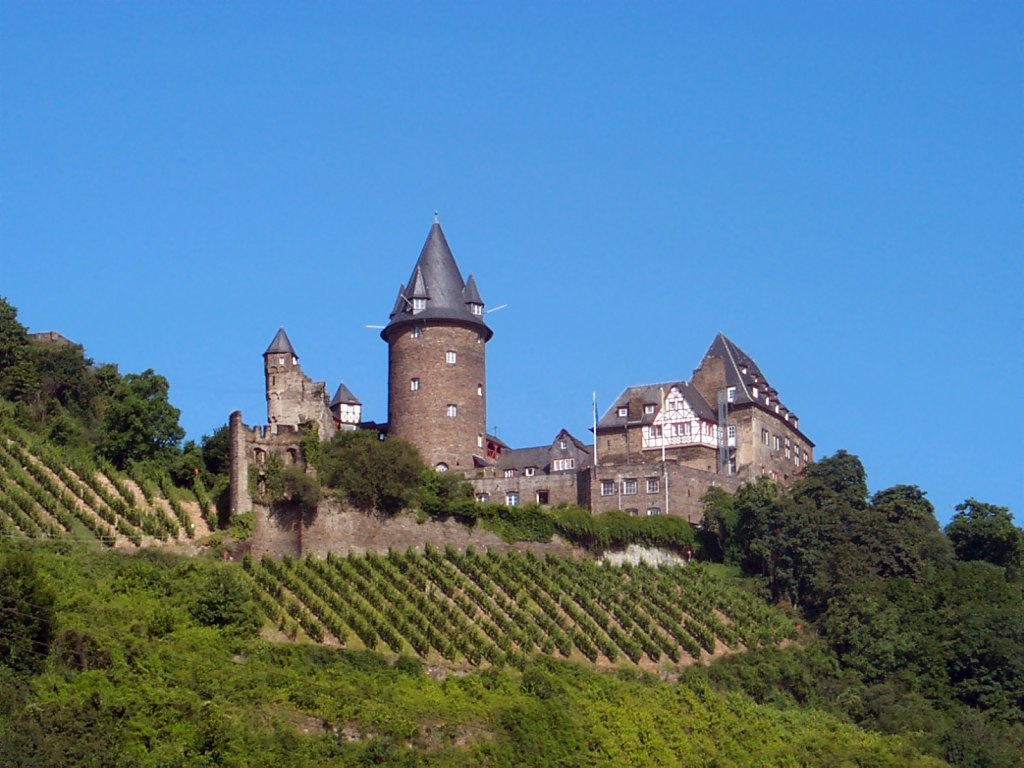
Sooneck Castle stands majestically in the Upper Middle Rhine Valley, near the village of Niederheimbach in Germany. This 13th-century hill castle is part of the rich cultural tapestry of the Rhine Gorge, a UNESCO World Heritage Site since 2002. Its strategic location on a steep hillside overlooking the Rhine River provided both a commanding defensive position and a vital administrative center during the medieval period.
The castle's origins trace back to the High Medieval period, with the earliest documented mention around 1271. Initially, it was managed by the lords of Hohenfels who served as bailiffs for the imperial abbey of Kornelimünster near Aachen. This role was similar to that of the nearby Reichenstein Castle, indicating a network of regional fortifications under ecclesiastical authority. Sooneck functioned as both a military stronghold and a symbol of the abbey's territorial influence.
The medieval history and early conflicts
In 1282, King Rudolph I of Habsburg besieged and destroyed Sooneck Castle during his campaigns to consolidate imperial power. Following its capture, the king imposed a strict prohibition on rebuilding, reaffirmed in 1290, which left the castle in ruins for several decades. This ban reflected the turbulent political climate of the late 13th century and the king's intent to curb rebellious nobility and secure his realm.
The rebuilding ban was lifted in 1349 by King Charles IV after the castle and its bailiwick passed to the Electorate of Mainz. Shortly before this, in 1346, the Archbishop of Mainz, Heinrich III, granted Sooneck Castle as a fief to John, Knight Marshall of Waldeck. John undertook significant reconstruction efforts, restoring the castle's defensive and residential functions, marking a new chapter in its history.
Ganerbenburg and family disputes
Following John's death, Sooneck Castle became a Ganerbenburg—a multi-family castle jointly owned by four branches of the Waldeck family. This shared ownership arrangement often led to internal strife, as the co-owners frequently quarreled over inheritance rights and property management. Several formal truces were necessary to maintain peace within the castle walls, illustrating the complexities of feudal inheritance and family politics in medieval Germany.
When the Waldeck line ended in 1553 with the death of Philipp Melchior, the von Breidbach zu Bürresheim family, who had been co-tenants, became sole owners of Sooneck. However, their eventual extinction led to the castle's decline and neglect, a fate common to many medieval fortresses as political and military priorities shifted over time.
Destruction and decline in the early modern period
During the Palatinate War of Succession in 1689, Sooneck Castle suffered destruction at the hands of French troops under King Louis XIV. This widespread campaign targeted many castles on the left bank of the Rhine, aiming to weaken enemy strongholds. The devastation left Sooneck in ruins once again, marking the end of its medieval military significance.
In 1774, the ruins were leased by the Mainz cathedral chapter to local residents of Trechtingshausen, who repurposed the land for vineyard cultivation. This agricultural use persisted as ownership eventually passed to the community of Niederheimbach, reflecting a shift from military to economic functions in the region.
19th-century restoration and romantic revival
The 19th century brought a revival for Sooneck Castle when, in 1834, the Prussian Crown Prince Friedrich Wilhelm IV and his brothers purchased the dilapidated site. Between 1843 and 1861, the castle was extensively rebuilt as a hunting lodge, blending preservation with romantic architectural enhancements. The project was led by Carl Schnitzler, a military architect who respected the original medieval structures while introducing neo-Gothic and romantic elements popular at the time.
The restoration included the installation of the Prussian royal coat of arms above the north gate, symbolizing the royal family's connection to the castle. Despite these efforts, internal family disputes and the political upheavals of the 1848 revolutions in Germany prevented Sooneck from ever serving its intended purpose as a hunting retreat.
Architectural features and interior design
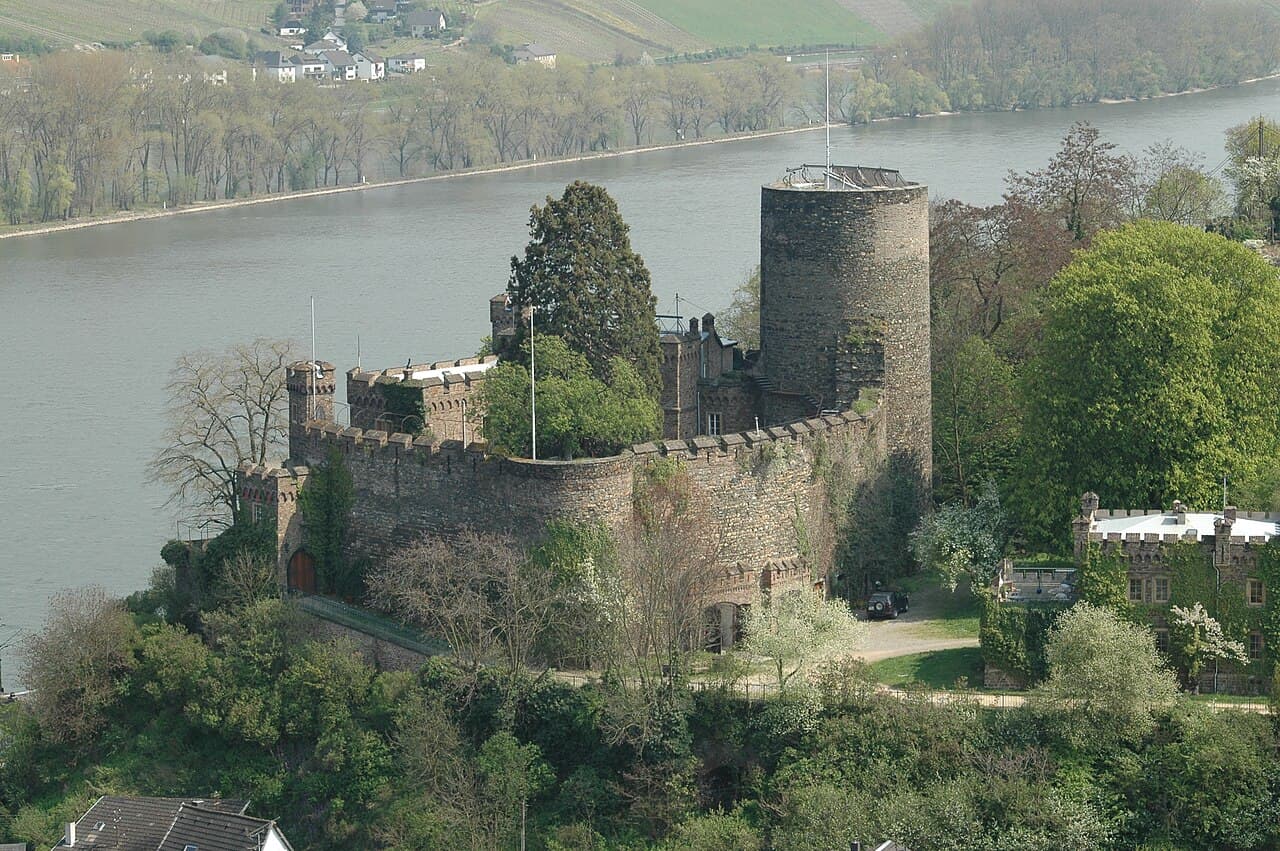
Sooneck Castle's architecture reflects its layered history, combining medieval fortifications with 19th-century romanticism. The castle retains its original layout adapted to the hillside terrain, including defensive walls, gatehouses, and battlements. The north gate remains a prominent feature, showcasing the blend of historical masonry and later decorative additions.
The interiors are furnished predominantly in neo-Gothic and Biedermeier styles, reflecting 19th-century tastes. The residential rooms display an impressive collection of paintings and artworks associated with the House of Hohenzollern and the Köth-Wanscheid family foundation. Since 1991, the castle's collection has included drawings and sketches by the artist Johann-Caspar Schneider, enhancing its cultural significance.
Modern stewardship and visitor experience
Following World War I, Sooneck Castle was nationalized and became state property. After World War II, it was managed by the federal state of Rhineland-Palatinate, and since 1948, the State Directorate for Castles, Palaces, and Antiquities has overseen its preservation. The castle is open to the public through guided tours, offering visitors insight into its rich history and architectural evolution.
As part of the Rhine Gorge UNESCO World Heritage Site, Sooneck Castle contributes to the region's outstanding cultural landscape, surrounded by vineyards, historic towns, and other medieval castles. Its well-preserved structures and romantic interiors make it a valuable destination for those interested in medieval history, castle architecture, and 19th-century restoration movements.
Location and setting
Sooneck Castle is situated on the northeastern slope of the Binger Wald forest, overlooking the Rhine valley. Its hillside position provided strategic advantages in medieval times, controlling river traffic and protecting regional interests. Today, the castle's scenic surroundings enhance its appeal, combining natural beauty with historical grandeur.
Significance in castle heritage
Sooneck Castle exemplifies the evolution of a medieval fortress through centuries of conflict, decline, and romantic revival. Its transformation from a strategic stronghold to a noble hunting lodge illustrates broader trends in German castle architecture and aristocratic culture. The castle's preservation and inclusion in the UNESCO World Heritage Site underline its importance as a cultural and historical monument in the Rhine region.
Frequently asked questions (FAQ)
- How do I get to Sooneck Castle?
- Sooneck Castle is located in Niederheimbach, Germany, and can be accessed by car or public transport. There are parking facilities available nearby, and for those using public transport, the nearest train station is located in the town of Bingen, from where you can take a bus or enjoy a scenic hike to the castle.
- What is the historical significance of Sooneck Castle?
- Sooneck Castle was built in the 13th century and served as a strategic fortification along the Rhine River. It has a rich history, having changed ownership several times, and is now recognized as a significant example of medieval architecture in the region.
- When was Sooneck Castle last renovated?
- Sooneck Castle underwent significant restoration in the 19th century, which helped preserve its architectural integrity. Recent improvements have been made to enhance visitor experience while maintaining the castle’s historical charm.
- Can I enter Sooneck Castle without a guided tour?
- Yes, visitors can explore certain areas of Sooneck Castle independently. However, guided tours are available and highly recommended as they provide in-depth historical context and fascinating stories about the castle's past.
- Why is Sooneck Castle a popular tourist attraction?
- Sooneck Castle is popular for its stunning views of the Rhine Valley and its well-preserved medieval architecture. Visitors are drawn to its picturesque setting and the opportunity to learn about the region's history and culture.
- Is it possible to host events at Sooneck Castle?
- Yes, Sooneck Castle offers facilities for hosting events such as weddings, corporate meetings, and private gatherings. The unique backdrop of the castle provides a memorable setting for any occasion.
- What are the opening hours for Sooneck Castle?
- Sooneck Castle is typically open to visitors from April to October, with varying hours depending on the season. It is advisable to check the official website for the most current information on opening times before your visit.
- What are the ticket prices to visit Sooneck Castle?
- Ticket prices for Sooneck Castle are generally affordable, with discounts available for children, students, and seniors. Special rates may apply for guided tours, so it's best to review the ticketing information on the castle’s official website prior to your visit.
- What is the best time to visit Sooneck Castle?
- The best time to visit Sooneck Castle is during the spring and early autumn when the weather is mild, and the surrounding landscapes are particularly beautiful. Visiting during these seasons allows you to enjoy the outdoor areas and scenic views without the summer crowds.
- Are there any nearby attractions to explore while visiting Sooneck Castle?
- Yes, visitors to Sooneck Castle can explore several nearby attractions, including the picturesque town of Bingen and the scenic Rhine Valley vineyards. The area is rich in history and natural beauty, making it ideal for a full day of exploration.
Photo gallery

Photo by The original uploader was Peter Weller at German Wikipedia. (Original text: Foto Peter Weller)•CC BY-SA 3.0
Information
Website
Visit websiteSources & official resources
Verify the information above using these authoritative references.
Loading map...
Visitor reviews
No reviews yet. Been here? Write the first review and help other travelers!
Write the first reviewVisited this castle? Share your experience
Your review helps other travelers and adds first-hand knowledge to our encyclopedia.