Nollig Castle Ruins
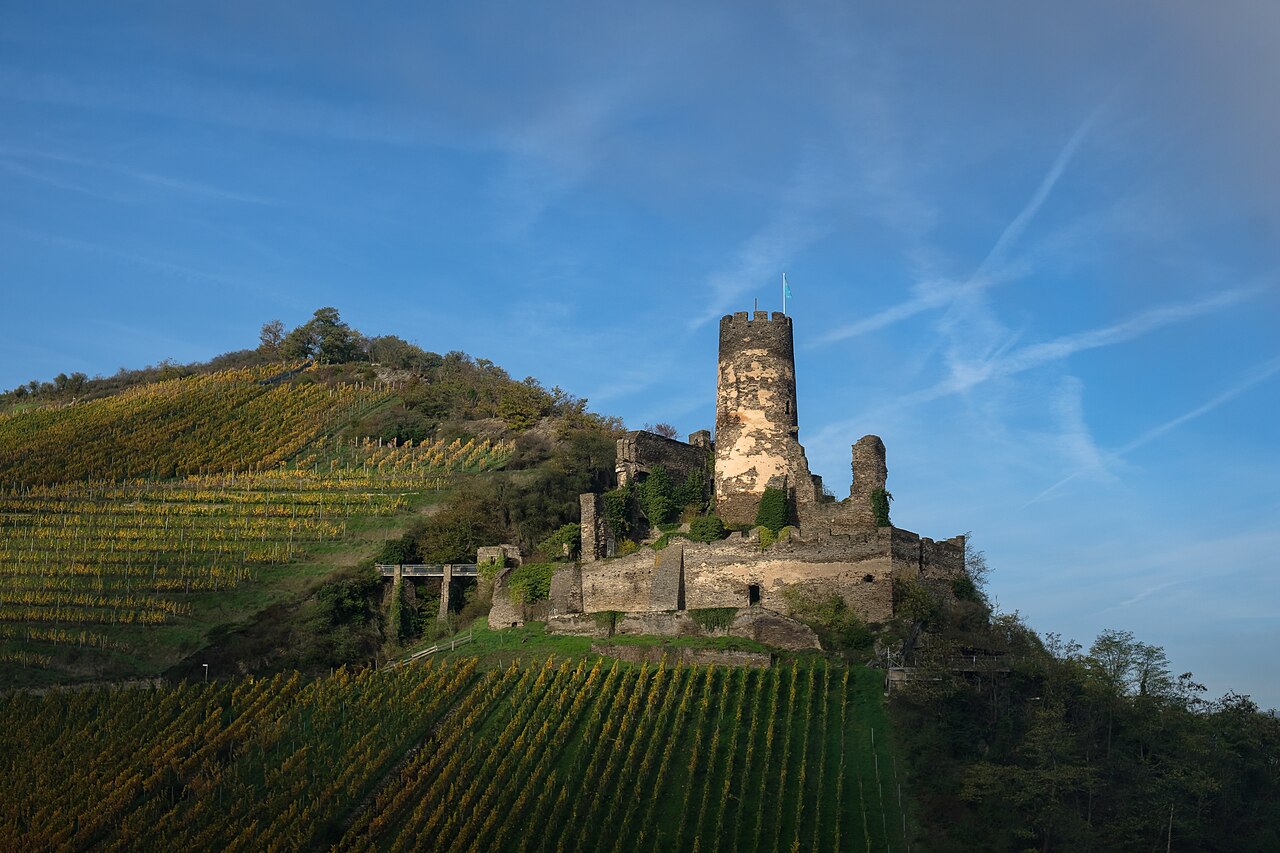
Nollig Castle ruins stand prominently on the right bank of the Rhine River above the town of Lorch in Germany. The site features the remains of a massive tower that was part of a larger medieval fortress complex. The castle's origins date back to around 1300, during the late medieval period, when it was initially constructed as a cornerstone of the city's fortifications. This early structure was soon expanded into a more extensive fortress to strengthen the defenses along this strategically important stretch of the river.
Historical context and strategic importance
The Rhine River has long been a crucial trade and transportation route in Europe, making control over its banks a significant military and economic advantage. Nollig Castle was built to protect the town of Lorch and to oversee river traffic, serving as a defensive stronghold against potential invaders. Its position on the elevated right bank provided commanding views over the river valley, allowing early detection of approaching threats.
During the late medieval period, castles such as Nollig were essential components of territorial defense systems. The initial construction around 1300 reflects the period's architectural and military trends, emphasizing fortified towers and walls designed to withstand sieges and control key routes.
Architectural features and construction
The surviving structure of Nollig Castle primarily consists of a large stone tower, which was likely the keep or main defensive stronghold of the fortress. This tower would have been surrounded by curtain walls and additional fortifications, although much of these have not survived. The robust masonry and elevated position highlight the castle's role as a defensive bastion.
The castle's design reflects typical late medieval military architecture, with thick walls and limited openings to resist attacks. The tower's height and mass would have provided both a lookout point and a refuge during assaults. While detailed floor plans and additional structures are not well documented, the castle's remains suggest a compact but formidable fortress.
Ownership and current status
Today, the Nollig Castle ruins are privately owned and are not open to the public. The site remains an important cultural and historical landmark in the region, symbolizing the medieval heritage of Lorch and the surrounding Rhine valley. Although visitors cannot access the ruins directly, the castle can be viewed from nearby vantage points along the river and in the town.
Preservation and cultural significance
As a late medieval ruin, Nollig Castle offers valuable insights into the military architecture and regional history of the Rhine valley. Its preservation as a ruin allows for the study of medieval fortification techniques and the strategic use of riverbank locations for defense. The castle contributes to the cultural landscape of Rhineland-Palatinate, attracting interest from historians, architects, and tourists who appreciate medieval heritage.
Frequently asked questions (FAQ)
- Can I visit Nollig Castle ruins?
- Nollig Castle ruins are privately owned and currently not open to public visits. However, the ruins can be viewed from nearby public areas around Lorch and along the Rhine River.
- When was Nollig Castle built?
- Nollig Castle was constructed around the year 1300 during the late medieval period as part of Lorch's city fortifications.
- What is the architectural style of Nollig Castle?
- Nollig Castle reflects late medieval military architecture with a focus on a massive defensive tower and thick stone walls typical of hill castles from that era.
- Where is Nollig Castle located?
- Nollig Castle is located on the right bank of the Rhine River above the town of Lorch in the Rhineland-Palatinate region of Germany.
- Why was Nollig Castle built?
- The castle was built to protect the town of Lorch and control river traffic on the Rhine, serving as a strategic defensive fortress during the late medieval period.
Information
Current owner
Private owner
Loading map...
Visitor reviews
No reviews yet. Been here? Write the first review and help other travelers!
Write the first reviewVisited this castle? Share your experience
Your review helps other travelers and adds first-hand knowledge to our encyclopedia.