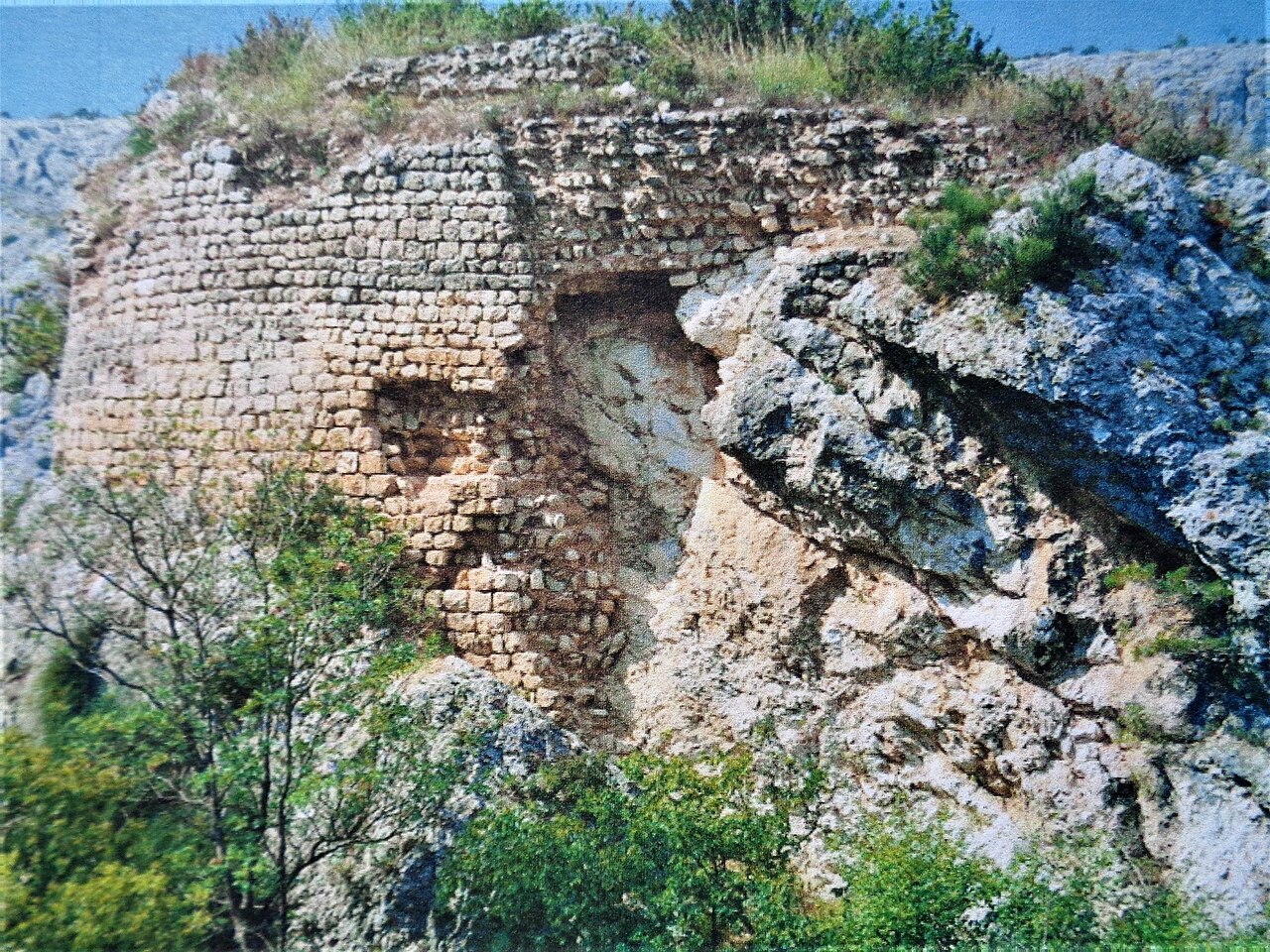
Sonković Castle
Sonković Castle, known locally as Utvrda or Kula Sonković, is a medieval fortress located north of the village of Sonković in the Šibenik-Knin County of Croatia. This castle occupies a strategic position on a rocky ridge adjacent to the entrance of a small canyon, overseeing a natural spring whose waters flow through the canyon and ultimately into Lake Prokljan. This setting not only provided a natural defensive advantage but also ensured a reliable water supply, a crucial feature for any fortress of its time.
Historical background and significance
The origins of Sonković Castle trace back to the early medieval period, making it one of the older fortifications in the region. It served as the seat of the Sonković family, a local noble lineage that lent its name to the surrounding village. The castle's history is closely tied to the turbulent political landscape of Dalmatia and the broader Balkan region during the Middle Ages.
In 1528, the castle and its village were absorbed into the Ottoman Empire, marking a significant shift in the area's control. This period also coincides with the extinction of the Sonković family, after which the castle's direct noble stewardship ended. The Ottoman presence lasted until 1684, when the territory fell under the rule of the Venetian Republic. However, there is little documented evidence regarding the extent to which either the Ottomans or Venetians utilized the castle for military or administrative purposes.
Following Venetian rule, which lasted until 1794, the castle's strategic importance diminished as political and military priorities evolved in the region. The lack of clear records about later usage suggests that Sonković Castle gradually fell into disuse.
Architectural features and location
Sonković Castle is classified as a hill castle, built to take advantage of the natural elevation and rocky terrain for defense. Its position on a ridge above a canyon entrance provided natural fortification, making direct assault difficult. The presence of a natural spring below the castle was a vital resource, ensuring water availability during sieges or prolonged occupation.
The castle's remains indicate a compact fortified structure, likely featuring typical medieval defensive elements such as stone walls and possibly a tower or keep, although detailed architectural studies are limited. The absence of a clear path to the castle today reflects its rugged setting and the decline in maintenance over the centuries.
Access and preservation status
Currently, Sonković Castle is in a state of ruins and is freely accessible to visitors. There are no formal paths or visitor facilities, and reaching the site requires scrambling up a rocky hillside through dense vegetation. This challenging access preserves the castle's secluded character but limits the number of casual visitors.
The castle's preservation status reflects its long abandonment and the absence of significant restoration efforts. Its ruins offer valuable insights into early medieval fortification techniques in Croatia and the historical shifts in regional control from local noble families to Ottoman and Venetian powers.
Sonković Castle in the context of Croatian medieval fortifications
Sonković Castle exemplifies the smaller-scale fortresses typical of Dalmatian hinterlands during the early medieval period. Unlike the grand coastal fortresses or Renaissance palaces found elsewhere in Croatia, Sonković served primarily local defensive and administrative functions. Its survival, even in ruin, contributes to understanding the distribution of power and settlement patterns in Šibenik-Knin County.
While not extensively documented or restored, Sonković Castle remains a point of interest for historians and enthusiasts of medieval architecture, offering a tangible connection to the region's complex past.
Visiting tips and nearby attractions
Visitors to Sonković Castle should be prepared for a physically demanding approach due to the lack of established paths. Proper footwear and caution are advised when scrambling over rocky terrain. The natural surroundings, including the canyon and spring, provide a scenic backdrop for exploration.
Nearby, the village of Sonković and the broader Šibenik-Knin County offer additional historical sites and natural attractions, including the famous Krka National Park and the coastal town of Šibenik, known for its Renaissance and Baroque architecture.
Frequently asked questions (FAQ)
- How do I get to Sonković Castle?
- Sonković Castle is located in the village of Sonković, Croatia. The easiest way to reach the castle is by car, as it is accessible via the main roads connecting to the nearby towns. Public transportation options may also be available, but checking local bus schedules in advance is recommended.
- What is the historical significance of Sonković Castle?
- Sonković Castle dates back to the 15th century and is an important landmark in Croatian history. Originally built for defense purposes, it has witnessed various historical events and changes in ownership over the centuries. Today, it stands as a symbol of the region's rich heritage.
- When was Sonković Castle built?
- Construction of Sonković Castle began in the late 1400s, with its initial purpose being to serve as a stronghold. Over the years, it underwent several renovations and expansions that enhanced its architectural features. The castle's enduring structure reflects its historical importance and the architectural styles of its time.
- Can I visit Sonković Castle year-round?
- Yes, Sonković Castle is open to visitors throughout the year, although specific opening hours may vary by season. It's best to check the official website or contact local tourism offices for the most accurate information before planning your visit. The castle offers a unique glimpse into history, regardless of the time of year.
- Why is Sonković Castle considered an architectural gem?
- Sonković Castle showcases a blend of Gothic and Renaissance architectural styles, making it a notable example of Croatia's historical architecture. Its well-preserved walls, towers, and surrounding grounds create a picturesque scene that attracts architecture enthusiasts. The castle’s design reflects the military and residential needs of its time, offering insights into 15th-century construction techniques.
- Is it possible to take guided tours of Sonković Castle?
- Yes, guided tours are available for visitors who wish to learn more about the history and architecture of Sonković Castle. These tours often provide deeper insights into the castle's significance and the stories behind its construction. Check with local tour operators for schedule details and availability.
- What are the ticket prices for visiting Sonković Castle?
- Ticket prices for Sonković Castle are generally affordable, making it accessible for visitors. Discounts may be available for students, seniors, and groups, so it’s a good idea to inquire about any applicable rates when purchasing tickets. Prices can vary, so checking the official site for the latest information is recommended.
- What is the best time to visit Sonković Castle?
- The best time to visit Sonković Castle is during the spring and early autumn months when the weather is pleasant and conducive for exploring. These seasons typically offer fewer crowds, allowing for a more enjoyable experience. Summer can be busy, but it also features various events and activities around the castle.
- Are there any nearby attractions to visit after Sonković Castle?
- Yes, the area surrounding Sonković Castle is rich in cultural and natural attractions. Nearby, you can explore beautiful parks, historical sites, and charming villages that showcase Croatian heritage. Make sure to plan additional time in your itinerary to discover the local attractions and enjoy the scenic landscapes.
Information
Loading map...
Visitor reviews
No reviews yet. Been here? Write the first review and help other travelers!
Write the first reviewVisited this castle? Share your experience
Your review helps other travelers and adds first-hand knowledge to our encyclopedia.