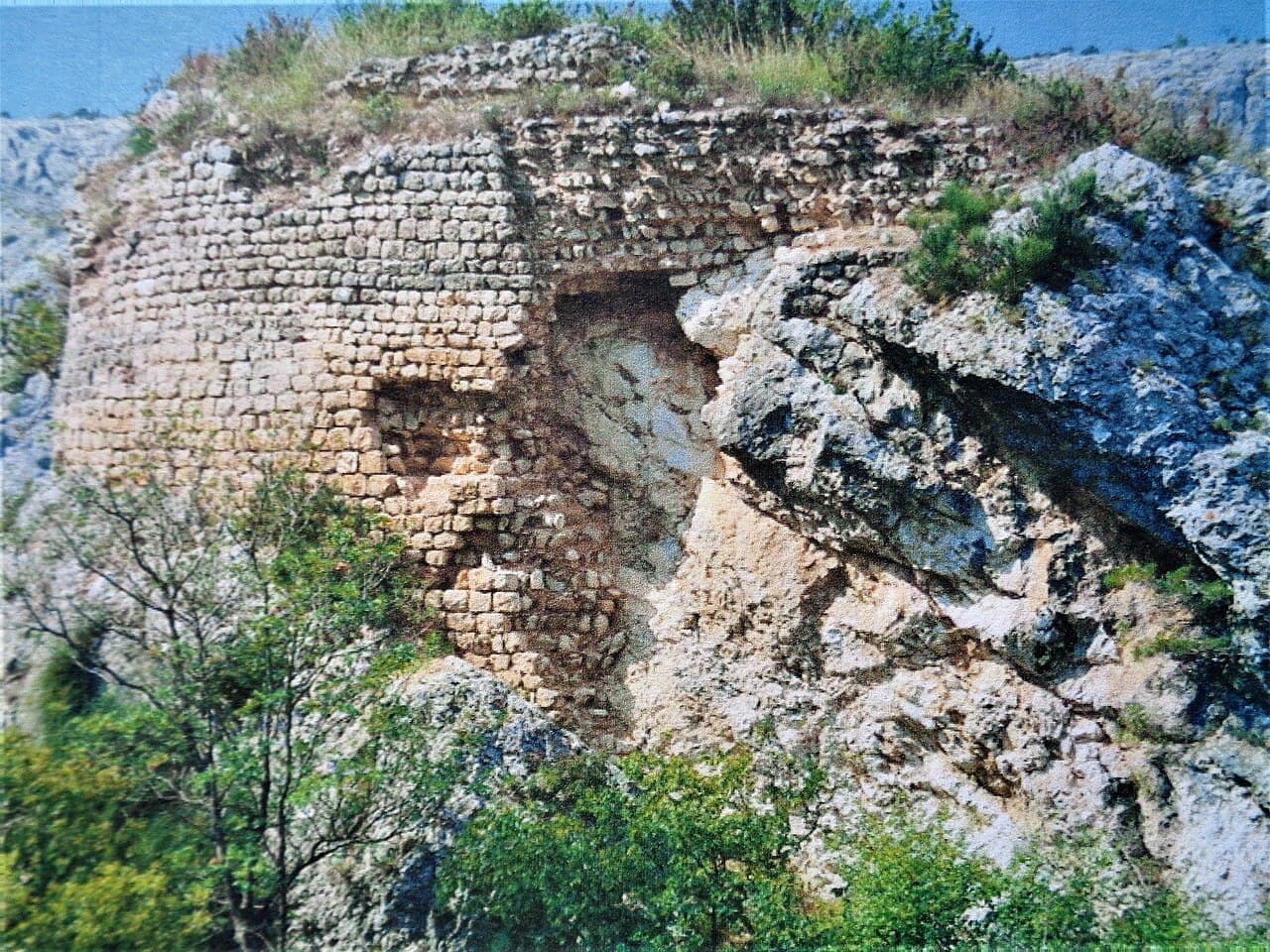
Kamičak Castle
Kamičak Castle is a striking example of a late medieval fortified structure perched atop a rocky hill overlooking the Krka River within the boundaries of Krka National Park, Croatia. The castle's ruins lie near the village of Brištane in the administrative area of the town of Drniš, Šibenik-Knin County. Its strategic location between Visovac Lake and the Roški Slap waterfall provided both natural defense and control over the surrounding landscape.
First documented in 1345, Kamičak Castle was confirmed as the property of Ivan II Nelipić by King Ludovik I of Angevin. The Nelipić family, a powerful Croatian noble lineage, is believed to have held the castle from at least the 11th century. Oral tradition associates the castle with Petar Svačić (Snačić), the last king of the independent Kingdom of Croatia, who died in the Battle of Gvozd Mountain in 1097. The Nelipić family is said to descend from the Svačić tribe, which adds historical significance to the site.
Medieval ownership and political significance
After the death of the last male Nelipić, Ivaniš Nelipić in 1434, the castle passed to his son-in-law Ivan VI Anž Frankopan. However, King Sigismund of Luxemburg did not recognize this succession and instead granted the castle to the Talovac noble family. Later, in 1445, Kamičak was given to Grgur Utješinović, who is noted for donating the nearby Visovac Island to the Franciscan Province of Bosna Srebrena. His son, Cardinal Juraj Utješinović, an influential figure born in Kamičak in 1482, later played a significant role in the region's religious and political affairs.
By the late 15th century, the castle came under the ownership of the Halapić brothers, who were involved in the election of King Vladislaus II Jagelović in 1490. Other notable figures associated with Kamičak include Marko Mišljenović, who served as Ban (Viceroy) of Croatia from 1506 to 1507.
Architectural features and strategic location
Kamičak Castle was constructed primarily in the 14th century and exemplifies the characteristics of a hill castle built for defense and control of the surrounding territory. Its position atop a steep rocky outcrop provided natural fortification, making it difficult to assault. The castle's layout included defensive walls, towers, and a courtyard, typical of medieval fortifications designed to withstand sieges.
The castle's proximity to the Krka River and its commanding view of the nearby Visovac Lake and Roški Slap waterfall underscored its role as a sentinel over important waterways and trade routes. Although much of the structure is now in ruins, archaeological remains indicate the presence of multiple defensive elements and residential quarters.
The fall and ruin of kamičak castle
The Ottoman Empire's expansion into the Balkans in the 15th and 16th centuries brought increasing military pressure on Croatian borderlands. Following the conquest of the Kingdom of Bosnia in 1463, Ottoman forces intensified their incursions. Kamičak Castle fell to the Ottomans in 1522 or 1523, marking the end of its strategic and residential use.
After its capture, the castle was deliberately ruined and abandoned, as it held little value for the Ottoman military administration. The site has remained in ruins ever since, serving as an archaeological testament to the turbulent history of the region and the shifting powers that shaped medieval Croatia.
Cultural heritage and current status
Today, Kamičak Castle is classified as archaeological ruins and is part of the protected area of Krka National Park. Its remains attract historians, archaeologists, and visitors interested in medieval Croatian history and architecture. The castle's dramatic setting on a cliff edge offers panoramic views and a tangible connection to the past.
Visitors to the region can explore the ruins and appreciate the castle's historical context within the broader narrative of Croatian noble families, medieval warfare, and Ottoman expansion. Although the castle no longer stands intact, its legacy endures through historical records, oral traditions, and its enduring presence in the landscape of Šibenik-Knin County.
Frequently asked questions (FAQ)
- What is the historical significance of Kamičak Castle?
- Kamičak Castle, dating back to the 15th century, played a crucial role in the defense of the region against Ottoman invasions. Its strategic position provided a vantage point for monitoring the surrounding areas and controlling trade routes, making it an important military stronghold in Croatian history.
- When was Kamičak Castle built?
- Kamičak Castle was constructed in the late 15th century, with its origins tracing back to the year 1474. The castle has undergone various renovations over the centuries, reflecting changes in architectural styles and defensive needs.
- Can I visit Kamičak Castle year-round?
- Yes, Kamičak Castle is open to visitors throughout the year. However, accessibility may vary depending on weather conditions, so it's advisable to check local updates before planning your visit.
- What are the opening hours for Kamičak Castle?
- Kamičak Castle typically opens to visitors from 9 AM to 5 PM. During the summer months, extended hours may be available, so it's best to verify the schedule prior to your visit.
- Is it possible to explore the castle grounds on my own?
- Yes, visitors can explore the castle grounds independently, taking in the stunning views and historical architecture. Guided tours may also be available for those who wish to learn more about the castle's history and significance.
- What nearby attractions can I visit when at Kamičak Castle?
- While visiting Kamičak Castle, you can also explore the charming town of Drniš, known for its historical sites and beautiful natural scenery. Additionally, the nearby Krka National Park offers breathtaking waterfalls and hiking opportunities, making it a great complement to your castle visit.
- How much does it cost to enter Kamičak Castle?
- The ticket prices for Kamičak Castle are quite reasonable, typically ranging from 20 to 50 Croatian Kuna, depending on age and group size. Children and students often receive discounts, making it an affordable option for families.
- When is the best time to visit Kamičak Castle?
- The best time to visit Kamičak Castle is during the spring and early autumn months when the weather is mild and pleasant. This allows for a comfortable exploration of the castle and its surroundings, as well as the chance to enjoy local festivals in Drniš.
- Is Kamičak Castle accessible for visitors with mobility challenges?
- The accessibility of Kamičak Castle may be limited due to its historical architecture and terrain. Visitors with mobility challenges are advised to contact the site in advance to inquire about specific accommodations and possible assistance during their visit.
Photo gallery

Information
Loading map...
Visitor reviews
No reviews yet. Been here? Write the first review and help other travelers!
Write the first reviewVisited this castle? Share your experience
Your review helps other travelers and adds first-hand knowledge to our encyclopedia.


