Someries Castle
Someries Castle stands as a remarkable example of a fortified manor house from the 15th century, located just south of Luton in Bedfordshire, England. Despite its name, the site was never a traditional military fortress but rather a grand residence designed to convey strength and status through its architecture and defensive features. Its proximity to the modern London Luton Airport juxtaposes the historical significance of the site with contemporary development.
The origins of the site trace back to William de Someries, who established a residence here in the medieval period. The current ruins date primarily to the time of Sir John Wenlock, who acquired the estate in 1430 and initiated construction of the manor house. Wenlock's vision was pioneering for England, as Someries Castle is considered one of the earliest examples of brick construction in the country, marking a significant departure from the more common stone or timber buildings of the era.
Architectural significance and construction
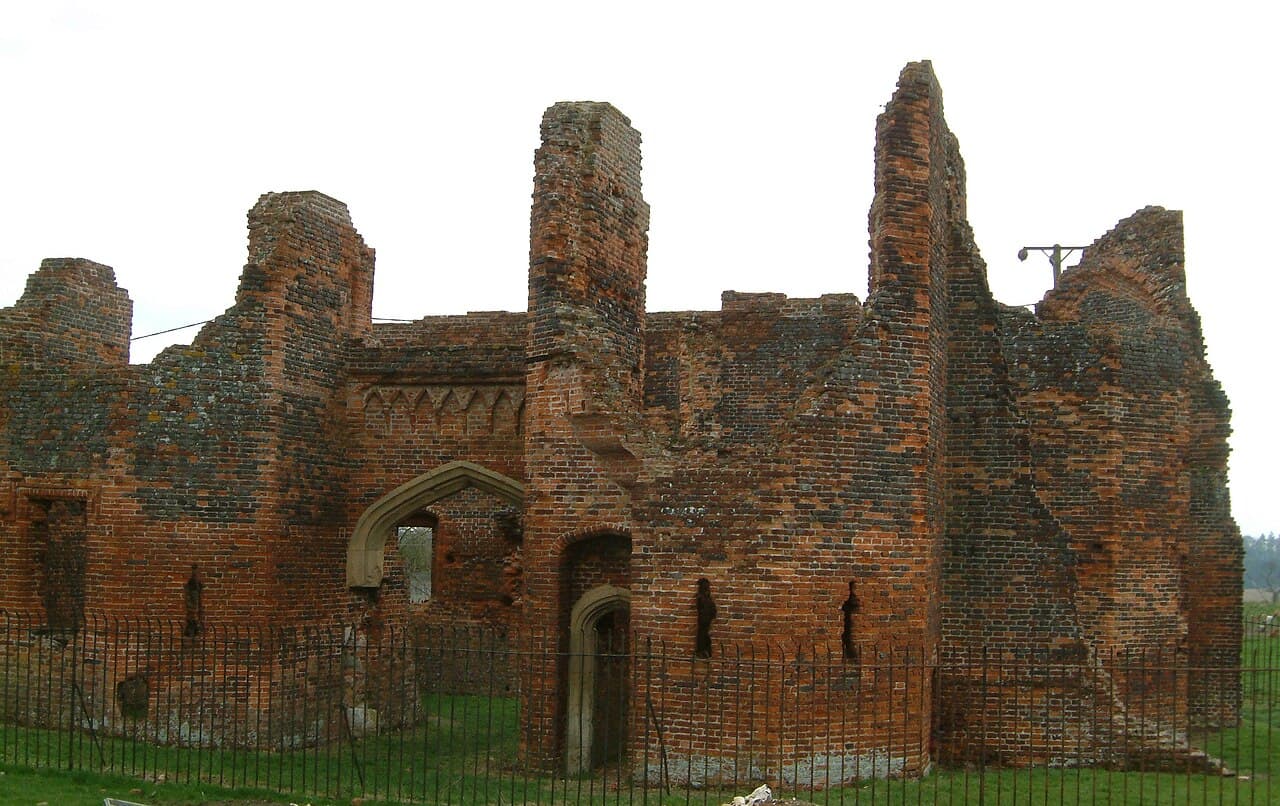
The manor house was designed as a fortified residence, incorporating elements typical of defensive architecture but primarily serving as a status symbol. The use of brickwork was innovative in England during the late medieval period, reflecting continental influences and the wealth of its owner. The surviving remains include the gatehouse, which uniquely housed a chapel and a lodge, showcasing the multifunctional nature of the complex.
The manor was constructed on relatively flat terrain at about 157 meters above sea level, surrounded by agricultural land. The layout included formal gardens, the earthworks of which are still visible today. These gardens were carefully planned in the 15th century and represent one of the earliest examples of designed landscapes associated with a manor house in England.
Unfinished ambitions and historical context
The construction of Someries Castle was never completed due to the untimely death of Sir John Wenlock at the Battle of Tewkesbury in 1471, a pivotal conflict in the Wars of the Roses. Wenlock’s death abruptly halted progress, leaving the manor partially finished. Ownership subsequently passed to the Rotheram family, who maintained the estate for some time.
Decline and partial demolition
By the 18th century, much of the manor had fallen into disrepair and was deliberately demolished. The bricks from the original structure were salvaged and repurposed in the construction of nearby farm buildings during the 19th century. This practical reuse reflects changing attitudes toward heritage and the economic considerations of the time.
The site’s earthworks, once thought to be remnants of an earlier manor, were later identified through archaeological study as the remains of the formal gardens laid out in the 15th century. These findings have enhanced understanding of the manor’s original grandeur and the lifestyle of its inhabitants.
Preservation and public access
Someries Castle is now a Scheduled Ancient Monument, recognized for its cultural and historical importance. The ruins, primarily the gatehouse with its chapel and lodge, remain standing and offer valuable insights into late medieval architecture and construction techniques. The site is freely accessible to the public, though it is somewhat secluded at the end of a dirt track near farm buildings, with the modern airport runway nearby.
In the early 21st century, preservation efforts included repairs that unfortunately caused some damage due to scaffolding installation in 2007. Nevertheless, the ruins continue to be a significant heritage site, drawing visitors interested in England’s architectural and feudal history.
Local legends and cultural impact
Local folklore surrounds Sir John Wenlock, whose spirit is said to haunt the ruins, linking the site’s dramatic historical narrative to enduring cultural stories. This legend enriches the visitor experience, blending tangible history with intangible heritage.
Architectural features and layout
The surviving brick walls of the gatehouse demonstrate the craftsmanship and design sensibility of the period. The inclusion of a chapel within the gatehouse is a distinctive feature, indicating the importance of private worship and the integration of religious spaces within residential fortifications.
The manor’s layout, including the formal gardens marked by earthworks, reflects the 15th-century trends in landscape design, emphasizing order and aesthetic appeal alongside functionality. These gardens would have complemented the manor’s status and offered a controlled natural environment for leisure and display.
Site environment and surroundings
Situated on flat agricultural land, the manor’s location was strategically chosen for both practicality and prestige. The elevation of approximately 157 meters provided a modest vantage point, while the surrounding fields supported the estate’s economic base. Today, the juxtaposition of the historic ruins with the nearby airport creates a unique contrast between past and present.
Frequently asked questions (FAQ)
- How do I get to Someries Castle in Luton?
- Someries Castle is located south of Luton city center, accessible via local roads leading to a dirt track near farm buildings. It is close to London Luton Airport, making it easy to visit by car or taxi.
- What is the historical significance of Someries Castle?
- Someries Castle is notable as one of England's earliest brick buildings and a fortified manor house from the 15th century. It reflects the transition in architecture and social status during the late medieval period.
- Can I visit Someries Castle for free?
- Yes, Someries Castle is freely accessible to the public. Visitors can explore the ruins and surrounding grounds without an entrance fee.
- When was Someries Castle built and by whom?
- The manor house was constructed beginning in 1430 by Sir John Wenlock, who initiated one of England's first brick-built fortified manor houses.
- Why is Someries Castle considered unique?
- Its use of brickwork during the 15th century was pioneering in England, and the manor's gatehouse included a chapel and lodge, showcasing multifunctional architecture uncommon in similar residences.
Photo gallery

Information
Loading map...
Visitor reviews
No reviews yet. Been here? Write the first review and help other travelers!
Write the first reviewVisited this castle? Share your experience
Your review helps other travelers and adds first-hand knowledge to our encyclopedia.