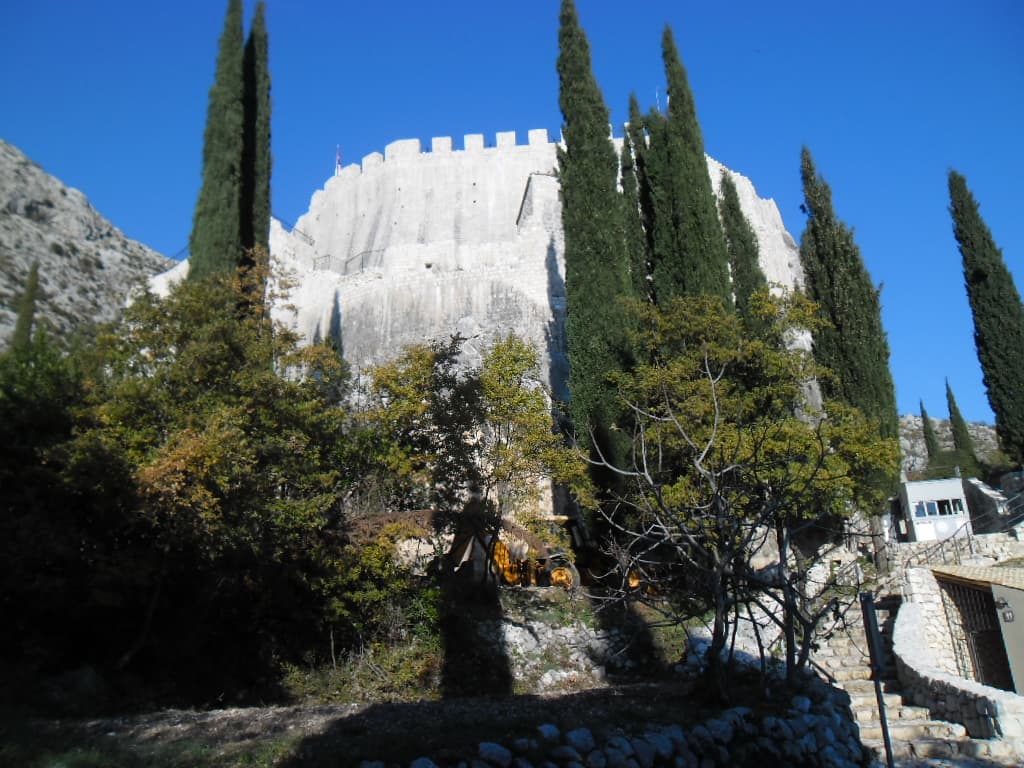
Sokol Castle is a significant medieval fortress situated in the village of Dunave within the Konavle region of Croatia. Perched under the eastern slopes of the Sniježnica mountain and near the border with Montenegro's Sutorina, the castle is also known locally as Sokol grad or Sokol kula, meaning 'Falcon castle'. This site holds a layered history, reflecting continuous human occupation from prehistoric times through the medieval period.
Archaeological significance and early history
The area around Sokol Castle has been inhabited since the Eneolithic period, with archaeological evidence of settlements from the Bronze Age and Iron Age. Notably, the site was associated with the Cetina culture, an important prehistoric cultural group in the region. Excavations, including work by the renowned archaeologist Arthur J. Evans, have uncovered artifacts and structural remains, although Evans did not publish comprehensive findings. Systematic archaeological surveys have been ongoing since the 1970s, revealing the site's long-standing human presence.
During Roman times, the location gained strategic importance as part of the Byzantine limes, serving as a defensive frontier. The fortress's position allowed control over key routes and protection of the region from incursions.
Medieval construction and historical role
The exact construction date of the medieval fortress known as Fort Sokol remains uncertain. The first documented mention of the castle dates back to 1373. It appears again in historical records in 1391 during the donation of the Konavle region by the Sanković family to the Republic of Ragusa (Dubrovnik). From this point, the fortress became a key military stronghold under Ragusan control.
The castle was garrisoned by troops loyal to Dubrovnik and commanded by a member of the local gentry, serving as a defensive bulwark protecting the southern borders of the republic. Its architecture reflects typical late-medieval fortress design, adapted to the rugged terrain of the region.
Architectural features
Sokol Castle is classified as a bastioned fortress, a style characterized by angular bastions designed to withstand artillery attacks, which became prominent in the late medieval and early modern periods. The fortress is built primarily of local stone, with defensive walls, towers, and a central courtyard. Its elevated position provided commanding views over the surrounding landscape, crucial for early warning and defense.
Later history and decline
Following the Cretan War (1645–1669), the military significance of Sokol Castle diminished. The shifting political and military landscape, including changes in warfare technology and regional power dynamics, rendered the fortress obsolete. By 1672, the castle was abandoned and fell into disuse.
Despite its abandonment, the site remained culturally important. It houses a medieval stećak necropolis, a collection of distinctive medieval tombstones unique to the region, and a Glagolitic marble inscription, highlighting the area's historical literacy and religious heritage.
Preservation and current status
Today, Sokol Castle is a protected archaeological site. Preservation efforts focus on maintaining the ruins and facilitating further research. The castle's remains offer valuable insights into the region's complex history, from prehistoric times through the Byzantine and medieval periods to the early modern era.
Visitors to the site can explore the ruins and appreciate the strategic location that once guarded the southern approaches to the Republic of Ragusa. The castle's cultural and historical layers make it a significant landmark in Croatian heritage.
Frequently asked questions (FAQ)
- When was Sokol Castle first documented?
- Sokol Castle was first mentioned in historical records in 1373, with earlier archaeological evidence of habitation dating back to prehistoric times.
- What cultures inhabited the site before the medieval period?
- The site was inhabited by the Eneolithic, Bronze Age, and Iron Age cultures, notably the Cetina culture, and later was part of the Roman and Byzantine defensive frontier.
- What is the architectural style of Sokol Castle?
- Sokol Castle is a bastioned fortress, featuring defensive walls and angular bastions typical of late-medieval military architecture.
- Why was Sokol Castle abandoned?
- After the Cretan War (1645–1669), the castle lost its military importance and was abandoned by 1672 due to changes in warfare and regional politics.
- Can visitors access the castle ruins today?
- Yes, Sokol Castle is a protected archaeological site open to visitors who wish to explore its ruins and learn about its historical significance.
Photo gallery

Information
Current owner
State museum
Loading map...
Visitor reviews
No reviews yet. Been here? Write the first review and help other travelers!
Write the first reviewVisited this castle? Share your experience
Your review helps other travelers and adds first-hand knowledge to our encyclopedia.



