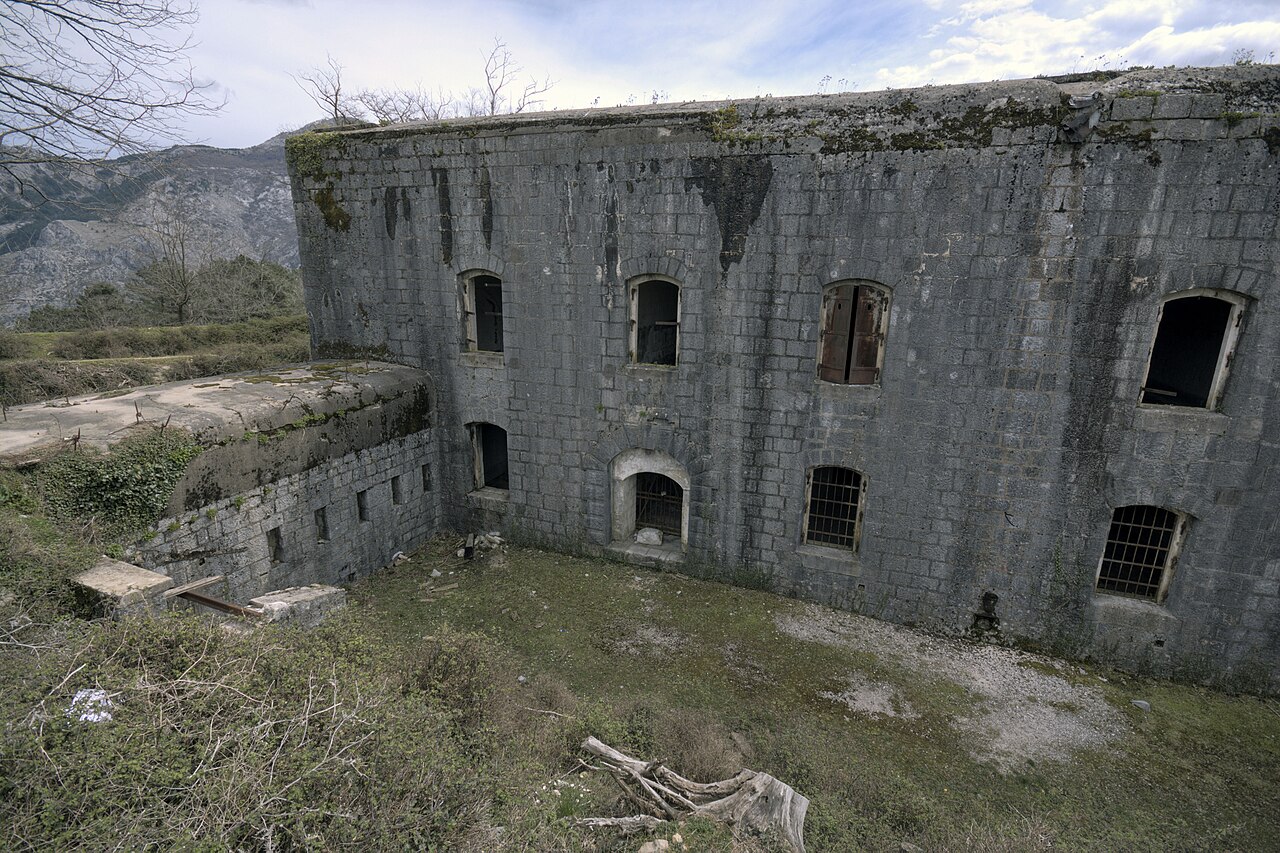
Mamula Fortress
Mamula Fortress stands sentinel on Lastavica Island, a small, uninhabited isle at the entrance to the breathtaking Boka Bay in Montenegro. Known also simply as Mamula, this fortress was constructed in the late 19th century under the direction of Austrian Admiral Lazar Mamula. Its primary strategic purpose was to guard the bay against enemy naval forces, controlling access to one of the most beautiful and historically significant natural harbors in the Adriatic Sea.
The fortress's imposing silhouette, with its thick stone walls and bastions, reflects the military architectural style typical of the Austro-Hungarian Empire's coastal defenses. Despite its formidable appearance, Mamula Fortress never engaged in battle, as no cannon fire was ever recorded from its artillery positions. Its isolated location and robust construction made it an ideal military installation, but also lent it a reputation as a forbidding and mysterious place.
Architectural features and strategic design
Mamula Fortress is a classic example of a coastal fortress designed to withstand naval attacks and to control maritime traffic. The fort is roughly oval-shaped, encompassing a central courtyard surrounded by thick stone walls punctuated with artillery platforms and defensive towers. Its design incorporates bastions and casemates that housed cannon emplacements, enabling defenders to cover all approaches by sea.
The fortress's construction utilized local stone and traditional masonry techniques, resulting in a robust structure that has endured the elements for over a century. Inside the walls, remnants of prison cells, storerooms, and living quarters can still be explored, offering insight into the daily life of its garrison. Notable features include a historic well and steep stone staircases that connect different levels of the fortification.
Historical roles through the 20th century
World wars and concentration camp
During both World War I and World War II, Mamula Fortress was repurposed as a concentration camp and prison. Its remote location and formidable defenses made it a grim detention site. Prisoners held here endured harsh conditions, and the fort's history is marked by these dark chapters. The use of Mamula as a prison camp reflects the broader military and political turmoil of the region during the early 20th century.
Post-war and modern status
After the wars, the fortress fell into disuse but remained a significant cultural monument. Despite proposals to develop Mamula into a tourist resort or exclusive site, these plans have yet to materialize fully. The fortress remains largely unused, preserved in a state that balances between ruin and restoration. It continues to attract visitors interested in its history, architecture, and natural surroundings.
Natural environment and tourism
The island of Lastavica is surrounded by crystal-clear, blue waters, making it a favored destination for tourists seeking both history and natural beauty. The fortress is accessible by boat or kayak from nearby Herceg Novi, located just 3.5 nautical miles away. Guided tours in summer offer visitors a chance to explore Mamula alongside nearby attractions such as Rose, Zanjic Beach, and the Blue Cave.
Visitors often enjoy snorkeling and diving in the transparent waters around the island, where underwater visibility is excellent. Adventurous travelers sometimes camp or picnic on the island, experiencing the solitude and atmosphere of this historic site firsthand. The island's flora and fauna, including wild rabbits and seabirds, contribute to its unique charm.
Cultural significance and future prospects
Mamula Fortress holds a special place in Montenegro's cultural heritage as a symbol of the Austro-Hungarian military presence and the region's turbulent history. Its evocative ruins and strategic location have made it a popular site for filming movies and survival shows, highlighting its dramatic and isolated character.
While local opinions vary on the development of the fortress, ongoing interest from investors suggests that Mamula may see revitalization efforts in the future. Until then, it remains a protected monument, watched over by nature and serving as a poignant reminder of the past amidst the stunning backdrop of Boka Bay.
Frequently asked questions (FAQ)
- How do I get to Mamula Fortress from Herceg Novi?
- Mamula Fortress is accessible by boat or kayak from Herceg Novi, which is approximately 3.5 nautical miles away. During the summer, guided tours are available that include transport to the island and nearby attractions.
- What was the primary purpose of Mamula Fortress?
- The fortress was built to protect the entrance to Boka Bay and prevent enemy ships from entering. Despite its military design, it never fired a shot in combat.
- Can I explore the inside of Mamula Fortress?
- Yes, visitors can explore the ruins of the fortress, including old prison cells, the central courtyard, and remaining defensive structures. Some parts have steep stairs and uneven terrain, so caution is advised.
- Is Mamula Fortress suitable for swimming and snorkeling?
- The island is surrounded by clear, blue waters ideal for swimming and snorkeling. Visitors often bring goggles to enjoy the underwater visibility around the island.
- What is the historical significance of Mamula Fortress during the World Wars?
- Mamula served as a concentration camp and prison during both World War I and World War II, reflecting its strategic isolation and use for detaining prisoners under harsh conditions.
Information
Loading map...
Visitor reviews
No reviews yet. Been here? Write the first review and help other travelers!
Write the first reviewVisited this castle? Share your experience
Your review helps other travelers and adds first-hand knowledge to our encyclopedia.