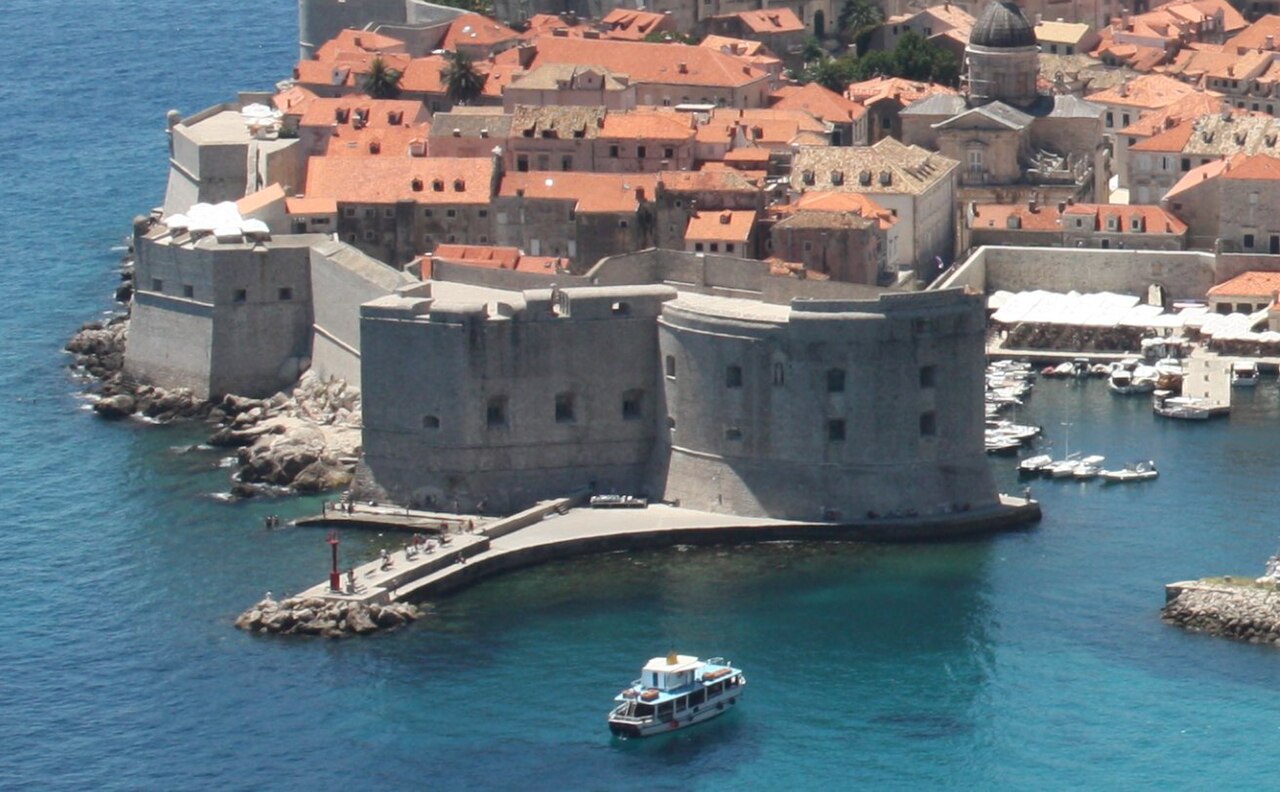
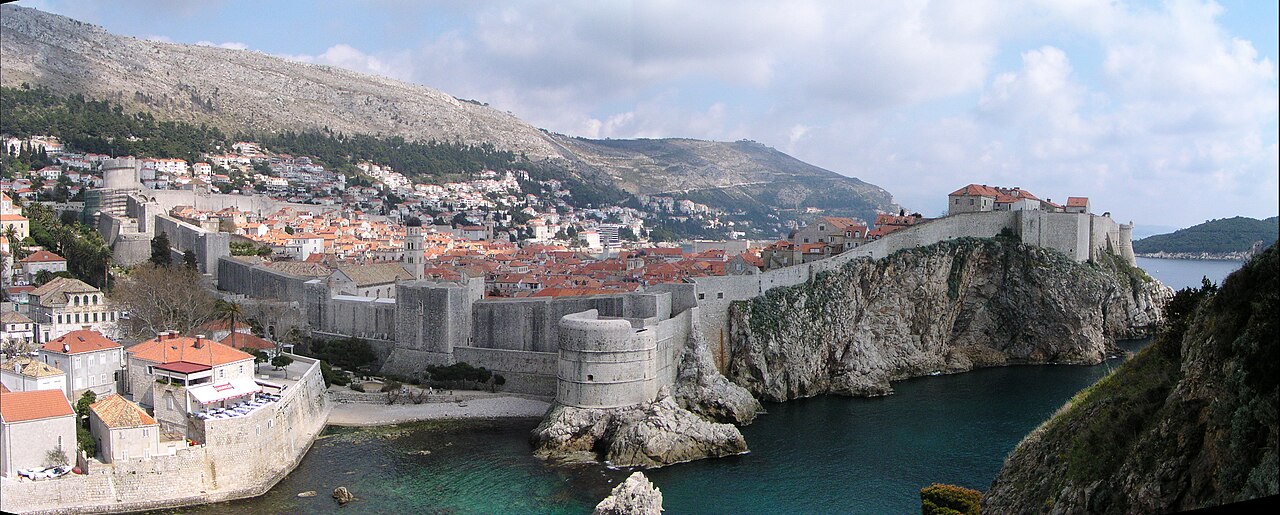
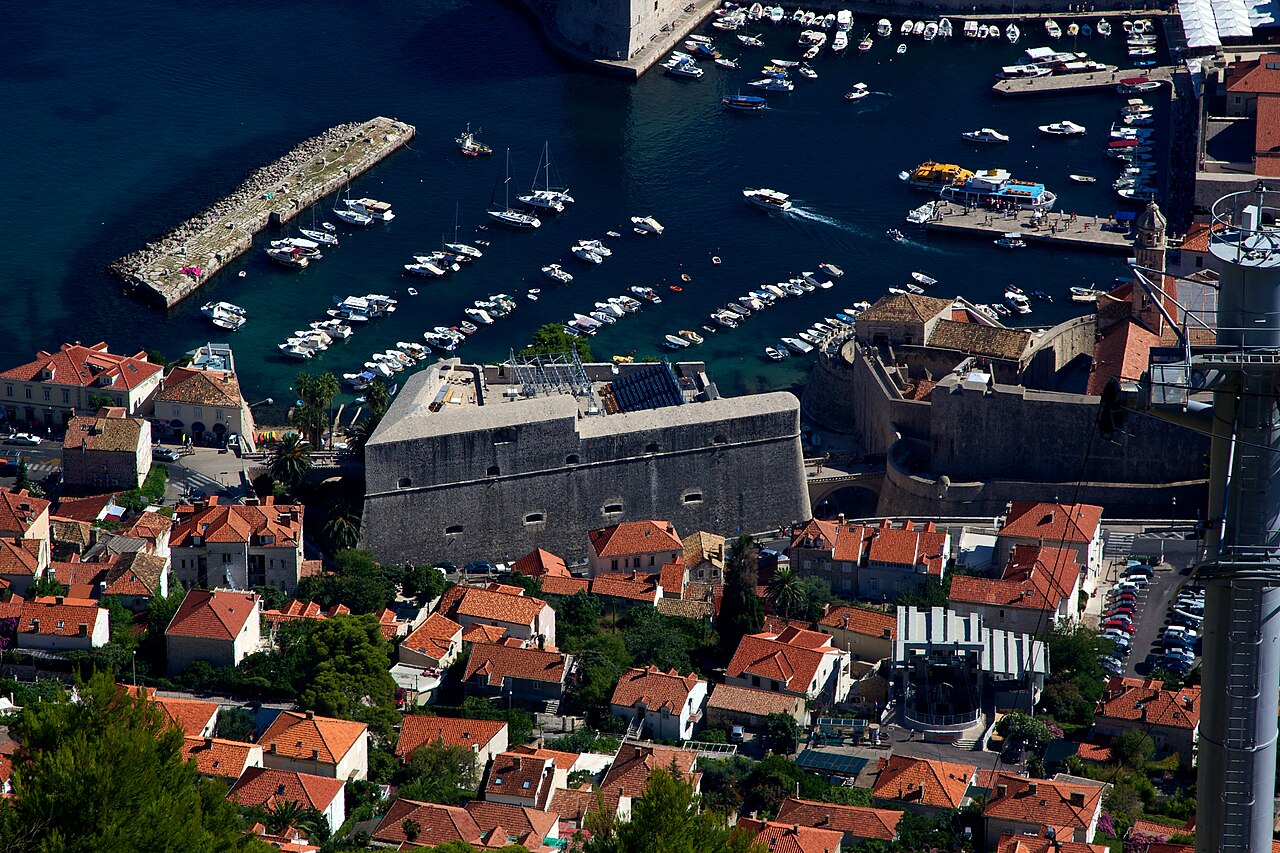
Fort Royal is a prominent fortress located on the highest point of Lokrum island, just off the coast of Dubrovnik, Croatia. Constructed during the early 19th century, this historic fortification was originally built by the French military in 1806 amidst the Napoleonic Wars, when the region was under French occupation. Its strategic position atop the island provided a commanding view over the Adriatic Sea and the surrounding coastline, serving as a crucial defensive stronghold to protect the important maritime city of Dubrovnik.
The fortress was later renamed Maximilian's Tower by the Austrian Empire after they took control of the area following the fall of Napoleon. The construction of Fort Royal was completed around 1835, reflecting the military architectural styles and defensive needs of the early modern period. The fort's design incorporates thick stone walls, bastioned defenses, and artillery placements that were typical for coastal fortresses of the time, enabling it to withstand naval attacks and sieges.
Historical context and strategic importance
Fort Royal's establishment was part of a broader effort by the French to consolidate their control over Dalmatia during the turbulent Napoleonic era. The fortress played a key role in securing the maritime approaches to Dubrovnik, which had been an important trading and naval hub since the Middle Ages. The fort's elevated position on Lokrum island allowed for early detection of enemy ships and provided a formidable deterrent against potential invasions.
After the Congress of Vienna and the subsequent reorganization of European territories, the Austrian Empire took over the fortress and maintained it as a military installation. The Austrians enhanced the fortifications and renamed it Maximilian's Tower, reflecting their influence and the continuing strategic value of the site through the 19th century.
Architectural features and design
The design of Fort Royal is characteristic of early 19th-century military architecture with its robust stone construction and bastioned layout. The fortress features thick defensive walls built to resist cannon fire, with angled bastions that allowed defenders to cover all approaches with overlapping fields of fire. The walls encircle a central courtyard and include various chambers for troops, ammunition storage, and command posts.
The fort's location on a hilltop demanded careful engineering to adapt to the rocky terrain of Lokrum island. Access to the fort was controlled by a single main gate, fortified to withstand assault. The interior spaces were designed to support a garrison capable of sustained defense, including provisions for artillery emplacements facing the sea to repel naval threats.
Defensive structures
- Bastions: Angular projections from the walls that allowed defenders to fire along the faces of the walls and cover blind spots.
- Thick stone walls: Constructed to absorb and deflect cannon fire, typical of post-medieval fortifications.
- Artillery platforms: Designed to mount cannons with clear lines of fire over the sea approaches.
- Moat and ditch: Though limited by the island terrain, defensive ditches helped slow attackers.
Later history and current status
Following its military use in the 19th century, Fort Royal gradually lost its strategic importance with advances in military technology and changes in political control. Today, it stands as a well-preserved historical monument and a popular tourist destination on Lokrum island.
Visitors to Fort Royal can explore the fortress ruins, enjoy panoramic views of Dubrovnik and the Adriatic Sea, and learn about the site's role in the region's complex history. The fort's preservation allows insight into Napoleonic-era fortification techniques and the military history of Dalmatia.
Visiting Fort Royal
Access to Fort Royal is typically via a hike from the main part of Lokrum island, which itself is reachable by boat from Dubrovnik's Old Town harbor. The walk to the fortress involves ascending rocky paths, making sturdy footwear advisable. The site is open to visitors year-round, offering a unique blend of natural beauty and historical architecture.
Frequently asked questions
- When was Fort Royal built? Fort Royal was built by the French in 1806 during their occupation of the region and completed around 1835 under Austrian control.
- What is the architectural style of Fort Royal? The fortress reflects early 19th-century military architecture with thick stone walls and bastioned defenses typical of the period.
- How do I get to Fort Royal? Visitors reach Fort Royal by boat to Lokrum island from Dubrovnik, followed by a hike to the fortress on the island's highest point.
- Is Fort Royal open to the public? Yes, the fortress is accessible to visitors year-round as part of Lokrum island's tourist attractions.
- What can I see from Fort Royal? From the fort's elevated position, visitors enjoy panoramic views of Dubrovnik, the Adriatic Sea, and surrounding islands.
- Are there guided tours available? Guided tours of Lokrum island often include Fort Royal, providing historical context and architectural insights.
Information
Website
Visit websiteSources & official resources
Verify the information above using these authoritative references.
Loading map...
Visitor reviews
No reviews yet. Been here? Write the first review and help other travelers!
Write the first reviewVisited this castle? Share your experience
Your review helps other travelers and adds first-hand knowledge to our encyclopedia.