Soběslav Castle
Soběslav Castle stands as a significant hill castle in the historic town of Soběslav, Czechia. Established likely in the 13th century by the influential Rožmberk family, this fortress has witnessed centuries of regional power struggles and architectural evolution. The castle’s first documented mention dates to 1385, marking the beginning of its recorded history and its enduring presence in the Bohemian landscape.
The strategic importance of Soběslav Castle in medieval Bohemia
During the late medieval period, Soběslav Castle was a focal point in the turbulent conflicts that shaped the region. Its location within the town’s fortifications gave it a commanding defensive role. Notably, the castle served as a prison for King Václav IV after his capture by Jindřich III of Rožmberk, reflecting the intense noble rivalries of the era.
The castle’s military significance was further underscored during the Hussite Wars in the early 15th century. In 1421, it successfully resisted an assault led by the famed military leader Jan Žižka. Again in 1435, the fortress withstood a siege by the Taborites, a radical Hussite faction. Despite the castle’s resilience, the adjacent town suffered destruction in both attacks. While the fortress endured, it likely sustained damage during subsequent conflicts, though detailed records are scarce.
Political upheaval and architectural adaptation in the 15th and 17th centuries
The mid-15th century brought further unrest. In 1467, the town’s fortifications, including the castle, underwent repairs following civil strife. The subsequent civil war in 1468 saw Jan II of Rožmberk align with the Zelená Hora faction, resulting in the temporary loss of the town, although the Rožmberk family retained control of the castle. By 1481, the family had restored their authority over the town, reaffirming their regional dominance.
Between 1613 and 1615, the castle underwent a significant functional transformation. Acting on the wishes of Petr Vok of Rožmberk, Jan Jiří of Švamberk converted part of the castle into a Czech school, marking a shift from military to educational use. This adaptation reflects the broader Renaissance influence on castle architecture and usage, emphasizing civic and cultural roles alongside defense.
Post-medieval use and preservation efforts
Following the devastation of the Thirty Years’ War, Soběslav Castle’s military importance diminished. It was repurposed for practical functions, initially as a granary and later as a brewery malt house, with operations continuing until 1951. This adaptive reuse underscores the castle’s integration into the economic life of the town beyond its original defensive purpose.
The castle experienced decline during the 20th century but became a focus of restoration beginning in 2001. By September 2010, the northern section was successfully converted into a municipal library, blending historic preservation with contemporary community use. Since 1963, Soběslav Castle has been protected as a cultural monument, ensuring its legacy and continued conservation.
Architectural features and layout
Integration with town fortifications
Soběslav Castle is integrally connected to the town’s defensive walls, forming a crucial part of the overall fortification system. Situated in the northwest corner of the historic center at an elevation of 410 meters, the castle’s design reflects both medieval and Renaissance architectural elements.
Defensive structures
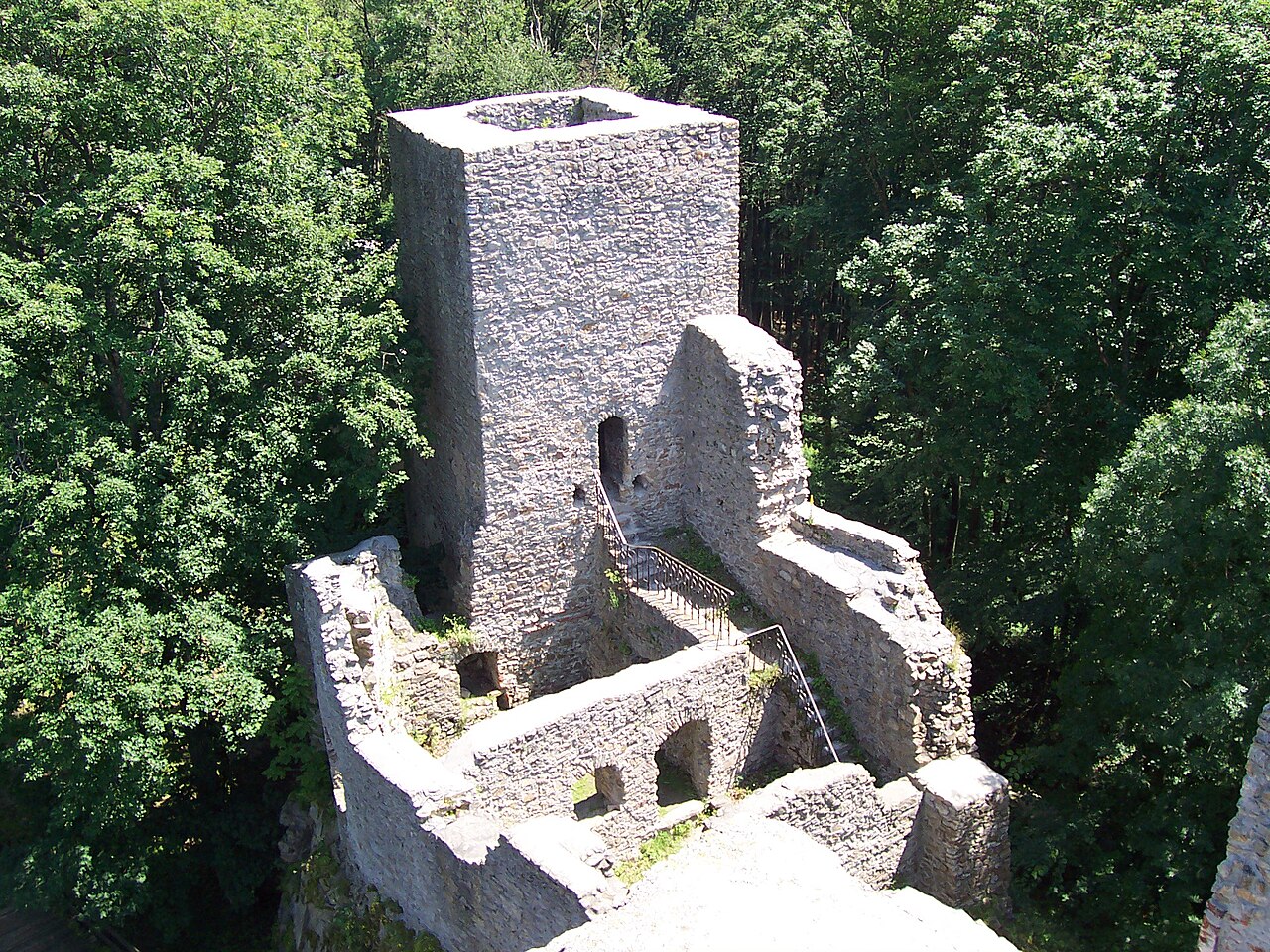
A prominent feature is the three-quarter round tower with a flat rear wall, likely constructed after the mid-15th century. This tower, accessible through a stone portal shaped like a saddle, provided a strategic vantage point for surveillance and defense. The saddle-shaped portal, with its curved arch design, enhanced both structural stability and defensive capability.
Residential and functional buildings
Adjacent to the northern wall lies a rectangular palace featuring vaulted cellar spaces with barrel vaults—a hallmark of medieval architecture—while the upper floors have flat ceilings. The first floor contains a spacious hall accessible via a preserved portal from a gallery on the courtyard side, alongside a smaller residential chamber dating to the late 14th century. These spaces indicate areas designed for noble residence and indoor activities.
On the southern side, a Renaissance-era building originally constructed as a school underwent several reconstructions over the centuries. This building reflects the castle’s adaptive reuse and evolving functions from the early 17th century onward.
Historical significance and cultural heritage
Soběslav Castle embodies the layered history of Bohemia, from its origins as a noble fortress through its role in the Hussite Wars and later civil conflicts. Its architectural evolution mirrors broader European trends, transitioning from a medieval stronghold to a Renaissance civic institution and eventually to a modern cultural venue.
The castle’s preservation as a protected cultural monument underscores its importance to Czech heritage. Its current use as a municipal library and cultural site ensures that Soběslav Castle remains a living part of the community, bridging past and present.
Frequently asked questions (FAQ)
- How do I visit Soběslav Castle?
- Soběslav Castle is open daily from 10:00 to 16:00. Visitors can explore the castle grounds and visit the municipal library housed within the northern section free of charge.
- What is the historical significance of Soběslav Castle?
- Soběslav Castle played a key role in regional conflicts such as the Hussite Wars and served as a prison for King Václav IV. It reflects the turbulent history of Bohemia and noble power struggles.
- Can I see the original medieval architecture at Soběslav Castle?
- Yes, the castle retains important medieval architectural features, including a three-quarter round tower with a saddle-shaped portal, vaulted cellars, and a late 14th-century residential chamber.
- Is Soběslav Castle accessible for visitors with disabilities?
- While efforts have been made to improve accessibility, some areas of the castle, especially older sections with uneven surfaces and stairs, may be challenging for visitors with mobility impairments.
- When is the best time to visit Soběslav Castle?
- The castle is open year-round, but spring and summer offer the best weather for exploring both the castle and the historic town of Soběslav.
- Are there any guided tours available at Soběslav Castle?
- Guided tours may be available during peak tourist seasons or by special arrangement. Visitors should check with the municipal office or local tourist information for current offerings.
Information
Opening hours
10:00-16:00, daily
Ticket prices
Free
Current owner
Municipality
Loading map...
Visitor reviews
No reviews yet. Been here? Write the first review and help other travelers!
Write the first reviewVisited this castle? Share your experience
Your review helps other travelers and adds first-hand knowledge to our encyclopedia.