Kozí Hrádek
Kozí hrádek, literally meaning 'little goat castle' and historically known as Ziegenburg in German, is a ruined medieval Gothic castle located in the South Bohemian Region of the Czech Republic. This castle holds significant historical importance as the refuge of the Bohemian religious reformer Jan Hus during the years 1413 to 1414. Its story is deeply intertwined with the religious and political upheavals of the early 15th century in Bohemia.
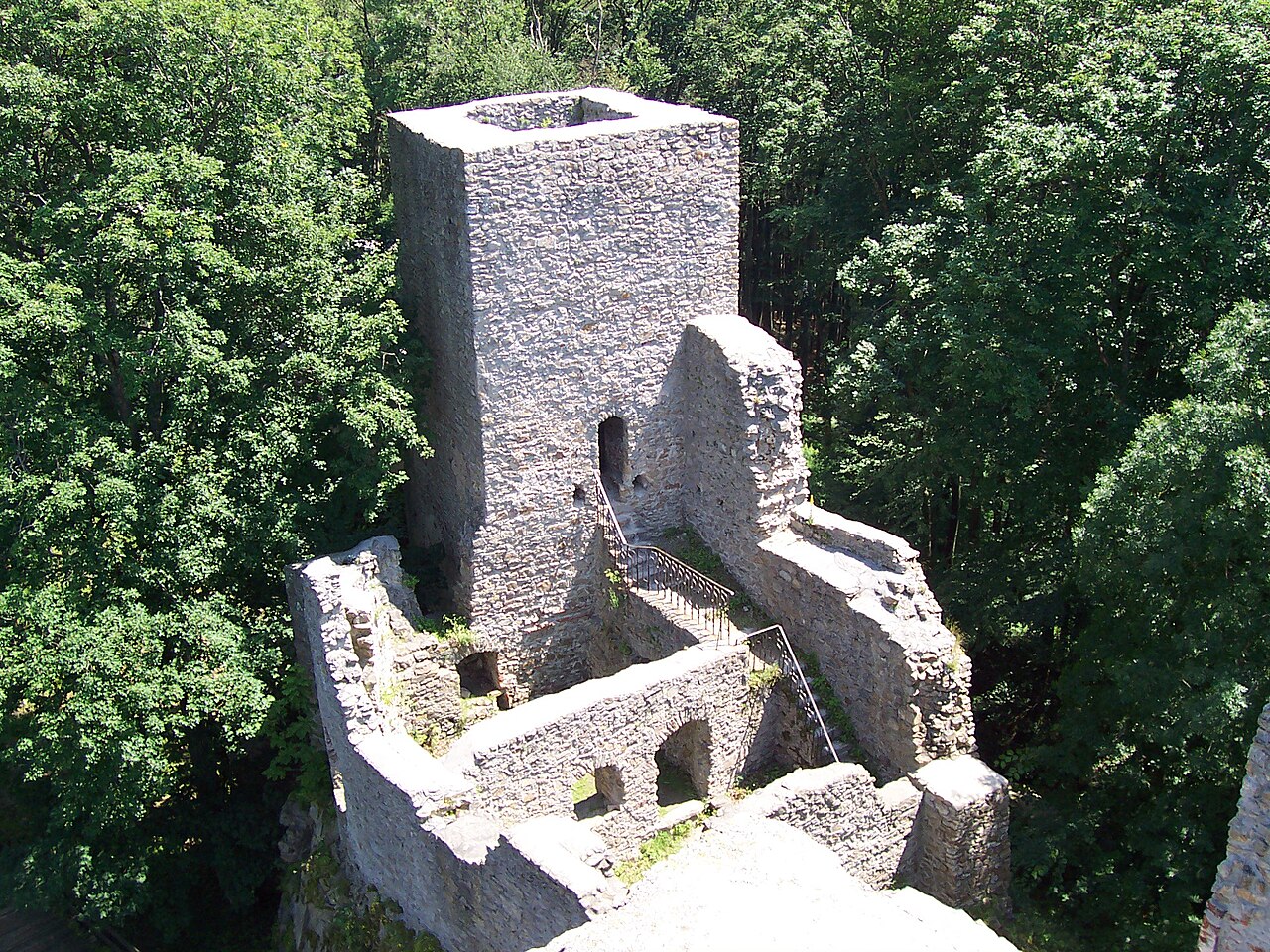
Constructed in the 14th century, Kozí hrádek was built in the Gothic architectural style typical of the Late Medieval period. The castle's strategic location and design reflect the defensive needs of the time, featuring characteristic Gothic elements such as pointed arches, ribbed vaults, and robust stone walls. Although now in ruins, the remnants of its walls, towers, and fortifications reveal the castle's original layout and defensive capabilities.
Historical significance and Jan Hus's refuge
The castle is most renowned for its role as a sanctuary for Jan Hus, a key figure in the Bohemian Reformation. Hus sought refuge at Kozí hrádek during a turbulent period when his religious teachings challenged the Catholic Church's authority. His stay at the castle from 1413 to 1414 was a critical moment in his life before he was summoned to the Council of Constance, where he was ultimately condemned and executed.
Kozí hrádek’s association with Jan Hus elevates its cultural and historical value, marking it as a symbol of early Protestant reform and resistance against ecclesiastical power. The castle's role as a refuge underscores its importance beyond mere military function, serving as a place of political and religious significance.
Destruction and archaeological excavation
During the Hussite Wars—a series of conflicts from 1419 to 1434 rooted in religious and social upheaval—the castle suffered severe damage. In 1438, Kozí hrádek was destroyed by fire amid these wars and subsequently abandoned. The castle fell into ruin, with its stone structures gradually deteriorating over the centuries.
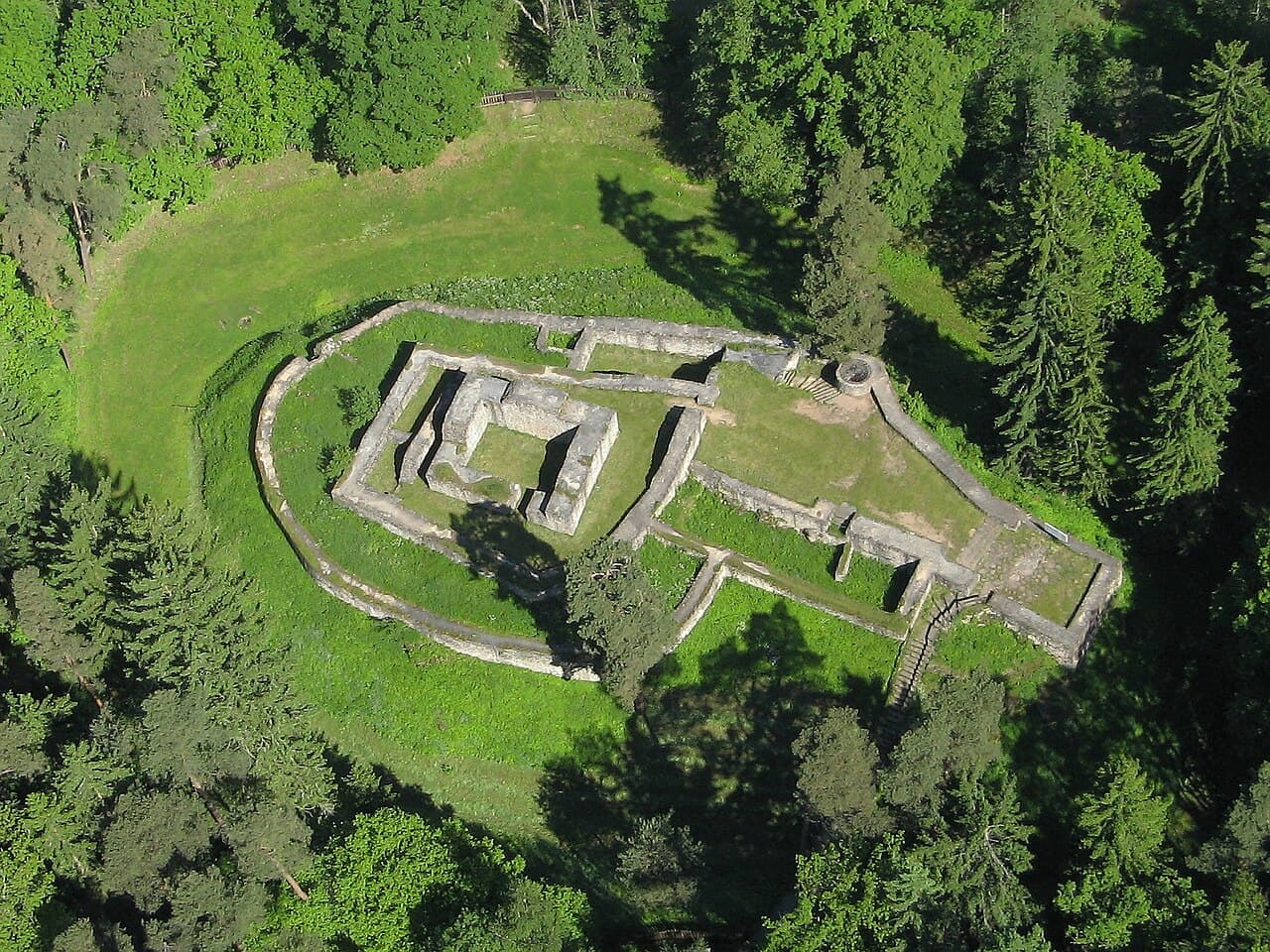
Modern archaeological excavations have extensively studied the site, uncovering foundations, defensive structures, and artifacts that shed light on the castle's construction, layout, and daily life during its occupation. These excavations have been crucial in preserving Kozí hrádek as a national cultural monument, ensuring its protection and enabling public education about its historical context.
Architectural features and layout
The castle was originally designed as a hill castle, taking advantage of natural elevations for defense. Its layout included a keep or donjon, curtain walls, and several towers that provided vantage points over the surrounding landscape. The Gothic style is evident in the pointed windows and doorways, as well as in the masonry techniques used.
Though much of the superstructure is lost, the remaining ruins allow visitors to appreciate the castle's medieval defensive architecture. The site also includes remnants of living quarters, a courtyard, and possibly a chapel, which were typical components of castles serving both military and residential functions during the Late Medieval period.
Present-day status and visitor information
Today, Kozí hrádek stands as an archaeological ruin protected under Czech heritage laws. The site is accessible to visitors interested in medieval history, architecture, and the legacy of Jan Hus. Interpretive signage and guided tours provide insights into the castle's past and its role in Bohemian history.
The preservation efforts focus on maintaining the structural remains and preventing further decay. Kozí hrádek's ruins offer a tangible connection to the Late Medieval period and the turbulent era of the Hussite Wars, making it a valuable destination for scholars and tourists alike.
Frequently asked questions (FAQ)
- When was Kozí hrádek castle built?
- Kozí hrádek castle was built in the 14th century during the Late Medieval period, featuring Gothic architectural elements.
- What is the historical significance of Kozí hrádek?
- The castle is best known as the refuge of the Bohemian religious reformer Jan Hus from 1413 to 1414 before the Hussite Wars.
- What happened to Kozí hrádek during the Hussite Wars?
- Kozí hrádek was destroyed by fire in 1438 during the Hussite Wars and subsequently abandoned, leading to its current ruined state.
- Can visitors explore Kozí hrádek today?
- Yes, Kozí hrádek is an archaeological ruin open to visitors, with archaeological excavations revealing its medieval layout and history.
- What architectural style characterizes Kozí hrádek?
- Kozí hrádek is characterized by Gothic architecture, typical of the Late Medieval period when it was constructed.
Photo gallery

Information
Loading map...
Visitor reviews
No reviews yet. Been here? Write the first review and help other travelers!
Write the first reviewVisited this castle? Share your experience
Your review helps other travelers and adds first-hand knowledge to our encyclopedia.