Smolensk Kremlin
The Smolensk Kremlin (Russian: Смоленский кремль) stands as a monumental bastioned fortress in the city of Smolensk, located in western Russia. Constructed primarily between 1595 and 1602 during the reigns of Tsars Feodor I and Boris Godunov, this fortress was designed to protect the Russian state from western invasions. The fortress walls stretch approximately 6.5 kilometres (4 miles), although less than half of this extensive perimeter remains preserved today.
Supervised by the renowned architect Fyodor Kon, the Smolensk Kremlin is a prime example of Renaissance military architecture adapted to Russian needs, featuring massive bastions and thick defensive walls that incorporate both traditional Russian and Western European fortification techniques. This combination was essential for withstanding artillery sieges during the turbulent late 16th and early 17th centuries.
Historical context and strategic importance
Smolensk has historically been a key fortress city due to its position on the western frontier of Russia, serving as a gateway between Russia and European powers. The Kremlin's construction was part of a broader effort to strengthen Russia's western defenses after the Livonian War and amid ongoing conflicts with the Polish-Lithuanian Commonwealth and other neighbors.
The fortress played a crucial role during several significant military engagements, including the Siege of Smolensk (1609–1611) during the Polish-Muscovite War and later conflicts in the 17th and 18th centuries. Its robust fortifications enabled defenders to resist prolonged sieges, although the city did change hands multiple times due to the shifting tides of war.
Architectural features and design
Bastioned walls and towers
The Smolensk Kremlin is characterized by its bastioned fortifications, a style that was innovative for Russia at the time. The fortress walls are punctuated by numerous bastions—angular protrusions designed to allow defenders to cover adjacent walls with crossfire and to better absorb and deflect cannon fire.
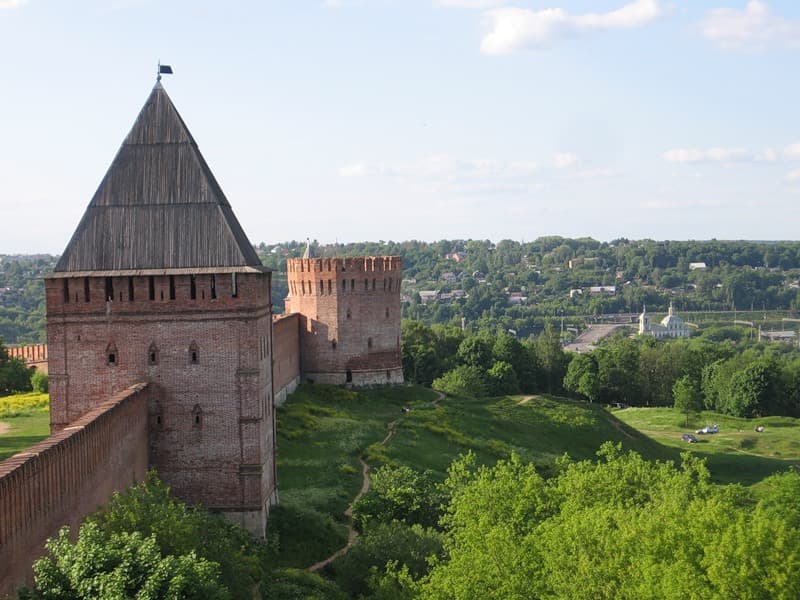
The walls themselves are constructed from thick brick and stone, reaching heights of up to 19 meters in some sections. The bastions vary in size and shape, adapted to the terrain and defensive needs. Several towers remain, including gate towers that once controlled access to the city and served as observation points.
Internal structures and layout
Inside the Kremlin walls, there was a complex network of military and administrative buildings, including barracks, armories, and command centers. While many structures have not survived intact, archaeological studies have revealed foundations and remnants that provide insight into the fortress's operational organization.
The Kremlin's layout reflects Renaissance military engineering principles, with a focus on maximizing defensive coverage and minimizing blind spots. The walls form an irregular polygon, adapting to the topography of Smolensk's central hill.
Preservation and cultural significance
Today, the Smolensk Kremlin is recognized as a federally protected architectural monument in Russia. Although only a portion of the original walls remain, ongoing preservation efforts aim to maintain and restore key sections to safeguard this historical heritage.
The fortress is a symbol of Smolensk's resilience and historical role as a frontier city. It attracts historians, architects, and tourists interested in military architecture and Russian history. The Kremlin also hosts cultural events and exhibitions that highlight its past and significance in Russian state defense.
Visiting the Smolensk Kremlin
Visitors to the Smolensk Kremlin can explore the surviving walls and towers, gaining a tangible sense of the fortress's scale and defensive capabilities. Informational plaques and guided tours provide context about the fortress's construction, historical battles, and architectural features.
The site is accessible year-round, with the best visiting conditions in late spring through early autumn when weather permits comfortable exploration of the outdoor fortifications and surrounding cityscape.
Frequently asked questions (FAQ)
- What is the historical significance of Smolensk Kremlin?
- Smolensk Kremlin is a vital historical site, representing the rich heritage of the city of Smolensk. It has served as a fortress and a strategic military stronghold throughout Russian history, particularly during the times of invasions and wars in the region.
- When was Smolensk Kremlin built?
- The construction of Smolensk Kremlin dates back to the late 16th century, with significant developments continuing into the 17th century. Its impressive walls and towers were designed to defend the city against external threats, showcasing the architectural styles of the period.
- Can I visit the Smolensk Kremlin year-round?
- Yes, the Smolensk Kremlin is open for visitors year-round, although certain sections may have limited access during the winter months. It's recommended to check ahead for any seasonal events or maintenance that might affect accessibility.
- What are the opening hours for Smolensk Kremlin?
- The Smolensk Kremlin typically opens at 10:00 AM and closes at 6:00 PM, with extended hours during the summer months. It's advisable to verify the exact timings on the official website or contact the administration for any changes.
- Is it possible to take guided tours of the Smolensk Kremlin?
- Yes, guided tours are available for visitors who wish to learn more about the history and architecture of Smolensk Kremlin. These tours provide valuable insights and are led by knowledgeable guides who can enhance your experience.
- What are the ticket prices for visiting Smolensk Kremlin?
- Ticket prices for Smolensk Kremlin are generally affordable, with discounts available for students and seniors. It's best to check the official site for the most current pricing and any special promotions that may be offered.
- When is the best time to visit Smolensk Kremlin?
- The best time to visit Smolensk Kremlin is during the late spring and early autumn when the weather is mild and pleasant. Visiting during these seasons also allows you to enjoy the beautiful surrounding gardens and outdoor areas.
- What nearby attractions can I explore after visiting Smolensk Kremlin?
- After visiting Smolensk Kremlin, you can explore nearby attractions such as the Cathedral of the Assumption and the Smolensk State Museum-Reserve. These sites offer further insight into the cultural and historical significance of Smolensk.
- How do I get to Smolensk Kremlin using public transportation?
- You can easily reach Smolensk Kremlin via local buses and trams, which provide convenient access from various parts of the city. Be sure to check the local transit schedules for the most efficient routes to your destination.
Photo gallery

Information
Loading map...
Visitor reviews
No reviews yet. Been here? Write the first review and help other travelers!
Write the first reviewVisited this castle? Share your experience
Your review helps other travelers and adds first-hand knowledge to our encyclopedia.