Smalyany Castle Ruins
Smalyany Castle, also known as Biely Kovieĺ Castle or Smolyan Castle, stands as a remarkable example of a Renaissance hill castle built in the early 17th century in present-day Belarus. Constructed before 1626 by order of Duke Semyon A. Sangushka, a prominent noble of the Grand Duchy of Lithuania, this castle served both as a fortified residence and a strategic defensive bastion near the eastern frontier. Its location in the village of Smalyany positioned it as a vital military and administrative center during a turbulent period marked by frequent conflicts and shifting borders.
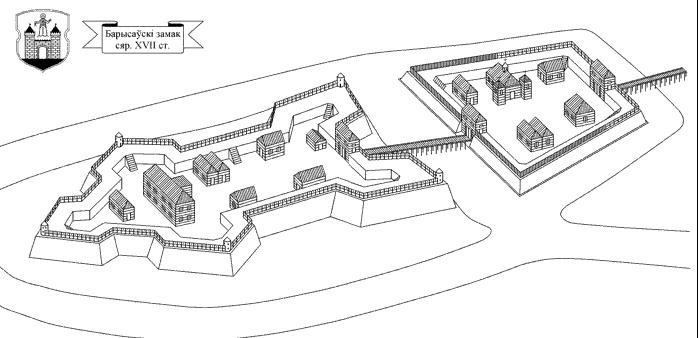
The castle's architectural design reflects the transitional Renaissance style, incorporating both defensive and residential elements. The complex featured a large rectangular layout with an inner courtyard, surrounded by robust walls and corner towers. The main building rose to three stories, constructed using a distinctive masonry technique combining large bricks and medium-sized stones arranged in rows reminiscent of Dutch brickwork. This method provided both strength and aesthetic order to the structure.
Historical significance and military role
Smalyany Castle played a crucial role in several major conflicts of the 17th and early 18th centuries. During the Russo-Polish War (1654–1667), it was a focal point of military engagements, sustaining considerable damage. Later, in the Great Northern War (1700–1721), the castle was garrisoned by approximately 200 Swedish soldiers under General-Adjutant Kanifer. The strategic importance of the fortress made it a target for Russian forces loyal to Peter I, who eventually captured and partially destroyed it to prevent further military use. These conflicts underscored the castle's significance as a border stronghold and its vulnerability amid the era's warfare dynamics.
Ownership and decline
The castle was originally owned by the Sangushko family, a distinguished Lithuanian noble lineage. After the wars, the family shifted their primary residence to Grodno, signaling the beginning of Smalyany Castle's decline. The mid-18th century marked the start of its gradual abandonment. Following the 1830–1831 uprisings, the castle was confiscated and transferred to Collegiate Assessor Vasily Semyonov, who dismantled parts of it for building materials. Later, State Councillor V. A. Titov acquired the ruins and undertook preservation efforts to stabilize the remaining structures, notably reinforcing the main pentagonal tower.
Architectural features and layout
Fortifications and towers
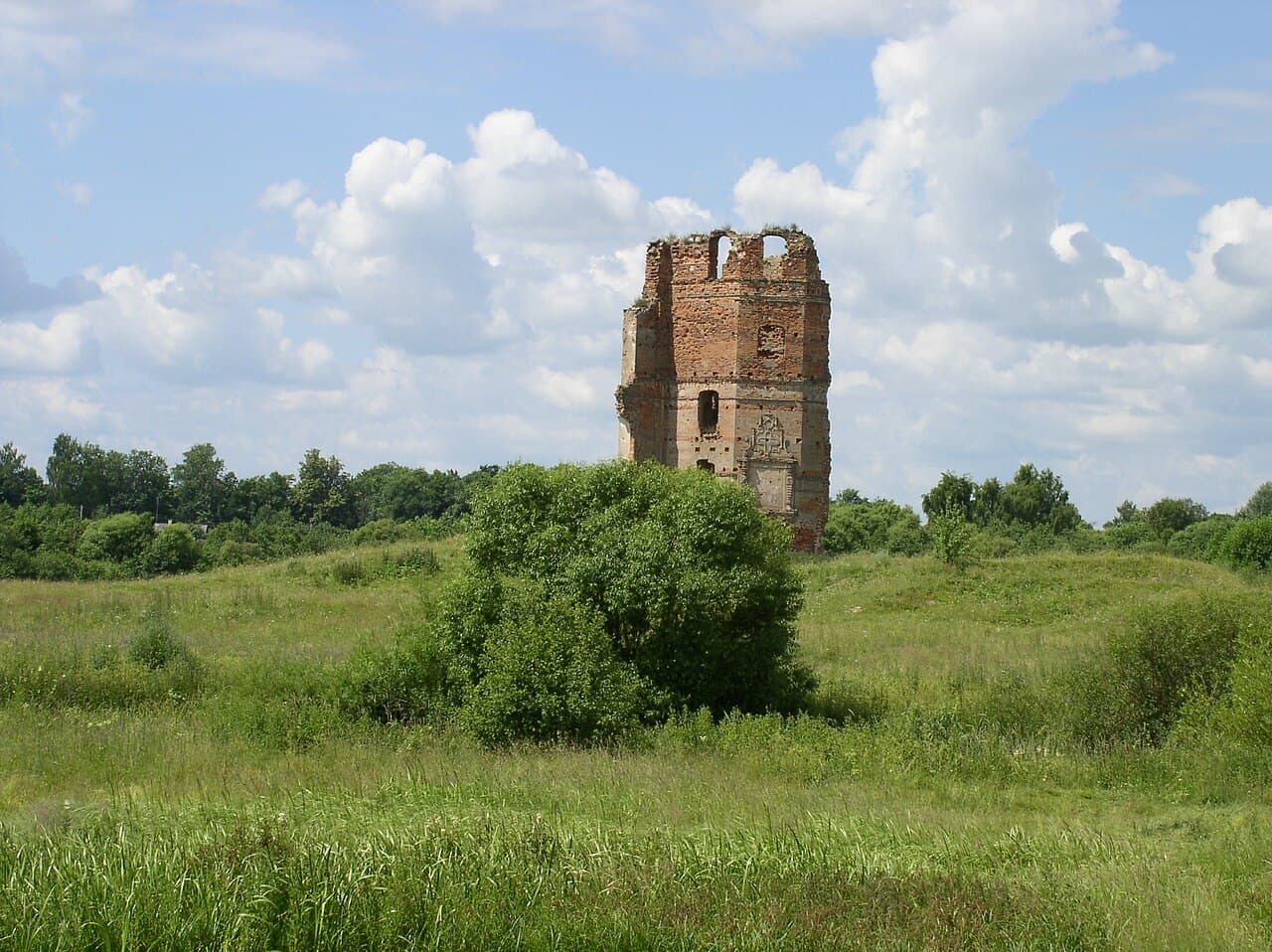
The castle's defensive system was composed of four square corner towers extending beyond the curtain walls, designed not only for defense but also as residential quarters, as evidenced by window openings and fireplaces. The main entrance was guarded by a massive five-story pentagonal tower reaching about 20 meters in height. This tower was connected to the main building by a vaulted arched passage, allowing secure internal access. Inside, remnants of a spiral staircase and niches indicate its dual function as a lookout and living space.
Construction materials and techniques
The walls were built from large bricks measuring approximately 8 by 13 by 29 centimeters, interspersed with medium-sized stones laid in an orderly masonry style akin to Dutch brickwork. This combination enhanced both the structural integrity and visual appeal of the castle. The main gates were crafted from sturdy pine planks reinforced with iron strips and large nails, designed to withstand assaults.
Decorative elements and interior
Historical records and surviving fragments reveal that the castle's exterior was painted white, giving rise to the name "Biely" meaning "white." Interior decorations included tiled stoves adorned with the "Pahonia" coat of arms and frescoes reflecting the noble status of the Sangushko family. Stucco cartouches and window frames with 16th-century motifs further illustrated the Renaissance artistic influences present in the castle.
Current state and archaeological remains
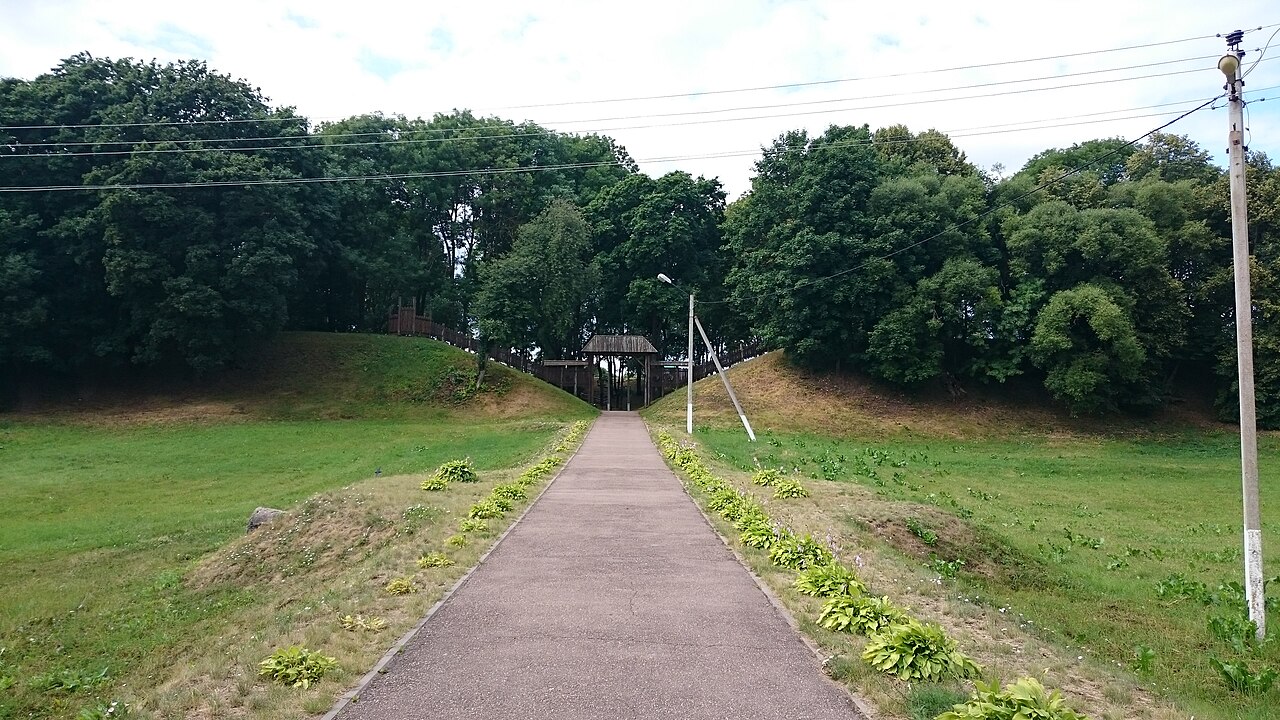
Today, Smalyany Castle exists as partially preserved ruins that offer valuable insights into its original grandeur and architectural sophistication. The remains include fragments of the main pentagonal tower, sections of adjoining walls, foundation outlines, and cellar rooms. Conservation efforts in the 19th century, particularly by V. A. Titov, helped stabilize the structure using small buttresses to prevent further collapse.
The castle's site reveals a rectangular plan measuring approximately 100 by 200 meters, with the central building about 25 by 50 meters. It is situated on a slightly elevated area just above a marshy floodplain, suggesting the presence of an artificial water reservoir or moat that enhanced its defensive capabilities during the 17th and 18th centuries.
Archaeological significance
Excavations and studies of the ruins have uncovered details about construction methods, defensive strategies, and residential arrangements of the period. The combination of Renaissance architectural elements with practical military features exemplifies the dual purpose of noble residences in border regions during this era. The site remains an important cultural heritage monument in Belarus, attracting historians and visitors interested in early modern fortifications.
Visiting and cultural importance
Although in ruins, Smalyany Castle remains a significant historical landmark reflecting the turbulent history of Belarus and the Grand Duchy of Lithuania. Its architectural remnants and the stories embedded in its walls contribute to understanding the region's past conflicts, noble life, and defensive architecture. Visitors can explore the site to appreciate the castle's layout and imagine its former prominence.
Preservation efforts continue to ensure that this heritage site remains accessible and informative for future generations. The castle's distinctive white facade, defensive towers, and strategic location near the eastern frontier make it a unique example of Renaissance military architecture in Eastern Europe.
Frequently asked questions (FAQ)
- What is the historical significance of Smalyany Castle Ruins?
- Smalyany Castle Ruins are remnants of a medieval fortress that dates back to the 15th century. It played a strategic role in the region's defense and has witnessed various historical events, reflecting the cultural heritage of Belarus.
- When was Smalyany Castle built?
- The construction of Smalyany Castle began in the late 15th century and was completed in the early 16th century. Its architecture showcases the transition from Gothic to Renaissance styles, making it a fascinating study for history enthusiasts.
- Can I visit Smalyany Castle Ruins?
- Yes, Smalyany Castle Ruins are open to visitors, allowing you to explore the historical site and enjoy the scenic views of the surrounding landscape. However, be sure to check local guidelines and regulations before your visit.
- What are the opening hours for Smalyany Castle Ruins?
- The opening hours for Smalyany Castle Ruins may vary seasonally, but it is generally open from 9 AM to 6 PM. It is advisable to verify the current hours prior to your visit to ensure you have ample time to explore.
- Is it possible to access the castle ruins by public transport?
- Yes, Smalyany Castle Ruins can be accessed via public transport from nearby towns. Local buses and taxis frequently operate in the area, making it convenient for visitors to reach the site.
- What is the best time to visit Smalyany Castle Ruins?
- The best time to visit Smalyany Castle Ruins is during the spring and early autumn months when the weather is mild and the natural surroundings are lush. This allows for a more pleasant experience while exploring the ruins.
- Are there any nearby attractions to visit?
- Yes, visitors to Smalyany Castle Ruins can explore other historical sites and natural attractions in the vicinity, including local museums and parks. This makes for a well-rounded day of sightseeing in the area.
- How much is the entry fee to Smalyany Castle Ruins?
- The entry fee to Smalyany Castle Ruins is typically quite affordable, making it accessible to a wide range of visitors. Be sure to check the latest pricing information before your visit, as fees may vary.
Photo gallery

Information
Website
Visit websiteSources & official resources
Verify the information above using these authoritative references.
Loading map...
Visitor reviews
No reviews yet. Been here? Write the first review and help other travelers!
Write the first reviewVisited this castle? Share your experience
Your review helps other travelers and adds first-hand knowledge to our encyclopedia.