Barysaŭ Castle
Barysaŭ Castle stands as a significant medieval fortress located in the town of Barysaw, Belarus. Established during the late 12th or early 13th century by the forces of the Grand Duchy of Lithuania, the castle was strategically positioned on an island formed by the Berezina River's ancient channels. This location was crucial for controlling important waterways linking the Baltic Sea to the Black Sea and vital land routes toward the Grand Duchy's core territories.
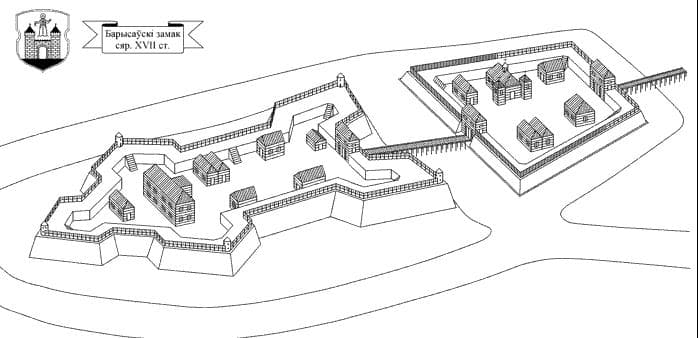
The castle's earliest incarnation was a wooden and earth fortification designed to defend the region and serve as an administrative center. Its placement on a naturally fortified island, surrounded by a wide water moat sustained by the Berezina and its tributary, the Prileya, enhanced its defensive capabilities. The island, approximately two hectares in size, was encircled by a high earthen embankment topped with wooden palisades and towers, creating a formidable barrier against invaders.
Medieval construction and strategic importance
During the 13th century, Barysaŭ Castle grew in prominence amid the shifting power dynamics of Eastern Europe. It played a crucial role in the defense of the Grand Duchy of Lithuania's eastern frontier, particularly as conflicts intensified between the Polish-Lithuanian Commonwealth and the Tsardom of Russia. The castle's position allowed it to control river traffic and land access, making it a key military and administrative hub.
Originally constructed primarily of wood and earthworks, the fortress underwent several enhancements over the centuries. By the 16th century, it had become a vital stronghold, enduring multiple sieges. Notably, it withstood attacks in 1514 and during the Livonian War (1558–1583), when it maintained a permanent garrison to secure the eastern borders of the Commonwealth.
Sieges and military engagements
The castle's resilience was tested repeatedly. In 1655, during renewed hostilities, Russian forces captured and burned the fortress after prolonged combat. The destruction was significant, but Tsar Alexei Mikhailovich ordered its swift reconstruction. Local peasants were mobilized to rebuild the castle by 1657, reinforcing it with four walls strengthened by sand, adding a secret water passage to the Berezina River, a well, and wooden buildings primarily used for grain storage.
This reconstruction transformed Barysaŭ Castle into both a defensive bastion and a logistical hub. It housed weapons, military equipment, food supplies, and large stores of gunpowder and lead. These resources were critical for military operations in the region, with shipments dispatched to key Russian cities such as Smolensk and Moscow in 1660.
Despite these fortifications, the castle faced another siege during the harsh winter of 1661–1662 by Lithuanian troops. After enduring a year-long blockade, the garrison, weakened and depleted, abandoned the fortress. Nevertheless, the castle was restored again by the late 17th century and remained in good condition until the late 18th century.
Architectural features and fortifications
Barysaŭ Castle’s layout evolved over time. By the mid-17th century, it had an oval shape with a southern wall featuring a projecting redan, an angular fortification designed to improve defensive coverage. An outer fortification to the east, separated by a wide water-filled moat, housed an Orthodox church, indicating the presence of religious life within the fortress.
Historical accounts from 1593 describe a wooden bridge approximately 426 meters long, spanning the Berezina River toward Minsk. This bridge was vital for maintaining communication and transport.
Defensive enhancements included the construction of five bastions in the mid-17th century. These bastions projected outward from the walls, allowing defenders to cover adjacent walls with gunfire. The earthen ramparts were reinforced externally with double-layered pine log walls reaching about 2.5 meters high. These wooden fortifications incorporated embrasures, openings for firing weapons, enabling soldiers to defend the castle effectively.
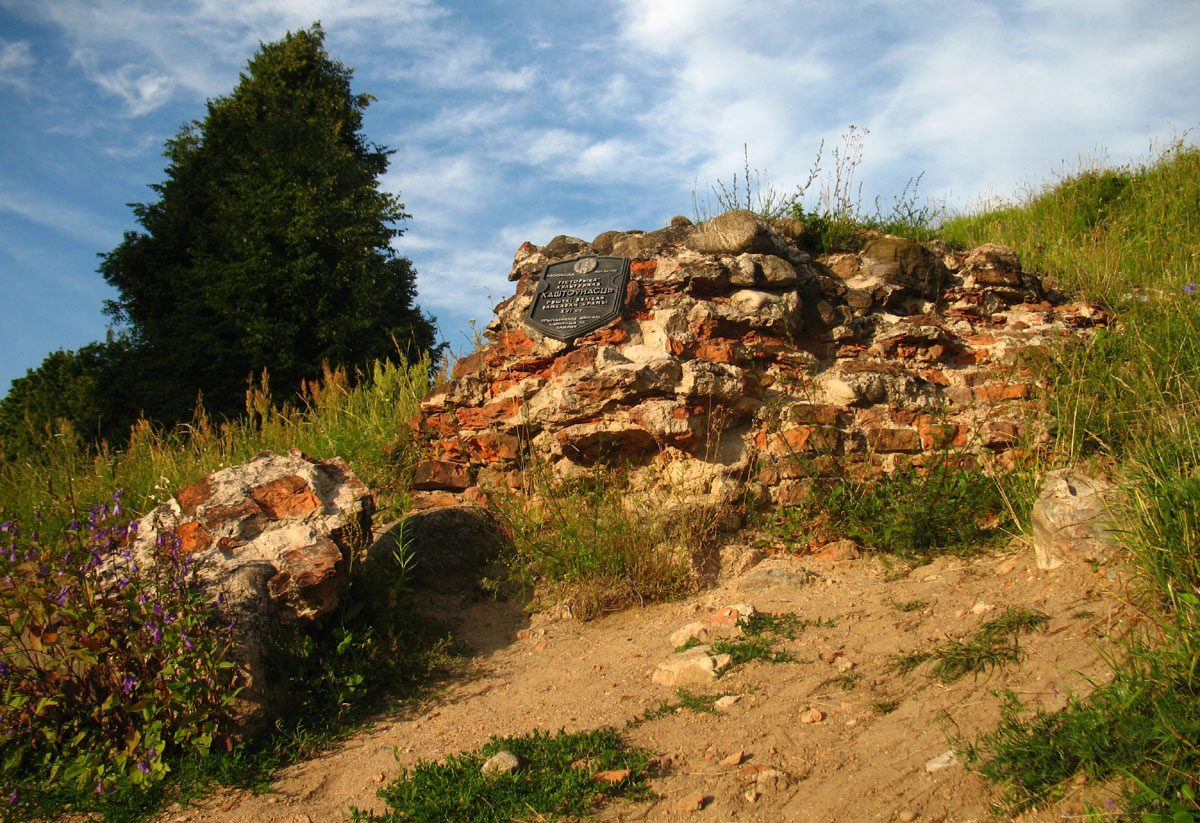
Archaeological excavations have uncovered remains of wooden walls and towers atop the earthen ramparts, as well as a gatehouse structure. However, by the late 18th century, external fortifications were no longer marked on maps, reflecting the decline of the medieval defenses. Only internal buildings remained prominent in cartographic records.
Transition to prison castle and later history
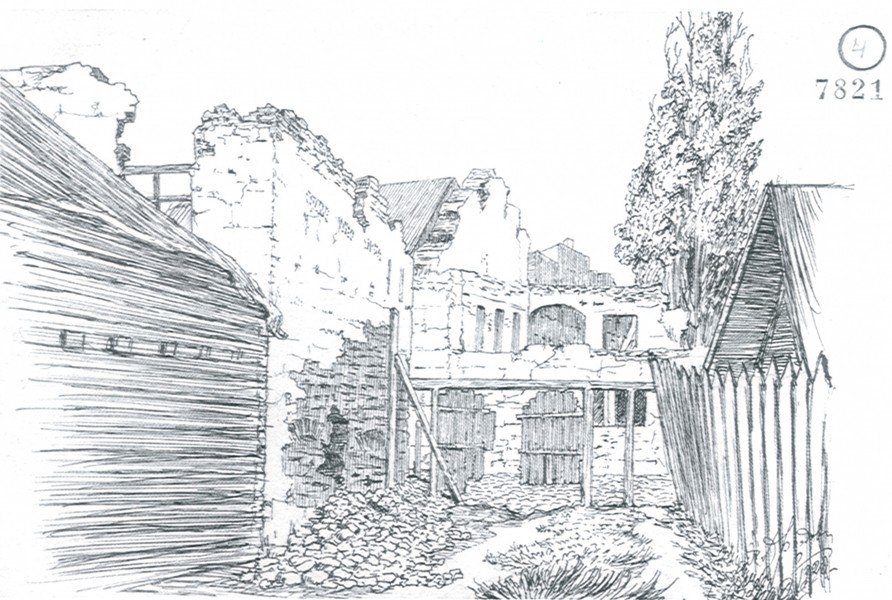
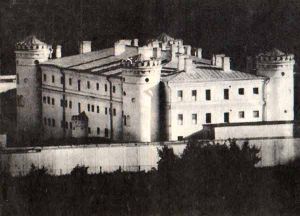
In the 19th century, the original wooden and earth fortifications had fallen into ruin. A new two-story stone prison castle was constructed on the site, enclosed by a stone wall. This prison served as a detention facility until the mid-20th century. The complex suffered damage during the Polish-Soviet War in 1920, but remnants of the brick walls and surrounding defenses still survive today.
The castle site also includes vestiges of Russian military fortifications from the 1812–1813 period, such as tet-de-pont (bridgehead defenses) and artillery batteries, linking it to later historical conflicts in the region.
Modern developments have impacted the site; the northern moat has been largely filled due to construction activities, including a pedestrian bridge and nearby residential buildings. Nevertheless, water-filled moats continue to outline much of the historic perimeter.
Preservation and cultural significance
Plans have been proposed in recent years to preserve and develop Barysaŭ Castle as part of a state-supported initiative to protect important historical castles in Belarus. These efforts aim to safeguard the site’s archaeological remains and promote its cultural heritage, highlighting its role in the military and administrative history of the region.
Today, Barysaŭ Castle remains a valuable archaeological and historical site, reflecting centuries of military architecture, regional conflict, and adaptation from a medieval fortress to a prison complex. Its location on the Berezina River and its layered history offer insights into the strategic importance of fortifications in Eastern Europe from the Middle Ages through the modern era.
Frequently asked questions (FAQ)
- When was Barysaŭ Castle originally built?
- Barysaŭ Castle was originally established in the late 12th or early 13th century by the Grand Duchy of Lithuania.
- What role did Barysaŭ Castle play in regional conflicts?
- The castle served as a strategic defensive and administrative stronghold, enduring multiple sieges during conflicts such as the Livonian War and wars between the Polish-Lithuanian Commonwealth and Tsardom of Russia.
- What remains of Barysaŭ Castle can visitors see today?
- Visitors can see remnants of the castle's earthen ramparts, wooden fortifications, the stone prison castle built in the 19th century, and water-filled moats outlining the historic perimeter.
- Is Barysaŭ Castle accessible to the public?
- Currently, the castle site is primarily an archaeological ruin with limited public access, but preservation efforts are underway to develop the site for cultural tourism.
- What architectural features characterized Barysaŭ Castle?
- The castle featured wooden palisades, towers, earthen embankments, bastions with embrasures, a projecting redan, and a secret water passage to the Berezina River.
Photo gallery

Information
Loading map...
Visitor reviews
No reviews yet. Been here? Write the first review and help other travelers!
Write the first reviewVisited this castle? Share your experience
Your review helps other travelers and adds first-hand knowledge to our encyclopedia.