Dreznik Castle Ruins
Dreznik Castle ruins stand as a significant relic of high medieval fortifications in the region of Rakovica, Croatia. Mentioned in historic sources dating back to the 12th century, the castle was strategically built as a defense fortress rather than a commercial hub. Its location overlooking the Korana river canyon provided a commanding view of the surrounding landscape, crucial for monitoring movements and defending the borderlands.
Historical context and significance
The history of Dreznik Castle is deeply intertwined with the turbulent border region it guarded. Throughout the high medieval period, this area was frequently contested, leading to numerous conflicts and changes in rulership. Unlike many castles that evolved into centers of trade or administration, Dreznik remained primarily a military stronghold. Its role was to serve as a bulwark against invasions and incursions, reflecting the persistent instability of the region.
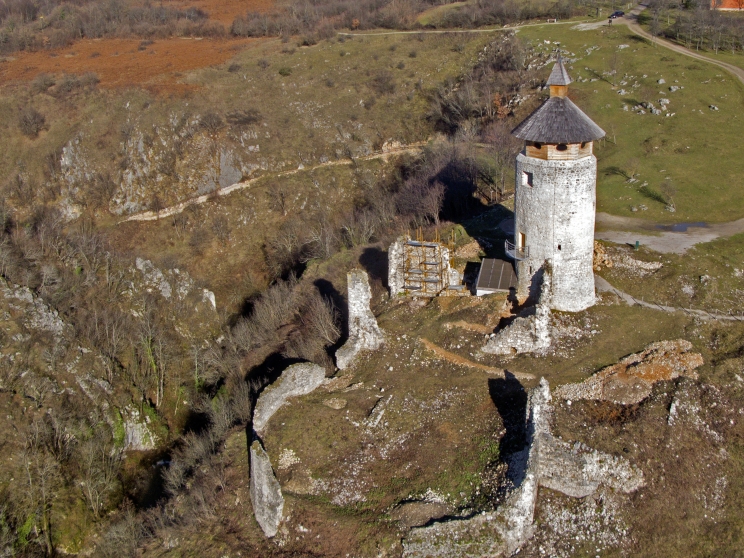
After the decline of its military importance, the castle's fate changed dramatically in the 19th century. Following the year 1830, the fortress was sold by the Austrian monarchy to a private trader. This new ownership marked the beginning of the castle's physical decline, as the walls were dismantled and the stone repurposed for construction elsewhere. This practice was common in that era, contributing to the ruinous state of many medieval fortresses.
Architectural features and layout
Though much of the original structure has been lost, the remaining defense tower has been preserved and renovated. This tower exemplifies the military architecture of the high medieval period, featuring thick stone walls designed to withstand sieges and attacks. The castle's position on elevated terrain further enhanced its defensive capabilities, making it difficult for enemies to mount successful assaults.
The fortress likely included typical medieval defensive elements such as battlements, curtain walls, and possibly a moat or natural barriers formed by the surrounding terrain. The strategic use of the natural landscape was a common feature in castles of this type, maximizing defense while minimizing construction efforts.
Modern preservation and visitor experience
Today, visitors to the Dreznik Castle ruins can explore the renovated defense tower, which serves as a vantage point offering panoramic views of the Korana river canyon and the surrounding mountains. The site provides insight into the military history of this dynamic border region, illustrating the challenges faced by medieval communities in maintaining security and sovereignty.
The ruins stand as a testament to the castle's former strategic importance and the changing political landscape of the area. Interpretive materials at the site help visitors understand the historical context and architectural significance of the fortress, enriching the experience beyond the visual spectacle.
Geographical and cultural setting
Located in the region of Lika-Senj County, near the town of Rakovica, the castle occupies a commanding position that has influenced its historical role. The proximity to the Korana river not only provided natural defense but also connected the castle to important routes and natural resources. This setting underscores the castle's function as a military outpost rather than a civilian settlement.
The ruins contribute to the cultural heritage of Croatia, representing medieval fortification techniques and the historical complexity of the borderlands between different kingdoms and empires. Preservation efforts highlight the importance of maintaining such sites for educational and tourism purposes.
Frequently asked questions (FAQ)
- When was Dreznik Castle originally built?
- Dreznik Castle dates back to the 12th century, during the high medieval period, as a defensive fortress.
- What remains of Dreznik Castle can visitors see today?
- Visitors can see the renovated defense tower and ruins of the walls, offering views over the Korana river canyon.
- Why was Dreznik Castle primarily built?
- The castle was built mainly for defense in a turbulent border region, not as a trading or residential center.
- Can visitors access the tower at Dreznik Castle ruins?
- Yes, the defense tower has been renovated and is accessible, providing panoramic views of the surroundings.
- Who currently owns Dreznik Castle ruins?
- The ruins are currently privately owned, following the sale by the Austrian monarchy in the 19th century.
Information
Current owner
Private owner
Loading map...
Visitor reviews
No reviews yet. Been here? Write the first review and help other travelers!
Write the first reviewVisited this castle? Share your experience
Your review helps other travelers and adds first-hand knowledge to our encyclopedia.