Sloup Castle
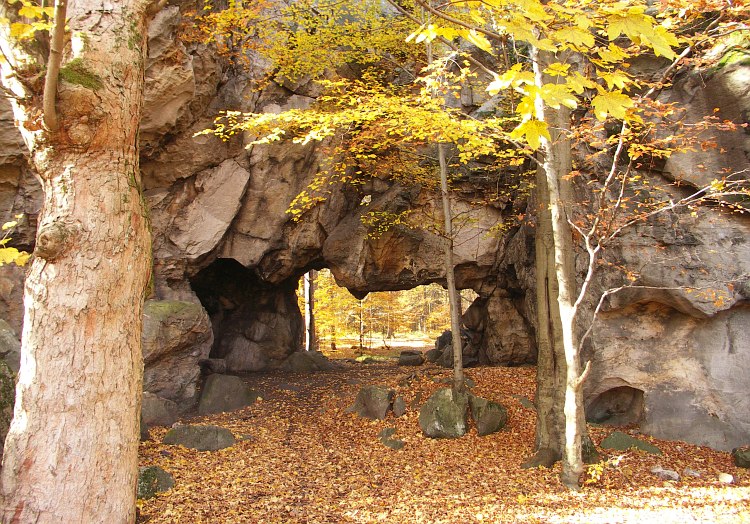
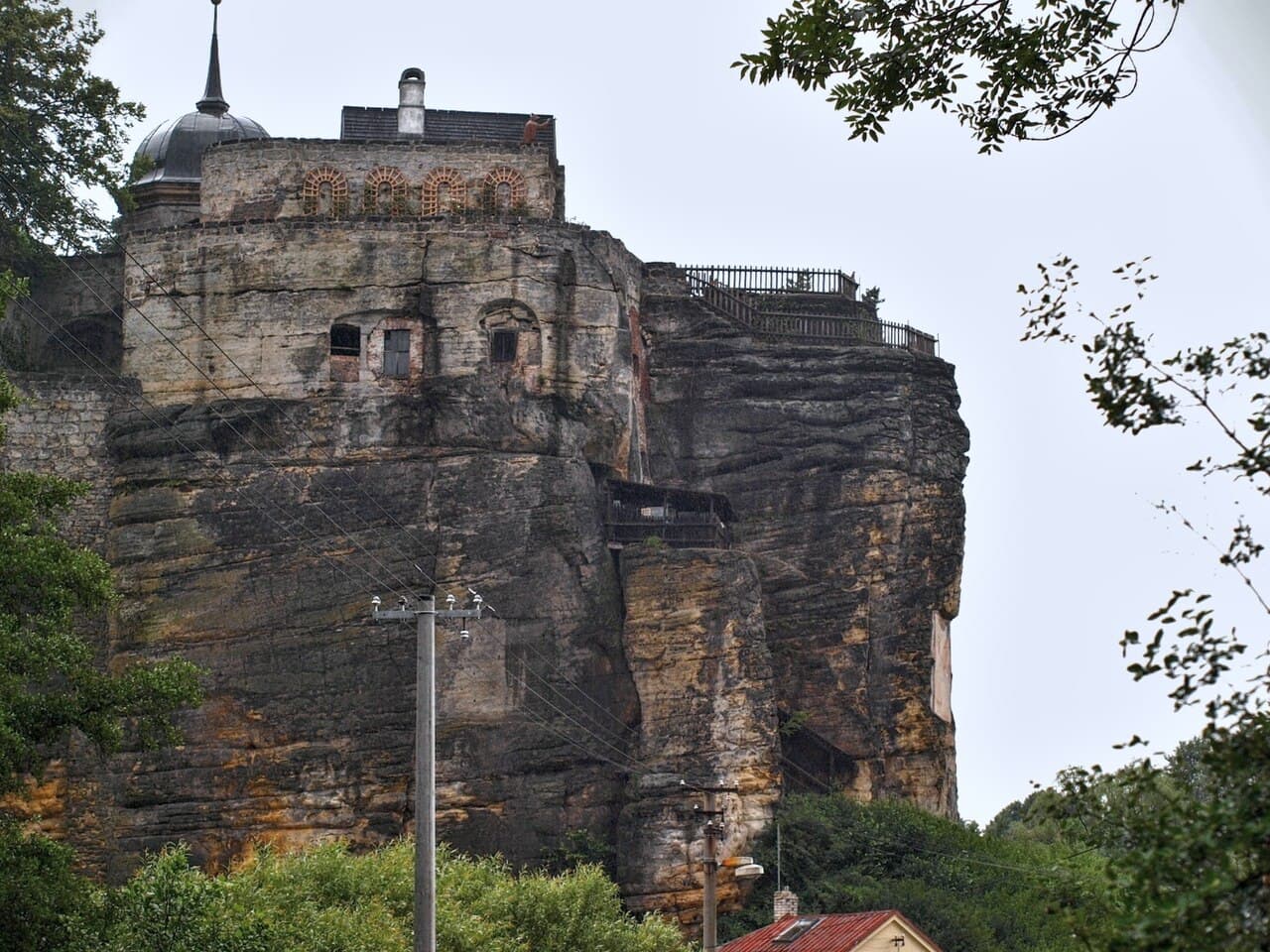
Sloup Castle is a remarkable example of a rock castle uniquely integrated into a 35-metre high sandstone rock formation in the municipality of Sloup v Čechách, Czechia. Established in the 14th century by the noble Ronovec family, it was strategically positioned along an important salt trade route connecting Meissen and Česká Lípa. The castle's name, meaning "column," derives from the distinct freestanding rock pillar into which much of the fortress was carved. This natural feature was ingeniously adapted with carved fortifications, including loopholes and masonry-filled gullies, transforming the rock into a formidable defensive stronghold.
The castle's initial mention dates to 1324, with ownership attributed to Čeněk of Ojvína. Its elevated position and the ingenious system of trenches allowed defenders to flood the surrounding area, effectively creating a natural moat that made Sloup Castle nearly impregnable during the Late Medieval period. This combination of natural and man-made defenses exemplifies medieval military architecture adapted to unique geological conditions.
Medieval history and military significance
Throughout the 15th century, Sloup Castle played a notable role in regional conflicts. It was the base of the infamous Knight Mikeš Pancíř of Smojno, who used it as a launching point for raids into Lusatia. The castle endured two significant sieges in 1444 and 1445, during which defenders were starved into surrender. Despite this, Mikeš regained control shortly after, maintaining his hold until 1455. The castle's military importance waned by the late 15th century, serving more as a refuge than an active fortress.
In 1639, during the Thirty Years' War, Sloup Castle was captured and destroyed by Swedish forces under General Johan Banér. The destruction was so severe that the castle was never rebuilt for military use, marking the end of its role as a defensive bastion.
Baroque hermitage transformation
Following its military decline, the castle found new life as a hermitage from 1670 to 1785. Under the patronage of Count Ferdinand Hroznata of Kokořov, hermits inhabited the site, carving out new chambers, terraces, and a chapel completed in 1693. These modifications introduced Baroque architectural elements into the rock complex, blending spiritual function with the rugged medieval setting.
Notable figures during this period included Konstantin, a bricklayer who contributed to structural enhancements, and Václav Rincholín, who painted a solar clock on the rock face. The hermits also cultivated the surrounding land, with Samuel Görner growing crops and vineyards on the terraces. A statue commemorating him, originally wooden and destroyed in 1866, stands today as a replica symbolizing this era.
Architectural features and surviving elements
Sloup Castle's architecture is characterized by its integration with natural sandstone formations. The castle's summit was carved to mimic traditional defensive walls, complete with loopholes for archers. The trenches and gullies around the rock were fortified with masonry and could be flooded, creating an effective defense system.
Many original medieval features survive, including rock-cut staircases leading to the summit, multiple chambers carved into the sandstone, and a cistern for water storage. The dungeon area contains prisoner inscriptions and graffiti, providing a rare glimpse into the lives of those once imprisoned there.
Baroque additions from the hermitage period include the rock chapel, terraces, and three artificial grottoes housing sculptures assembled by Karel Kinsky between 1719 and 1726. The castle's main entrance was relocated to the southeast during this time, accompanied by the creation of a small park enhancing its appeal as a leisure destination.
Cultural significance and modern use
After the hermitage was disbanded in 1785, the estate passed to the Kinsky family, who transformed Sloup Castle into a romantic tourist attraction. Their efforts attracted notable visitors, including Archdukes Franz Karl and Stephan of Austria, King Frederick Augustus I of Saxony, and the future Emperor Franz Joseph I. The Kinsky family maintained ownership until 1940, after which the castle was nationalized following World War II.
Today, Sloup Castle is a well-preserved hill castle and a popular destination for visitors interested in medieval architecture, natural rock formations, and Baroque hermitage history. The site hosts candlelit concerts and historical jousting matches, enriching its cultural offerings. Its elevated position offers stunning views of the surrounding villages, the town of Nový Bor, and the Lusatian Mountains, making it a favored spot for outings and historical exploration.
The castle stands as a testament to the adaptation of natural landscapes for defensive purposes, the evolution of medieval fortifications, and the integration of spiritual and cultural functions in later centuries. Its combination of natural rock features and human craftsmanship provides a unique window into Czech history and architectural ingenuity.
Frequently asked questions (FAQ)
- How do I get to Sloup Castle?
- Sloup Castle is located in Sloup v Čechách, accessible by regional roads and public transport from Česká Lípa and Nový Bor. Visitors can reach the castle by foot from the village center via marked hiking trails.
- What is the best time to visit Sloup Castle?
- The castle is best visited from spring to early autumn when the weather is favorable for hiking and outdoor activities. Seasonal events like candlelit concerts and historical jousting matches are typically held in summer.
- Can I explore the carved chambers and dungeons?
- Yes, visitors can explore the rock-cut chambers, including the dungeon with prisoner inscriptions, staircases, and the Baroque chapel. Some areas may have limited access for safety reasons, so guided tours are recommended.
- Is Sloup Castle suitable for children and families?
- Sloup Castle offers an engaging experience for families, with open spaces and historical features to explore. However, the rocky terrain and staircases require caution, so children should be supervised closely.
- Are there entrance fees or opening hours?
- Entrance to Sloup Castle is typically free or low-cost, with opening hours varying seasonally. It is advisable to check the local tourism office or official website for current visitor information and event schedules.
Photo gallery

Information
Sources & official resources
Verify the information above using these authoritative references.
Loading map...
Visitor reviews
No reviews yet. Been here? Write the first review and help other travelers!
Write the first reviewVisited this castle? Share your experience
Your review helps other travelers and adds first-hand knowledge to our encyclopedia.