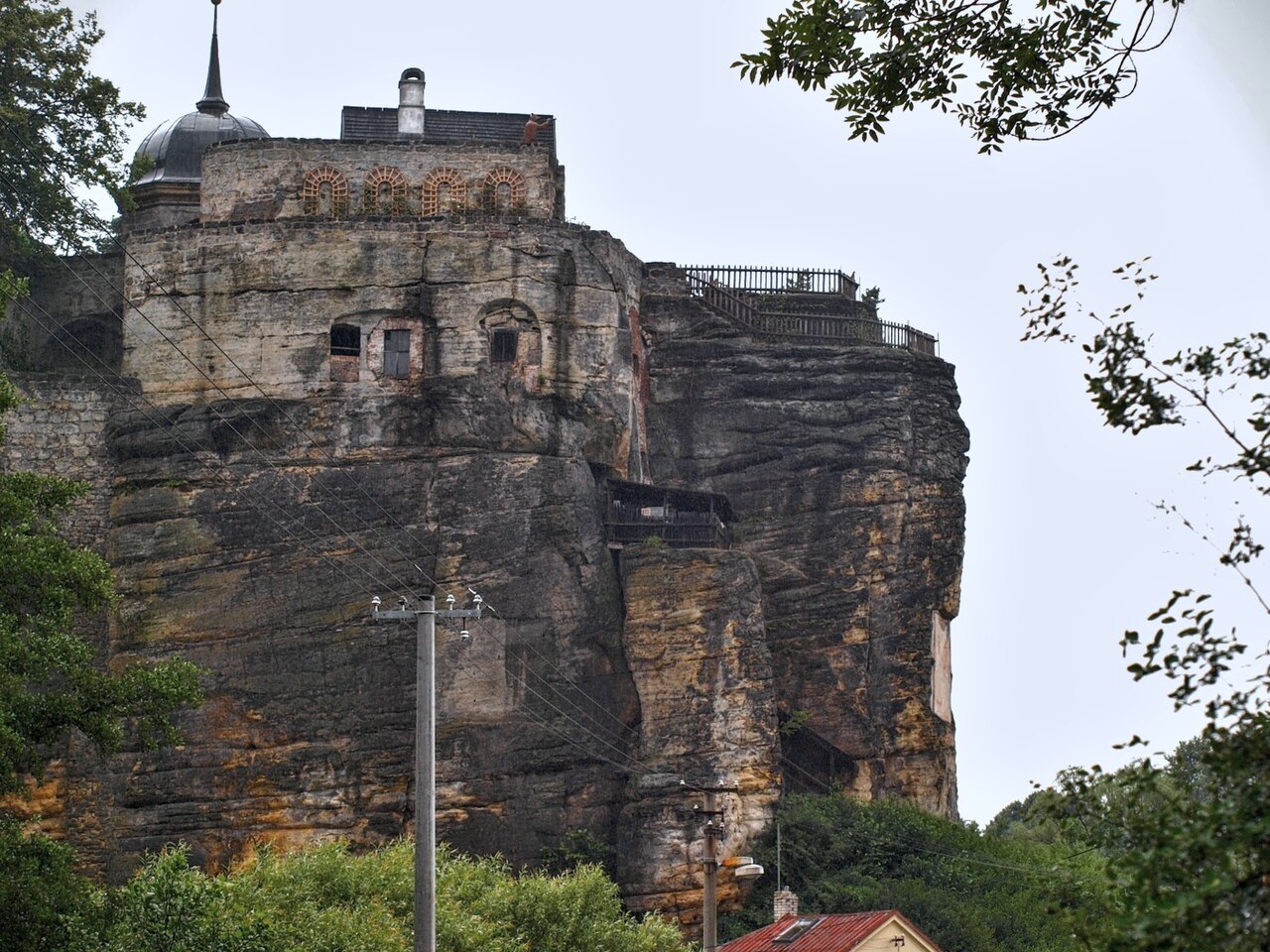
Lipý Castle Ruins
Lipý Castle ruins, located in the historic town of Česká Lípa in the Czech Republic, represent the remains of a significant 13th-century Gothic water castle. Established by the noble Ronovci family in the late High Medieval period, Lipý Castle was strategically built on an island formed by branches of the Ploučnice river, utilizing natural water defenses that typify water castles of the era. Over centuries, the castle evolved from a fortified stronghold into a Renaissance chateau before falling into decline and ruin, reflecting the region's turbulent history and architectural transitions.
Early history and founding
The castle's origins date back to around 1268, credited to Chval of the Ronovci family. His son, Čeněk of Lipá, who first adopted the surname "of Lipá" in 1277, is believed to have been the principal figure in the castle's initial construction, although he died shortly after in 1278. The castle was built on an island, a classic feature of a water castle, surrounded by the river's branches to maximize defense. This location replaced an earlier watchtower, possibly of Serbian Milčany origin, indicating the site's longstanding strategic importance.
Following Čeněk's death, his son Jindřich of Lipá inherited the castle. Jindřich was a prominent nobleman and influential figure at the Bohemian royal court. Between 1305 and 1319, he founded the nearby town of Česká Lípa, fostering the area's growth and development. Under his patronage, the castle saw significant upgrades, with wooden structures gradually replaced by stone buildings, enhancing its fortifications and residential status before the 14th century.
Ownership and architectural evolution
In 1319, ownership passed to the Berka family of Dubá, relatives of the Ronovci line. The Berkas fortified and expanded the castle extensively over the next century. However, the castle faced destruction during the Hussite Wars in 1426, when it was seized and burned by troops led by Jan Roháč of Dubá, a Hussite resistance leader.
Despite damage, the castle was restored and transitioned from a medieval fortress to a Renaissance chateau in the 16th century. The Berka family commissioned new palatial buildings with characteristic Renaissance architectural elements, including vaulted ceilings and cellars. The castle's residential functions were enhanced with the addition of a two-story palace and other noble dwellings, reflecting changing tastes and the decline of purely military architecture.
Subsequent owners included the Vartenberk and Kounic families, who maintained the castle as a noble residence. After the Battle of White Mountain in 1620, the castle was confiscated and granted to Albrecht of Wallenstein in 1622. Wallenstein used Lipý primarily for administrative purposes, and the castle's military significance waned.
The castle suffered further during the Thirty Years' War, notably plundered by Swedish forces in 1643. After this period, it ceased to be a noble residence and gradually fell into disrepair.
Decline, destruction, and industrial transformation
The 19th century marked a period of significant decline for Lipý Castle. A major fire in 1820 severely damaged the remaining structures. Later in the century, industrial development led to the partial demolition of the castle ruins to make way for a sugar refinery. This industrial overlay altered the historic landscape, with parts of the castle grounds repurposed for factory buildings and associated infrastructure.
In the 20th century, the ruins served diverse functions, including theatrical performances, educational uses, and military storage. However, much of the southern palace was demolished in 1957, further reducing the visible remains.
Archaeological research and restoration efforts
Between 1995 and 2003, systematic archaeological excavations uncovered foundational remains of the original castle structures, including the bergfried tower, palatial buildings, and fortifications. These studies clarified the castle's complex layout and construction phases, revealing the transition from wooden to stone defenses and the later Renaissance modifications.
Following the excavations, restoration projects funded with approximately 35 million Czech crowns stabilized and partially reconstructed key sections, particularly in the eastern part of the castle. These efforts preserved surviving masonry and made the site accessible for cultural and educational purposes.
Architectural features and castle layout
Defensive structures
Lipý Castle was originally a water castle, its island location surrounded by the Ploučnice river branches providing natural protection. The earliest fortifications included wooden palisades and earthworks encircling the western residential area. By the late 13th century, these were replaced with robust stone walls and a bent entrance gate on the eastern side, designed to hinder attackers and control access.
A dominant feature is the massive circular bergfried tower in the northern section, approximately 12.6 meters in diameter. This stone tower served as a last refuge during sieges and a secure storage space. Its size and construction highlight its defensive importance.
Residential and palatial buildings
The southwestern corner housed a two-story stone palace with vaulted ceilings and cellars, foundations of which remain visible. In the 14th century, the southern side saw the addition of new palaces, including a distinctive latrine tower projecting into the moat, a typical medieval sanitary feature.
Later Renaissance additions included northern palaces and a separate residential house, reflecting the castle's evolution from fortress to noble residence. These buildings featured characteristic vaulted cellars and more refined architectural details aligned with Renaissance aesthetics.
Access and auxiliary structures
Access to the island was via a stone bridge equipped with chambers and two drawbridges, connecting the castle to the mainland and a nearby mill. This setup enhanced defense and allowed controlled entry.
Modern use and cultural significance
Today, the Lipý Castle ruins serve as a cultural venue hosting events such as Passion Plays and exhibitions. The eastern wing houses a permanent display featuring the history of the castle, the former sugar refinery, and a memorial dedicated to the local Jewish community and their contributions to Česká Lípa.
The renovated premises around the eastern gate recreate the 19th-century atmosphere, including rooms once used by the sugar factory director. The exhibitions are furnished with period furniture from the National Heritage Institute collections and include two original stoves, preserving tangible links to the site's layered history.
Management of the site has transitioned to municipal cultural organizations, and since 2011, a historical textile printing center operates nearby, integrating the castle ruins into the town's cultural and educational landscape.
Visitor information and accessibility
The site is open to the public for cultural events and guided tours. Visitors can explore the stabilized ruins, learn about the castle's historical phases, and enjoy the exhibitions highlighting both the medieval and industrial heritage of the area. The location's blend of natural river surroundings and preserved masonry offers a unique insight into Gothic water castle architecture and its transformation over centuries.
Frequently asked questions (FAQ)
- When was Lipý Castle originally built?
- Lipý Castle was originally constructed in the 13th century, around 1268, by the Ronovci family.
- What architectural style characterizes Lipý Castle?
- Lipý Castle primarily features Gothic architectural elements typical of High Medieval water castles, with later Renaissance additions.
- Can visitors explore the castle ruins today?
- Yes, visitors can explore the stabilized ruins and enjoy cultural events and exhibitions held at the site.
- What notable features remain visible at Lipý Castle?
- Notable remains include the massive bergfried tower, parts of stone fortifications, foundations of palatial buildings, and the eastern gate.
- Is there a museum or exhibition at the castle?
- Yes, the eastern wing houses permanent exhibitions about the castle's history, the former sugar refinery, and the local Jewish community.
Information
Opening hours
Seasonal opening hours, typically during cultural events and weekends
Ticket prices
Varies by event; often free or nominal fee for exhibitions
Website
Visit websiteSources & official resources
Verify the information above using these authoritative references.
Loading map...
Visitor reviews
No reviews yet. Been here? Write the first review and help other travelers!
Write the first reviewVisited this castle? Share your experience
Your review helps other travelers and adds first-hand knowledge to our encyclopedia.