Milštejn Castle
Milštejn Castle stands as a remarkable example of a late 13th-century hill castle strategically positioned in the Lusatian Mountains near the village of Cvikov-Mařenice in Czechia. Constructed by Bohemian nobility, the castle was primarily established to secure an important medieval trade route linking Lipá and Zittau, vital corridors for merchant caravans traversing northern Bohemia. This location underscores the castle's dual role as a defensive stronghold and an administrative center overseeing commerce and toll collection in the region.
Historical significance and ownership
Milštejn Castle was part of a broader network of fortifications erected by prominent noble families, notably the lords of Vartenberk and Ronovci, who wielded considerable influence in the area during the high and late medieval periods. The earliest known written record of the castle dates back to 1343, where it is described as a station responsible for escorting traders between Oybin and Česká Lípa. This highlights the castle's strategic importance in controlling trade and ensuring safe passage through the Lusatian Mountains.
During the 14th and 15th centuries, ownership transferred to the Berka of Dubá family, with Jindřich Berka z Dubé notably holding the castle from 1362 to 1404. His descendants adopted the castle's name as part of their identity, reflecting its significance within their lineage. The fortress maintained a modest garrison, typically between twelve and sixteen armed men, tasked with protecting merchant convoys and collecting tolls, underscoring its economic and military functions.
Despite its defenses, Milštejn was overtaken in 1456 by forces from Lusatia, marking a pivotal moment in its history. The 15th century represented the castle's zenith, with records from 1545 referring to it as "Zámek Milsstaain." Ownership remained with the Berka family into the 16th century, but the fortress gradually declined in military relevance. By 1590, only a single guard was stationed at the site, signaling its reduced strategic importance. Further damage was inflicted during the Thirty Years' War in 1634, when Swedish troops under General Banner caused significant harm to the structure.
Architectural features and ruins
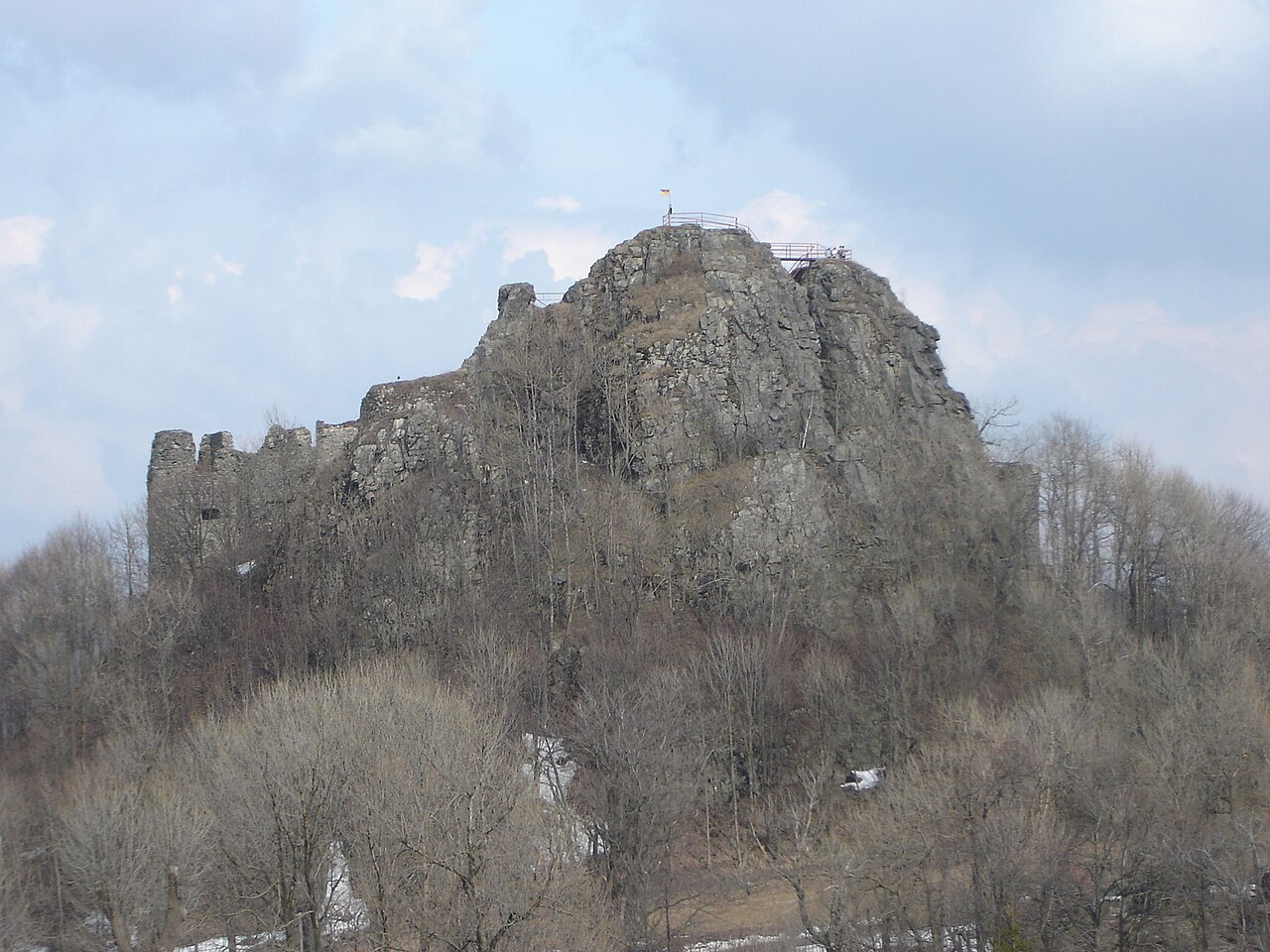
Perched atop Žernov peak at an elevation between 544 and 562 meters, Milštejn Castle occupies a natural quartzite rock formation approximately 20 meters high. This geological feature provided a formidable natural defense, enhancing the castle's strategic surveillance capabilities over the adjacent trade route and surrounding landscape.
The original architectural layout of Milštejn Castle is not fully documented, but surviving elements include remnants of enclosing walls and faint outlines of former towers. The castle featured multiple defensive towers, including a prominent bergfried—a main defensive tower typical of medieval fortifications. Unfortunately, centuries of quartz sandstone quarrying severely damaged the foundations and led to the loss of above-ground structures. Key towers were dismantled or collapsed over time: one was demolished circa 1685, another fell in 1726, and the final bergfried was intentionally destroyed in 1793.
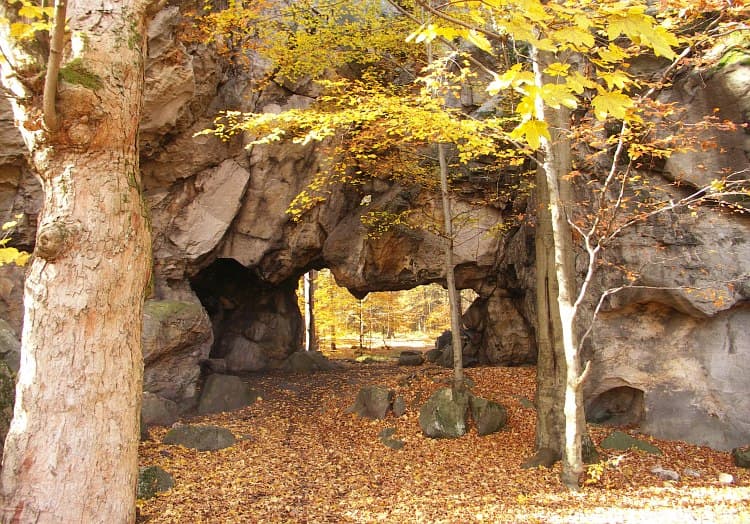
A notable natural feature integrated into the castle's site is the large rock arch known locally as the Felstor, which cuts beneath the central portion of the rock massif. Below the ruins, visitors can observe collapsed underground chambers, primarily the result of sandstone extraction rather than original castle construction.
Water supply was historically supported by the nearby Stříbrná studánka spring, located approximately 200 meters from the castle ruins. This spring once fed a pond, of which only the dam remains today, illustrating the castle's reliance on natural water sources for its inhabitants.
Economic activities and quarrying impact
In addition to its military and administrative roles, the area surrounding Milštejn Castle was exploited for its rich deposits of quartz sandstone, a material highly valued for crafting millstones. Quarrying activities began as early as the 13th century and expanded significantly during the 18th and 19th centuries. This industrial exploitation profoundly affected the castle's structural integrity, contributing to the progressive destruction of its architectural remains. Quarry operations ceased around 1910, leaving the ruins as a testament to both medieval heritage and industrial history.
Cultural heritage and modern access
Today, Milštejn Castle is recognized as a cultural monument of the Czech Republic, officially cataloged under the number 14320/5–2870. Although it exists primarily as ruins, the site holds significant historical and architectural value, attracting visitors interested in medieval fortifications and regional history.
Access to the castle ruins is facilitated by well-marked hiking trails, including the red and green trails. The green trail offers a direct route from the village of Svor, providing visitors with an immersive experience through the scenic Lusatian Mountains to the castle's elevated position. Interpretive signage and preserved features allow for an engaging exploration of the site’s past.
Frequently asked questions (FAQ)
- How do I get to Milštejn Castle?
- Milštejn Castle is located near Cvikov-Mařenice in Czechia, easily accessible by car or public transport. If you're traveling by car, the castle is situated just off the main roads leading into the region, and there is parking available nearby. For those using public transport, local bus services connect to nearby towns, making it convenient for visitors.
- What is the historical significance of Milštejn Castle?
- Milštejn Castle dates back to the 14th century and played a crucial role in the defense of the region. It was strategically positioned to control trade routes and protect the surrounding territories from invaders. Today, it stands as a testament to the medieval architecture and history of the area.
- When was Milštejn Castle built?
- Construction of Milštejn Castle began in the 14th century, with the first written records mentioning it in 1346. Over the centuries, the castle underwent several renovations and expansions, reflecting the architectural styles of different periods. The preservation efforts have made it an important historical site for visitors to explore.
- Can I visit Milštejn Castle year-round?
- Yes, Milštejn Castle is open to visitors year-round, but it's best to check the specific opening hours before planning your visit. During the peak summer months, the castle may have extended hours and guided tours available. In winter, access may be limited due to weather conditions, so it's advisable to check ahead.
- Why is Milštejn Castle a popular tourist attraction?
- Milštejn Castle attracts visitors with its rich history, stunning architecture, and picturesque surroundings. The castle offers breathtaking views of the surrounding landscape, making it a perfect spot for photography and exploration. Additionally, the castle hosts various cultural events and reenactments throughout the year, enhancing the visitor experience.
- Is it possible to take guided tours at Milštejn Castle?
- Yes, guided tours are available at Milštejn Castle, providing visitors with in-depth knowledge about its history and architecture. These tours are led by knowledgeable guides who share fascinating stories and insights about the castle's past. It's recommended to book in advance during peak tourist seasons to secure your spot.
- What are the ticket prices for visiting Milštejn Castle?
- Ticket prices for Milštejn Castle are generally affordable, with discounts available for children, students, and seniors. The standard admission fee grants access to the castle grounds and guided tours. Check the official website or local tourist information for the most current pricing and any special offers.
- What are the best times to visit Milštejn Castle?
- The best times to visit Milštejn Castle are during the spring and fall months when the weather is mild and the surrounding nature is at its most beautiful. Summer is also popular, but it can be crowded with tourists. Visiting during weekdays may help you avoid larger crowds and enjoy a more tranquil experience.
- Are there any nearby attractions to visit along with Milštejn Castle?
- Yes, there are several nearby attractions that complement a visit to Milštejn Castle. The charming town of Cvikov offers various historical sites and local shops, while the beautiful nature trails in the surrounding area provide opportunities for hiking and outdoor activities. Exploring these attractions can enhance your overall experience in the region.
Photo gallery

Information
Website
Visit websiteSources & official resources
Verify the information above using these authoritative references.
Loading map...
Visitor reviews
No reviews yet. Been here? Write the first review and help other travelers!
Write the first reviewVisited this castle? Share your experience
Your review helps other travelers and adds first-hand knowledge to our encyclopedia.