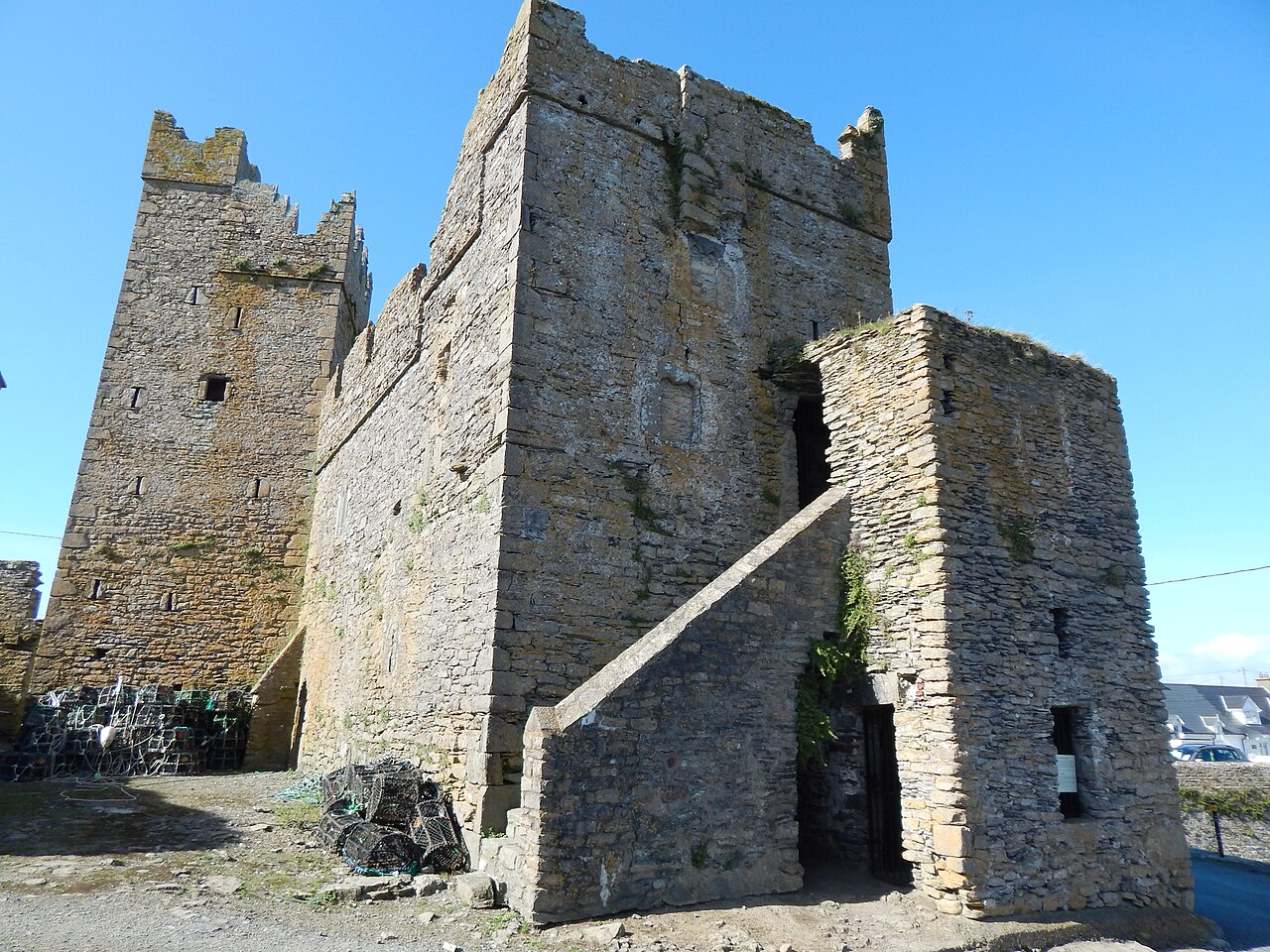
Slade Castle
Slade Castle is a notable example of a late medieval fortified residence located in the village of Slade, within County Wexford, Ireland. This castle illustrates the architectural evolution typical of the period, beginning as a tower house in the 14th or 15th century and later expanded with a rectangular stronghouse in the late 16th century. The castle's strategic position near the harbor underscores its historical role in local maritime activities, including salt production.
Origins and early history
The original structure of Slade Castle was likely constructed by the Laffan family, who were prominent local landowners during the 14th and 15th centuries. The Laffans are believed to have had connections to the Knights Hospitallers of St John, a medieval military and religious order. This connection is supported by historical records indicating that Slade Castle was part of a manor owned by the Order in the 15th century, with the manor's center at Kilcloggan Castle further up the Hook Peninsula.
The manor of the Knights Hospitallers
The association with the Knights Hospitallers suggests that Slade Castle was not only a defensive stronghold but also part of a broader network of properties managed by the Order. When the Order was suppressed in 1541, the castle remained in the hands of the Laffan family, indicating their continued influence and ownership despite the political and religious upheavals of the time.
Architectural development and features
Originally, Slade Castle was built as a tower house, a common form of fortified residence in Ireland during the medieval period. Tower houses typically feature thick stone walls, narrow windows, and a vertical emphasis designed for defense and habitation. In the late 16th century, the Laffan family expanded the castle by adding a rectangular stronghouse adjoining the original tower. This addition reflects changes in architectural style and defensive needs, providing more spacious living quarters and enhanced fortifications.
Defensive elements and layout
The castle's design includes robust stone walls and a compact footprint typical of tower houses, with the later stronghouse offering a more rectangular plan. The proximity to the harbor was significant for controlling access and overseeing maritime activities. Nearby remnants of saltworks developed in the late 17th century by William Mansel, a tenant of the castle, highlight the economic activities linked to the site.
Later history and ownership
By 1666, ownership of Slade Castle had passed to the Loftus family, an influential family in the region. In 1684, the Loftus family rented the castle to William Mansel, who is known for developing the saltworks adjacent to the castle. These saltworks played a vital role in the local economy, and their remains still line the harbor area, providing a tangible link to the castle's post-medieval use.
Decline and current state
The exact date when Slade Castle was abandoned is not well documented. Today, the castle stands as a well-preserved example of a late medieval tower house and stronghouse complex. While the interior is not accessible to visitors, the exterior can be freely explored, offering a picturesque glimpse into Ireland's medieval architectural heritage.
Visiting Slade Castle
Slade Castle is open to the public for exterior viewing, allowing visitors to appreciate its medieval stonework and commanding location near the harbor. The site is valued for its historical significance and scenic setting on the Hook Peninsula. Although the interior remains closed, the castle's exterior and surrounding landscape provide ample opportunity for photography and historical interest.
Frequently asked questions (FAQ)
- What is the historical significance of Slade Castle?
- Slade Castle is a notable example of medieval architecture, with origins dating back to the 12th century. It played a crucial role in the defense of the region during various conflicts, making it an important landmark in British history.
- When was Slade Castle built?
- Slade Castle was constructed in the late 1100s, primarily as a fortress to protect the area from invasions. Over the centuries, it has undergone several renovations, reflecting the architectural styles of different eras.
- Can I visit Slade Castle?
- Yes, Slade Castle is open to visitors year-round. Guided tours are available, allowing guests to explore its rich history and stunning architecture.
- What are the opening hours for Slade Castle?
- Slade Castle is typically open from 10 AM to 5 PM during the summer months, with shorter hours in the winter. It's advisable to check the official website for any seasonal changes or special events.
- Is Slade Castle accessible for visitors with disabilities?
- Yes, Slade Castle is committed to making its facilities accessible to all visitors. There are ramps and designated pathways to ensure that everyone can enjoy the castle grounds and exhibits.
- What is the best time to visit Slade Castle?
- The best time to visit Slade Castle is during the spring and summer months, when the weather is pleasant and the gardens are in full bloom. Additionally, there are often special events and activities scheduled during this time.
- How much do tickets cost to enter Slade Castle?
- Ticket prices for Slade Castle vary depending on age and group size, with discounts available for children, seniors, and families. It's advisable to purchase tickets online in advance to secure the best rates and avoid long lines.
- Are there any nearby attractions to visit along with Slade Castle?
- Yes, visitors to Slade Castle can also explore several nearby attractions, including the picturesque Slade Village and several walking trails that showcase the natural beauty of the area. Local museums and cafes provide additional opportunities for exploration and relaxation.
Information
Loading map...
Visitor reviews
No reviews yet. Been here? Write the first review and help other travelers!
Write the first reviewVisited this castle? Share your experience
Your review helps other travelers and adds first-hand knowledge to our encyclopedia.