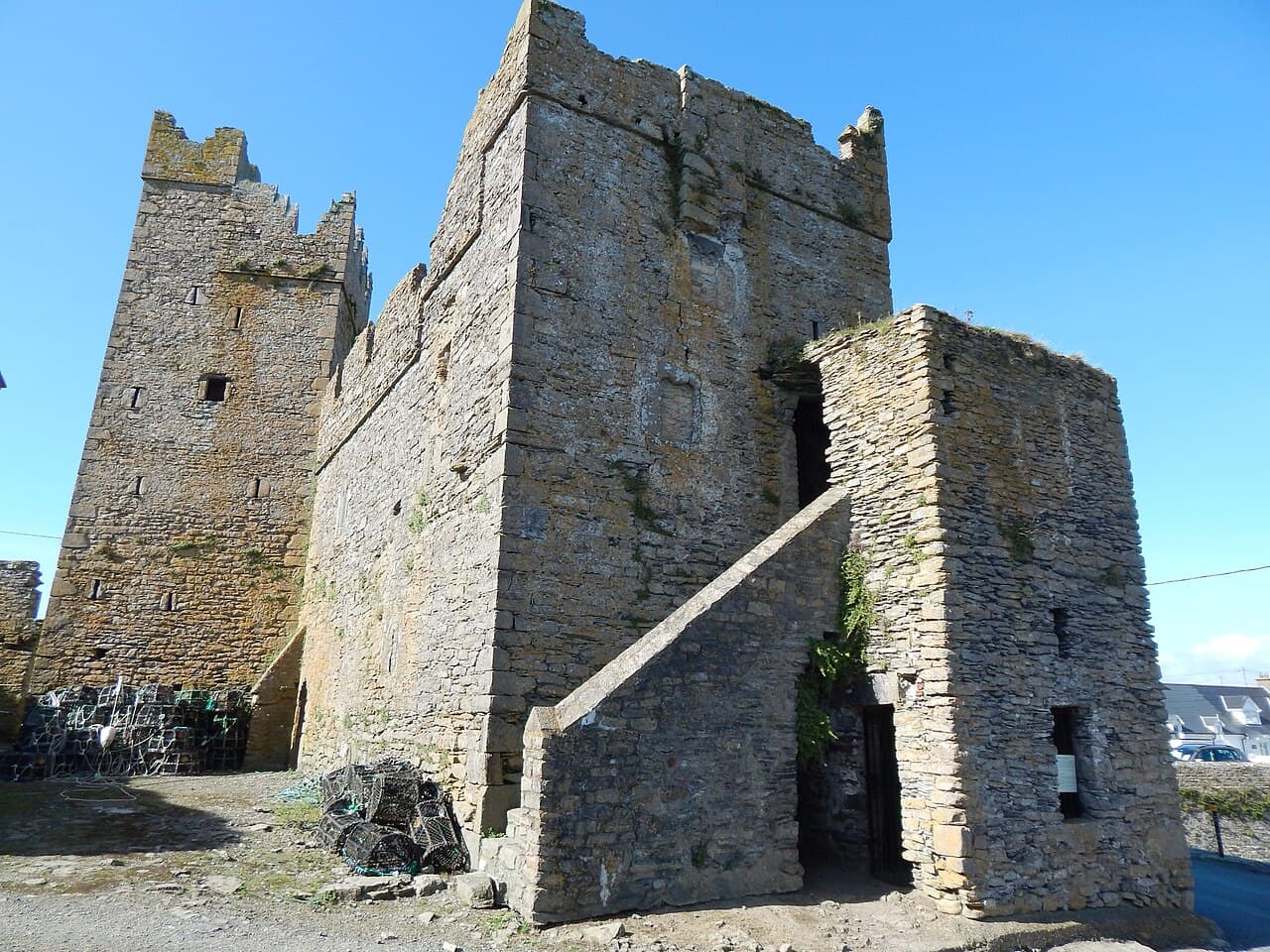
Slade Castle — Ireland castle

Slade Castle

Slade Castle, a 16th-century tower house on Hook Peninsula, Ireland
Slade, Ireland
Renaissance (15th–17th c.)
Well Preserved

Slade Castle is a remarkable example of a 16th-century tower house situated in the village of Slade on the Hook Peninsula in County Wexford, Ireland. This National Monument primarily dates to the late 15th or early 16th century, reflecting the architectural and historical characteristics of the Renaissance period in Ireland. Tower houses like Slade Castle were fortified residences built by Anglo-Norman and Gaelic Irish families, serving both defensive and domestic purposes.

Historical context and significance

Slade Castle was constructed during a time when Ireland experienced significant social and political changes. The late 15th and early 16th centuries marked a period of consolidation of power by local lords and the Anglo-Norman settlers. The castle was built as a fortified home to protect the occupants from raids and conflicts common in the region. Its location on the Hook Peninsula, a strategic coastal area, allowed control over maritime routes and local trade.

The castle is associated with the prominent local families who held influence in County Wexford during the Renaissance. It stands as a testament to the defensive architecture employed in Ireland during this era, combining residential comfort with military functionality.

Architectural features and layout

Structure and materials

Slade Castle is a classic example of a hill castle in the form of a tower house, constructed primarily from local stone. The tower rises several stories high, with thick walls designed to withstand attacks. The use of stone and the vertical emphasis of the structure provided both defense and a commanding view of the surrounding landscape.

Defensive elements

The castle features typical defensive architectural elements such as narrow slit windows for archers, battlements along the roofline, and a fortified entrance. The entrance is protected by a heavy wooden door and possibly a murder hole or machicolation, allowing defenders to repel attackers. The tower's height and limited access points made it difficult for enemies to breach.

Interior and domestic spaces

Inside, Slade Castle would have contained a great hall used for dining and gatherings, private chambers for the lord and his family, and storage areas. Fireplaces and narrow spiral staircases are characteristic features. The design balanced security with the needs of daily life, reflecting the dual role of the tower house as a home and fortress.

Preservation and current condition

Today, Slade Castle is well preserved and maintained as a National Monument. It offers visitors a glimpse into Renaissance-era fortifications in Ireland. The castle's condition allows for exploration of its architectural features, including the battlements, tower rooms, and defensive structures.

Its preservation contributes to the cultural heritage of County Wexford and serves as an educational site for those interested in medieval and Renaissance Irish history.

Visiting Slade Castle

Slade Castle is accessible to the public, providing an opportunity to experience a Renaissance tower house firsthand. Visitors can explore the castle's interior, climb to the battlements for panoramic views of the Hook Peninsula, and learn about the historical context through onsite information.

The castle's location near the coast adds to its appeal, combining historical interest with scenic surroundings.

Visitor information

  • Opening hours: Typically open during daylight hours; specific times may vary seasonally.
  • Admission: Often free or with a nominal fee; check local sources before visiting.
  • Accessibility: Some areas may be challenging for those with mobility issues due to stairs and uneven surfaces.

Architectural legacy and cultural importance

Slade Castle represents the architectural style of Irish Renaissance tower houses, which were widespread across Ireland during the 15th and 16th centuries. These structures illustrate the adaptation of medieval defensive concepts into more comfortable residences that still prioritized security.

The castle contributes to the understanding of local history, feudal society, and the evolution of military architecture in Ireland. It remains a significant cultural landmark on the Hook Peninsula and within County Wexford.

Frequently asked questions (FAQ)

How do I get to Slade Castle?
Slade Castle is located in Slade, Ireland, and is accessible by car or public transport. The nearest major city is Wexford, from where you can take a bus or drive to the castle. Parking is available on-site for visitors.
What is the historical significance of Slade Castle?
Slade Castle dates back to the 15th century and is an important example of Irish medieval architecture. It served as a stronghold for the local nobility and played a role in various historical events throughout Irish history. The castle's rich history makes it a captivating site for visitors interested in Ireland's past.
When was Slade Castle built?
Slade Castle was constructed in the late 15th century, with its origins traced back to the year 1480. It showcases typical features of the period, including its distinctive tower and defensive structures. Restoration efforts have preserved its historical integrity for future generations.
Can I take guided tours of Slade Castle?
Yes, guided tours are available at Slade Castle, providing visitors with an enriched experience. The knowledgeable guides share fascinating stories and insights about the castle's history and architecture. It is recommended to check the schedule in advance as tours may vary throughout the year.
Why is Slade Castle popular among tourists?
Slade Castle is popular due to its stunning architecture, historical significance, and picturesque location by the sea. Visitors enjoy exploring the castle's well-preserved ruins and learning about its storied past. The scenic views surrounding the castle also make it a favorite for photography enthusiasts.
Is it possible to host events at Slade Castle?
Yes, Slade Castle offers facilities for hosting special events, including weddings and corporate gatherings. The unique backdrop of the castle creates a memorable setting for any occasion. It is advisable to contact the management for availability and specific arrangements.
What are the opening hours of Slade Castle?
Slade Castle is open to visitors from 10 AM to 5 PM daily, with extended hours during the summer months. It is advisable to check the official website for any seasonal changes or special closures. Arriving early can help you avoid crowds and enjoy a more peaceful visit.
What are the ticket prices for visiting Slade Castle?
Tickets to Slade Castle are reasonably priced, with discounts available for students and seniors. Children under a certain age can enter for free, making it an affordable outing for families. Visitors can purchase tickets on-site or online for convenience.
What is the best time to visit Slade Castle?
The best time to visit Slade Castle is during the spring and early autumn months when the weather is mild and pleasant. These seasons also offer fewer crowds, allowing for a more enjoyable exploration of the castle and its grounds. Additionally, the surrounding landscapes are particularly beautiful during this time.
Are there any nearby attractions to Slade Castle?
Yes, there are several attractions near Slade Castle, including stunning coastal walks and other historical sites. The charming town of Wexford is also nearby, offering shops, restaurants, and additional cultural experiences. Visitors can easily plan a full day of activities in the area.

Photo gallery

Slade Castle
Click to view

Photo by Ianfhunter•CC BY-SA 4.0

1 photo • Click any image to view in full screen

Information

Hill Castle

Loading map...

Visitor reviews

No reviews yet. Been here? Write the first review and help other travelers!

Write the first review

Visited this castle? Share your experience

Your review helps other travelers and adds first-hand knowledge to our encyclopedia.

Write a review

(5/5)

0/2000 characters

Your review will be visible after admin approval

Nearby castles

0 km

Slade Castle

Slade, United Kingdom

Slade Castle is a notable example of a late medieval fortified residence located in the village of Slade, within County Wexford, Ireland. This castle illustrates the architectural evolution typical of the period, beginning as a tower house in the 14th or 15th century and later expanded with a rectangular stronghouse in the late 16th century. The castle's strategic position near the harbor underscores its historical role in local maritime activities, including salt production. Origins and early history The original structure of Slade Castle was likely constructed by the Laffan family, who were prominent local landowners during the 14th and 15th centuries. The Laffans are believed to have had connections to the Knights Hospitallers of St John, a medieval military and religious order. This connection is supported by historical records indicating that Slade Castle was part of a manor owned by the Order in the 15th century, with the manor's center at Kilcloggan Castle further up the Hook Peninsula. The manor of the Knights Hospitallers The association with the Knights Hospitallers suggests that Slade Castle was not only a defensive stronghold but also part of a broader network of properties managed by the Order. When the Order was suppressed in 1541, the castle remained in the hands of the Laffan family, indicating their continued influence and ownership despite the political and religious upheavals of the time. Architectural development and features Originally, Slade Castle was built as a tower house, a common form of fortified residence in Ireland during the medieval period. Tower houses typically feature thick stone walls, narrow windows, and a vertical emphasis designed for defense and habitation. In the late 16th century, the Laffan family expanded the castle by adding a rectangular stronghouse adjoining the original tower. This addition reflects changes in architectural style and defensive needs, providing more spacious living quarters and enhanced fortifications. Defensive elements and layout The castle's design includes robust stone walls and a compact footprint typical of tower houses, with the later stronghouse offering a more rectangular plan. The proximity to the harbor was significant for controlling access and overseeing maritime activities. Nearby remnants of saltworks developed in the late 17th century by William Mansel, a tenant of the castle, highlight the economic activities linked to the site. Later history and ownership By 1666, ownership of Slade Castle had passed to the Loftus family, an influential family in the region. In 1684, the Loftus family rented the castle to William Mansel, who is known for developing the saltworks adjacent to the castle. These saltworks played a vital role in the local economy, and their remains still line the harbor area, providing a tangible link to the castle's post-medieval use. Decline and current state The exact date when Slade Castle was abandoned is not well documented. Today, the castle stands as a well-preserved example of a late medieval tower house and stronghouse complex. While the interior is not accessible to visitors, the exterior can be freely explored, offering a picturesque glimpse into Ireland's medieval architectural heritage. Visiting Slade Castle Slade Castle is open to the public for exterior viewing, allowing visitors to appreciate its medieval stonework and commanding location near the harbor. The site is valued for its historical significance and scenic setting on the Hook Peninsula. Although the interior remains closed, the castle's exterior and surrounding landscape provide ample opportunity for photography and historical interest.

Late Medieval (14th–15th c.)
Details
6.1 km

Dunmore Castle

Dunmore East, United Kingdom

Dunmore Castle is a historic coastal tower ruin located in the village of Dunmore East, within County Waterford, Ireland. This castle stands on a prominent cliffside overlooking the strand, approximately 200 meters from St. Andrew's Church. Its strategic position provided commanding views of the surrounding coastline and sea approaches, an important factor in its original defensive purpose. Origins and historical context The castle was constructed around 1640 by Lord Power of Curraghmore, a prominent landowner who possessed extensive estates in the region. The site itself likely had earlier defensive significance, as it is believed a promontory fort existed here before the castle's construction, indicating the location's long-standing military importance. During the early to mid-17th century, Ireland experienced significant political and military upheaval, including the Irish Confederate Wars. The building of Dunmore Castle during this period reflects the need for fortified residences that combined domestic comfort with defensive capabilities against potential threats. Architectural features and design The surviving structure of Dunmore Castle is a circular tower, which is an example of a coastal tower house typical of the 17th century. Unlike the traditional medieval round towers found in Ireland, which were primarily ecclesiastical and built much earlier, this tower served as a fortified residence and lookout point. The tower's circular design provided defensive advantages, allowing for better resistance against artillery and easier surveillance of the surrounding area. It was constructed using local stone, with thick walls to withstand attacks and harsh coastal weather conditions. While the castle was reportedly a striking sight in its prime, by the middle of the 18th century it had fallen into disrepair. Today, only this single tower remains, standing as a ruin that offers insight into the region's turbulent history and architectural evolution. Historical significance and decline Dunmore Castle's construction by the Power family, influential in County Waterford, illustrates the consolidation of land and power by Anglo-Irish nobility during the 17th century. The castle's location near the sea was strategic for monitoring maritime activity and protecting local interests. Despite its initial prominence, the castle did not survive intact through subsequent centuries. The decline in its military importance, combined with changing political and social circumstances, led to its gradual abandonment and ruin. Visiting Dunmore Castle today Currently, Dunmore Castle exists as a tower ruin accessible to the public, though visitors can only view it from the outside as the interior is not open for entry. The site is situated in a pleasant seaside village that attracts tourists for its scenic coastal views and historical ambiance. While modest in scale compared to larger castles, Dunmore Castle offers a tangible connection to Ireland's 17th-century fortifications and the legacy of the Power family. It is a point of interest for those exploring the heritage of County Waterford and the maritime history of the region. Architectural and cultural context Dunmore Castle represents a type of coastal fortress typical of the period, combining residential and defensive functions. Its circular tower form was a practical architectural solution to the challenges posed by artillery warfare and coastal defense needs. The castle's ruinous state today provides valuable insights for historians and archaeologists studying the evolution of Irish castles and the impact of 17th-century conflicts on local architecture.

Post-Renaissance (17th–18th c.)
Details
6.4 km

Kilcloggan Castle

East of L4045 Broomhill Point, United Kingdom

Kilcloggan Castle is a notable example of a 14th-century late medieval tower house located in the townland of Kilcloggan in County Wexford, Ireland. This slender, square castle rises to approximately 17 meters in height and reflects the architectural and historical legacy of the Knights Hospitallers of St John, who are believed to have constructed it as the center of their manor on the Hook Peninsula. The knights hospitallers and their manorial influence The Knights Hospitallers were a military and religious order active during the medieval period, known for their role in the Crusades and for establishing fortified sites across Europe. Kilcloggan Castle served as a strategic stronghold and administrative center for the order's holdings in the region. Alongside Kilcloggan, the Knights Hospitallers controlled other significant castles on the Hook Peninsula, including Ballyhack Castle and Slade Castle. Their presence in this part of Ireland was part of a broader network of fortifications that helped secure their territorial and economic interests. Architectural features and layout Kilcloggan Castle is characterized by its slender, square plan typical of many late medieval tower houses in Ireland. Standing approximately 17 meters tall, the castle would originally have been surrounded by a bawn—a defensive walled courtyard—though this feature has not survived to the present day. The tower house likely contained multiple floors with narrow windows and thick stone walls designed for defense as well as habitation. Its vertical emphasis and compact footprint reflect the need for both protection and efficient use of space during the turbulent medieval period. Historical ownership and changes The castle's history is closely tied to the fate of the Knights Hospitallers, who were suppressed in Ireland in 1541 during the Tudor reformation of monastic and military orders. Following this suppression, Kilcloggan Castle changed hands several times. By 1587, it was held by Henry Radcliffe, a figure associated with the English administration in Ireland. Shortly thereafter, in 1591, ownership passed to Sir Dudley Loftus, whose family retained possession of the castle until the late 19th century. This continuity of ownership through the Loftus family reflects the castle's role as a landed estate rather than a purely military fortress in later centuries. Current status and accessibility Today, Kilcloggan Castle stands within the garden of a private residence, limiting public access to the site. Despite its restricted accessibility, the castle remains an important architectural and historical monument within County Wexford. Its preservation as a well-preserved late medieval tower house offers valuable insight into the defensive structures and manorial estates of the period. Significance in Irish medieval architecture Kilcloggan Castle exemplifies the typical Irish tower house form that proliferated during the late medieval period. These structures combined residential and defensive functions, often serving as the homes of local lords or military orders. The castle's association with the Knights Hospitallers adds an additional layer of historical interest, highlighting the role of religious military orders in shaping the medieval landscape of Ireland. While many tower houses have fallen into ruin, Kilcloggan's relatively intact state provides a valuable case study for scholars and enthusiasts of medieval architecture. Architectural details and defensive features The castle's square tower design includes thick stone walls that would have provided substantial protection against attackers. Narrow slit windows allowed defenders to observe and repel assaults while minimizing vulnerability. The original bawn would have added an outer layer of defense, enclosing the courtyard and ancillary buildings such as stables or workshops. Internally, the tower likely featured vaulted chambers and a spiral staircase, common elements in tower houses designed to maximize defense and efficient movement within limited space. Context within the Hook Peninsula The Hook Peninsula, where Kilcloggan Castle is situated, was a strategic location during the medieval period due to its coastal position and access to maritime routes. The presence of multiple castles, including Ballyhack and Slade, underscores the peninsula's importance as a defensive and administrative region. Kilcloggan Castle's role as the center of the Knights Hospitallers' manor highlights its significance within this network of fortifications.

Late Medieval (14th–15th c.)
Details

