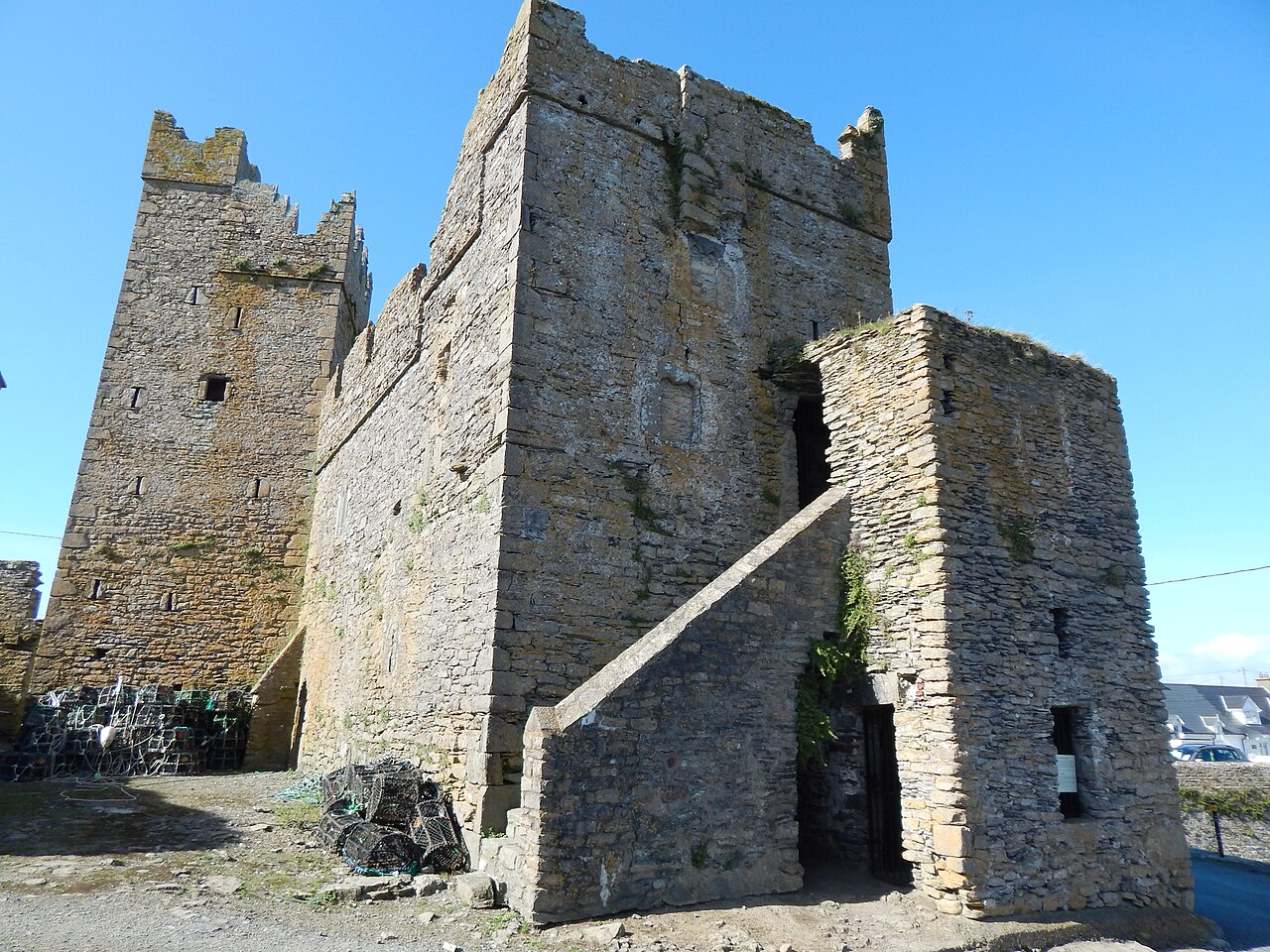
Dunmore Castle
Dunmore Castle is a historic coastal tower ruin located in the village of Dunmore East, within County Waterford, Ireland. This castle stands on a prominent cliffside overlooking the strand, approximately 200 meters from St. Andrew's Church. Its strategic position provided commanding views of the surrounding coastline and sea approaches, an important factor in its original defensive purpose.
Origins and historical context
The castle was constructed around 1640 by Lord Power of Curraghmore, a prominent landowner who possessed extensive estates in the region. The site itself likely had earlier defensive significance, as it is believed a promontory fort existed here before the castle's construction, indicating the location's long-standing military importance.
During the early to mid-17th century, Ireland experienced significant political and military upheaval, including the Irish Confederate Wars. The building of Dunmore Castle during this period reflects the need for fortified residences that combined domestic comfort with defensive capabilities against potential threats.
Architectural features and design
The surviving structure of Dunmore Castle is a circular tower, which is an example of a coastal tower house typical of the 17th century. Unlike the traditional medieval round towers found in Ireland, which were primarily ecclesiastical and built much earlier, this tower served as a fortified residence and lookout point.
The tower's circular design provided defensive advantages, allowing for better resistance against artillery and easier surveillance of the surrounding area. It was constructed using local stone, with thick walls to withstand attacks and harsh coastal weather conditions.
While the castle was reportedly a striking sight in its prime, by the middle of the 18th century it had fallen into disrepair. Today, only this single tower remains, standing as a ruin that offers insight into the region's turbulent history and architectural evolution.
Historical significance and decline
Dunmore Castle's construction by the Power family, influential in County Waterford, illustrates the consolidation of land and power by Anglo-Irish nobility during the 17th century. The castle's location near the sea was strategic for monitoring maritime activity and protecting local interests.
Despite its initial prominence, the castle did not survive intact through subsequent centuries. The decline in its military importance, combined with changing political and social circumstances, led to its gradual abandonment and ruin.
Visiting Dunmore Castle today
Currently, Dunmore Castle exists as a tower ruin accessible to the public, though visitors can only view it from the outside as the interior is not open for entry. The site is situated in a pleasant seaside village that attracts tourists for its scenic coastal views and historical ambiance.
While modest in scale compared to larger castles, Dunmore Castle offers a tangible connection to Ireland's 17th-century fortifications and the legacy of the Power family. It is a point of interest for those exploring the heritage of County Waterford and the maritime history of the region.
Architectural and cultural context
Dunmore Castle represents a type of coastal fortress typical of the period, combining residential and defensive functions. Its circular tower form was a practical architectural solution to the challenges posed by artillery warfare and coastal defense needs.
The castle's ruinous state today provides valuable insights for historians and archaeologists studying the evolution of Irish castles and the impact of 17th-century conflicts on local architecture.
Frequently asked questions (FAQ)
- What is the historical significance of Dunmore Castle?
- Dunmore Castle, located in Dunmore East, is a striking example of 19th-century architecture and has a rich history tied to the local area. Originally built as a private residence, it has served various purposes over the years, reflecting the evolution of the region and its inhabitants.
- When was Dunmore Castle built?
- Dunmore Castle was constructed in the early 19th century, with its foundation laid around 1825. The castle showcases the Gothic Revival architectural style, which was popular during that period.
- What are the opening hours for Dunmore Castle?
- Dunmore Castle typically opens to visitors from 10 AM to 5 PM, but hours may vary seasonally. It is advisable to check the official website or local tourist information for the most accurate and up-to-date information before your visit.
- Can I visit Dunmore Castle?
- Yes, visitors are welcome to explore Dunmore Castle, but access may be limited due to private ownership. Be sure to check for any guided tours that may be available to enhance your experience.
- Is it possible to access Dunmore Castle for those with mobility issues?
- Dunmore Castle has limited accessibility options, as the terrain around the castle can be uneven. Visitors with mobility concerns are encouraged to contact the management in advance to inquire about specific accommodations.
- What is the best time to visit Dunmore Castle?
- The best time to visit Dunmore Castle is during the late spring and early summer months when the weather is generally milder and the surrounding gardens are in full bloom. Additionally, this period tends to see fewer tourists, allowing for a more peaceful experience.
- What nearby attractions can I visit while in Dunmore East?
- While in Dunmore East, visitors can enjoy the beautiful coastal views, sandy beaches, and local seafood restaurants. The charming fishing village atmosphere offers additional attractions such as scenic walks and historical sites in the vicinity.
- What are the ticket prices for visiting Dunmore Castle?
- Ticket prices for Dunmore Castle can vary depending on the type of tour or access offered. It is recommended to check the official website for current pricing and any special offers available for visitors.
Information
Address
Dock Rd, Dunmore East, County Waterford, Ireland
Loading map...
Visitor reviews
No reviews yet. Been here? Write the first review and help other travelers!
Write the first reviewVisited this castle? Share your experience
Your review helps other travelers and adds first-hand knowledge to our encyclopedia.