Skopje Fortress
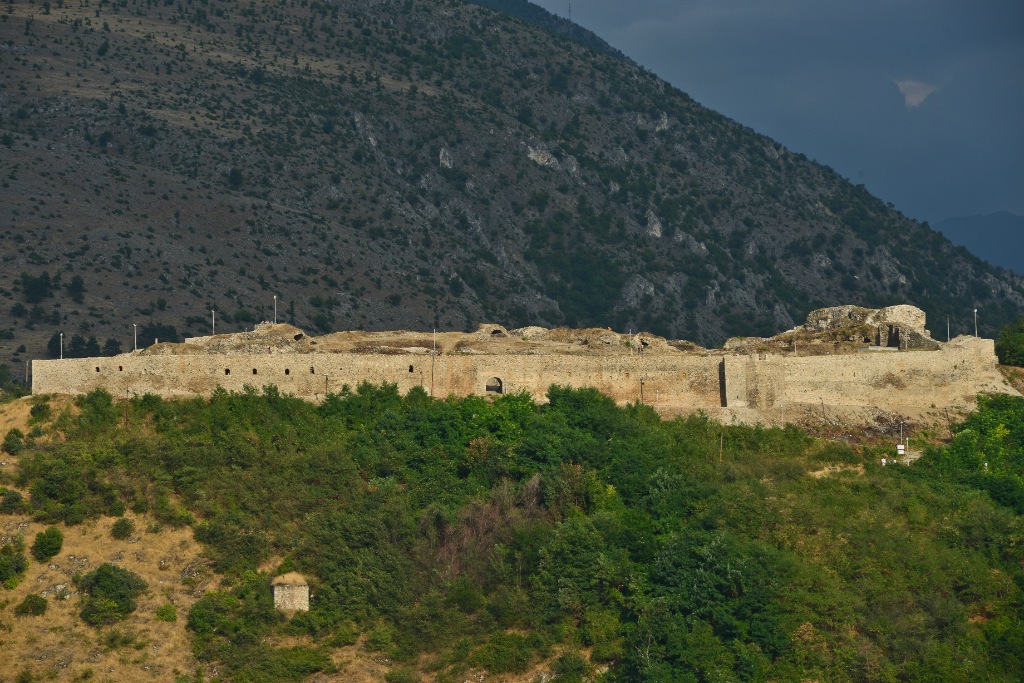
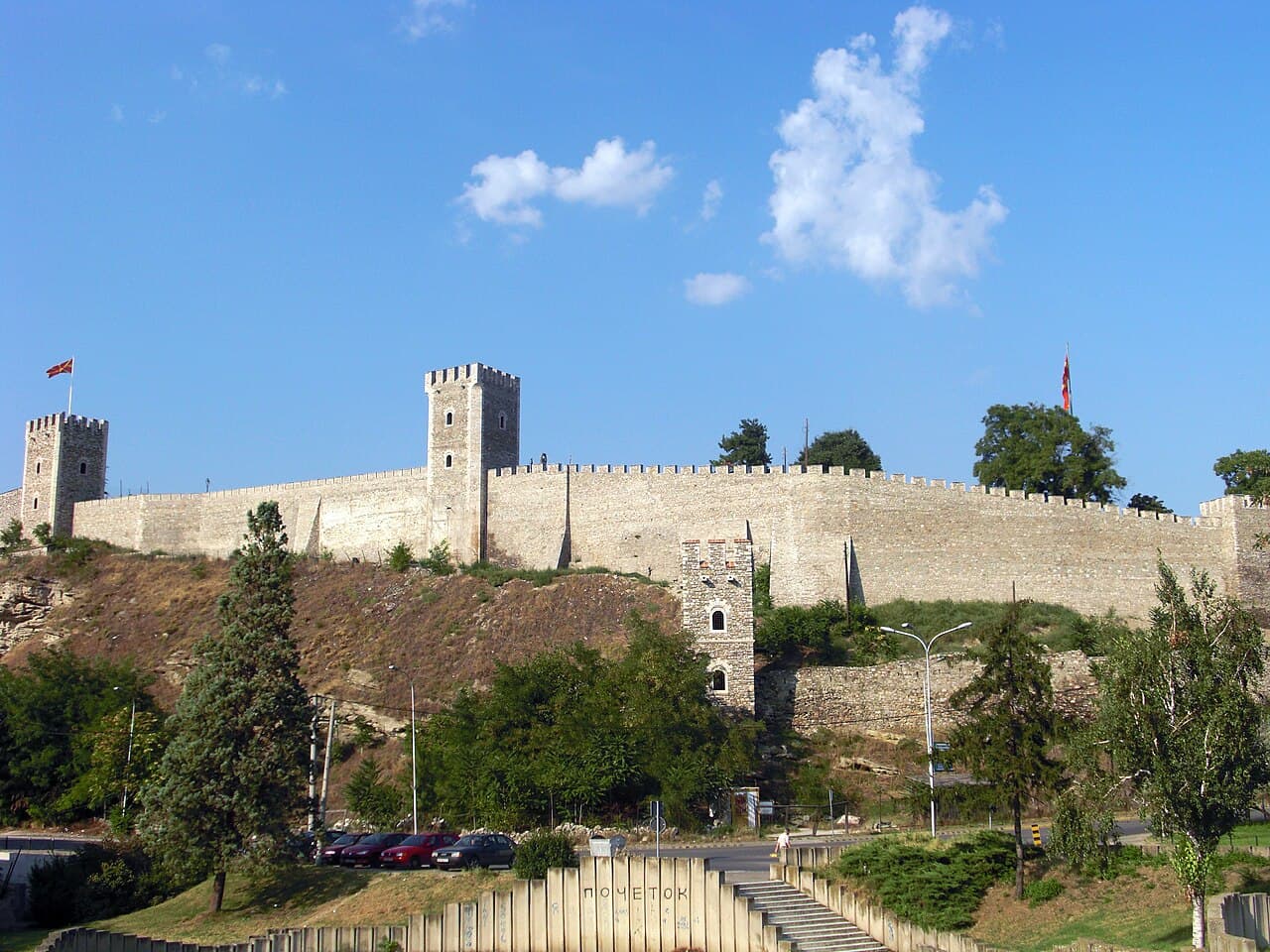
Skopje Fortress, locally known as Kale, stands prominently on the highest point in Skopje, North Macedonia, overlooking the tranquil Vardar River. This fortress is a significant historic landmark that has witnessed the rise and fall of empires and played a pivotal role in the medieval history of the Balkans. Its strategic location and enduring presence have made it a symbol of the city, even appearing on the coat of arms of Skopje and incorporated into the city’s flag.
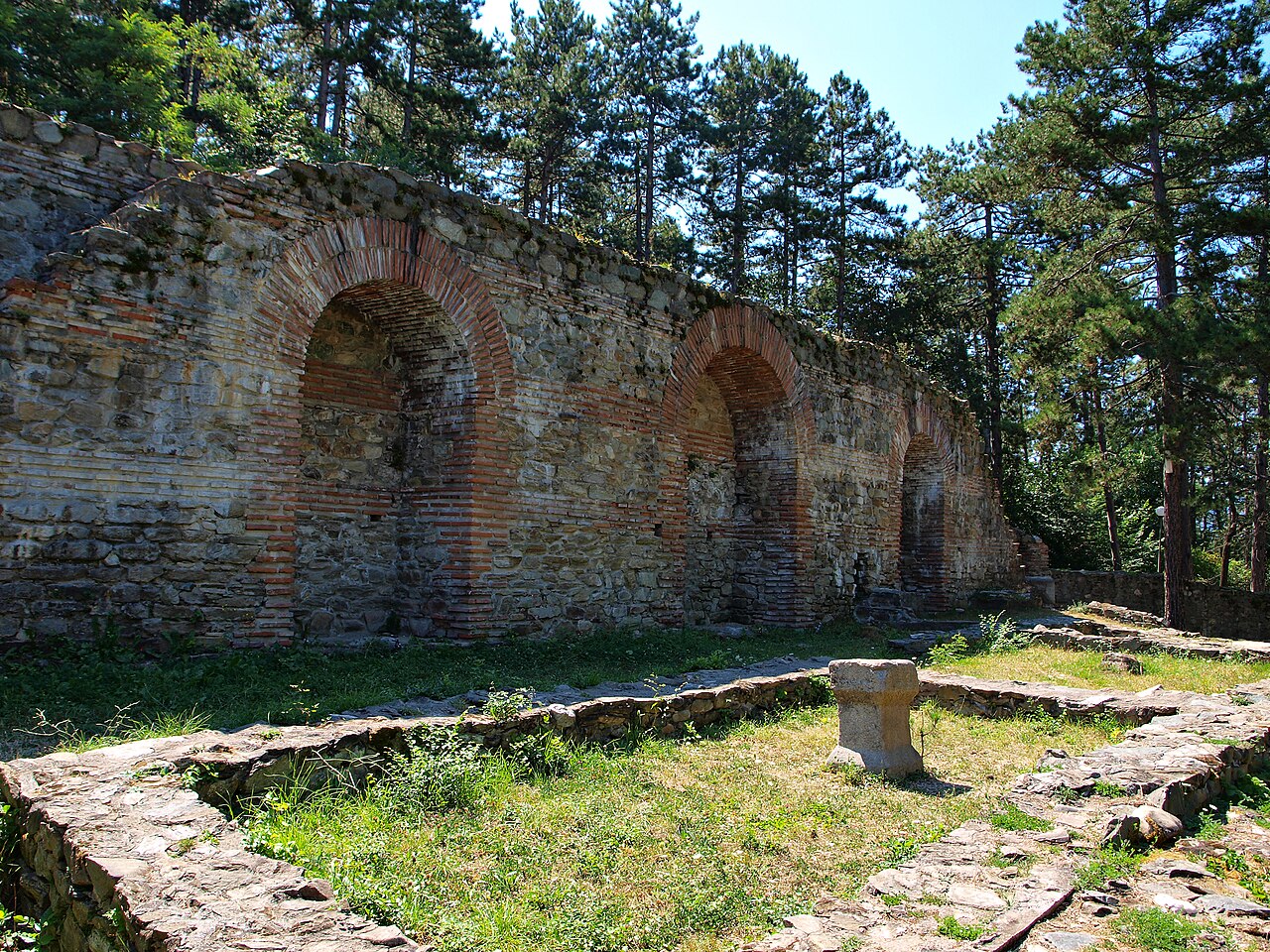
The origins of the fortress trace back to the 6th century AD, during the reign of Emperor Justinian I. It was constructed using yellow limestone, travertine, and Roman building materials salvaged from the nearby ancient city of Skupi, which was devastated by a catastrophic earthquake in 518 AD. This early fortress was part of Justinian’s efforts to fortify the region following the destruction of Skupi, reflecting the Byzantine architectural style and military engineering of the period.
Early medieval origins and construction phases
The initial fortress, built on a site with a history of human habitation dating back to the Neolithic and Bronze Ages (around 4000 BC), was continuously developed over the centuries. The fortress underwent significant construction and expansion in the 10th and 11th centuries, building upon the remains of the original Byzantine structure. These phases reflect the fortress's ongoing military importance in the region, particularly during the turbulent periods of Byzantine-Bulgarian conflicts.
Byzantine and Bulgarian influence
Between 992 and 1015, Skopje served as the capital of the First Bulgarian Empire. The fortress was central during this time, notably as the focal point of the uprising led by Peter Delyan against Byzantine rule. Although detailed records of the fortress’s medieval appearance are scarce, historical documents suggest it was a fortified complex with typical defensive features such as thick walls and towers.
The fortress in the Serbian empire
In 1346, the fortress gained further prominence when Stefan Dušan crowned himself emperor within its walls, marking Skopje as the new capital of the Serbian Empire. This event underscored the fortress’s political and symbolic significance in medieval Balkan history. Under Serbian rule, the fortress likely saw enhancements to its fortifications, adapting to the military needs of the time.
Architectural features and layout
Skopje Fortress is classified as a bastioned fortress, a design that incorporates projecting bastions allowing defenders to cover adjacent walls with gunfire, a feature that became increasingly important with the advent of gunpowder weaponry. The fortress’s walls are constructed primarily from yellow limestone and travertine, with many sections incorporating Roman-era inscriptions and materials, highlighting the reuse of ancient building elements.
The fortress encompasses a complex layout with defensive walls, bastions, gates, and internal courtyards. Archaeological excavations have revealed remains of residential quarters, churches, and other structures within the fortress, indicating it was not only a military installation but also a center of administration and habitation.
Decline and recent restoration efforts
Following the Ottoman conquest, the fortress gradually fell into neglect and was eventually abandoned. Its strategic importance diminished, and it suffered damage from various earthquakes, notably the devastating 1963 Skopje earthquake, which partially destroyed the remaining structures. For decades, the fortress remained in a state of ruin.
Recent decades have seen efforts to excavate, preserve, and partially restore the fortress. These initiatives aim to protect the site’s cultural heritage and promote it as a major tourist attraction. Today, Skopje Fortress stands as a well-preserved bastioned fortress, offering visitors a glimpse into the layered history of Skopje and the broader Balkan region.
Cultural and historical significance
As a symbol of resilience and continuity, Skopje Fortress embodies the complex history of North Macedonia, from its ancient roots through Byzantine, Bulgarian, Serbian, and Ottoman periods. It remains a focal point for understanding medieval fortification architecture and the geopolitical dynamics of the Balkans.
Visitors to the fortress can explore its extensive walls and bastions, enjoy panoramic views of the Vardar River and the city, and appreciate the archaeological findings that shed light on the daily lives of its former inhabitants. The fortress is a testament to the enduring strategic importance of this site over more than a millennium.
Frequently asked questions (FAQ)
- When was Skopje Fortress originally built?
- Skopje Fortress was originally constructed in the 6th century AD during the reign of Emperor Justinian I, using materials from the Roman city of Skupi after it was destroyed by an earthquake in 518.
- What architectural style characterizes Skopje Fortress?
- The fortress primarily reflects Byzantine architectural influences with later modifications, featuring bastioned fortifications typical of medieval military architecture.
- Can visitors access Skopje Fortress year-round?
- Yes, Skopje Fortress is generally open to visitors throughout the year, though specific opening hours may vary seasonally. It is advisable to check local tourism resources for current visiting times.
- What historical events took place at Skopje Fortress?
- Skopje Fortress was the site where Stefan Dušan crowned himself emperor in 1346, marking Skopje as the capital of the Serbian Empire. It also played roles during Byzantine and Bulgarian rule.
- Is there an entrance fee to visit Skopje Fortress?
- Visiting Skopje Fortress is typically free of charge, making it an accessible historical site for tourists and locals alike.
Photo gallery

Photo by Yemc•Public domain
Information
Current owner
Municipality of Skopje
Loading map...
Visitor reviews
No reviews yet. Been here? Write the first review and help other travelers!
Write the first reviewVisited this castle? Share your experience
Your review helps other travelers and adds first-hand knowledge to our encyclopedia.