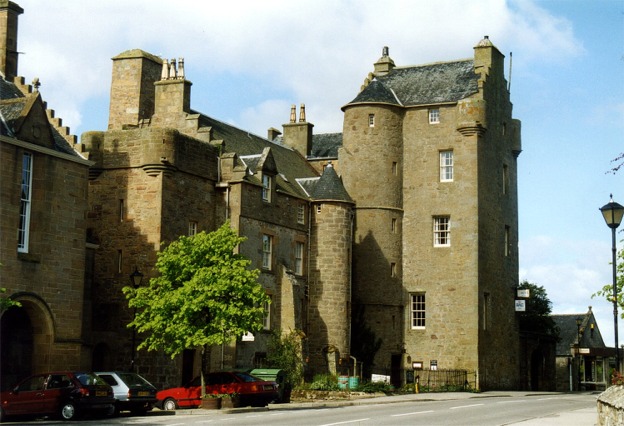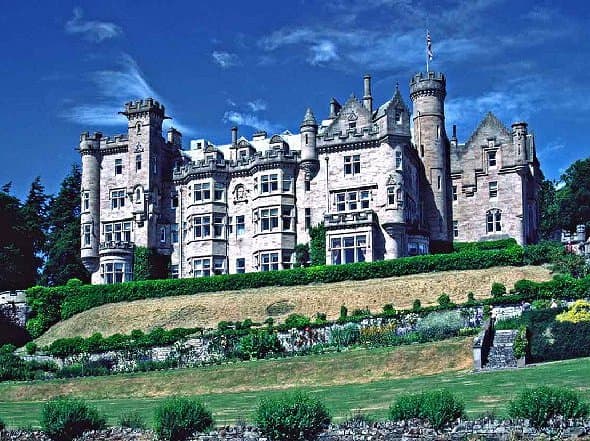
Skibo Castle
Skibo Castle is a historic hill castle located in the Highland region of Scotland, near the town of Dornoch. Its origins date back to the 12th century, with the first recorded mention in a charter from 1211. Originally, the castle served as the residence of the Bishops of Caithness until the mid-16th century, when the estate was transferred to John Gray in 1545 to strengthen alliances amid the rising threat of Protestant uprisings in northern Scotland.
The castle's ownership changed hands several times over the centuries. In the 18th century, a relative of the Gray family constructed a modern house on the estate before 1760. The property saw further development and enlargement in 1872 under Evan Charles Sutherland-Walker, who extended the house and improved the grounds. However, by the late 19th century, the castle had fallen into significant disrepair.
The transformation under Andrew Carnegie
In 1897, the American industrialist and philanthropist Andrew Carnegie leased Skibo Castle with an option to buy. He purchased the estate in 1898 for £85,000, despite its deteriorated condition. Carnegie invested over £2 million in extensive renovations and expansions, increasing the castle’s size from approximately 1,500 square meters to more than 5,600 square meters. His improvements included the creation of the artificial Loch Ospisdale and an 18-hole golf course, which enhanced the estate's status as a luxurious sporting retreat.
Carnegie’s vision transformed Skibo Castle into a grand Edwardian estate, reflecting the post-Renaissance architectural influences of the late 19th and early 20th centuries. The castle incorporated elements of traditional Scottish baronial style blended with modern comforts of the era. It remained in the Carnegie family until 1982, serving as a private residence and retreat.
Modern era and the Carnegie Club
Following its sale by the Carnegie family, businessman Peter de Savary acquired Skibo Castle and established the Carnegie Club, a private members-only hotel and country club. The club offers exclusive accommodation within the castle and its surrounding lodges, maintaining the luxurious atmosphere established by Carnegie. The estate provides a variety of recreational activities, including golf, clay pigeon shooting, tennis, and horse riding.
The club's Carnegie links golf course is notable for its exclusivity, with fewer than 1,000 rounds played annually, ensuring a private and undisturbed experience for members. The funds raised from membership fees are reinvested into maintaining and upgrading the estate, including a sympathetic restoration of Carnegie's historic swimming pool, completed in 2010.
Architectural features and grounds
Skibo Castle stands prominently overlooking the Dornoch Firth, set within expansive grounds covering approximately 20,000 acres. The castle's architecture reflects a blend of styles from its long history, with the current structure primarily reflecting post-Renaissance and Edwardian influences. The extensive renovations carried out by Carnegie introduced modern amenities while preserving the castle's historic character.
The estate's landscape features the man-made Loch Ospisdale, designed to enhance the natural beauty and recreational opportunities of the grounds. The castle's various lodges, also restored and modernized, provide additional accommodation for club members, preserving the estate's function as a private retreat.
Historical significance
Skibo Castle's long history as a religious residence, noble estate, and private retreat highlights its evolving role in Scottish heritage. Its association with the Bishops of Caithness during the medieval period underscores its strategic and ecclesiastical importance. The castle's transformation under Andrew Carnegie marks a significant chapter in its history, reflecting the wealth and social aspirations of the industrial age.
Visiting and membership
Today, Skibo Castle operates exclusively as the Carnegie Club, a members-only establishment. It does not offer public tours but provides luxurious accommodation and recreational facilities to its members and their guests. The club's exclusivity and limited membership contribute to the preservation of the estate's tranquil and private atmosphere.
Skibo Castle remains a notable example of a Scottish hill castle that has adapted through centuries, blending historical legacy with modern luxury. Its preservation and continued use as a private club ensure that its architectural and cultural heritage endures into the 21st century.
Frequently asked questions (FAQ)
- How do I get to Skibo Castle?
- Skibo Castle is located near Dornoch in the Scottish Highlands. The nearest major airport is Inverness Airport, which is approximately 50 miles away. From there, you can take a train or drive to Dornoch, followed by a short taxi ride to the castle.
- What is the historical significance of Skibo Castle?
- Skibo Castle was originally built in the late 19th century and has a rich history associated with the Carnegie family. Andrew Carnegie, the famous industrialist, purchased the castle in 1898 and made several renovations, turning it into a luxurious retreat. Today, it is known for its blend of history and modern luxury.
- When was Skibo Castle built?
- Construction of Skibo Castle began in 1890 and was completed in 1892. The castle was designed by the architect George Washington Browne in a Scottish Baronial style, reflecting its grandeur and historical essence. Over the years, it has undergone various renovations to preserve its historical features.
- Can I visit Skibo Castle?
- Skibo Castle is a private estate and is not open to the general public. However, it is possible to visit if you are a guest at the Carnegie Club, which offers membership and access to the estate's amenities. Reservations are required, so it's best to plan ahead.
- Why is Skibo Castle a popular destination?
- Skibo Castle is popular for its stunning architecture, beautiful surroundings, and rich history. It offers a unique experience of luxury combined with the charm of a historic castle. Guests enjoy golfing, fine dining, and various recreational activities amidst the scenic Highlands.
- Is it possible to host events at Skibo Castle?
- Yes, Skibo Castle is available for private events, including weddings, corporate retreats, and special celebrations. The castle's picturesque setting and exceptional service make it a sought-after venue. Interested parties should contact the castle management for more details on availability and packages.
- What are the opening hours of Skibo Castle?
- As Skibo Castle operates primarily as a private members' club, it does not have standard public opening hours. Access is granted to members and their guests, so it is advisable to check with the Carnegie Club for specific visiting times. Planning in advance is essential for those wishing to experience the castle.
- What are some nearby attractions to Skibo Castle?
- Nearby attractions include the beautiful Dornoch Beach, the historic Dornoch Cathedral, and the stunning landscape of the Highlands. Visitors can also explore the charming town of Dornoch, which offers shops, restaurants, and local culture. Additionally, the area is known for its excellent golfing opportunities, including the famous Royal Dornoch Golf Club.
- What are the ticket prices for visiting Skibo Castle?
- As Skibo Castle is not open to the general public, there are no standard ticket prices. Access is primarily available through membership at the Carnegie Club, which has its own fee structure. For specific information on membership and associated costs, it is recommended to visit the Carnegie Club's official website.
Photo gallery

Information
Website
Visit websiteSources & official resources
Verify the information above using these authoritative references.
Loading map...
Visitor reviews
No reviews yet. Been here? Write the first review and help other travelers!
Write the first reviewVisited this castle? Share your experience
Your review helps other travelers and adds first-hand knowledge to our encyclopedia.