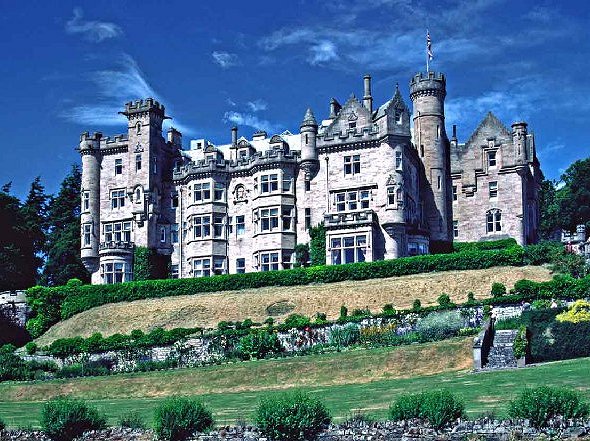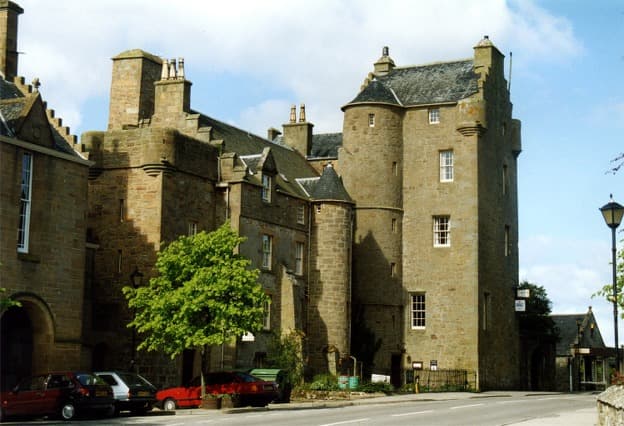
Dornoch Castle
Dornoch Castle stands as a significant historic structure located in the town of Dornoch, Scotland, directly opposite the town's cathedral. Constructed around 1500, it originally served as the residence for the bishops of Caithness, embodying the ecclesiastical authority and influence in the region during the late medieval period. The castle's initial purpose as an episcopal home reflects the intertwining of religious and feudal power in Scotland during the Renaissance era.
Early history and episcopal origins
The castle was built in the early 16th century, a time when fortified residences were common among high-ranking church officials to assert their status and provide security. Bishop Robert Stewart, a notable figure in the castle's history, transferred ownership in 1557 to John Gordon, 11th Earl of Sutherland, marking a transition from ecclesiastical to noble possession. This change in ownership reflects broader political and social shifts in Scotland during the mid-16th century.
Destruction and rebuilding after clan conflict
In 1570, Dornoch Castle was severely damaged when it was set alight during a violent feud between the McKay and Murray clans. The fire necessitated substantial rebuilding, during which the castle's most prominent architectural feature, the upper part of the tower, was added. This rebuilt tower incorporated a spiral staircase, which later provided access to a courtroom established in the early 19th century, illustrating the castle's evolving functional roles.
Architectural evolution and civic use
Following a period of decline in the 18th century, the castle underwent restoration between 1813 and 1814. These works adapted the building for civic purposes, including use as a school and prison. Later, in 1859–1860, architect William Fowler remodeled the castle extensively to serve as a courthouse and the headquarters for the Sheriff of Sutherland. This phase introduced significant structural changes, including functional interior spaces suited for legal and administrative activities.
Late 19th-century modifications
Around 1880, further alterations were made to the castle, notably the heightening of the south-west block and the addition of a three-storey east tower. These expansions increased the castle's footprint and reflected its transformation into a hunting lodge catering to visiting sportsmen. The architectural adaptations during this period exhibit a blend of practicality and aesthetic enhancement, aligning with Victorian tastes and leisure culture.
20th-century transformation and current use
In the 20th century, Dornoch Castle transitioned into private ownership in 1922 and was converted into a hotel in 1947. The hotel currently offers 24 guest rooms, including suites and garden rooms added in the 1970s. These modern additions coexist with the castle's historic fabric, providing contemporary accommodation while preserving the building's heritage. The castle holds a category B listed building status, recognizing its regional architectural and historical significance.
Architectural features and layout
The castle's structure reveals a multi-phased development reflecting its varied uses over centuries. The tower with spiral staircase remains a defining vertical element, historically connecting to the courtroom used in the 1800s. The heightened south-west block and the three-storey east tower added in the late 19th century expanded the castle's scale and functionality. The building materials and decorative details, while not extensively documented, suggest a pragmatic approach to restoration and adaptation, balancing preservation with new uses.
Cultural significance and local folklore
Dornoch Castle's history is enriched by local legend, particularly the reputed haunting by Andrew McCornish, a 17th-century covenanter executed for sheep stealing. This story links the castle to Scotland's complex religious and social history during the turbulent covenanting period. Such folklore contributes to the castle's cultural identity and visitor interest, adding an intangible layer to its historical narrative.
Visiting dornoch castle today
Today, Dornoch Castle operates as a family-run hotel, offering guests a chance to experience its historic ambiance alongside modern comforts. Its location opposite Dornoch Cathedral situates it within a historic townscape rich in heritage. Visitors can appreciate the castle's architectural evolution, from its origins as an episcopal residence through its civic and leisure adaptations, making it a notable destination for those interested in Scottish history and architecture.
Frequently asked questions (FAQ)
- How do I visit Dornoch Castle hotel?
- Dornoch Castle operates as a family-run hotel offering 24 rooms. Visitors can book accommodations directly through the hotel's website or by phone. The hotel is located in the town of Dornoch, opposite the cathedral, making it easily accessible by car or public transport.
- What is the historical significance of Dornoch Castle?
- Dornoch Castle was originally built around 1500 as the residence for the bishops of Caithness. It later served as a noble residence, courthouse, and hunting lodge, reflecting its varied roles in Scottish history.
- When was Dornoch Castle restored and repurposed as a courthouse?
- The castle was restored between 1813 and 1814 and remodeled in 1859–1860 to serve as a courthouse and the sheriff's headquarters for Sutherland.
- Can I explore the castle's architectural features during a visit?
- As a functioning hotel, public access to all architectural features may be limited. However, guests can appreciate the castle's historic elements such as the tower with spiral staircase and the 19th-century additions during their stay.
- Is Dornoch Castle haunted?
- Local legend tells of a ghost named Andrew McCornish, a 17th-century covenanter executed for sheep stealing. This folklore adds to the castle's cultural heritage and visitor intrigue.
Photo gallery

Information
Sources & official resources
Verify the information above using these authoritative references.
Loading map...
Visitor reviews
No reviews yet. Been here? Write the first review and help other travelers!
Write the first reviewVisited this castle? Share your experience
Your review helps other travelers and adds first-hand knowledge to our encyclopedia.