Skiathos Castle
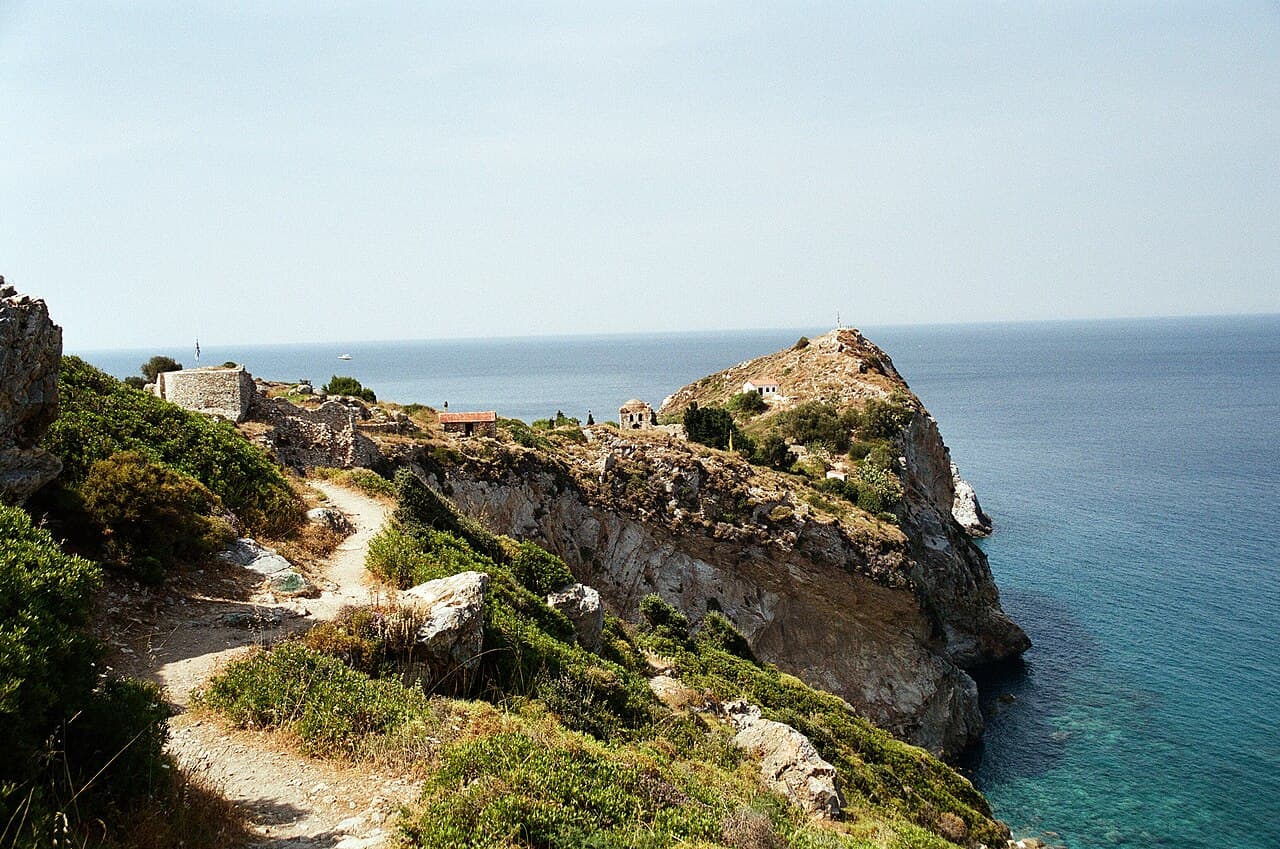
Skiathos Castle stands as a remarkable example of a medieval hill castle in Greece, embodying a rich history of strategic defense and cultural transitions. Established in the mid-14th century by the local Byzantine population, the fortress was constructed around 1360 as a direct response to the persistent threat of Turkish pirate raids. Its location on a rocky promontory at the northernmost point of Skiathos island provided natural protection with steep cliffs on three sides, while man-made fortifications secured the vulnerable landward approach. This combination of natural and constructed defenses made Skiathos Castle a formidable stronghold throughout its active history.
Historical context and significance
The castle's foundation marked a pivotal moment when the inhabitants of the original settlement, now the modern town of Skiathos, sought refuge from maritime threats. Initially under Byzantine control, the castle witnessed significant political upheaval following the Fall of Constantinople in 1453. Subsequently, the fortress came under the control of the Republic of Venice, which imposed a strict and often harsh regime. Venetian governance was marked by tension and rebellion, notably the failed uprising against Governor Vicenzo Baffo in 1518, reflecting local resistance to foreign rule.
The strategic importance of Skiathos Castle was highlighted during the Ottoman-Venetian conflicts. In 1538, the castle endured a siege led by the famed Ottoman admiral Hayreddin Barbarossa. The inhabitants, hoping to avoid massacre, killed the Venetian governor and surrendered the fortress to Ottoman forces. However, this transition brought severe consequences, including the enslavement and killing of many residents. The Ottomans reinforced the castle's defenses in 1619, underscoring its ongoing military value.
The mid-17th century saw a brief Venetian reconquest under Francesco Morosini, who recaptured the castle in 1660 after a raid in 1655. Venetian rule remained oppressive, with public executions and forced conscription of locals as rowers in the Venetian navy. Despite these hardships, the castle maintained its role as a key defensive site in the region.
During the Greek War of Independence in the early 19th century, Skiathos Castle was a focal point of revolutionary activity. Greek forces from Mount Olympus repeatedly targeted the fortress, culminating in its capture and plunder by rebels led by Tsamis Karatasos on July 14, 1826. Following the establishment of the independent Greek state in 1829, the castle was abandoned in favor of resettling the original town site, marking the end of its military significance.
Architectural features and defensive design
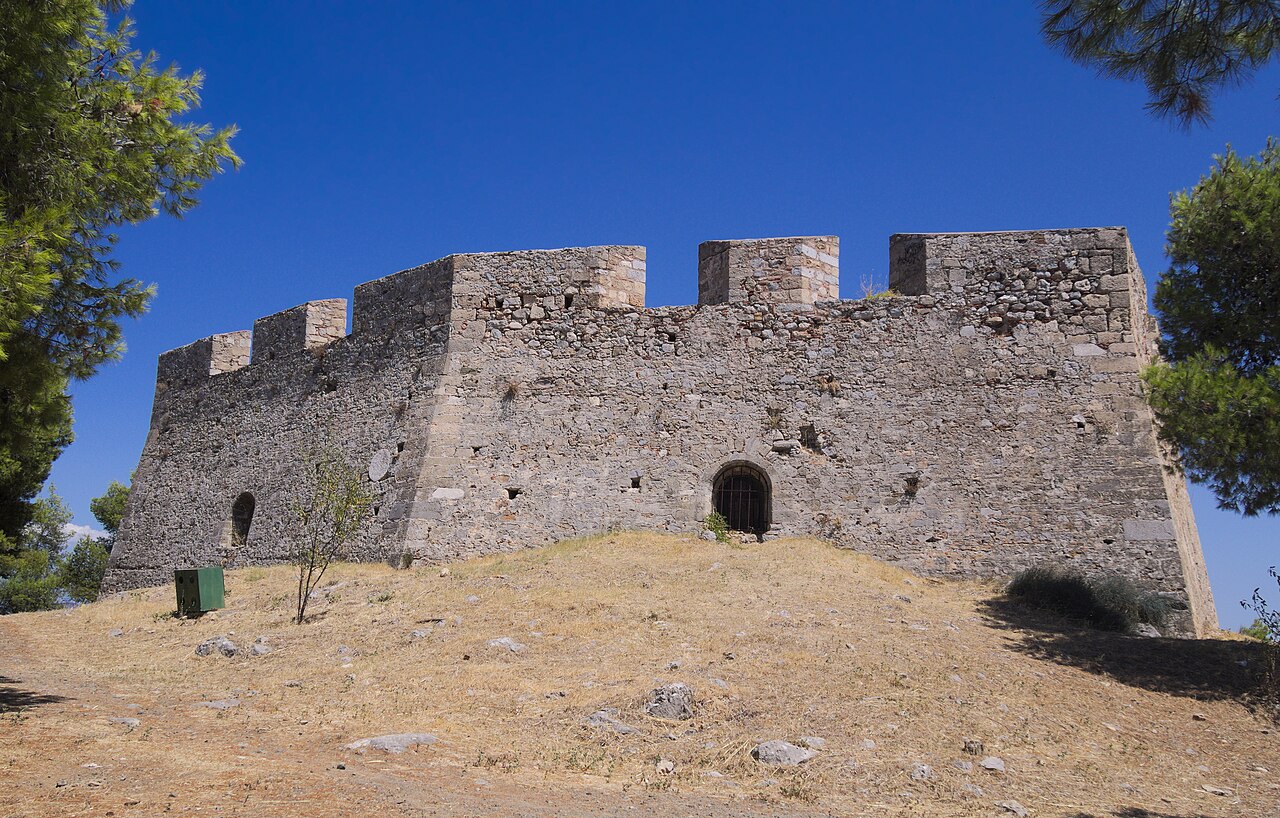
The castle's architecture reflects its primary function as a defensive bastion against both sea and land attacks. The natural topography provided steep cliffs on the northern, eastern, and western sides, effectively deterring naval assaults. The southern side, facing the land, was fortified with robust walls to protect the only accessible entrance. This entrance was deliberately narrow and fortified with a wooden drawbridge, emphasizing control over access.
A notable defensive feature near the main gate was the use of a ζεματίστρα, a cauldron for boiling oil, which defenders could pour on attackers attempting to breach the walls. Inside the enclosure, the castle housed a densely packed community of between 500 and 1,500 inhabitants, accommodated within tightly clustered houses that maximized the limited space available.
Religious and communal structures
Religious life was integral to the castle's community, with approximately twenty churches serving four distinct parishes. Among these, the churches of St. Nicholas and the Nativity held special significance as the local bishop's cathedral. These churches remained active even after the castle's abandonment, highlighting their enduring cultural importance.
During Ottoman rule, the castle's internal layout was adapted to meet new administrative and religious needs. A modest mosque and the residence of the Turkish governor were constructed, reflecting the Ottoman presence. These additions were designed for a small garrison rather than a large military force, indicating a shift in the castle's role during this period.
Preservation and restoration efforts
Today, Skiathos Castle is recognized for its historical and architectural significance. Restoration projects have focused on preserving key elements such as the churches of St. Marina and St. Basil, which have been carefully restored to maintain their structural integrity and historical character. Additionally, two critical cisterns essential for water storage have been conserved, ensuring the survival of vital infrastructure from the castle's active period.
Efforts have also targeted the preservation of the Ottoman-era mosque, sections of the main gate complex, and portions of the defensive walls. These conservation activities aim to protect the castle's architectural heritage and provide insight into the varied historical phases it experienced.
Cultural and touristic importance
As a site of layered historical narratives, Skiathos Castle offers visitors a glimpse into the complex interactions between Byzantine, Venetian, and Ottoman powers in the Aegean region. Its well-preserved fortifications and religious monuments attract scholars and tourists interested in medieval architecture and Greek history. The castle's dramatic setting atop a rocky promontory with panoramic sea views enhances its appeal as a cultural landmark.
Visitors today can explore the remaining walls, gates, and religious buildings, gaining an understanding of the castle's defensive strategies and community life. The site serves as a testament to the resilience and adaptability of its inhabitants through centuries of conflict and change.
Frequently asked questions (FAQ)
- How do I get to Skiathos Castle?
- Skiathos Castle is located on the northern tip of Skiathos island. Visitors can reach it by a short hike from Skiathos town, enjoying scenic views along the way.
- What is the best time to visit Skiathos Castle?
- The best time to visit Skiathos Castle is during the spring and autumn months when the weather is mild and the site is less crowded, offering a more pleasant experience.
- Is Skiathos Castle accessible for visitors with mobility issues?
- Due to its hilltop location and uneven terrain, Skiathos Castle may pose challenges for visitors with mobility issues. Comfortable footwear and caution are recommended.
- What historical periods are represented in Skiathos Castle?
- Skiathos Castle reflects a blend of Byzantine, Venetian, and Ottoman influences, with construction and modifications spanning from the 14th to the 17th centuries.
- Are there any guided tours available at Skiathos Castle?
- Guided tours may be available through local tourist offices or private operators, providing detailed historical and architectural insights into Skiathos Castle.
Photo gallery

Information
Opening hours
8:00-19:00, daily
Ticket prices
Free
Current owner
Municipality of Skiathos
Website
Visit websiteSources & official resources
Verify the information above using these authoritative references.
Loading map...
Visitor reviews
No reviews yet. Been here? Write the first review and help other travelers!
Write the first reviewVisited this castle? Share your experience
Your review helps other travelers and adds first-hand knowledge to our encyclopedia.