Karababa Fortress
Karababa Fortress stands as a significant example of Ottoman military architecture in Greece, located on a strategic hill within the municipality of Chalcis. Constructed in 1684 during the height of the Ottoman-Venetian conflicts, this hill castle was designed to fortify the region against Venetian incursions. The fortress not only reflects the military priorities of the late 17th century Ottoman Empire but also sits atop a site with a rich and layered history dating back to ancient times.
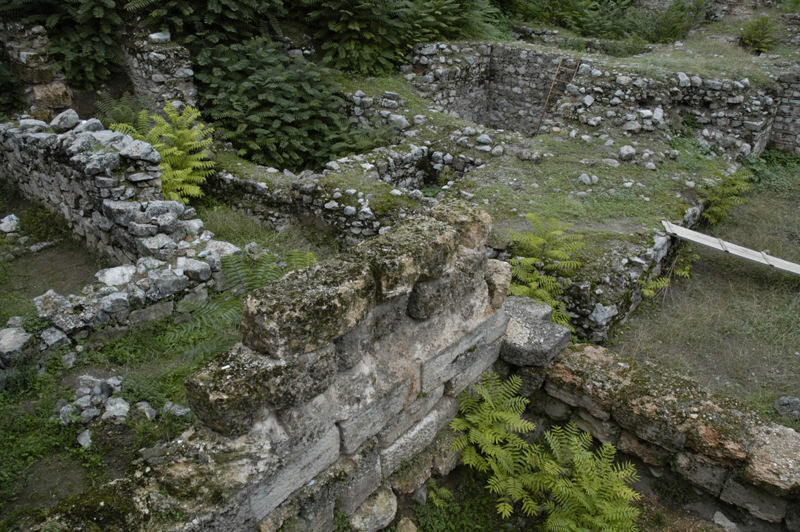
The hill known as Fourka was originally the location of the ancient city of Kanithos, which featured prominent public buildings such as a theater, gymnasium, and stadium. Archaeological remains of these structures, along with tombs, still survive, offering a glimpse into the area's classical past. The site’s strategic importance is further underscored by fortifications dating from the Roman era until approximately 146 BCE. However, there is no substantial evidence of fortifications during the Byzantine or Venetian periods, making the Ottoman fortress a defining feature of the hill’s later history.
Historical context and military significance
The construction of Karababa Fortress in 1684 was part of the Ottoman Empire’s broader efforts to secure its territories against the Republic of Venice, which was a dominant naval and military power in the Mediterranean. The fortress played a crucial role in controlling the approaches to Chalcis, a key urban center on the island of Euboea. Its robust defenses helped the Ottomans maintain control over the region throughout the turbulent years of the late 17th and early 18th centuries.
In 1688, the fortress famously withstood a siege by Venetian forces led by Francesco Morosini, an experienced military commander. Despite the Venetian attempt to capture the stronghold, the fortress held firm, demonstrating the effectiveness of its design and the resilience of its garrison. Karababa remained under Ottoman control well into the 19th century, only transitioning to the modern Greek state after the Treaty of London in 1833.
Architectural features and fortifications
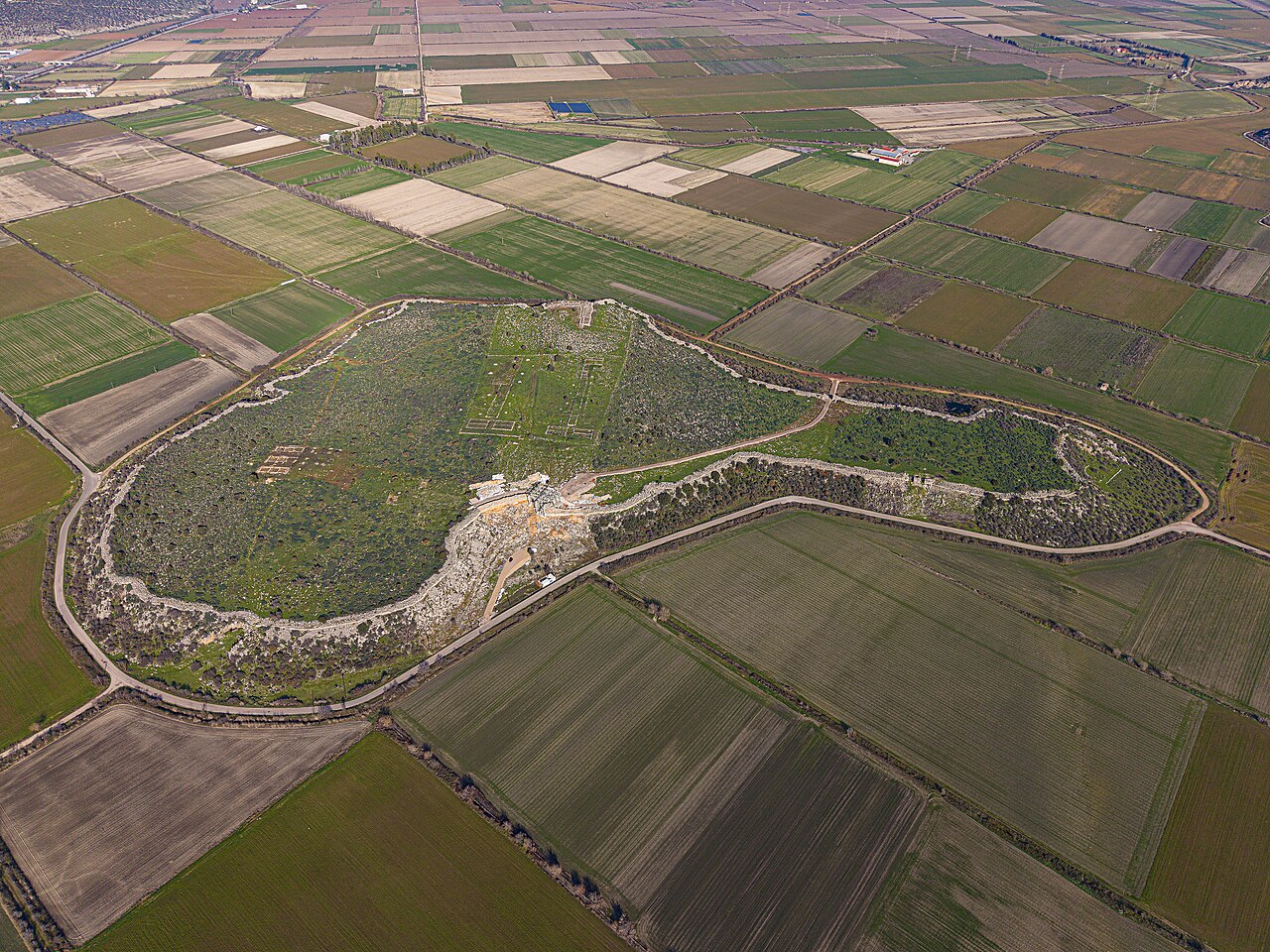
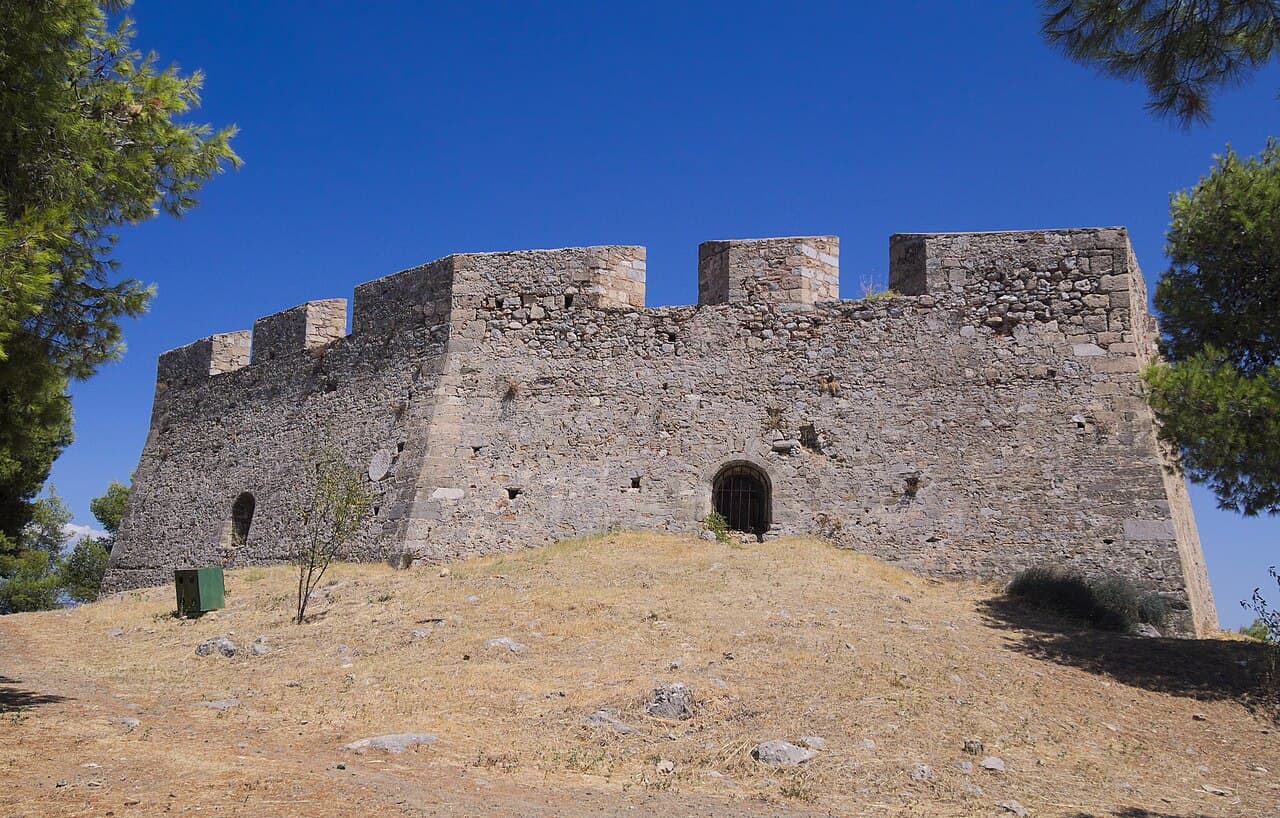
The fortress occupies an elongated hilltop measuring approximately 240 meters east to west and about 54 meters wide. Its defensive walls are built vertically to a height of around six meters, featuring battlements and embrasures designed for effective defense and firing positions. The northern side is reinforced by a rampart and three bastions, including a distinctive hexagonal bastion on the eastern end overlooking the town of Chalcis.
At the western high point of the hill stands a substantial seven-sided tower, notable for its thick walls reaching up to 3.5 meters. This tower includes an internal water reservoir to sustain the occupants during sieges, a critical feature for prolonged defense. The fortress’s only entrance is located on the southeastern slope, the lowest point of the fortification, where a gate provides controlled access.
Near the entrance, remains of military buildings once supported the fortress’s operational needs. Between the gate and the eastern bastion rises a bell tower equipped with an alarm bell, historically used as a warning system to alert defenders of approaching threats. Additional defensive adaptations include rifle embrasures set into the northern wall, reflecting later modifications to accommodate evolving military technology.
Later use and preservation
During the Second World War, the fortress was repurposed by Italian troops who installed machine guns and anti-aircraft guns, turning it into an observation post to monitor enemy movements. This military use underscores the fortress’s enduring strategic value well beyond its original Ottoman context.
Following the war, the fortress underwent a significant restoration effort between 1985 and 2000, aimed at preserving its historical fabric and making it accessible to visitors. Today, Karababa Fortress is a well-preserved monument that offers insight into multiple historical layers, from ancient Greek civilization through Roman, Ottoman, and modern periods.
Interior and cultural heritage
Within the fortress walls, the Church of Prophet Elijah, built in 1895, remains the sole surviving building from the fortress’s later occupation, symbolizing the continuity of religious and community life. The eastern bastion displays two 19th-century Russian cannons, which serve as tangible reminders of the military history associated with the site.
The interior of the western tower has been adapted into an exhibition space showcasing a diverse collection of sculptures, reliefs, and architectural elements from various periods, including Paleochristian, Byzantine, Venetian, and Ottoman. These artifacts illustrate the cultural and historical complexity of the region and highlight the fortress’s role as a custodian of heritage spanning several centuries.
Archaeological significance
The site’s archaeological importance is underscored by the remains of the ancient city of Kanithos, with its public buildings and tombs providing valuable insights into classical urban planning and society. The layering of fortifications from Roman times to the Ottoman period reflects the strategic importance of the hill throughout history.
Visitor experience
Visitors to Karababa Fortress can explore the extensive defensive walls, bastions, and towers, gaining a comprehensive understanding of Ottoman military architecture. The exhibition in the western tower enriches the visit by connecting the fortress to the broader historical narrative of the region. The fortress’s elevated position offers panoramic views of Chalcis and the surrounding landscape, enhancing its appeal as a cultural and historical destination.
Frequently asked questions (FAQ)
- When was Karababa Fortress built and by whom?
- Karababa Fortress was built in 1684 by the Ottoman Empire as a military stronghold to defend against Venetian attacks.
- What ancient city was located on the site before the fortress?
- The ancient city of Kanithos was located on the hill, featuring public buildings such as a theater, gymnasium, and stadium.
- What are the main architectural features of Karababa Fortress?
- The fortress features six-meter-high vertical walls with battlements and embrasures, three bastions including a hexagonal one, and a seven-sided tower with thick walls and a water reservoir.
- How was the fortress used during World War II?
- During World War II, Italian troops used Karababa Fortress as an observation post and fortified it with machine guns and anti-aircraft guns.
- Is Karababa Fortress open to visitors today?
- Yes, after restoration efforts from 1985 to 2000, the fortress is preserved and accessible for visitors interested in its history and architecture.
Photo gallery

Information
Loading map...
Visitor reviews
No reviews yet. Been here? Write the first review and help other travelers!
Write the first reviewVisited this castle? Share your experience
Your review helps other travelers and adds first-hand knowledge to our encyclopedia.