Castle of Lamia
The Castle of Lamia is a prominent hill castle located in central Greece, occupying a commanding position on a rocky hill within the municipality of Lamia. This fortress is notable for its strategic placement atop the ancient acropolis of Lamia, a site with continuous fortification history dating back to at least the 5th century BCE. The castle's location offers expansive views over the surrounding landscape, including the towns of Ravenika and key mountain peaks such as Etea, Kalidromo, Otris, Parnassus, and Giona, as well as the Maliakos Gulf. These vantage points highlight the site's enduring military importance throughout history.
Historical background and significance
The origins of the Castle of Lamia trace back to the aftermath of the Fourth Crusade in 1204, when the Franks constructed the fortress following their conquest of Constantinople. Built on a site already fortified since ancient times, the castle became a key stronghold in the region. Prior to the Frankish construction, the area was controlled by the Ancient Macedonians from the mid-4th century BCE, a period linked to the Lamian War, an uprising against Macedonian dominance. The fortress was known as "Zeitouni" by the 9th century CE, a name preserved in records from 869 to 870 CE.
After the fragmentation of Byzantine lands post-1204, the castle served as the center of the Barony of Zetounion under Frankish rule. Its status as a castle was officially acknowledged in correspondence from Pope Innocent III in the early 13th century. The fortress changed hands multiple times due to shifting regional powers. In 1218, it was seized by the Despotate of Epirus under Constantine Komnenos Doukas, marking a significant political shift.
From 1264, the castle became part of the semi-autonomous region of Thessaly, governed by John I Doukas, who ruled from the nearby city of Hypate. In 1275, the castle was transferred as part of a dowry to John's Frankish son-in-law, integrating it into the Duchy of Athens. The Duchy fell to the Catalan Company in 1311, a mercenary group that held the castle for several decades.
The Ottoman Empire captured the fortress in 1446. Unlike many other medieval fortifications, the Castle of Lamia retained significant strategic value under Ottoman rule, continuing to serve as a key point for regional governance and defense well into later centuries.
Architectural features and layout
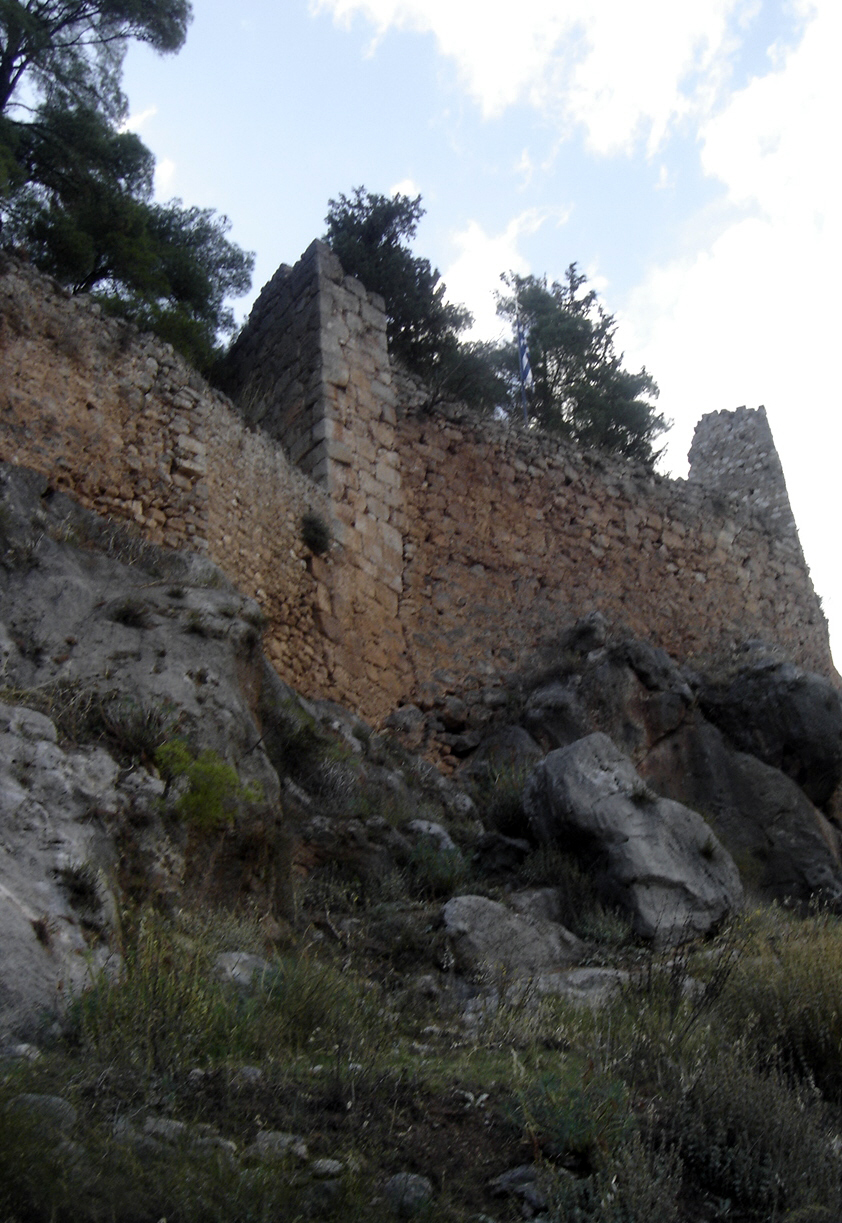
The Castle of Lamia is built directly on the ancient acropolis, which provides a naturally fortified foundation. While detailed records of the castle's internal arrangement, size, or specific orientation are scarce, the surviving structures indicate robust stone fortifications characteristic of medieval military architecture. The castle's walls and defensive works utilize the rocky terrain to enhance its defensive capabilities.
Though no detailed descriptions exist regarding specific architectural elements such as staircases, gates, or decorative features, the castle's remains suggest a complex designed for both defense and administrative functions. The absence of elaborate decorative elements aligns with its primary role as a military fortress rather than a residential palace.
Strategic importance and geographical context
The castle's location on a rocky hilltop overlooking the surrounding plains and the Maliakos Gulf was crucial for controlling regional trade routes and military movements. Its position allowed for early warning of approaching forces and provided a stronghold that dominated the surrounding territory.
The views from the castle extend to several significant mountain peaks, including Parnassus, which is notable in Greek history and mythology. This geographical context underscores the castle's role in regional defense networks spanning ancient through medieval and Ottoman periods.
Preservation and current state
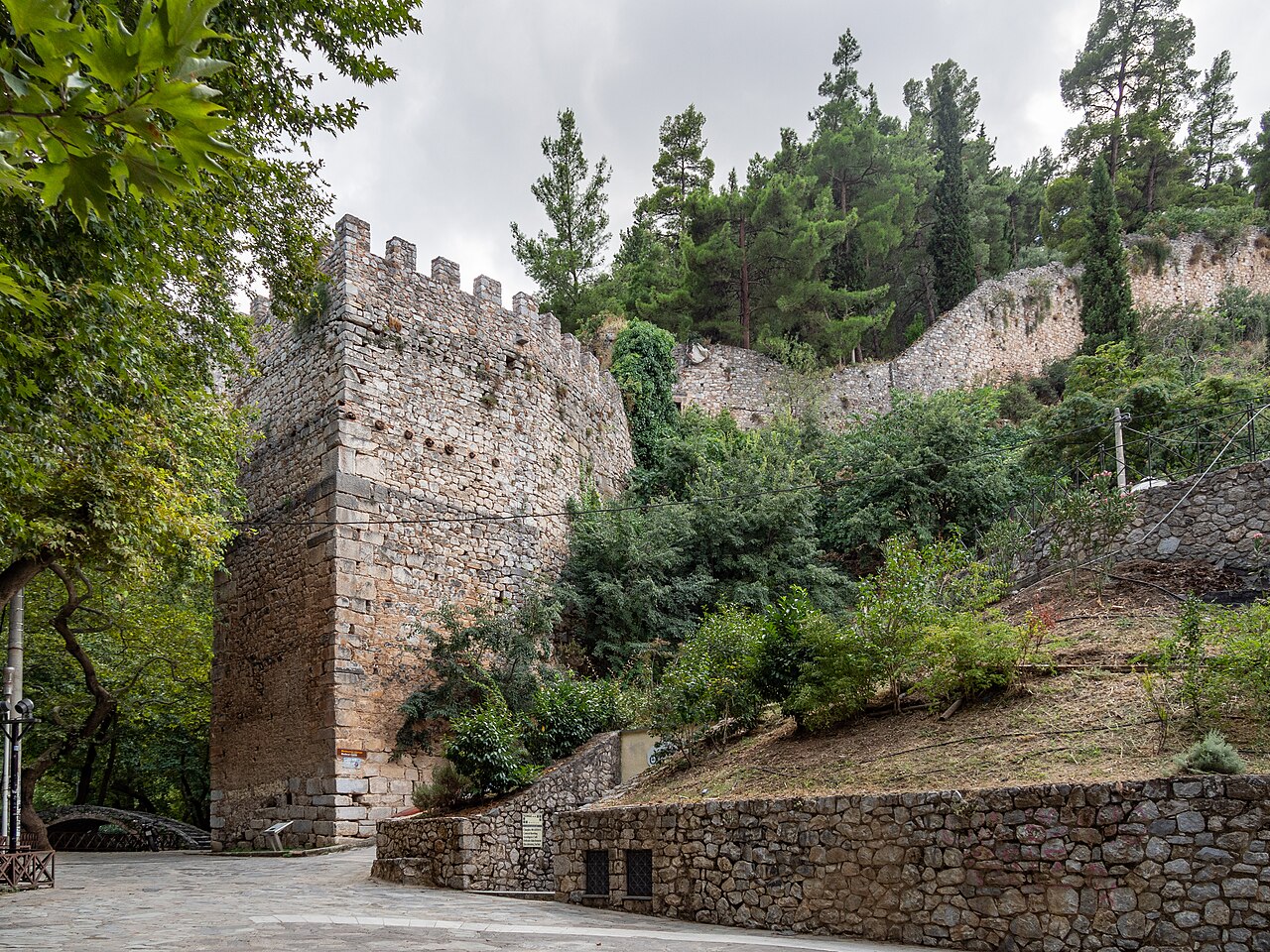
Today, the Castle of Lamia remains a visible historical monument. Its well-preserved stone walls and foundations testify to its enduring construction quality. Although detailed archaeological studies and restorations have been limited, the site continues to attract interest for its layered history and commanding views.
The castle serves as a tangible link between ancient Greek fortification traditions and medieval military architecture, reflecting the complex history of central Greece. Visitors can explore the ruins and appreciate the strategic significance of the site, which has witnessed centuries of conflict and governance changes.
Cultural and historical legacy
The Castle of Lamia embodies the historical transitions of central Greece, from ancient Macedonian control through Frankish and Catalan rule, to Ottoman administration. Its enduring presence on the ancient acropolis highlights the continuity of fortification practices in the region.
The castle's history is intertwined with significant historical events such as the Lamian War and the political shifts following the Fourth Crusade. As a result, it stands as a monument to the region's strategic importance and the complex interplay of cultures and powers over centuries.
Efforts to preserve and study the castle contribute to understanding the broader historical landscape of Greece and the evolution of medieval fortifications in the Balkans.
Frequently asked questions (FAQ)
- What is the historical significance of the Castle of Lamia?
- The Castle of Lamia has a rich history that dates back to the Byzantine era and served as a strategic military stronghold. It played a crucial role in various battles throughout the centuries, reflecting the region's turbulent past and its importance in controlling trade routes.
- When was the Castle of Lamia built?
- The Castle of Lamia was constructed in the late 12th century, during the Byzantine period. It has undergone several renovations and restorations over the years, particularly following its capture by different powers, which have contributed to its current state.
- What are the opening hours for the Castle of Lamia?
- The Castle of Lamia is open to visitors daily from 9:00 AM to 7:00 PM during the summer months and from 9:00 AM to 5:00 PM in the winter. It is advisable to check for any seasonal changes or special closures before planning your visit.
- Can I access the Castle of Lamia by public transport?
- Yes, the Castle of Lamia is accessible by public transport, with several bus routes connecting it to nearby towns and cities. Additionally, taxis and rideshare services are readily available for those preferring a more direct route.
- Is it possible to take guided tours of the Castle of Lamia?
- Yes, guided tours are available and highly recommended for a more in-depth understanding of the castle's history and architecture. Knowledgeable guides can provide fascinating insights and stories that enhance the visitor experience.
- What is the best time to visit the Castle of Lamia?
- The best time to visit the Castle of Lamia is during the spring and fall months when the weather is mild and ideal for exploring outdoors. These seasons also see fewer crowds, allowing for a more enjoyable experience.
- Are there any nearby attractions to visit after touring the Castle of Lamia?
- Yes, after visiting the Castle of Lamia, you can explore the charming old town of Lamia, which offers various shops and cafes. Additionally, nearby attractions include the historical sites of the ancient city of Lamia and beautiful natural landscapes that are perfect for hiking.
- What are the ticket prices for the Castle of Lamia?
- Tickets for the Castle of Lamia are affordably priced, typically costing around €5 for adults, with discounts available for students and seniors. Children under a certain age may enter for free, making it an accessible destination for families.
Information
Loading map...
Visitor reviews
No reviews yet. Been here? Write the first review and help other travelers!
Write the first reviewVisited this castle? Share your experience
Your review helps other travelers and adds first-hand knowledge to our encyclopedia.