Skhvilo Castle
Skhvilo Castle is a prominent 14th-century hill castle located northeast of the village of Kvemo Chala in the Kaspi municipality of the Shida Kartli region, Georgia. This medieval fortress was constructed by the feudal Zemdzinidze-Amilakhvari family, one of the notable noble houses of Georgia, who inherited the site and used it as their primary residence.
Historical background and significance
The site of Skhvilo Castle likely hosted fortifications since the 10th century, although the present structure dates from the 14th century. The castle served as both a defensive stronghold and a noble residence, reflecting the feudal power of the Amilakhvari family during the late medieval period. Over time, as political and military needs evolved, the Amilakhvari gradually relocated their main residence to the nearby village of Kvemo Chala, where they constructed the Amilakhvari Castle in the 16th and 17th centuries. From then on, Skhvilo Castle was primarily used as a fortress during times of conflict.
Role in regional conflicts
During the turbulent 17th and 18th centuries, Skhvilo Castle played a strategic role in the defense of Georgian territories. In the 1630s, under the reign of Teimuraz I of Kakheti who ruled over Kartli, the castle was held by Iamam Amilakhvari. Following Teimuraz's deposition by Shah Safi of Persia, the Persian shah appointed Rostom, a Muslim Georgian prince, as governor of Kartli. In 1636, Skhvilo Castle was besieged, likely by forces loyal to either Rostom or Teimuraz, resulting in significant damage to the fortress.
In the 18th century, the castle was a focal point in conflicts against the Leks—Islamic highlanders from the Northern Caucasus—as well as the Ottoman Empire and the Iranian Qizilbash. Notably, in 1742, two battles between Qizilbash and Ottoman forces were fought at Skhvilo under the leadership of Prince Givi Amilakhvari. Both battles ended in victory for Givi, after which the castle's defenses were reinforced.
Architectural features and layout
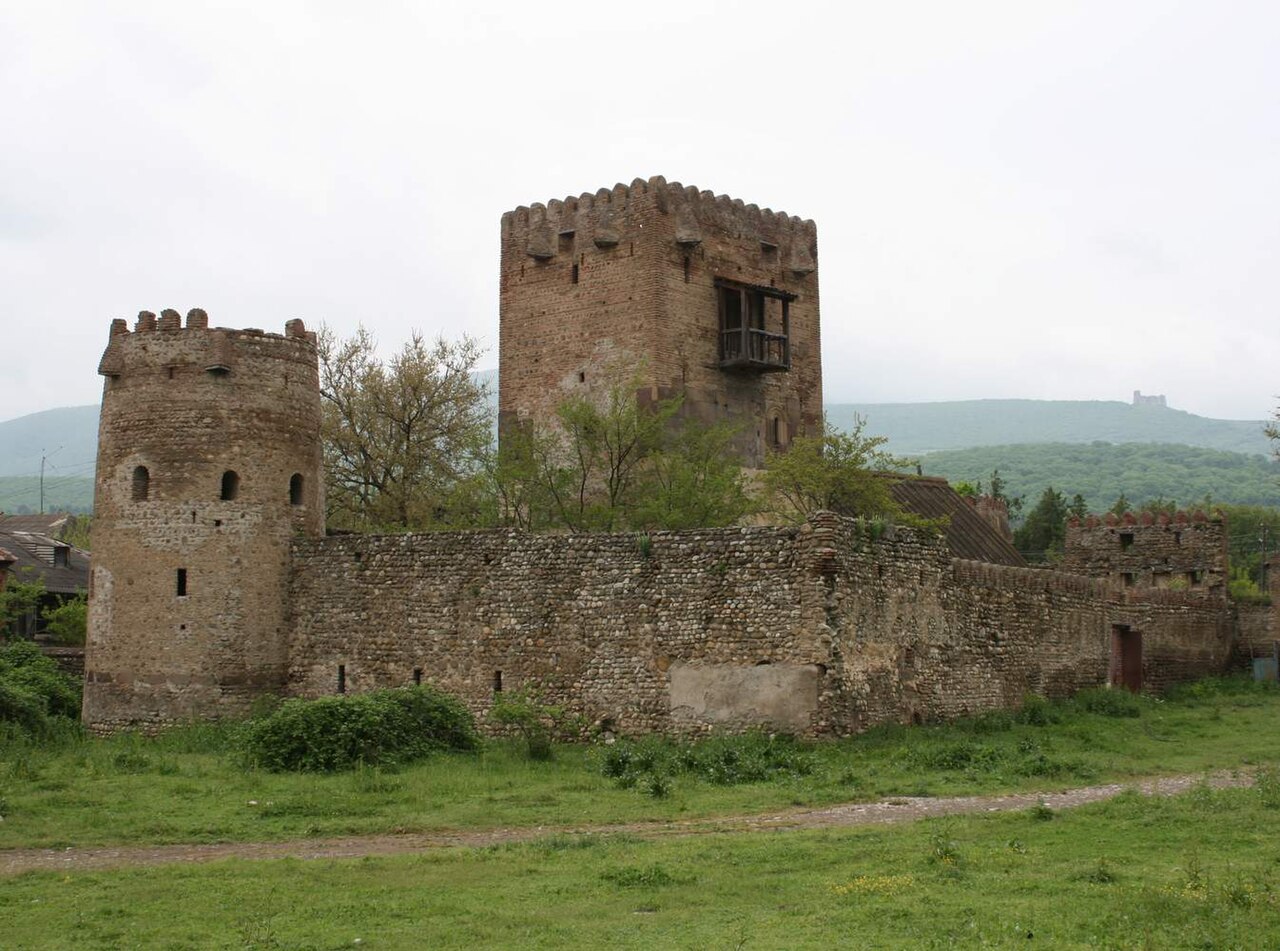
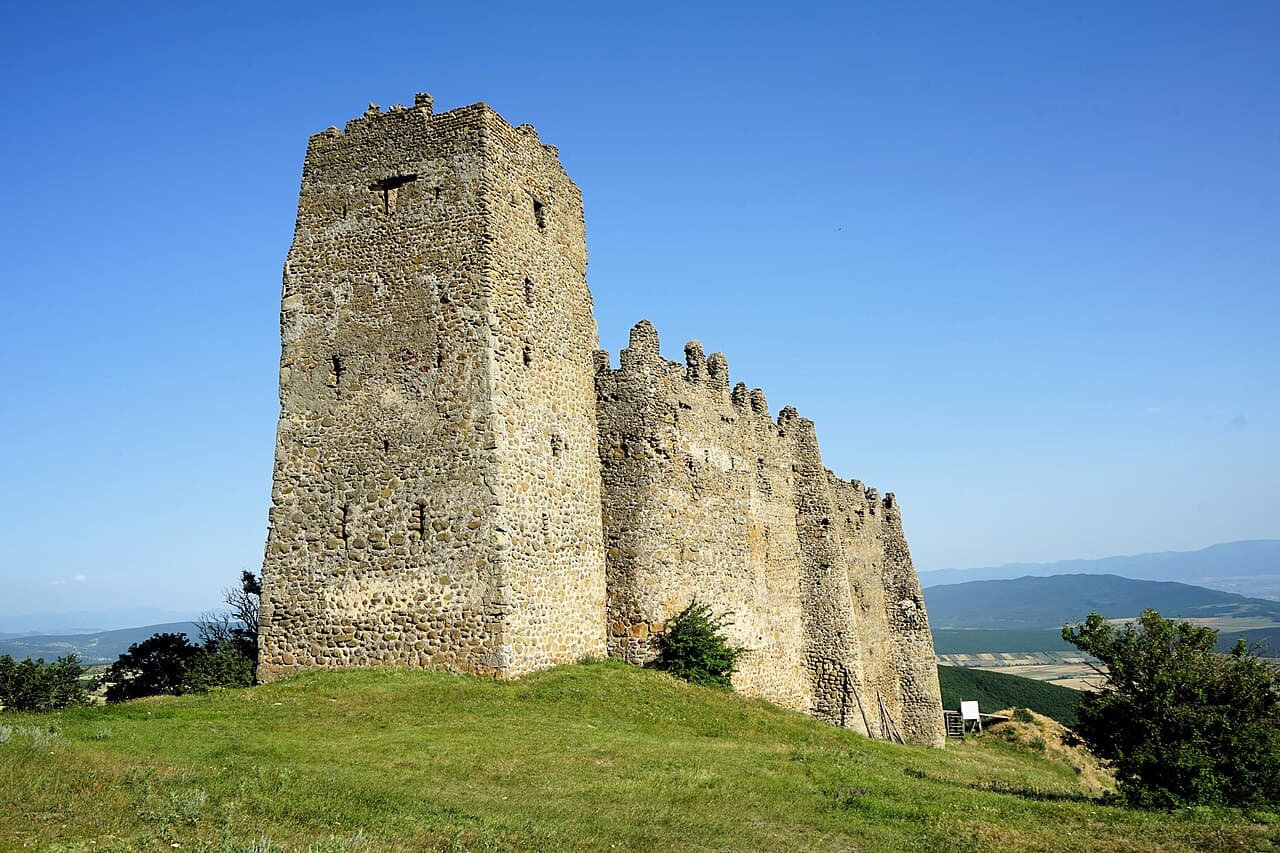
Skhvilo Castle is strategically built on a gentle mountain slope, offering commanding views over the surrounding plains. The fortress has a rectangular ground plan featuring two square towers positioned at opposite ends, which provided strong defensive vantage points. Within the castle walls are the remains of an inner dividing wall, a church, and several other buildings that served various residential and military functions.
The castle's design reflects typical late medieval Georgian military architecture with robust stone walls and defensive towers intended to withstand sieges and assaults. The presence of a church within the fortress indicates the importance of religious practice for its inhabitants and the integration of spiritual and military life.
Decline and modern status
By the 19th century, Skhvilo Castle had lost its military significance due to changing political and military circumstances and gradually fell into ruin. Despite this decline, the castle ruins retained historical importance and were used as a meeting place by revolutionary peasants during the 1905-1907 uprisings in Georgia.
Today, Skhvilo Castle remains a freely accessible ruin, although reaching it requires a serious 4WD vehicle due to the rugged mountain terrain. The site offers visitors a glimpse into Georgia's medieval past and the legacy of the Amilakhvari noble family. Its well-preserved towers and walls continue to attract enthusiasts of history and castle architecture.
Visiting Skhvilo Castle
Visitors to Skhvilo Castle can explore the extensive ruins, including the defensive structures and remnants of the inner buildings. The castle's elevated position provides panoramic views of the Shida Kartli plains, making it a rewarding destination for those interested in medieval fortifications and Georgian history. Due to its remote location, visitors are advised to prepare for a challenging drive and to wear appropriate footwear for exploring the uneven terrain.
Access and transportation
The castle is located near the village of Pantiani and northeast of Kvemo Chala, accessible primarily by off-road vehicles. Public transportation options are limited, so private or guided tours with appropriate vehicles are recommended.
Preservation and cultural importance
Skhvilo Castle is recognized as an important cultural heritage site in Georgia, representing the architectural and historical legacy of the late medieval period and the influential Amilakhvari family. Preservation efforts focus on maintaining the structural integrity of the remaining towers and walls to allow continued public access and study.
Frequently asked questions (FAQ)
- How do I get to Skhvilo Castle?
- Skhvilo Castle is located near Pantiani, Georgia, and can be accessed by car or by public transportation from nearby towns. The journey offers scenic views of the surrounding landscape, making it an enjoyable experience. Be sure to check local transport schedules for the best options.
- What is the historical significance of Skhvilo Castle?
- Skhvilo Castle dates back to the 11th century and is a significant example of medieval Georgian architecture. It played a crucial role in the defense against invasions and has witnessed numerous historical events over the centuries. The castle is a testament to the rich cultural heritage of Georgia.
- When was Skhvilo Castle built?
- Construction of Skhvilo Castle began in the 11th century, during the reign of the Georgian Kingdom. It was strategically built on a cliff to provide a defensive advantage against potential attacks. The castle has undergone various restorations over the years, preserving its historical features.
- Can I take guided tours of Skhvilo Castle?
- Yes, guided tours are available at Skhvilo Castle, providing visitors with insights into its history and architecture. Tours are conducted in multiple languages and can enhance your understanding of the site's significance. It's advisable to check in advance for tour schedules and availability.
- Why is Skhvilo Castle popular among tourists?
- Skhvilo Castle is popular for its breathtaking views, impressive architecture, and rich history. Visitors are drawn to its historical ambiance and the opportunity to explore its ancient structures. Additionally, the castle's picturesque location makes it a favored spot for photography.
- Is it possible to visit Skhvilo Castle year-round?
- Yes, Skhvilo Castle is open to visitors year-round, although the best time to visit is during the spring and fall when the weather is mild. However, winter conditions may affect accessibility, so it's wise to check weather forecasts before planning your visit. Summer can also be a great time to explore the castle, albeit with larger crowds.
- What are the opening hours for Skhvilo Castle?
- Skhvilo Castle is typically open from 9 AM to 6 PM. However, opening hours may vary seasonally, so it is recommended to confirm current hours before your visit. This ensures you have ample time to explore the castle and its surroundings.
- Are there any nearby attractions to visit?
- Yes, there are several nearby attractions worth visiting, including the picturesque town of Pantiani and other historical landmarks in the region. The area offers beautiful hiking trails and stunning landscapes that enhance the overall experience. Exploring these nearby sites can make your trip to Skhvilo Castle even more enriching.
- How much are the ticket prices for Skhvilo Castle?
- Ticket prices for Skhvilo Castle are generally affordable, making it accessible for a wide range of visitors. Discounts may be available for students and groups, so it's worth inquiring at the entrance. Always check for the latest pricing information before your visit to ensure a smooth experience.
Photo gallery

Information
Loading map...
Visitor reviews
No reviews yet. Been here? Write the first review and help other travelers!
Write the first reviewVisited this castle? Share your experience
Your review helps other travelers and adds first-hand knowledge to our encyclopedia.