Skånelaholm Castle
Skånelaholm Castle stands as a remarkable example of Renaissance architecture in Sweden, located in the serene landscape of Rosersberg within Sigtuna Municipality. The estate's history dates back to the 13th century, initially owned by King Magnus III of Sweden, who sold it to the Skokloster monastery in 1276. This early connection to monastic holdings shaped the estate's medieval character until the sweeping changes of the Protestant Reformation led by King Gustav Vasa, who confiscated church properties, transferring Skånelaholm to the Crown.
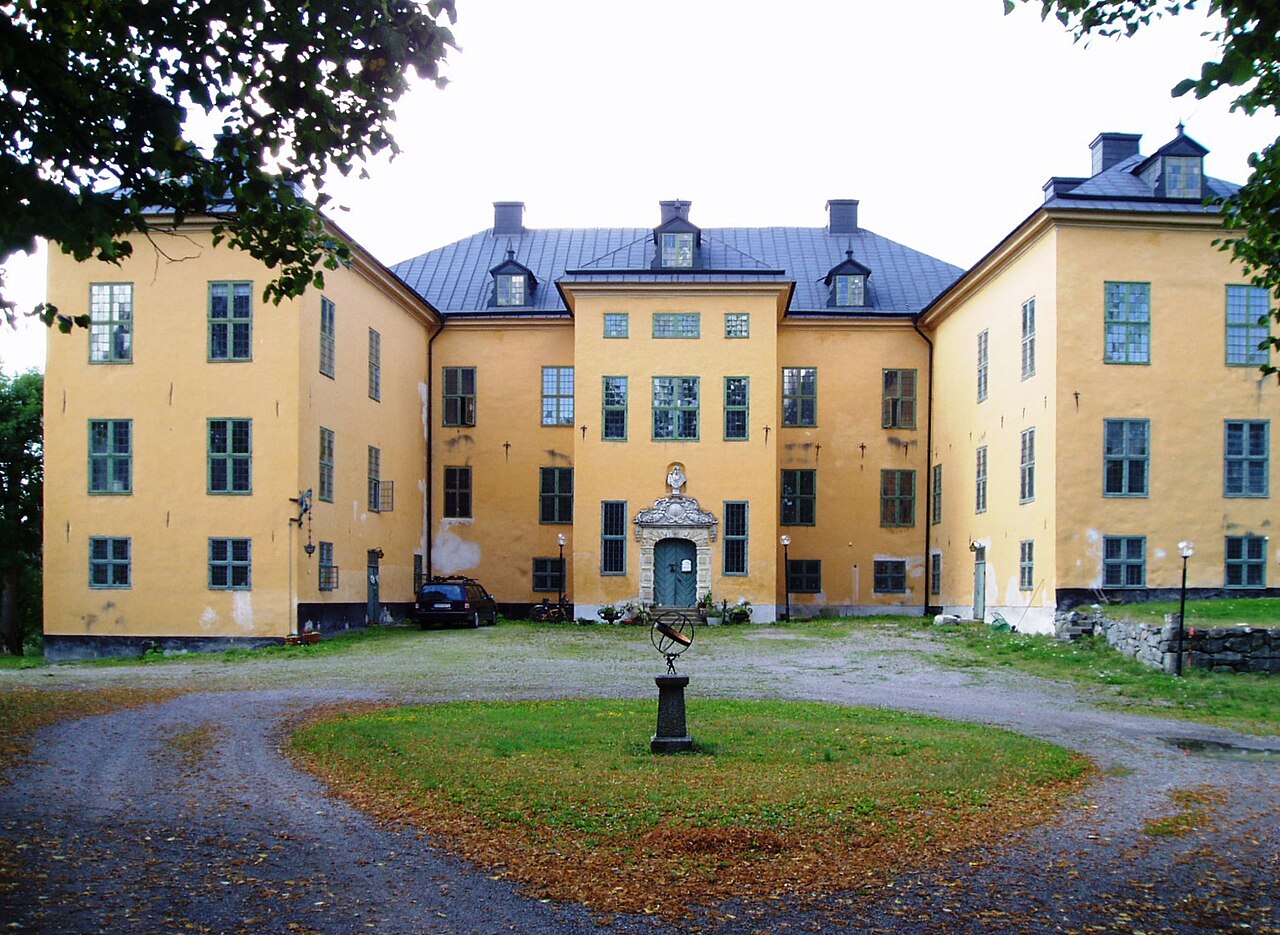
The present castle was constructed between 1639 and 1643 under the ownership of Anders Gyldenklou, who acquired the manor in 1641. The main building is a brick structure designed in the German-Dutch late Renaissance style, characterized by its rectangular shape, two principal floors, a projecting basement, and two attic levels. Originally, the castle featured exposed red brick walls and a steep wooden shingle roof, embodying the architectural trends of the period.
Historical ownership and legacy
Following its medieval monastic period, Skånelaholm remained a royal estate until the early 17th century, when it was leased to nobles such as Johan Patkull in 1618. The transition to private ownership marked a new chapter when the Gyldenklou family built the current manor house. In the late 17th century, ownership changed hands several times until Frans Jennings, an Irish-born merchant ennobled in Sweden, acquired it in 1742. The Jennings family maintained the estate for nearly two centuries, preserving its status as a noble family seat.
The 20th century brought significant changes when the fideicommissum ended in 1918, leading to the sale of Skånelaholm to Gösta Belfrage, who undertook restoration work. Later, in 1929, Herbert Rettig, a folklorist and historian, purchased the castle and ultimately donated it to the Royal Swedish Academy of Letters, History and Antiquities in 1962. The castle remained occupied by the Rettig family until 1985 and has since been preserved as a public cultural heritage site.
Architectural features and estate layout
The castle's main building is notable for its late Renaissance style with German-Dutch influences, featuring a rectangular plan and a balanced, symmetrical facade. Around 1760, four detached wings were added, likely designed by Jean Eric Rehn, enhancing the estate's grandeur and creating a harmonious complex. These wings frame a central axis aligned with the main facade, extending into a fruit garden and culminating in a large economic building to the northeast.
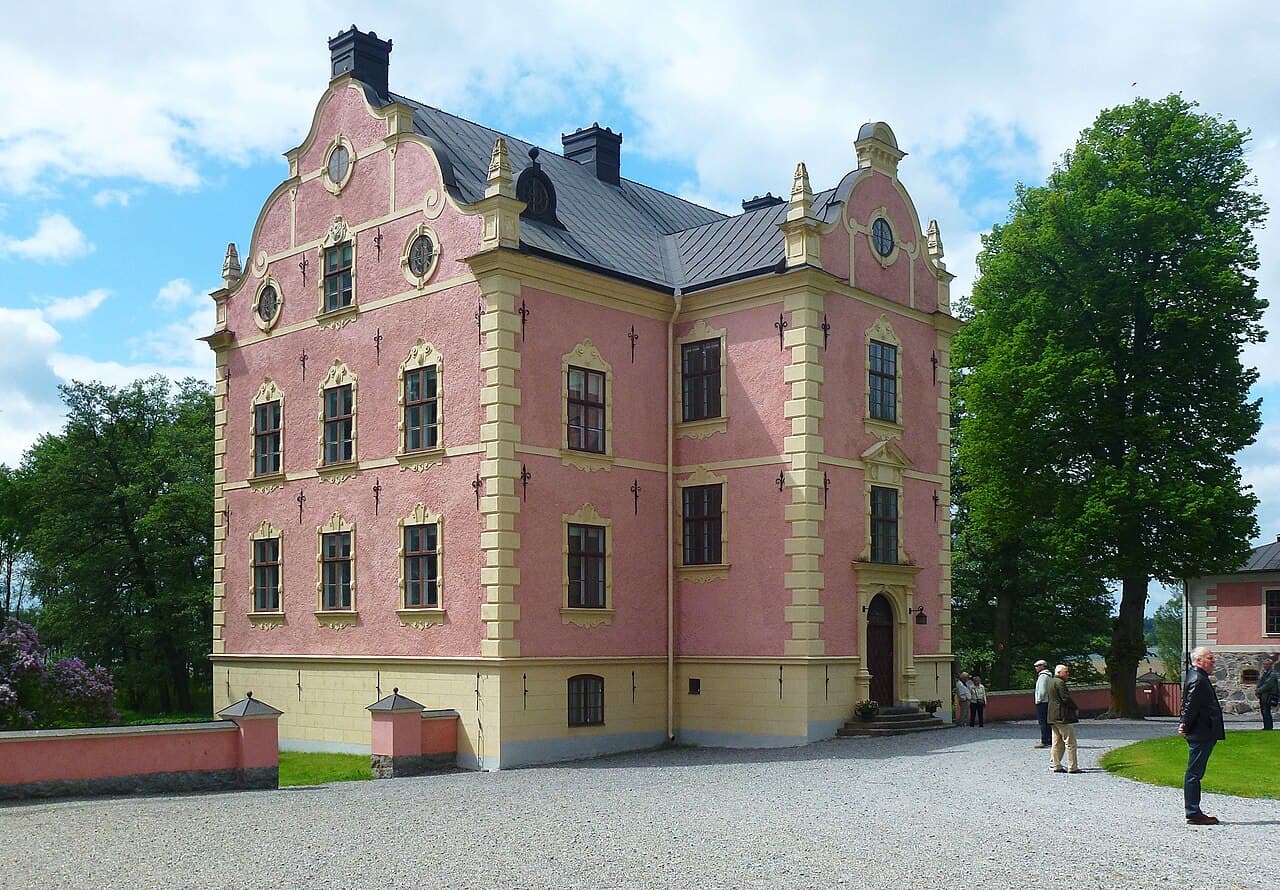
In the 1890s, the castle underwent significant exterior renovations, including the application of stucco over the original brick facades, which transformed the appearance to a lighter, plastered surface with decorative elements such as corner chains, window frames, and volutes on the gables. The roof was replaced with sheet metal, and concrete obelisks were added at the corners, giving the castle an ornate character. A restoration in 1979 refined the distinctive pink and beige color scheme that visitors see today.
Set on a peninsula in the calm waters of Lake Fysingen, the castle's grounds historically included a quay, facilitating water access. The surrounding park, originally established in the 18th century, was redesigned in the 19th century into an English landscape garden, noted for its naturalistic style and scenic vistas.
Interior design and cultural heritage
The interior of Skånelaholm Castle reflects a blend of stylistic periods. The first floor houses the main representative rooms, including a dining room styled to evoke the 17th century and a Rococo drawing room decorated with paintings inspired by François Boucher, possibly by Guillaume Taraval. The second floor contains a large library and a "blue drawing-room" furnished with Empire style pieces, some believed to be crafted in Venice.
The basement features a large kitchen from the late 19th century, equipped with fittings from Bolinders, and a cellar known as the "prison hole," historically used for food storage. Although much of the original interior decoration was removed before the castle's transfer to the Royal Academy, efforts have been made to furnish rooms with period-appropriate furniture and to reclaim original pieces where possible.
The attic now serves as a repository for a collection of folk furniture and household items gathered by Herbert Rettig, offering valuable insight into traditional Swedish material culture and craftsmanship.
Visiting skånelaholm castle today
Today, Skånelaholm Castle is open to the public during the summer season, offering visitors a chance to explore its historically preserved rooms, extensive gardens, and scenic lakeside setting. The castle's rich history, architectural significance, and cultural collections make it a notable destination for those interested in Swedish Renaissance manors and heritage preservation.
Visitors can appreciate the castle's harmonious blend of 17th-century architecture and later stylistic adaptations, as well as its role in Sweden's noble and cultural history. The estate's park and lakeside location provide a picturesque backdrop for leisurely exploration and photography.
Frequently asked questions (FAQ)
- When was Skånelaholm Castle built?
- Skånelaholm Castle was constructed between 1639 and 1643, with the main building completed in 1643.
- What architectural style is Skånelaholm Castle?
- The castle is primarily built in the German-Dutch late Renaissance style, with later additions and renovations incorporating mixed stylistic elements.
- Who owns Skånelaholm Castle today?
- The castle is currently owned and managed by the Royal Swedish Academy of Letters, History and Antiquities.
- Can I visit Skånelaholm Castle?
- Yes, Skånelaholm Castle is open to the public during the summer season, allowing visitors to explore its historic interiors and gardens.
- What is unique about the interior of Skånelaholm Castle?
- The interior features rooms styled from the 17th century to the Empire period, including a Rococo drawing room with paintings inspired by François Boucher and a large library with Venetian Empire furnishings.
Photo gallery

Information
Opening hours
Summer season
Current owner
Royal Swedish Academy of Letters, History and Antiquities
Website
Visit websiteSources & official resources
Verify the information above using these authoritative references.
Loading map...
Visitor reviews
No reviews yet. Been here? Write the first review and help other travelers!
Write the first reviewVisited this castle? Share your experience
Your review helps other travelers and adds first-hand knowledge to our encyclopedia.