Almarestäkets Castle, also known as St. Erik's Castle, is a significant medieval fortress ruin located in Stäket, within the Upplands-Bro municipality of Stockholm County, Sweden. This castle was strategically positioned at the vital choke point of Almarestäket strait, controlling access to Lake Mälaren, which was crucial for protecting the important cities of Sigtuna and Uppsala. Its location underscored its military and political importance during the Middle Ages.
Early history and medieval significance
Although the castle was first documented in the late 1300s, its origins trace back to the 12th century when an initial fortification was established to guard the surrounding region. The castle was closely associated with Eric IX of Sweden, also known as St. Erik, one of Sweden's patron saints, which is why the fortress is sometimes referred to as St. Erik's Castle. This association emphasizes the castle's importance not only militarily but also symbolically within Swedish medieval history.
Construction and architectural development
In the 1440s, Archbishop Nicolaus Ragvaldi received permission to construct a new castle at the site, reflecting the ongoing power struggle between the Swedish Crown and the Church. This new fortress was completed roughly ten years later, around the early 1450s. The castle's architecture during this period would have included typical medieval defensive features such as thick stone walls, towers, and possibly a moat or other water defenses, given its strategic location by the strait.
Castle features and layout
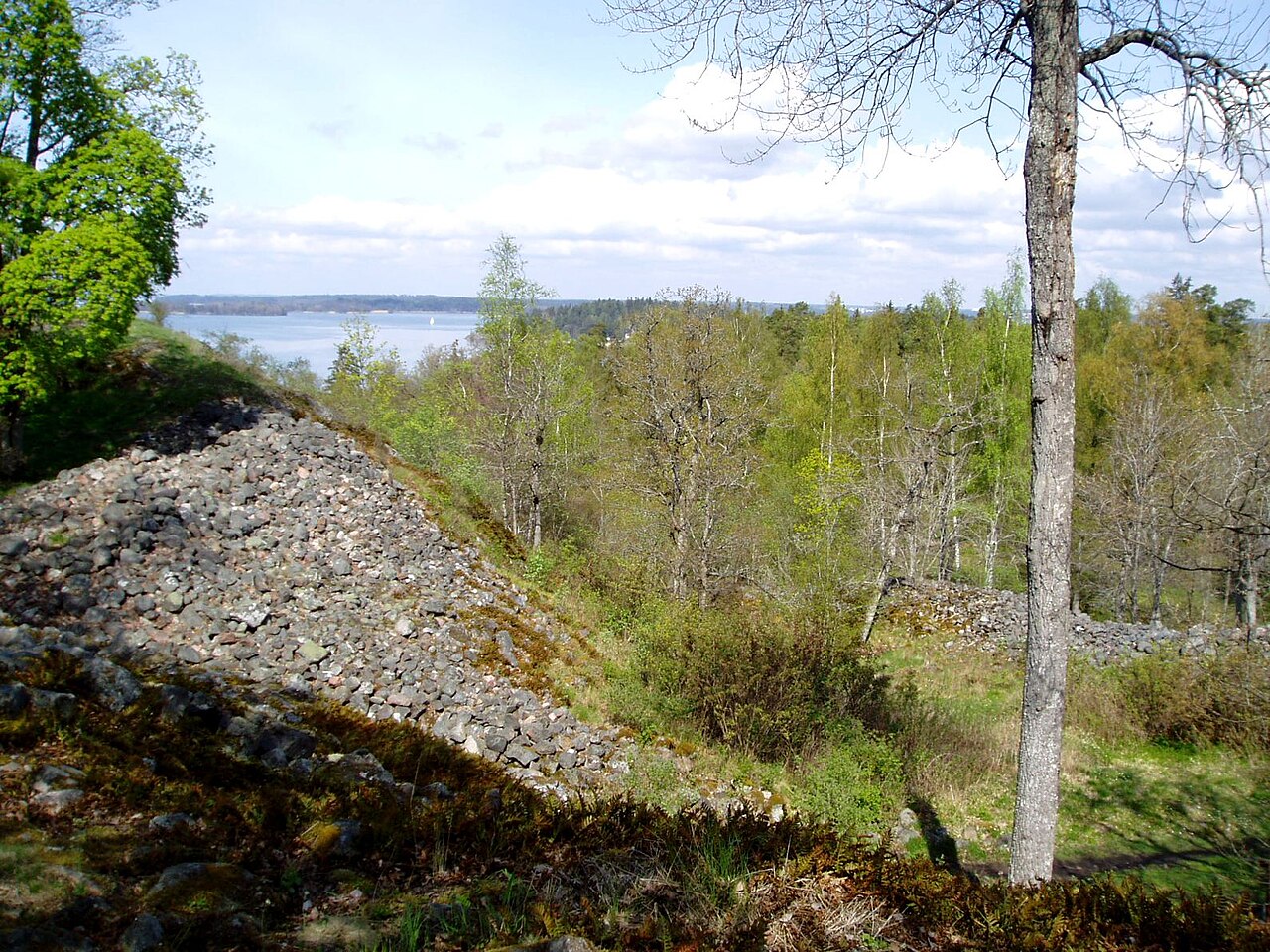
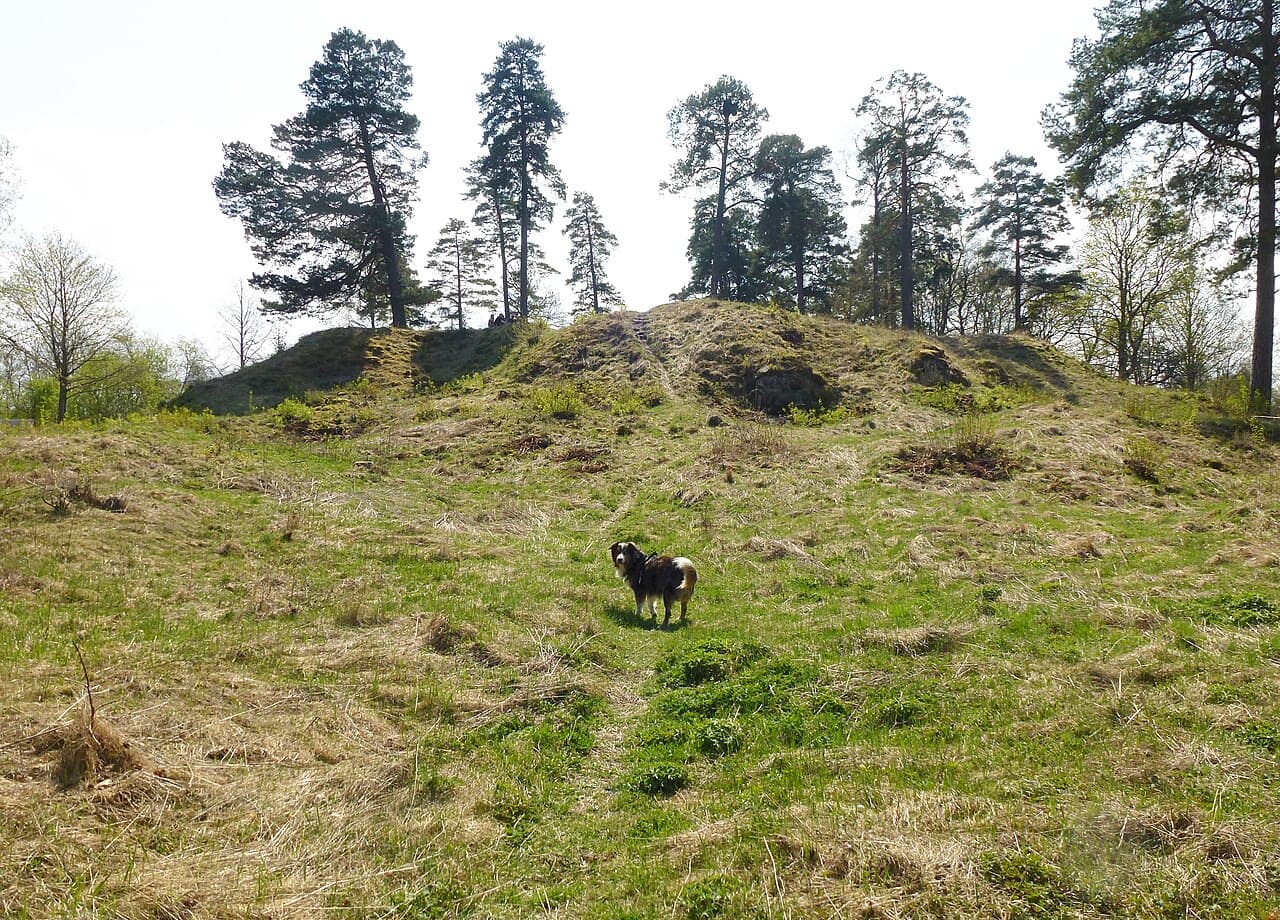
While the castle now lies in ruins, archaeological investigations have revealed traces of the castle foundations with potholes filled with stones and occasional bricks. These remnants provide insight into the castle's structure, which would have included various defensive and residential buildings within the complex. The castle's placement on a narrow waterway made it a formidable defensive position, controlling naval access and trade routes.
Historical conflicts and destruction
The castle was a focal point of conflict during the early 16th century, particularly involving Bishop Gustav Trolle, who controlled the fortress between 1516 and 1517. During this period, the castle was besieged by Sten Sture the Younger, a key figure in Swedish resistance against Danish influence. Archbishop Trolle barricaded himself inside the castle to avoid a trial, which led to the Swedish government's demand for the castle's demolition in 1517.
This demolition was controversial because it was carried out without formal authorization, breaching the principle that state property and church property should remain separate. The destruction of Almarestäkets Castle became a catalyst for further unrest, contributing to the events leading to the Stockholm Bloodbath of 1520. Archbishop Trolle, with support from Danish King Christian II, exacted revenge for the castle's destruction and other grievances by orchestrating the massacre of Swedish nobles.
Archaeological significance and preservation
Today, Almarestäkets Castle stands as an archaeological ruin and is protected as an ancient monument by the Swedish National Heritage Board. The site offers visible remains of the castle's foundations, with stone-filled potholes and scattered bricks marking the footprint of the once formidable fortress. These ruins provide valuable insights into medieval Swedish castle construction and the turbulent history of church and crown relations.
Visitors to the site can explore the remains and imagine the castle's past role as a military stronghold and symbol of ecclesiastical power. The castle's strategic location at the gateway to Lake Mälaren highlights its historical importance in controlling regional trade and defense.
Cultural and historical legacy
Almarestäkets Castle's story reflects the complex interplay between religious authority and royal power in medieval Sweden. Its association with prominent figures like Eric IX, Nicolaus Ragvaldi, Gustav Trolle, and Sten Sture the Younger situates it at the heart of critical historical events. The castle's destruction and the subsequent Stockholm Bloodbath underscore the violent struggles that shaped Sweden's path toward sovereignty.
Frequently asked questions (FAQ)
- What is the historical significance of Almarestäkets Castle?
- Almarestäkets Castle was a key medieval fortress controlling access to Lake Mälaren and played a central role in conflicts between the Swedish Crown and Church. It is linked to important figures like Archbishop Nicolaus Ragvaldi and Bishop Gustav Trolle.
- Can visitors explore the ruins of Almarestäkets Castle?
- Yes, visitors can explore the visible ruins of Almarestäkets Castle, including its foundations and stone-filled potholes. The site is protected as an ancient monument and offers insight into medieval castle architecture.
- When was Almarestäkets Castle demolished and why?
- The castle was demolished in 1517 after a siege by Sten Sture the Younger. The demolition was ordered by the Swedish government to prevent Archbishop Gustav Trolle from using it as a stronghold during political conflicts.
- Why is Almarestäkets Castle also called St. Erik's Castle?
- The castle is named after Eric IX of Sweden, also known as St. Erik, reflecting its symbolic importance and connection to one of Sweden's patron saints.
- What role did Almarestäkets Castle play in the Stockholm Bloodbath?
- The destruction of Almarestäkets Castle contributed to Archbishop Gustav Trolle's alliance with Danish King Christian II, leading to the Stockholm Bloodbath of 1520 as an act of revenge against Swedish nobles.
Photo gallery

Information
Current owner
Swedish National Heritage Board
Loading map...
Visitor reviews
No reviews yet. Been here? Write the first review and help other travelers!
Write the first reviewVisited this castle? Share your experience
Your review helps other travelers and adds first-hand knowledge to our encyclopedia.