Runsa Hill Fort
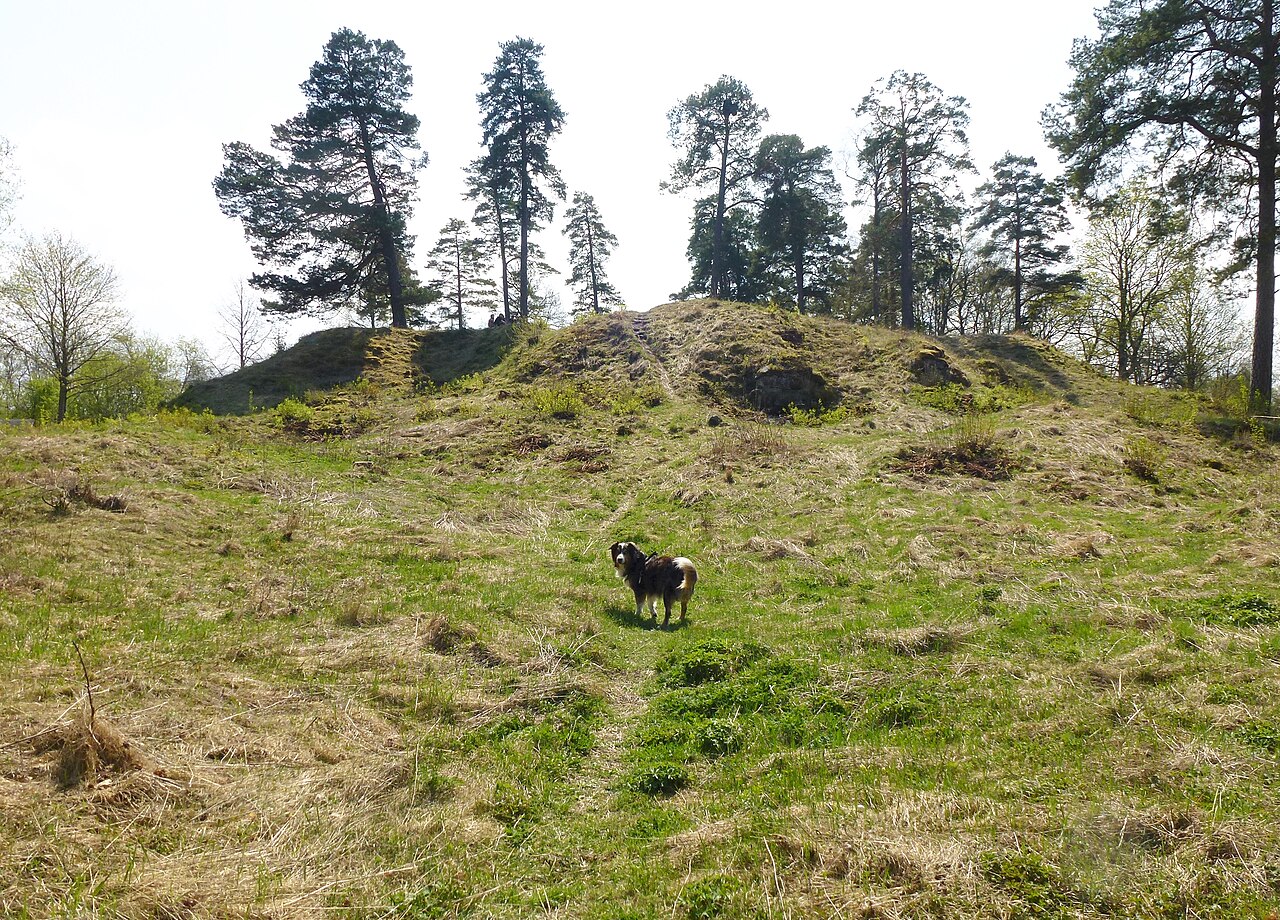
Runsa hill fort is a remarkable prehistoric hill castle located in Upplands Väsby, Sweden, prominently positioned on a 30-meter-high rock promontory overlooking Lake Mälaren. This strategic location provided natural defense advantages, making it an ideal site for fortification during the Early Medieval period (circa 400-500 AD). The fortification covers a substantial area of approximately 200 by 100 meters, indicating its significance as a defensive and possibly a communal stronghold in its time.
Archaeological significance and excavations
The site of Runsa hill fort was first excavated in 1902, with notable involvement from Crown Prince Gustaf VI Adolf of Sweden, reflecting early 20th-century interest in Sweden's ancient monuments. Further archaeological investigations were conducted in 1992, providing deeper insights into the fort's structure and its historical context. These excavations revealed the fort's layout and its relationship to surrounding ancient monuments.
Stone ship burial and burial ground
Directly below the ruins of the hill fort lies a significant stone ship burial site, consisting of approximately 30 graves. This burial ground is constructed from round stones arranged in the shape of a ship, a funerary tradition common in Scandinavian prehistory. The stone ship measures about 56 feet from bow to stern and is among the best-known stone circles in Sweden. The graves date back to the Early Medieval period (400-500 AD), contemporaneous with the hill fort's construction and use.
Runsa manor and historical ownership
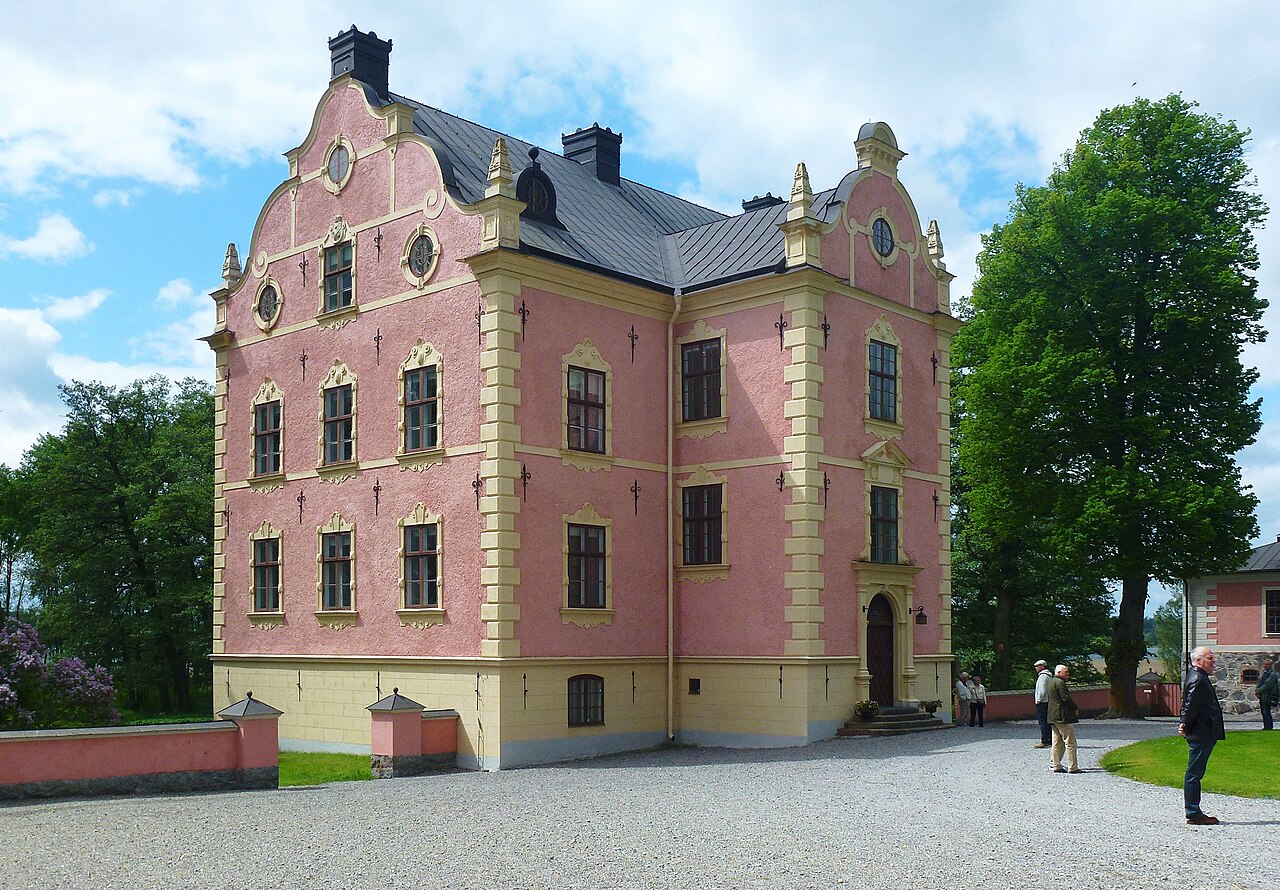
Adjacent to the hill fort and burial site is Runsa manor (Runsa herrgård), a historical estate surrounded by the ruins and other ancient monuments. The manor's documented history begins in 1313 when the estate was sold to the Archbishop of Uppsala. Following the Protestant Reformation, the estate was confiscated by King Gustav Vasa but later sold by his grandson, Jacob De la Gardie. The manor's main building dates from the mid-1600s and is believed to have been constructed under the direction of Countess Ebba Brahe, known historically as the mistress of King Gustavus Adolphus.
Architectural and cultural context
The Runsa hill fort exemplifies early Scandinavian defensive architecture, utilizing the natural topography of a rocky promontory to enhance its defensive capabilities. The combination of the fort with the nearby stone ship burial illustrates the cultural and ritual significance of the site, linking martial and funerary practices. The manor house adds a layer of post-medieval history, reflecting the transition from medieval ecclesiastical ownership to noble estates during the early modern period in Sweden.
Construction and layout
The fort's extensive area suggests a complex layout possibly including ramparts, walls, and lookout points, typical of hill forts designed for both defense and habitation. While detailed structural remains are limited, the site's prominence and size indicate its importance in regional power dynamics during the Early Medieval era.
Preservation and current condition
Today, Runsa hill fort is classified as an archaeological site, with visible ruins that attract visitors interested in Sweden's ancient history. The stone ship burial remains one of the most significant prehistoric monuments in the region, preserved as a cultural heritage site. The manor house remains a notable example of 17th-century Swedish architecture and noble residence.
Visiting information and cultural heritage
Visitors to Runsa can explore the hill fort ruins and the stone ship burial, gaining insight into Sweden's early medieval fortifications and burial customs. The proximity of Runsa manor offers a glimpse into the later historical narrative of the estate. The site is accessible year-round, though specific visiting hours for the manor may vary. Interpretive signage and guided tours are occasionally available to enhance the educational experience.
Frequently asked questions (FAQ)
- What is the historical significance of Runsa hill fort?
- Runsa hill fort is a prehistoric defensive site dating from 400-500 AD, strategically located on a rock promontory overlooking Lake Mälaren, illustrating early medieval fortification techniques in Sweden.
- Can visitors see the stone ship burial at Runsa?
- Yes, the stone ship burial site with approximately 30 graves is located below the hill fort ruins and is one of the best-preserved stone ship monuments in Sweden, accessible to visitors.
- What is the connection between Runsa manor and the hill fort?
- Runsa manor is situated near the hill fort ruins and was historically part of the estate. The manor dates from the mid-1600s and was associated with Countess Ebba Brahe, reflecting the site's continued importance through Swedish history.
- When was Runsa hill fort excavated?
- The hill fort was first excavated in 1902 with participation from Crown Prince Gustaf VI Adolf, and later archaeologists conducted further investigations in 1992 to better understand the site's history.
- Is Runsa hill fort open to the public?
- Yes, the site is accessible to the public as an archaeological site, allowing visitors to explore the ruins and the adjacent stone ship burial, although facilities and guided tours may be limited.
Information
Loading map...
Visitor reviews
No reviews yet. Been here? Write the first review and help other travelers!
Write the first reviewVisited this castle? Share your experience
Your review helps other travelers and adds first-hand knowledge to our encyclopedia.