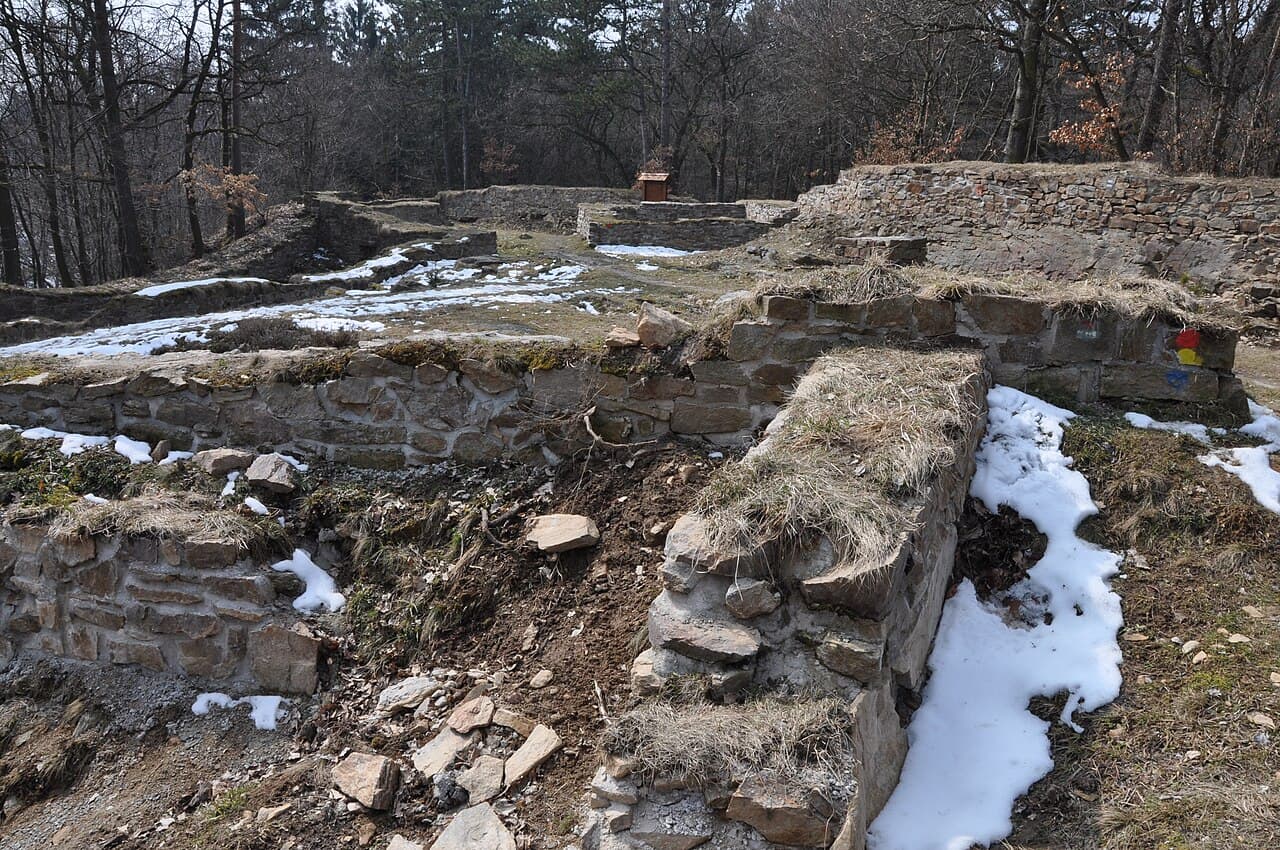
Sion Castle
Sion Castle is a notable late medieval fortress ruin located in Chlístovice, within the Central Bohemian Region of the Czech Republic, near the historic town of Kutná Hora. Founded in 1426 by the Hussite nobleman Jan Roháč of Dubá, the castle played a significant role during the turbulent Hussite Wars of the early 15th century. Despite its relatively brief period of active use, Sion Castle remains an important archaeological and historical site that reflects the military and political struggles of the era.
Founding and historical context
Sion Castle was constructed during a period of intense conflict in Bohemia, known as the Hussite Wars (1419–1434). These wars were sparked by religious and social upheaval following the execution of Jan Hus, a Czech reformer. Jan Roháč of Dubá, a staunch Hussite leader, established Sion as a stronghold to resist the forces loyal to the Holy Roman Emperor Sigismund. The castle's founding between 1426 and 1427 was part of a broader effort by Hussite factions to fortify strategic positions in the region.
Strategic location and purpose
Situated on a hill near Kutná Hora, a major silver mining town, Sion Castle was strategically placed to control important routes and support Hussite military operations. Its elevated position provided a defensive advantage, allowing its garrison to monitor enemy movements and resist sieges. The castle served both as a military fortress and a symbol of Hussite resistance against imperial forces.
Siege and destruction
The castle's active military use was short-lived. In 1437, after the end of the main Hussite Wars, Sion Castle became the last bastion of Jan Roháč of Dubá and his followers. Imperial forces allied with Emperor Sigismund laid siege to the castle for approximately four months. Despite determined resistance, the defenders were ultimately overcome. Following the siege, the castle was captured and deliberately burned, marking the end of its military significance.
Aftermath and historical impact
The destruction of Sion Castle symbolized the final suppression of the radical Hussite factions in Bohemia. Jan Roháč of Dubá was captured and executed, ending his leadership role. The castle was never rebuilt, and over the centuries, it fell into ruin. Its remains serve as a poignant reminder of the religious and political conflicts that shaped Bohemian history in the 15th century.
Architectural features and archaeological investigations
Today, Sion Castle exists primarily as archaeological ruins. The surviving elements include scattered portions of basement stone walls, fragments of arches, and remnants of stairs. These remains provide valuable insights into the castle's original layout and construction techniques typical of late medieval fortifications in Bohemia.
Archaeological excavations conducted in the 20th century have helped document the site's historical significance and physical characteristics. These studies revealed the castle's defensive structures and contributed to a better understanding of Hussite military architecture. The ruins are accessible to visitors interested in medieval history and archaeology.
Visiting sion castle today
As a ruin, Sion Castle offers a unique glimpse into the past for history enthusiasts and tourists exploring the Central Bohemian Region. The site is open to the public, although facilities are minimal due to its nature as an archaeological site. Visitors can explore the remains and appreciate the castle's historical context within the broader landscape of Bohemian medieval history.
The castle's proximity to Kutná Hora, a UNESCO World Heritage site known for its medieval silver mines and Gothic architecture, makes it a worthwhile addition to regional cultural itineraries. Exploring Sion Castle enriches understanding of the Hussite Wars and the complex history of Bohemia during the late medieval period.
Frequently asked questions (FAQ)
- What is the historical significance of Sion Castle?
- Sion Castle was a Hussite stronghold founded by Jan Roháč of Dubá during the Hussite Wars. It symbolizes the resistance against Emperor Sigismund's forces and was the site of a notable siege in 1437.
- Can I visit the ruins of Sion Castle?
- Yes, the ruins of Sion Castle are open to the public. Visitors can explore the remaining stone walls, arches, and stairs, although facilities are limited due to its status as an archaeological site.
- When was Sion Castle built and destroyed?
- Sion Castle was built between 1426 and 1427 and was destroyed after a four-month siege in 1437 by forces allied with Emperor Sigismund.
- Where is Sion Castle located?
- Sion Castle is located in Chlístovice, in the Central Bohemian Region of the Czech Republic, near the historic town of Kutná Hora.
- What remains of Sion Castle today?
- Today, only scattered parts of the basement stone walls, some arches, and stairs remain of the original castle, reflecting its ruinous state after destruction in the 15th century.
Photo gallery

Information
Current owner
Municipality
Loading map...
Visitor reviews
No reviews yet. Been here? Write the first review and help other travelers!
Write the first reviewVisited this castle? Share your experience
Your review helps other travelers and adds first-hand knowledge to our encyclopedia.



