Sinclair Girnigoe Castle
Castle Sinclair Girnigoe stands as a remarkable example of a late medieval Scottish fortress, perched dramatically on the cliffs overlooking the North Sea in the Highland region of Scotland. This castle complex, built and modified over approximately two centuries, was the ancestral seat of the powerful Clan Sinclair, Earls of Caithness. Its strategic location on a rocky promontory provided both a commanding view of the sea and natural defenses against invaders, making it a critical stronghold in northern Scotland.
The origins of the castle date back to the 15th century, with construction believed to have begun between 1476 and 1496 under the direction of William Sinclair, 2nd Earl of Caithness. The castle was initially known as Girnigoe Castle before later additions and expansions led to its renaming as Castle Sinclair in the early 17th century. Recent archaeological research has clarified that what were once thought to be two separate fortresses are in fact parts of a single, evolving castle complex. This complex includes a massive gate tower from the 14th century, a large hall and defensive walls from the 15th century, and a distinctive tower house centerpiece added during the 16th century, reflecting Renaissance military architectural influences.
Architectural features and defensive design
The tower house and structural layout
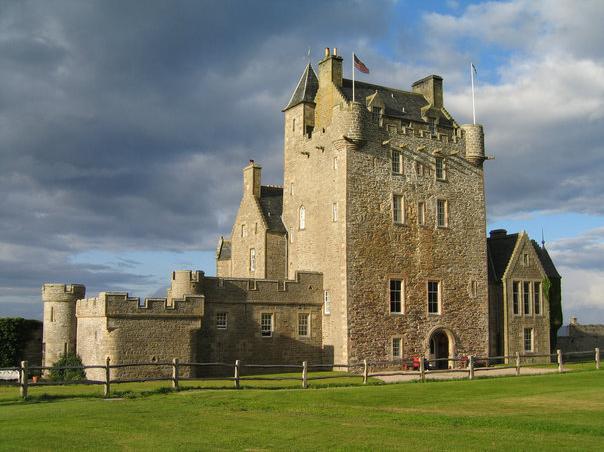
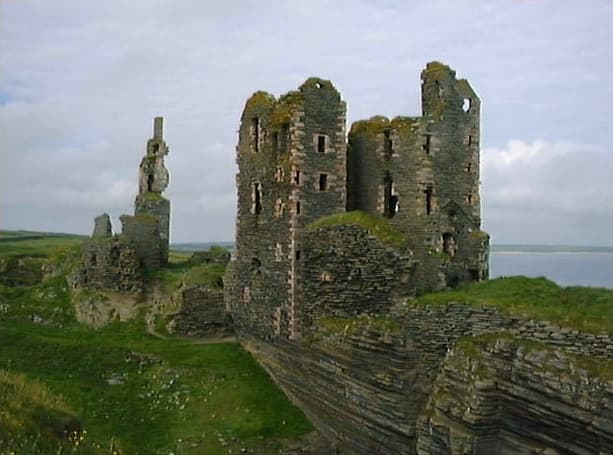
The castle’s five-story L-plan crow-stepped gabled tower house, known as Girnigoe, is the most prominent surviving structure. It was strategically built on a rocky promontory, which juts into Sinclair Bay, providing natural defenses on several sides. The tower house was surrounded by a curtain wall encompassing the promontory, with various outbuildings enclosed within. Notable architectural features include a secret chamber hidden in the vaulted ceiling of the kitchen, a rock-cut stairway descending to the sea, and a now-filled well on the lowest level of the tower, which would have been crucial for water supply during sieges.
Gatehouse, walls, and later expansions
In 1606, the castle underwent significant expansion under the Sinclair Earls, including the construction of a new gatehouse and additional buildings connected by a drawbridge spanning a rock-cut ravine. These additions were enclosed by a curtain wall, enhancing the defensive capabilities of the complex. The expansions coincided with an official Act of Parliament permitting the castle’s renaming from Girnigoe to Sinclair, although both names continued to be used interchangeably.
Historical significance and clan sinclair legacy
Early history and clan seat
Castle Sinclair Girnigoe served as a principal seat for the Sinclair Earls of Caithness for over two centuries. The castle witnessed significant historical events, including internal family conflicts and regional power struggles. For example, in 1577, George Sinclair, 4th Earl of Caithness, imprisoned his son, John, Master of Caithness, within the castle on suspicion of rebellion. John was held captive for seven years and reportedly died from mistreatment, a grim episode reflecting the turbulent nature of clan politics.
Sieges, battles, and decline
Following the death of George Sinclair, 6th Earl of Caithness in 1676 without heirs, the castle became the focus of a violent succession dispute. John Campbell of Glen Orchy, married to the widow of the 6th Earl, claimed the title and the castle, but George Sinclair of Keiss contested this claim. The resulting conflict culminated in the Battle of Altimarlech in 1680, where the Campbells emerged victorious. In 1690, George Sinclair of Keiss besieged the castle again, reportedly causing significant damage with cannon fire, though recent research questions the extent of this artillery damage. After this siege, the castle was abandoned and fell into ruin.
Preservation, restoration efforts, and current status
Over the centuries, the castle has suffered from neglect, harsh coastal weather, and vandalism. The cliffs supporting the castle have been unstable, threatening the structural integrity of the remaining buildings. Notably, the tower house was at risk of collapsing into the sea due to erosion and failing keystones supporting the walls.
In the 20th century, the castle passed out of Sinclair family hands but was purchased in 1950 and later donated to a trust dedicated to its preservation in 1999. The Clan Sinclair Trust has since undertaken restoration work to stabilize the ruins and protect the site’s archaeological and historical significance. Plans include making the castle accessible to the public, including provisions for handicapped visitors, which is rare among Scottish castles.
Cultural and architectural importance
Castle Sinclair Girnigoe is not only a symbol of the Clan Sinclair heritage but also an important example of medieval and Renaissance military architecture in Scotland. Its combination of a medieval gate tower, defensive walls, and a Renaissance-style tower house reflects the evolution of castle design in response to changing military technologies and social needs. The castle’s dramatic coastal setting adds to its cultural allure, making it a significant landmark in the Scottish Highlands.
The castle’s ruins continue to attract historians, archaeologists, and visitors interested in Scotland’s feudal past and clan history. Its preservation helps illuminate the complex interplay of power, architecture, and geography that shaped the region’s history.
Frequently asked questions (FAQ)
- How do I get to Castle Sinclair Girnigoe?
- Castle Sinclair Girnigoe is located on the northeast coast of Scotland near the village of Noss Head. Visitors typically travel by car from nearby towns such as Wick or Thurso. There is a parking area close to the castle, but access involves walking over uneven terrain and coastal paths, so sturdy footwear is recommended.
- What is the historical significance of Castle Sinclair Girnigoe?
- Castle Sinclair Girnigoe was the ancestral seat of the powerful Clan Sinclair, Earls of Caithness. It played a key role in regional power struggles during the late medieval and early modern periods, including sieges and clan disputes. Its architecture reflects the evolution of Scottish castles from medieval fortresses to Renaissance residences.
- Is Castle Sinclair Girnigoe accessible to visitors with disabilities?
- Restoration efforts by the Clan Sinclair Trust aim to improve accessibility, and once completed, the castle will be one of the few historic Scottish castles accessible to handicapped visitors. However, current access involves uneven coastal paths and may be challenging for some visitors.
- When is the best time to visit Castle Sinclair Girnigoe?
- The best time to visit Castle Sinclair Girnigoe is during the late spring to early autumn months when the weather is milder and coastal paths are safer to navigate. Summer months offer longer daylight hours, ideal for exploring the extensive ruins and enjoying the scenic views of Sinclair Bay.
- Are there guided tours available at Castle Sinclair Girnigoe?
- Guided tours are occasionally organized by the Clan Sinclair Trust and local heritage groups. Visitors are encouraged to check in advance for tour availability, which can provide valuable insights into the castle’s history, architecture, and clan heritage.
Photo gallery

Information
Current owner
Clan Sinclair Trust
Loading map...
Visitor reviews
No reviews yet. Been here? Write the first review and help other travelers!
Write the first reviewVisited this castle? Share your experience
Your review helps other travelers and adds first-hand knowledge to our encyclopedia.