Silves Castle
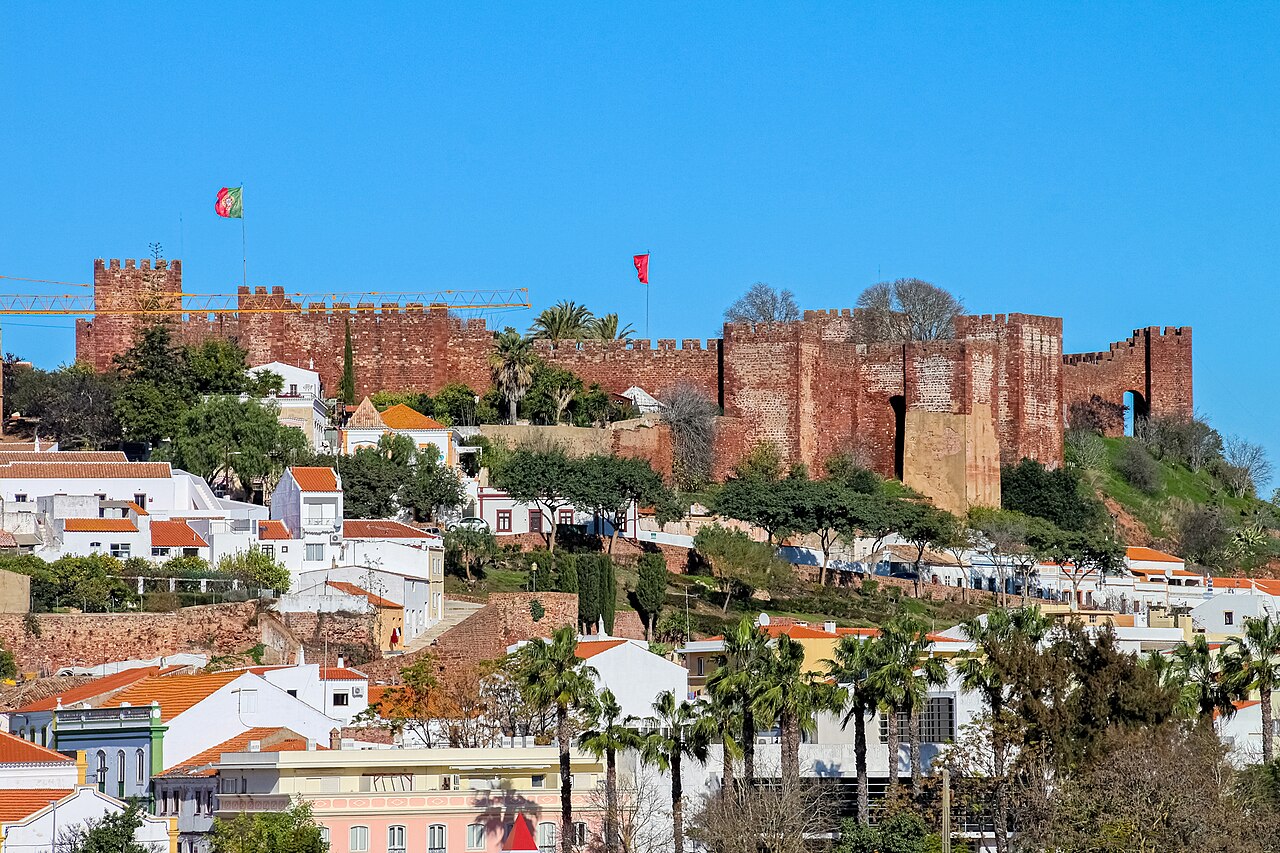
Silves Castle, known locally as Castelo de Silves, is a prominent late-medieval fortress situated in the historic town of Silves in the Algarve region of southern Portugal. This castle stands as a significant monument reflecting the region's complex history, marked by Roman, Visigothic, Moorish, and Portuguese influences. Built primarily from large, striking red sandstone blocks and taipa—a hardened mixture of mud and sandstone typical of Moorish construction—the castle's imposing walls and towers dominate the town's skyline.
The origins of Silves Castle trace back to earlier fortifications from the late Roman or Visigothic periods around the 4th or 5th centuries. However, the castle as it stands today was largely constructed during the Moorish occupation that began circa 715 AD. Known then as Xelb, Silves served as the regional capital under Moorish rule. The castle formed part of the extensive city walls that protected the town, which was strategically located near the now silted-up Arade River.
Historical significance and military conflicts
The castle's history is marked by numerous sieges and changes of control between Christian and Moorish forces. In 1060, Ferdinand I, King of León and Castile, captured Silves, but the Moors soon regained it. A notable event occurred in 1189 during the Third Crusade when Portuguese Christian forces, supported by thousands of English, German, and Flemish Crusaders en route to the Holy Land, besieged the castle. After a six-week siege, the Moors surrendered under an agreement that allowed them to leave unharmed. However, the Crusaders violated this pact, slaughtering the departing Moors and pillaging the town.
Subsequent attempts to retake Silves included an unsuccessful siege by Yacub Ben Yussuf in 1190 and a more successful campaign in 1191. During the 1190 siege, Richard the Lionheart notably assisted the Christian defenders. The town changed hands again in 1198 when King Sancho I of Portugal, aided by German Crusaders, recaptured Silves but dismantled the castle to prevent its reuse by enemies.
Finally, in 1242, the castle was conquered by Don Paio Peres Correia, Master of the Order of Santiago, during the reign of King Alfonso III. Alfonso III ordered the castle's reconstruction, underscoring its strategic importance. A statue of this king now stands just outside the castle gate, commemorating his role in Silves' history. After this period, the town's prominence gradually declined.
Architectural features and layout
Silves Castle is one of the largest castles in the Algarve region, enclosing an area approximately 125 by 100 meters. Its defensive walls are up to four meters thick and are reinforced by eleven square towers. Two of these towers function as barbicans, connected to the ramparts by supporting arches that sustain the walkway along the walls.
The castle has two main entrances: the primary gate, flanked by two towers, and a smaller postern gate known as the 'traitors' gate'. This latter gate is located near a projecting tower on the northern wall, which served as the castle's keep. This keep tower was bricked up during one of the restoration phases. Four of the towers were modified during the 14th and 15th centuries, featuring Gothic doorways, vaulted halls, and stones marked by medieval masons, reflecting the architectural styles of that period.
Inside the castle walls, no original buildings remain intact, but partially excavated foundations reveal the layout of former structures. Two cisterns survive: a smaller one approximately 60 meters deep of Roman origin, and a larger cistern known as El Moura Encantada ('the enchanted Moorish woman'). This larger cistern, supported by four vaults and tall columns, is linked to a local legend about a Moorish princess mourning her lost love. Today, this cistern is used for small exhibitions.
Damage, restoration, and current condition
The castle has endured significant damage over the centuries, notably from two major earthquakes in 1722 and 1755, which compromised parts of its structure. Restoration efforts began in the 20th century, with significant work carried out in 1940 to preserve and stabilize the castle's remaining walls and towers. Today, Silves Castle is considered well preserved and is a key heritage site managed as a public monument.
Cultural and touristic importance
Silves Castle is a major tourist attraction in the Algarve, offering visitors panoramic views over the town of Silves and the surrounding countryside. Its rich history, combined with its imposing medieval architecture and evocative legends, makes it a compelling destination for those interested in Portugal's medieval past and Moorish heritage. The castle's location on a hill provides an excellent vantage point, enhancing its defensive qualities and its appeal to visitors.
Visitors can explore the castle grounds, walk along the ramparts, and view exhibitions within the larger cistern. The site provides insight into the military, architectural, and cultural history of the Algarve region, illustrating the layered history from Roman times through the Middle Ages to the present day.
Frequently asked questions (FAQ)
- How do I get to Silves Castle?
- Silves Castle is located in the heart of Silves, Portugal, easily accessible by car or public transport. If you’re coming from Faro, you can take a train to Silves station and enjoy a short walk to the castle.
- What is the historical significance of Silves Castle?
- Silves Castle is one of the best-preserved Moorish castles in Portugal, dating back to the 11th century. It played a crucial role during the Reconquista and reflects the architectural and cultural influences of the period.
- When was Silves Castle built?
- Construction of Silves Castle began in the 11th century, with significant expansions and modifications occurring until the 13th century. The castle served as a fortress and a royal residence throughout its history.
- Can I enter Silves Castle with a ticket?
- Yes, visitors can enter Silves Castle by purchasing a ticket at the entrance. Tickets are reasonably priced, providing access to the castle grounds and stunning views of the surrounding area.
- Why is Silves Castle a popular tourist attraction?
- Silves Castle attracts tourists due to its rich history, stunning architecture, and breathtaking panoramic views of the town and countryside. Its well-preserved walls and towers offer a glimpse into Portugal's medieval past.
- Is it possible to visit Silves Castle year-round?
- Yes, Silves Castle is open to visitors throughout the year, although hours may vary seasonally. It’s wise to check ahead for any special events or maintenance closures before planning your visit.
- What are the opening hours for Silves Castle?
- Silves Castle generally opens from 9 AM to 7 PM during the summer months and from 9 AM to 6 PM in the winter. Always check the official website for the most current opening hours before your visit.
- What is the best time to visit Silves Castle?
- The best time to visit Silves Castle is during the spring and fall when temperatures are mild, making it comfortable for exploring. Additionally, visiting during these seasons allows you to enjoy fewer crowds and a more tranquil experience.
- Are there any nearby attractions to visit?
- Yes, near Silves Castle, you can explore the charming streets of Silves, the Gothic-style Silves Cathedral, and the beautiful Arade River. These attractions make for a delightful day of sightseeing in this historic town.
Information
Address
Rua do Castelo, Portugal
Loading map...
Visitor reviews
No reviews yet. Been here? Write the first review and help other travelers!
Write the first reviewVisited this castle? Share your experience
Your review helps other travelers and adds first-hand knowledge to our encyclopedia.