Castle of Alcantarilha
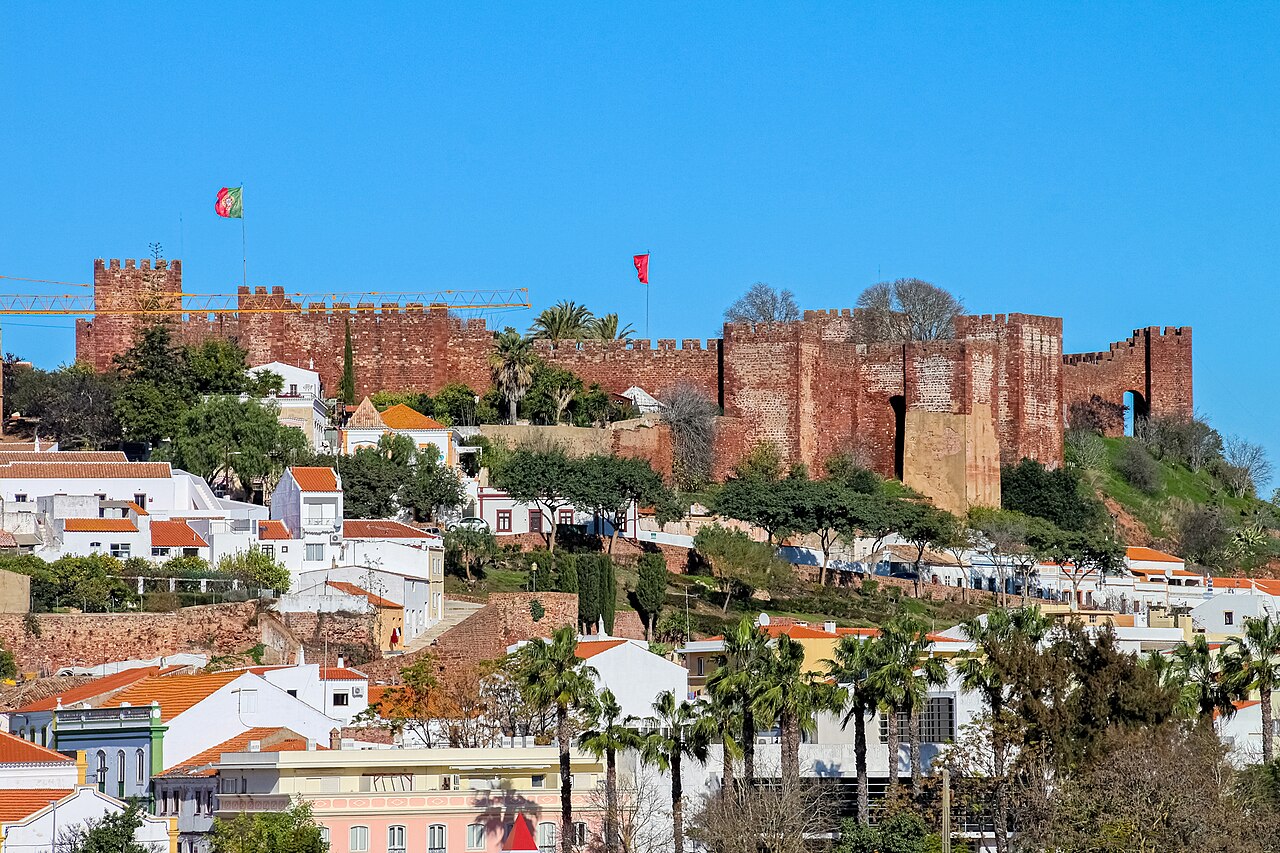
The Castle of Alcantarilha stands as a testament to the complex history of the Algarve region, located in the civil parish of Alcantarilha within the municipality of Silves, Portugal. Originally constructed during the 12th century under Muslim rule, this hill castle was strategically positioned to defend the inland territories against maritime incursions along the southern coast. Its origins are deeply intertwined with the region's transition from ancient settlements through Islamic governance to Christian reconquest.
Historical background and origins
The site of Alcantarilha has a long continuum of occupation that predates the castle itself. Archaeological evidence suggests that before the Islamic period, the location may have been a Lusitanian castro, a fortified hilltop settlement used by the native peoples of the Iberian Peninsula. Around 198 BCE, the Romans conquered the area, establishing a military base that maintained strategic ties to the nearby coastal port of Armação de Pêra. The castle's name derives from the Arabic "al-qantarâ", meaning "the bridge," a reference to a nearby bridge that was part of the vital route connecting the cities of Faro and Silves during the Islamic era.
During the 12th century, the castle was built as a fortified enclosure under Muslim control, designed to protect the interior from attacks originating from the sea. This period saw the establishment of defensive structures typical of Islamic military architecture in the Algarve, though much of the original construction was later modified or replaced during the Christian reconquest.
Transition to christian rule and medieval modifications
In the 13th century, the castle came under Christian control during the reign of King Afonso III. The capture of Alcantarilha by forces led by D. Paio Peres Correia marked a significant shift in the castle's function and architecture. The king ordered substantial works on the fortifications, which likely included either the initial construction of a new castle or extensive modifications to the existing Muslim walls. This transformation reflected the military and political needs of the Christian kingdom as it consolidated power in the Algarve.
The medieval Christian modifications introduced polygonal defensive walls and bastions, adapting the fortress to contemporary military technology and tactics. The castle's layout was roughly hexagonal, with six bastions placed at each corner to provide overlapping fields of fire and improved defense against siege warfare.
Early modern enhancements and military significance
During the 16th century, under the reigns of King João III and later King Sebastião, the castle underwent further enhancements to its defensive structures. These renovations were in response to increasing threats from North African pirates who frequently attacked coastal and inland settlements in the Algarve. The construction of bastions and reinforcement of walls were key measures taken to protect the local population and maintain control over the region.
By 1621, the castle still held strategic importance. Military engineer Alexandre Massai documented the presence of a local militia consisting of 27 horsemen and 221 foot soldiers. He recommended completing the defensive walls and digging a moat around the castle to enhance its fortifications, reflecting the evolving military engineering practices of the period.
During the Portuguese Restoration War in 1640, the castle saw restoration efforts aimed at strengthening Portugal's defenses against Spanish forces. Despite these efforts, the fortress gradually declined in military relevance during the 18th century, a decline accelerated by the devastating 1755 Lisbon earthquake which caused structural damage to the castle.
Architectural features and surviving remains
The Castle of Alcantarilha was originally designed as a fortified enclosure with a roughly hexagonal plan, featuring six bastions at each corner. The main gate was characterized by an arched entrance, a common defensive feature that controlled access while providing protection. The castle walls were primarily constructed from stone bonded with lime mortar, consistent with early modern fortification techniques recommended in the 17th century.
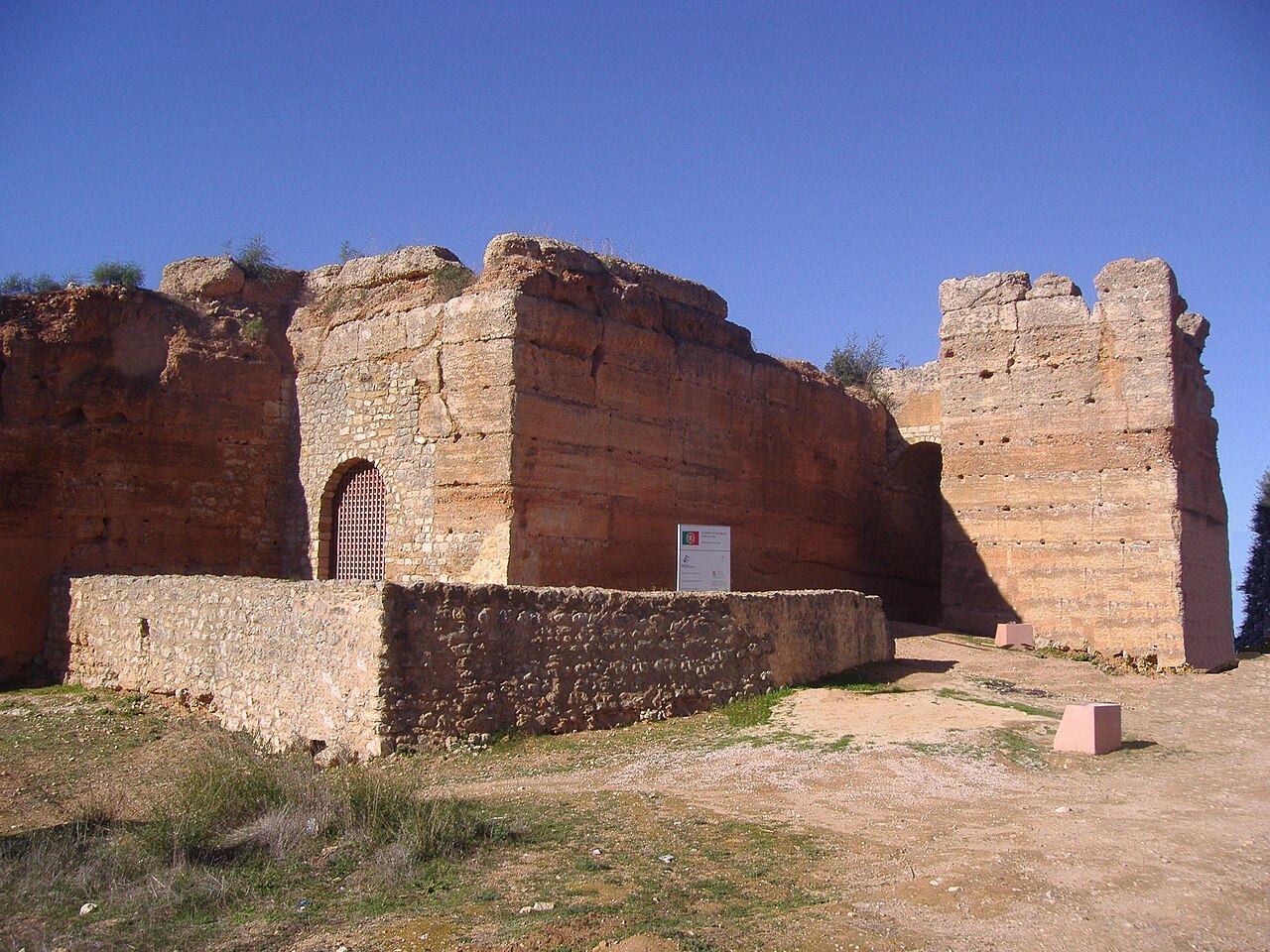
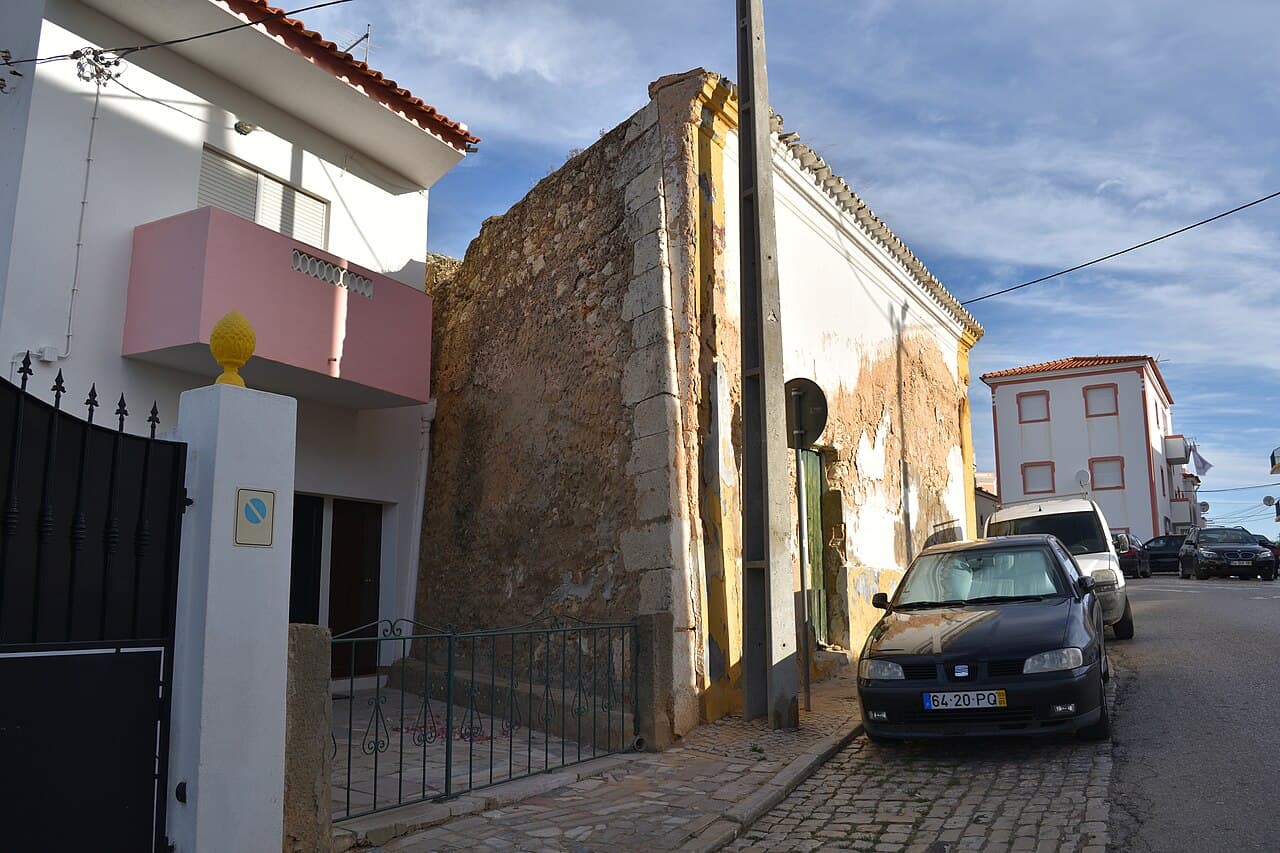
Today, one of the most prominent surviving sections of the wall is located near Travessa do Castelo, measuring approximately 12 meters in length and 4.5 meters in height. This wall segment is composed of small, irregular stones arranged unevenly, a construction style that differs from the more regular masonry typical of Islamic-era Algarve castles. This suggests the wall dates from the medieval Christian period modifications.
On the southeast side near Rua de Nossa Senhora do Carmo, the remains of a bastion corner are visible. This bastion was built from wedge-shaped limestone blocks that narrow toward the top, a design intended to deflect and absorb attacks. Near Travessa do Castelo, there is also a curved masonry section containing a doorway on the southwest face and a tall window about four meters high on the northwest side, indicating the architectural complexity of the fortress.
The castle walls feature defensive elements such as embrasures—narrow openings for firing weapons—and battlements with regular indentations providing cover for defenders. These features suggest the former presence of a chemin de ronde, a wall walk behind the battlements used by soldiers to patrol and defend the castle perimeter.
Along Rua do Lagar, additional wall sections and part of a tower survive. The tower has been incorporated into a modern private residence but retains its projecting corbel, known locally as an "orelhão" or "big ear," which supported defensive features like machicolations. These openings allowed defenders to drop objects or pour liquids on attackers below. The tower's architectural style bears similarities to towers found in the Walls of Lagos, such as Santo António, Gafaria, Quartos, and Paiol.
Some parts of the castle walls are now partially enclosed or obscured by surrounding buildings, especially near Travessa do Castelo. The largest preserved wall section is protected as a monument, but other fragments, including those near Rua do Lagar, lack formal heritage classification.
Modern history and preservation efforts
In the 20th century, urban expansion led to the demolition of much of the castle's interior and remaining walls. Despite this, the fortress was still considered to be in relatively good condition during the 1940s. The castle was officially designated as a Property of Public Interest in 1977, following administrative proceedings initiated in 1973 despite some local opposition.
Archaeological investigations conducted in 2000 and 2011 have helped uncover and document the castle's remains. Cultural events held in 2015 and 2016 celebrated the castle's heritage, reflecting ongoing community interest in preserving this historical site.
Today, the Castle of Alcantarilha remains a valuable archaeological ruin that offers insights into the region's layered history of Muslim and Christian occupation, military architecture, and coastal defense. Its surviving structures, though fragmented, reveal the evolution of fortification techniques from the medieval period through the early modern era in southern Portugal.
Frequently asked questions (FAQ)
- How do I get to the Castle of Alcantarilha?
- The Castle of Alcantarilha is located in Silves, Portugal, and can be easily accessed by car or public transportation. The nearest bus station is a short walk away, and there are parking facilities nearby for visitors arriving by car.
- What is the historical significance of the Castle of Alcantarilha?
- The Castle of Alcantarilha dates back to the Moorish occupation of the Iberian Peninsula and is a testament to the region's rich history. It is known for its strategic position and played a crucial role in the defensive system of the area during the medieval period.
- When was the Castle of Alcantarilha built?
- The construction of the Castle of Alcantarilha is believed to have begun in the 12th century, during the Moorish rule of the Algarve. It was later modified and expanded, reflecting the architectural styles of different eras.
- Can I visit the Castle of Alcantarilha year-round?
- Yes, the Castle of Alcantarilha is open to visitors throughout the year. However, it is advisable to check ahead for any seasonal changes in opening hours or special events that may affect accessibility.
- Why is the architecture of the Castle of Alcantarilha unique?
- The architecture of the Castle of Alcantarilha features a blend of Moorish and local styles, characterized by its stone walls and strategic design. Its well-preserved ruins offer a glimpse into the military architecture of the time, making it a fascinating site for history enthusiasts.
- Is it possible to take guided tours of the castle?
- Yes, guided tours are available at the Castle of Alcantarilha, providing visitors with in-depth knowledge of its history and architecture. These tours are conducted by knowledgeable guides and can enhance your understanding of the castle's significance.
- What are the ticket prices for the Castle of Alcantarilha?
- Ticket prices for the Castle of Alcantarilha are generally affordable, with discounts available for students and seniors. It is best to check the official website for the most up-to-date pricing and any special offers that may be available.
- What are the opening hours of the Castle of Alcantarilha?
- The Castle of Alcantarilha typically opens in the morning and closes in the evening, but the exact hours may vary by season. It is recommended to verify the current opening hours on the official website before planning your visit.
- When is the best time to visit the Castle of Alcantarilha?
- The best time to visit the Castle of Alcantarilha is during the spring and autumn months when the weather is mild and pleasant. This allows you to enjoy the outdoor surroundings and explore the castle without the summer crowds.
- Are there any nearby attractions to visit while in Silves?
- Yes, Silves is home to several nearby attractions, including the Silves Castle and the picturesque old town. Visitors can also explore local markets, museums, and the stunning landscapes surrounding the area for a complete experience.
Photo gallery

Information
Loading map...
Visitor reviews
No reviews yet. Been here? Write the first review and help other travelers!
Write the first reviewVisited this castle? Share your experience
Your review helps other travelers and adds first-hand knowledge to our encyclopedia.