Şile Castle — Turkey castle

Şile Castle

Şile Castle on Ocaklı Island, Istanbul
Şile, Istanbul, Turkey
Contemporary (20th–21st c.)
Restored

Şile Castle, also known as Şile Kalesi or Ocaklı Ada Kalesi, is a historic fortress located on Ocaklı Island just off the coast of the town of Şile in the Istanbul province of Turkey. This castle occupies a strategic position on a small island guarding the entrance to a harbor, reflecting its original military purpose as a watchtower.

The exact origins of Şile Castle are somewhat obscure, but it is generally accepted that it was initially constructed during the Byzantine Empire era, likely serving as a coastal lookout to protect maritime routes and the adjacent harbor. The fortress's location was critical for monitoring naval traffic and potential threats approaching the Bosphorus and the Black Sea coast.

Historical background and ownership

The castle's history is marked by several changes in control and phases of repair. Around 1305, the Genoese took possession of the fortress, utilizing it for their commercial and defensive needs in the region. Later, in 1396, the castle was conquered by the forces of the Ottoman Sultan Bayezid I, marking its integration into the expanding Ottoman realm.

Throughout its history, Şile Castle underwent at least two significant repair campaigns: one during Byzantine times and another under Ottoman rule. These restorations aimed to maintain the castle's defensive capabilities and structural integrity.

Architectural features and construction

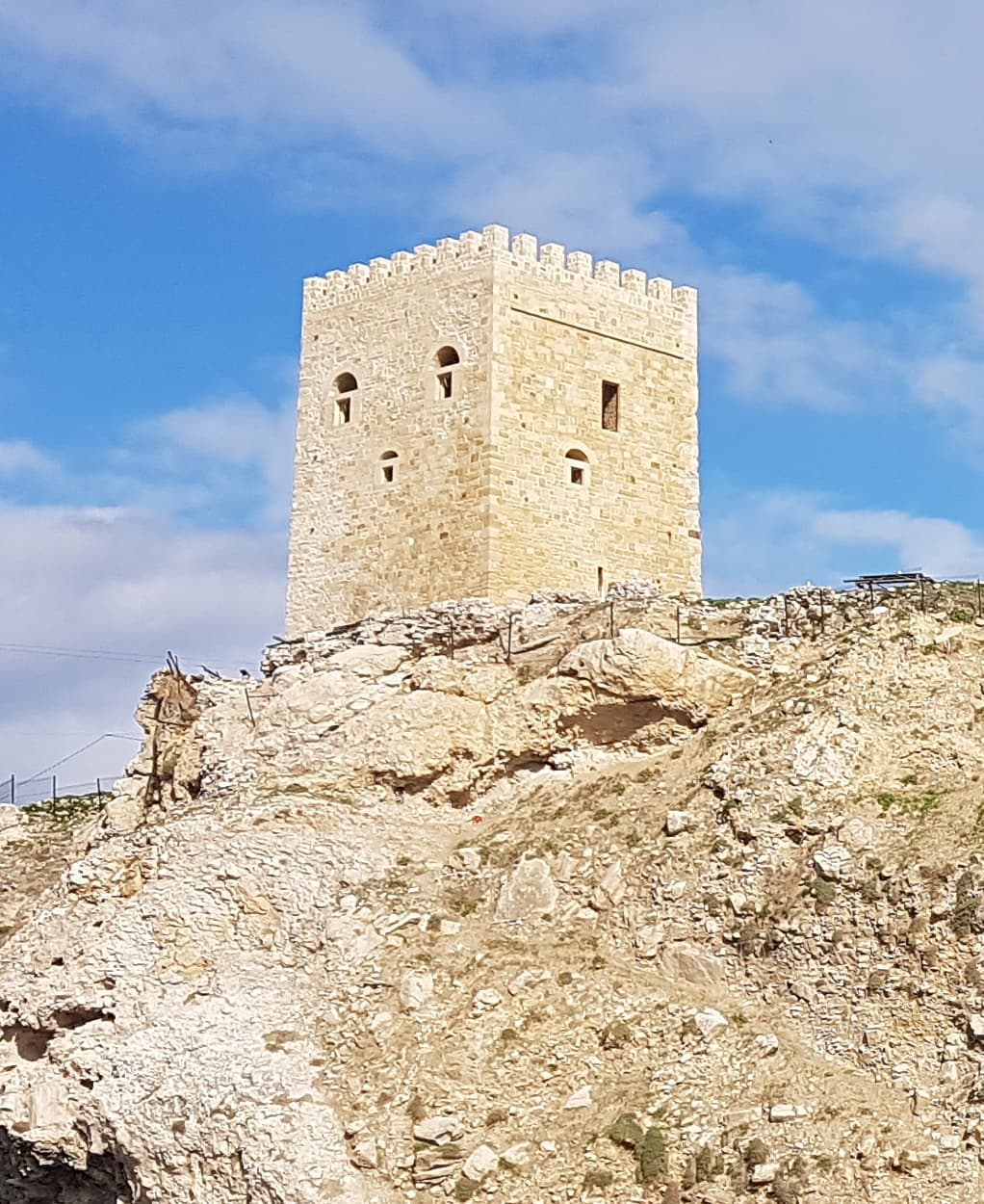
Şile Castle is built primarily from limestone quarried on Ocaklı Island. The castle has a square ground plan and originally rose to four stories in height. Its compact design reflects its function as a watchtower rather than a large fortress complex. The castle's walls and towers were designed to provide a vantage point over the surrounding sea and coastline.

Despite its relatively modest size, the castle's construction demonstrates typical medieval military architecture adapted to the island environment. The use of local limestone not only provided sturdy walls but also integrated the structure visually into its natural surroundings.

Decline and recent restoration

After centuries of use, the castle eventually fell into disuse and was abandoned. Over time, it suffered from neglect and damage, including significant harm caused by illegal treasure hunters who excavated parts of the site in the 20th century. This activity contributed to the castle's deterioration and loss of original fabric.

In 2015, Şile Castle underwent a controversial restoration intended to preserve and stabilize the structure. However, the restoration was widely criticized for its aesthetic choices, which many felt did not respect the castle's historical appearance. The castle was nicknamed the "SpongeBob Castle" due to its brightly colored and somewhat cartoonish look, which contrasted sharply with its medieval origins.

Currently, Şile Castle is not accessible to visitors because it is located on an island without regular transport connections. Previously, access was possible via a cable car, but this is no longer operational. Plans have been proposed to build a walkway to improve access, which would allow visitors to experience the site more fully.

Location and visitor information

Situated near the town of Şile, the castle occupies a prominent position on Ocaklı Island in the Black Sea. The site offers scenic views of the coastline and the sea, making it an attractive destination for visitors interested in history and coastal landscapes.

Although the castle's current appearance has sparked debate, the site remains significant for its historical associations with the Byzantine, Genoese, and Ottoman periods. The castle stands as a reminder of the strategic importance of this part of the Turkish coastline through the centuries.

Future prospects

Efforts to improve access and potentially enhance the castle's presentation may help restore some of its historical dignity. Any future restoration work will likely need to balance preservation with respect for the site's authentic medieval character.

Frequently asked questions (FAQ)

What is the historical significance of Şile Castle?
Şile Castle, built in the 14th century, served as a strategic fortress for the Byzantine Empire and later the Ottomans. Its location on the Black Sea coast allowed it to protect the region from naval invasions and trade routes. Today, it stands as a testament to the rich history of maritime defense in Turkey.
When was Şile Castle built?
Şile Castle is believed to have been constructed during the Byzantine period, around the 14th century. It was later renovated by the Ottomans, further enhancing its defensive capabilities. The castle's architecture reflects the military needs of its time and the cultural influences of different eras.
What are the opening hours for Şile Castle?
Şile Castle is open to visitors year-round, but the opening hours may vary seasonally. Typically, it is open from 9 AM to 7 PM during the warmer months and from 9 AM to 5 PM in the colder months. It is advisable to check local resources for the most current hours before planning your visit.
Can I enter Şile Castle and explore its interior?
Yes, visitors can enter Şile Castle and explore its grounds and interior. The castle offers a unique opportunity to walk through its historic walls and enjoy panoramic views of the surrounding area. However, some areas may have restricted access for safety reasons.
Is it possible to visit Şile Castle with children?
Absolutely! Şile Castle is a family-friendly destination. The site provides ample space for children to explore and learn about history in a fun way. Just be sure to supervise young children near the castle walls and steep areas.
What is the best time to visit Şile Castle?
The best time to visit Şile Castle is during the spring (April to June) and fall (September to November) when the weather is mild and pleasant. These seasons offer the best conditions for exploration and enjoying the scenic views without the summer crowds. Additionally, the surrounding natural beauty is at its peak during these months.
Are there any nearby attractions to visit after Şile Castle?
Yes, there are several attractions near Şile Castle, including the beautiful Şile Beach and the picturesque village of Şile itself. Visitors can also explore the iconic Şile Lighthouse, one of the oldest lighthouses in Turkey. These sites offer a perfect complement to your visit to the castle.
What are the ticket prices for entering Şile Castle?
The entrance to Şile Castle is usually free, allowing visitors to enjoy its historical significance without any cost. However, there may be fees for guided tours or special events held at the site. It's best to check in advance for any updates on pricing or special access.
How do I get to Şile Castle from Istanbul?
To reach Şile Castle from Istanbul, you can take a bus from the city center to Şile, which typically takes about 1.5 to 2 hours. Alternatively, driving is also a great option, as the scenic route along the coast offers beautiful views. Once in Şile, the castle is easily accessible and well-signposted.

Photo gallery

Şile Castle
Click to view

Photo by Justinianus•CC BY-SA 4.0

1 photo • Click any image to view in full screen

Information

Hill Castle

Loading map...

Visitor reviews

No reviews yet. Been here? Write the first review and help other travelers!

Write the first review

Visited this castle? Share your experience

Your review helps other travelers and adds first-hand knowledge to our encyclopedia.

Write a review

(5/5)

0/2000 characters

Your review will be visible after admin approval

Nearby castles

10.2 km

Heciz Castle

Eski İstanbul Şile Yolu, Turkey

Heciz Castle, locally known as Heciz Kalesi, is a historic Byzantine fortress located east of the hamlet of Kalealtı in the Istanbul province of Turkey. This castle occupies a strategic position on a hill overlooking a bend in the stream that runs through the valley below, suggesting its original purpose was to control and monitor the important road connecting Constantinople (modern-day Istanbul) to the coastal town of Şile. Architectural layout and features The castle is notable for its triangular plan, a design that provided effective defense by minimizing blind spots and making the most of the natural terrain. Its location on elevated ground offered commanding views of the surrounding wooded valley, which was an advantage for surveillance and defense. Despite the overgrown and wooded nature of the site today, several structural elements remain visible. There are the ruins of three towers, some of which retain connecting wall fragments. These towers would have served as lookout points and defensive strongholds within the castle's perimeter. The walls, though partially ruined, indicate a robust fortification system typical of Byzantine military architecture. Currently, two entrances can be identified. The main entrance is situated in the south, adjacent to the largest ruined tower, and is believed to be the original gate of the castle. A second entrance on the western wall appears to be a later addition, possibly from a more modern period, reflecting changes in the site's use or access requirements over time. Within the castle's interior, no significant remains of buildings or chambers have been identified, likely due to centuries of decay and vegetation overgrowth. The absence of extensive interior structures suggests the castle primarily functioned as a military outpost rather than a residential complex. Historical context and significance Built during the Byzantine period, Heciz Castle was part of a network of fortifications designed to protect the approaches to Constantinople, the capital of the Byzantine Empire. Its position along the route to Şile indicates its role in controlling traffic and securing the region against potential threats from the Black Sea coast or inland incursions. While detailed historical records of Heciz Castle are scarce, its architectural characteristics and strategic location align with Byzantine defensive strategies of the Middle Ages. The castle likely served as a small garrison post, providing early warning and defense rather than a large-scale fortress. Current condition and visitor information Today, Heciz Castle is in a ruined and overgrown state, with much of its structure obscured by dense vegetation. The site is freely accessible to visitors, although the terrain can be challenging due to the natural undergrowth and wild animals such as turtles that inhabit the area. Visitors should exercise caution when exploring the ruins, as the uneven ground and remnants of walls and towers can pose hazards. The castle offers a quiet and somewhat isolated glimpse into Byzantine military architecture, though it is less developed as a tourist site compared to other castles in the region. Architectural significance within the region Heciz Castle exemplifies the typical Byzantine hill castle designed for strategic oversight rather than grand residential purposes. Its triangular shape is relatively uncommon and reflects a tailored adaptation to the local topography. The surviving towers and walls provide valuable insight into the defensive techniques employed in the Byzantine Empire during the Middle Ages. The castle's proximity to Istanbul, a city rich in historical fortifications, places it within a broader context of imperial defense systems that protected one of the most important cities in medieval Europe and Asia. Exploring the surrounding area The region around Heciz Castle is characterized by natural woodland and a rural landscape that has changed little since the castle's active use. The nearby road connecting Istanbul to Şile remains a significant route, linking the inland areas with the Black Sea coast. Visitors interested in Byzantine history and architecture may find Heciz Castle an intriguing, if modest, site to explore, especially for those seeking less crowded and more natural historical locations. The surrounding valley and stream add to the scenic value of the visit, providing a peaceful environment for hiking and outdoor activities.

High Medieval (11th–13th c.)
Details
18.4 km

Sarıkavak Castle

Hasanlı, Turkey

Sarıkavak Castle, also known locally as Sarıkavak Kalesi, is a historical fortress located west of the village of Hasanlı in the Istanbul province of Turkey. This Byzantine-era castle is situated on a steep hill, providing a commanding view of the surrounding landscape. Its strategic position likely served to control an important route between Şile and Gebze, as well as a ford across a tributary of the Yeşildere stream, which flows to the north and east of the castle hill. Strategic location and historical context Constructed during the Byzantine period, Sarıkavak Castle was part of a network of fortifications designed to protect the approaches to Constantinople and secure local transportation routes. The castle's placement on a steep, kidney-shaped hill allowed it to oversee and control movement along the nearby roads and waterways, which were vital for trade and military logistics. Although detailed historical records about Sarıkavak Castle are scarce, its architectural features and location suggest it played a defensive role during the Middle Ages, particularly in securing the eastern approaches to the city of Istanbul. It may have also functioned as a watchtower or signal station within the Byzantine defensive system. Architectural features and layout The castle's kidney-shaped plan adapts to the natural contours of the hill. Significant remains of three towers still stand, indicating a well-fortified structure. These towers were likely used both for defense and as observation posts. The walls connecting the towers are partially preserved, constructed from local stone and mortar typical of Byzantine military architecture. It is believed that the original entrance to the castle was located near the southern tower, along the eastern wall. This positioning would have provided a defensible access point, possibly protected by a gatehouse or barbican, although these features are no longer visible due to the castle's ruinous state and dense overgrowth. The castle hill is currently covered in forest, and the ruins are heavily overgrown, making the remains difficult to spot except at close range. The natural vegetation has helped preserve some of the stonework but also obscures the full extent of the site. Visiting Sarıkavak Castle today Sarıkavak Castle is freely accessible to visitors, though reaching the site requires a considerable hike as there are no modern roads leading directly to it. The path to the castle passes through forested terrain, and visitors should be prepared for a moderately challenging trek. The remote location and natural surroundings offer a peaceful atmosphere for those interested in Byzantine history and medieval fortifications. Visitors are advised to be cautious of the local wildlife, including wild turtles that inhabit the area around the ruins. Due to the castle's overgrown condition, exploration requires careful footing to avoid damaging the fragile remains or disturbing the natural habitat. Preservation and archaeological significance Currently, Sarıkavak Castle is in a state of ruins with only partial walls and towers standing. The site has not undergone extensive archaeological excavation or restoration, which leaves much of its history and architectural details to be uncovered. Its preservation is challenged by natural overgrowth and the absence of protective measures. Despite limited research, Sarıkavak Castle remains an important example of Byzantine military architecture in the Istanbul region. It offers valuable insights into the defensive strategies employed along the approaches to the Byzantine capital and contributes to the understanding of medieval fortifications in northwestern Turkey.

High Medieval (11th–13th c.)
Details
33.1 km
Riva Castle — Turkey castle

Riva Castle

Riva, Turkey

Riva Castle (Turkish: Riva Kalesi) is a late medieval hill castle located in the village of Riva, within the Beykoz district of Istanbul Province, Turkey. It occupies a strategic position on a rocky outcrop where the Riva Creek flows into the Black Sea, overlooking a quiet seaside village. This coastal fortress has a layered history reflecting the shifting control of the region during the late Byzantine and early Ottoman periods. Historical background and origins Although local tradition sometimes attributes the castle's origins to the Byzantine Empire, the prevailing scholarly view suggests that Riva Castle was constructed by the Genoese in the 14th century. The Genoese, prominent maritime traders and fortress builders, established several fortifications along the Black Sea coast to protect their commercial interests. The castle's position near the confluence of the Riva stream and the sea made it an ideal point to control maritime routes and coastal access. By the late 14th century, the castle came under the control of the expanding Ottoman Empire. Sultan Bayezid I, who reigned from 1389 to 1402, is recorded to have captured Riva Castle following his conquests of nearby fortifications such as Yoros and Şile in 1391. This acquisition was part of the Ottomans' strategic efforts to dominate the Bosphorus and Black Sea coastlines, consolidating their hold over key maritime gateways. The castle first appears in Ottoman archival records under the name Revan Kalesi in 1778-1779 (1192 AH). This suggests continued recognition and use of the site well into the Ottoman period, despite changes in military technology and regional politics. Architectural features and construction Riva Castle is classified as a hill castle, built on elevated terrain that commands views over the surrounding landscape and sea approaches. Its construction reflects typical medieval defensive architecture adapted to coastal conditions. The castle is relatively small, perched on a rocky promontory adjacent to the beach, which provided natural defensive advantages. The original fortress likely featured thick stone walls, battlements, and towers designed to withstand sieges and control maritime traffic. The castle's proximity to the water and the Riva stream allowed for a natural moat effect on some sides, enhancing its defensive capabilities. In the late 18th century, the castle was rebuilt on its original foundations, indicating a significant restoration or reconstruction phase. Additional repairs were carried out throughout the 19th century, reflecting ongoing military or administrative use. The 2017 restoration aimed to preserve the structure, though the castle has remained closed to the public since then. Strategic importance and military role Riva Castle formed part of a network of fortifications guarding the northern approaches to Istanbul along the Black Sea coast. It was closely linked with other nearby castles such as Rumelifeneri Castle, which controlled the entrance to the Bosphorus Strait, and Yoros and Şile castles. The castle's position allowed it to monitor naval movements and serve as an early warning post against potential invasions or pirate raids. Its garrison was likely small but strategically important, coordinating with other fortresses to maintain Ottoman dominance in the region. Mythological and cultural associations The village of Riva, historically referred to as Ancyranum during the Eastern Roman Empire, is linked to Greek mythology. According to legend, Iason, leader of the Argonauts in search of the Golden Fleece, received an iron anchor here. This mythological connection enriches the cultural significance of the site beyond its military function. Current condition and accessibility Today, Riva Castle stands as a well-preserved example of a small medieval coastal fortress, though it remains closed to visitors following the 2017 restoration. The castle's isolated location on the Black Sea coast near the meeting point of the Riva stream offers scenic views but limited accessibility. Visitors can view the castle from the surrounding village and beach area, appreciating its rugged setting and historical context. The site is of interest to those studying Ottoman military architecture and Genoese influence in the eastern Mediterranean.

Late Medieval (14th–15th c.)
Details