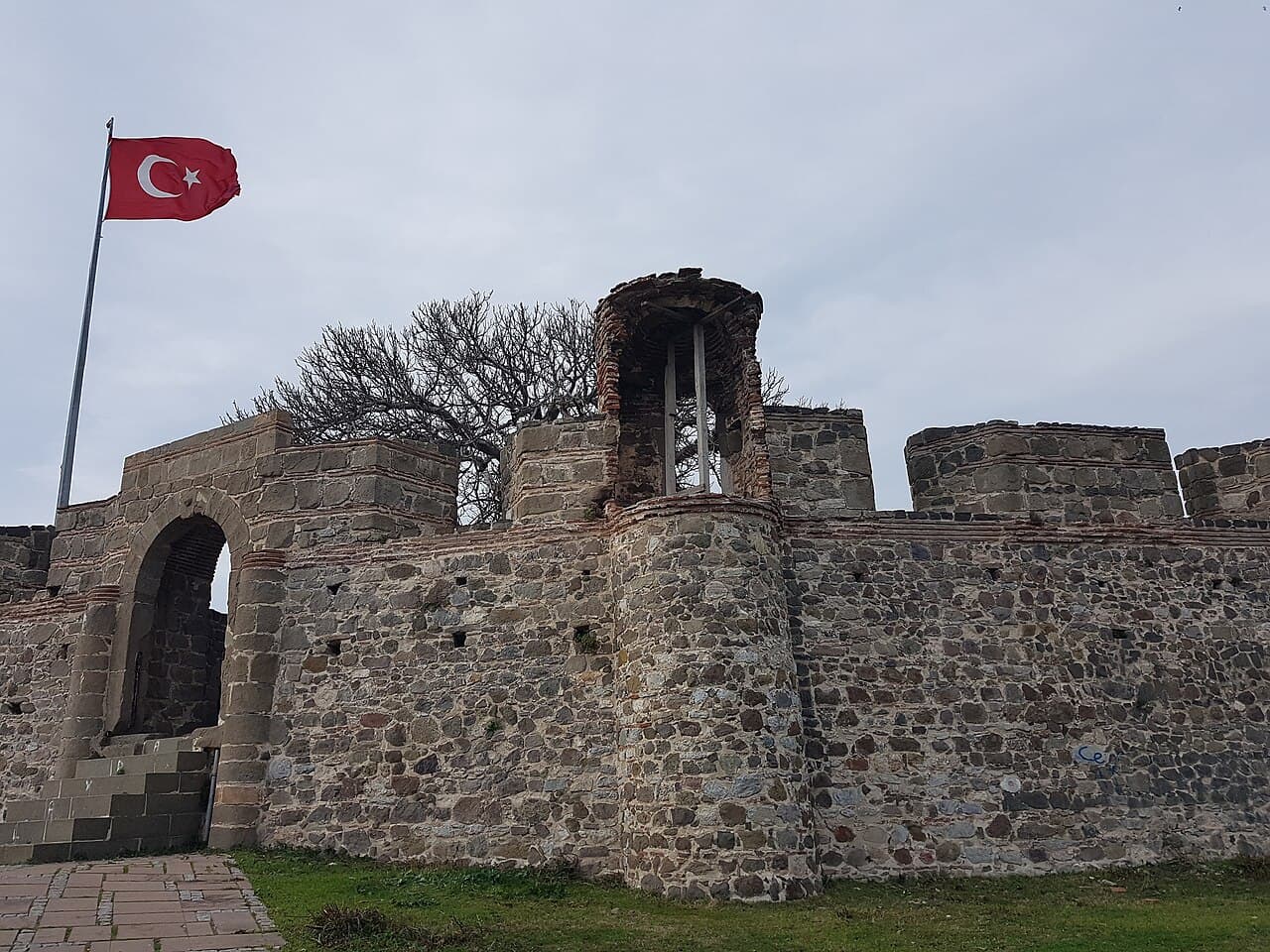
Riva Castle
Riva Castle (Turkish: Riva Kalesi) is a late medieval hill castle located in the village of Riva, within the Beykoz district of Istanbul Province, Turkey. It occupies a strategic position on a rocky outcrop where the Riva Creek flows into the Black Sea, overlooking a quiet seaside village. This coastal fortress has a layered history reflecting the shifting control of the region during the late Byzantine and early Ottoman periods.
Historical background and origins
Although local tradition sometimes attributes the castle's origins to the Byzantine Empire, the prevailing scholarly view suggests that Riva Castle was constructed by the Genoese in the 14th century. The Genoese, prominent maritime traders and fortress builders, established several fortifications along the Black Sea coast to protect their commercial interests. The castle's position near the confluence of the Riva stream and the sea made it an ideal point to control maritime routes and coastal access.
By the late 14th century, the castle came under the control of the expanding Ottoman Empire. Sultan Bayezid I, who reigned from 1389 to 1402, is recorded to have captured Riva Castle following his conquests of nearby fortifications such as Yoros and Şile in 1391. This acquisition was part of the Ottomans' strategic efforts to dominate the Bosphorus and Black Sea coastlines, consolidating their hold over key maritime gateways.
The castle first appears in Ottoman archival records under the name Revan Kalesi in 1778-1779 (1192 AH). This suggests continued recognition and use of the site well into the Ottoman period, despite changes in military technology and regional politics.
Architectural features and construction
Riva Castle is classified as a hill castle, built on elevated terrain that commands views over the surrounding landscape and sea approaches. Its construction reflects typical medieval defensive architecture adapted to coastal conditions. The castle is relatively small, perched on a rocky promontory adjacent to the beach, which provided natural defensive advantages.
The original fortress likely featured thick stone walls, battlements, and towers designed to withstand sieges and control maritime traffic. The castle's proximity to the water and the Riva stream allowed for a natural moat effect on some sides, enhancing its defensive capabilities.
In the late 18th century, the castle was rebuilt on its original foundations, indicating a significant restoration or reconstruction phase. Additional repairs were carried out throughout the 19th century, reflecting ongoing military or administrative use. The 2017 restoration aimed to preserve the structure, though the castle has remained closed to the public since then.
Strategic importance and military role
Riva Castle formed part of a network of fortifications guarding the northern approaches to Istanbul along the Black Sea coast. It was closely linked with other nearby castles such as Rumelifeneri Castle, which controlled the entrance to the Bosphorus Strait, and Yoros and Şile castles.
The castle's position allowed it to monitor naval movements and serve as an early warning post against potential invasions or pirate raids. Its garrison was likely small but strategically important, coordinating with other fortresses to maintain Ottoman dominance in the region.
Mythological and cultural associations
The village of Riva, historically referred to as Ancyranum during the Eastern Roman Empire, is linked to Greek mythology. According to legend, Iason, leader of the Argonauts in search of the Golden Fleece, received an iron anchor here. This mythological connection enriches the cultural significance of the site beyond its military function.
Current condition and accessibility
Today, Riva Castle stands as a well-preserved example of a small medieval coastal fortress, though it remains closed to visitors following the 2017 restoration. The castle's isolated location on the Black Sea coast near the meeting point of the Riva stream offers scenic views but limited accessibility.
Visitors can view the castle from the surrounding village and beach area, appreciating its rugged setting and historical context. The site is of interest to those studying Ottoman military architecture and Genoese influence in the eastern Mediterranean.
Frequently asked questions (FAQ)
- How do I get to Riva Castle?
- Riva Castle is located in Riva, Turkey, and can be accessed by public transportation or by car. If you're traveling from Istanbul, you can take a bus to Riva, which typically takes about an hour. Once in Riva, local taxis or walking can help you reach the castle.
- What is the historical significance of Riva Castle?
- Riva Castle dates back to the Byzantine era and has played a crucial role in the defense of the region throughout various historical conflicts. It offers a glimpse into the rich history of the area, showcasing the architectural styles and strategies used during its construction. The castle stands as a testament to the cultural heritage of Turkey.
- When was Riva Castle built?
- Riva Castle was originally constructed in the 14th century, during the Byzantine period, and has undergone various renovations over the centuries. Its strategic location made it an important fortification against invaders. Today, it remains a significant historical site for visitors interested in medieval architecture.
- Is it possible to enter Riva Castle?
- Yes, visitors are welcome to explore Riva Castle, although some areas may have restricted access for preservation reasons. Walking through the castle grounds allows you to appreciate the stunning views of the surrounding landscape and the Black Sea. Be sure to follow any guidelines provided during your visit to ensure a safe experience.
- Can I take guided tours of Riva Castle?
- Guided tours are available for visitors who wish to learn more about the history and architecture of Riva Castle. These tours typically provide insightful information that enhances your understanding of the castle's significance. It's advisable to check in advance for tour availability and schedule.
- What are the opening hours for Riva Castle?
- Riva Castle is generally open to visitors from 9 AM to 6 PM, but hours may vary seasonally. It's best to check their official website or contact local tourism offices for the most current information before planning your visit. Arriving early can help you enjoy the site with fewer crowds.
- What is the best time to visit Riva Castle?
- The best time to visit Riva Castle is during the spring and fall months when the weather is mild and pleasant. These seasons allow for comfortable exploration of the castle and its surroundings. Additionally, visiting during these times can help you avoid the summer tourist rush.
- Are there any nearby attractions to Riva Castle?
- Yes, the area surrounding Riva Castle offers several attractions, including beautiful beaches along the Black Sea and picturesque hiking trails. Nearby, you can explore the charming village of Riva, which features local shops and restaurants. This makes for a perfect day trip combining history and nature.
- What are the ticket prices for Riva Castle?
- Admission to Riva Castle is generally affordable, with ticket prices around 20 Turkish Lira for adults, while discounts may be available for students and children. It's advisable to check for any special events or promotions that may affect pricing. Purchasing tickets on-site is usually straightforward.
Photo gallery

Information
Loading map...
Visitor reviews
No reviews yet. Been here? Write the first review and help other travelers!
Write the first reviewVisited this castle? Share your experience
Your review helps other travelers and adds first-hand knowledge to our encyclopedia.



