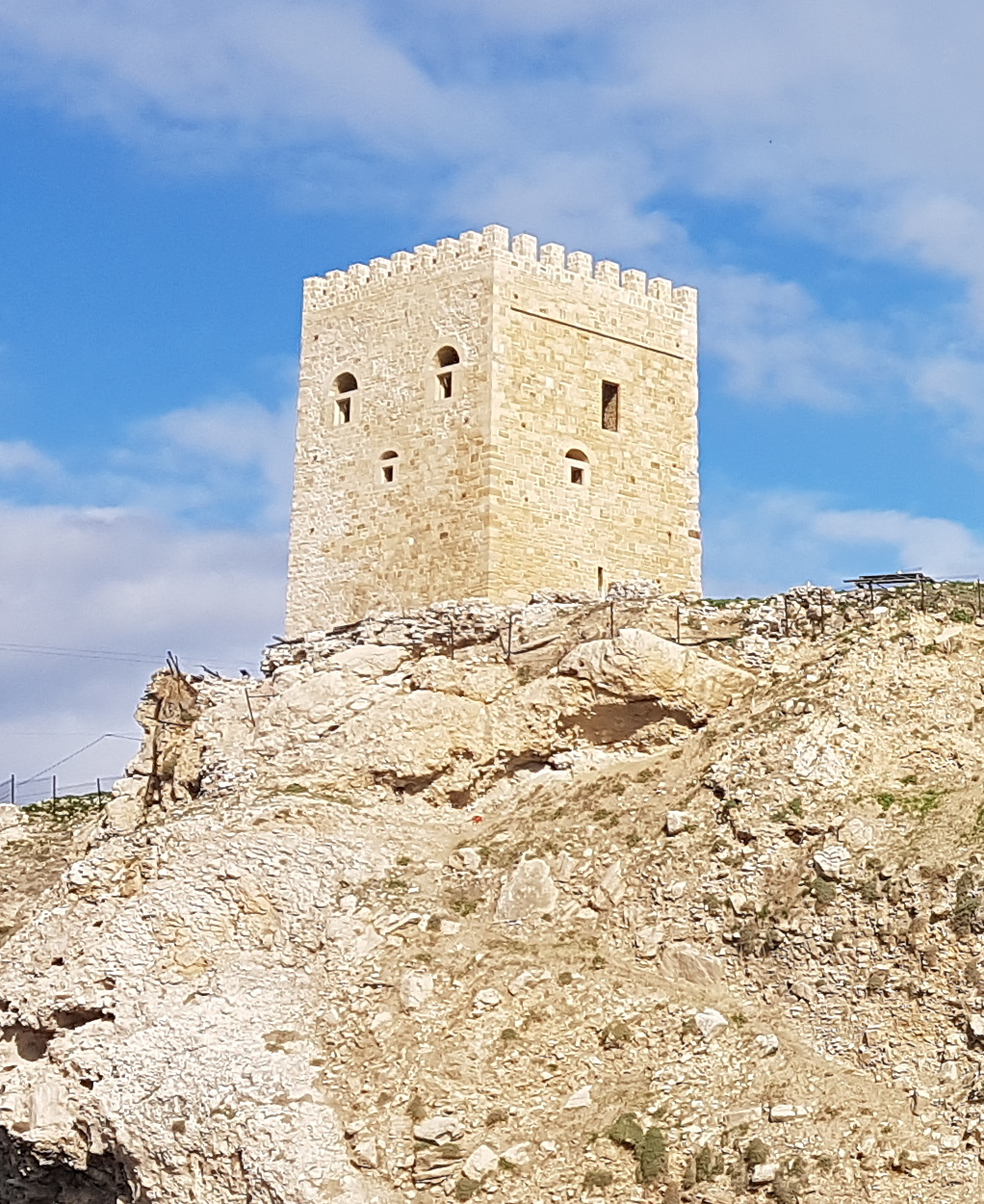
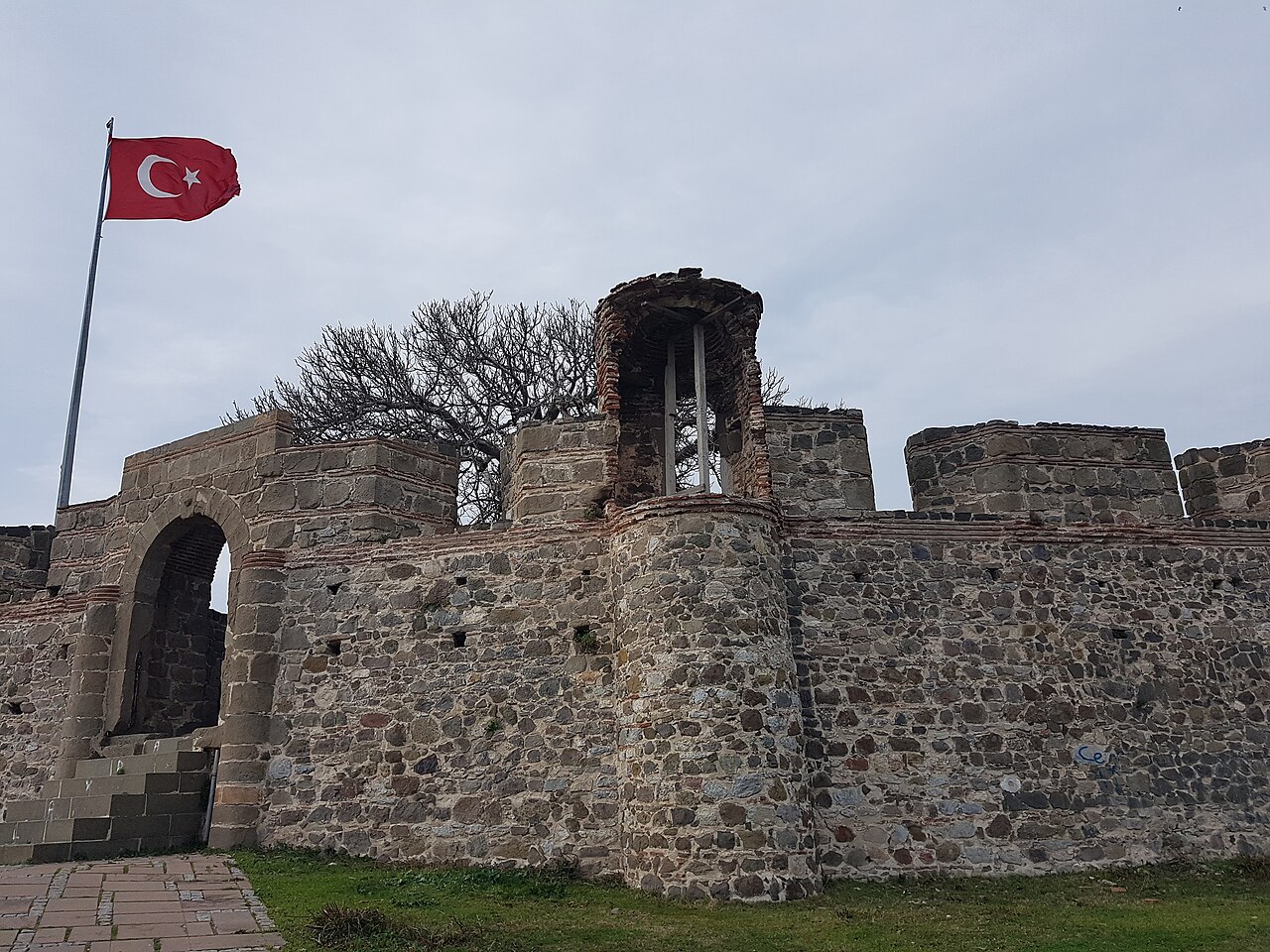
Heciz Castle
Heciz Castle, locally known as Heciz Kalesi, is a historic Byzantine fortress located east of the hamlet of Kalealtı in the Istanbul province of Turkey. This castle occupies a strategic position on a hill overlooking a bend in the stream that runs through the valley below, suggesting its original purpose was to control and monitor the important road connecting Constantinople (modern-day Istanbul) to the coastal town of Şile.
Architectural layout and features
The castle is notable for its triangular plan, a design that provided effective defense by minimizing blind spots and making the most of the natural terrain. Its location on elevated ground offered commanding views of the surrounding wooded valley, which was an advantage for surveillance and defense.
Despite the overgrown and wooded nature of the site today, several structural elements remain visible. There are the ruins of three towers, some of which retain connecting wall fragments. These towers would have served as lookout points and defensive strongholds within the castle's perimeter. The walls, though partially ruined, indicate a robust fortification system typical of Byzantine military architecture.
Currently, two entrances can be identified. The main entrance is situated in the south, adjacent to the largest ruined tower, and is believed to be the original gate of the castle. A second entrance on the western wall appears to be a later addition, possibly from a more modern period, reflecting changes in the site's use or access requirements over time.
Within the castle's interior, no significant remains of buildings or chambers have been identified, likely due to centuries of decay and vegetation overgrowth. The absence of extensive interior structures suggests the castle primarily functioned as a military outpost rather than a residential complex.
Historical context and significance
Built during the Byzantine period, Heciz Castle was part of a network of fortifications designed to protect the approaches to Constantinople, the capital of the Byzantine Empire. Its position along the route to Şile indicates its role in controlling traffic and securing the region against potential threats from the Black Sea coast or inland incursions.
While detailed historical records of Heciz Castle are scarce, its architectural characteristics and strategic location align with Byzantine defensive strategies of the Middle Ages. The castle likely served as a small garrison post, providing early warning and defense rather than a large-scale fortress.
Current condition and visitor information
Today, Heciz Castle is in a ruined and overgrown state, with much of its structure obscured by dense vegetation. The site is freely accessible to visitors, although the terrain can be challenging due to the natural undergrowth and wild animals such as turtles that inhabit the area.
Visitors should exercise caution when exploring the ruins, as the uneven ground and remnants of walls and towers can pose hazards. The castle offers a quiet and somewhat isolated glimpse into Byzantine military architecture, though it is less developed as a tourist site compared to other castles in the region.
Architectural significance within the region
Heciz Castle exemplifies the typical Byzantine hill castle designed for strategic oversight rather than grand residential purposes. Its triangular shape is relatively uncommon and reflects a tailored adaptation to the local topography. The surviving towers and walls provide valuable insight into the defensive techniques employed in the Byzantine Empire during the Middle Ages.
The castle's proximity to Istanbul, a city rich in historical fortifications, places it within a broader context of imperial defense systems that protected one of the most important cities in medieval Europe and Asia.
Exploring the surrounding area
The region around Heciz Castle is characterized by natural woodland and a rural landscape that has changed little since the castle's active use. The nearby road connecting Istanbul to Şile remains a significant route, linking the inland areas with the Black Sea coast.
Visitors interested in Byzantine history and architecture may find Heciz Castle an intriguing, if modest, site to explore, especially for those seeking less crowded and more natural historical locations. The surrounding valley and stream add to the scenic value of the visit, providing a peaceful environment for hiking and outdoor activities.
Frequently asked questions (FAQ)
- How do I get to Heciz Castle?
- Heciz Castle is located east of Kalealtı along the Eski İstanbul Şile Yolu in Istanbul Province, Turkey. Visitors can reach it by car or local transport to the nearby hamlet and then proceed on foot through wooded terrain.
- What is the historical significance of Heciz Castle?
- Heciz Castle was built by the Byzantines to control the road between Constantinople and Şile. It served as a military outpost for monitoring and defense during the Middle Ages.
- Is Heciz Castle accessible to the public?
- Yes, the castle is freely accessible to visitors. However, the site is overgrown and in ruins, so caution is advised while exploring the uneven terrain and remains.
- What architectural features remain at Heciz Castle?
- Visitors can see the remains of three towers with some connecting walls and two entrances, including the original southern gate near the largest tower.
- When was Heciz Castle built?
- While the exact construction date is unknown, Heciz Castle dates back to the Byzantine period, likely during the High Medieval era.
Information
Address
Eski İstanbul Şile Yolu, Turkey
Loading map...
Visitor reviews
No reviews yet. Been here? Write the first review and help other travelers!
Write the first reviewVisited this castle? Share your experience
Your review helps other travelers and adds first-hand knowledge to our encyclopedia.