Sigmundsried Castle
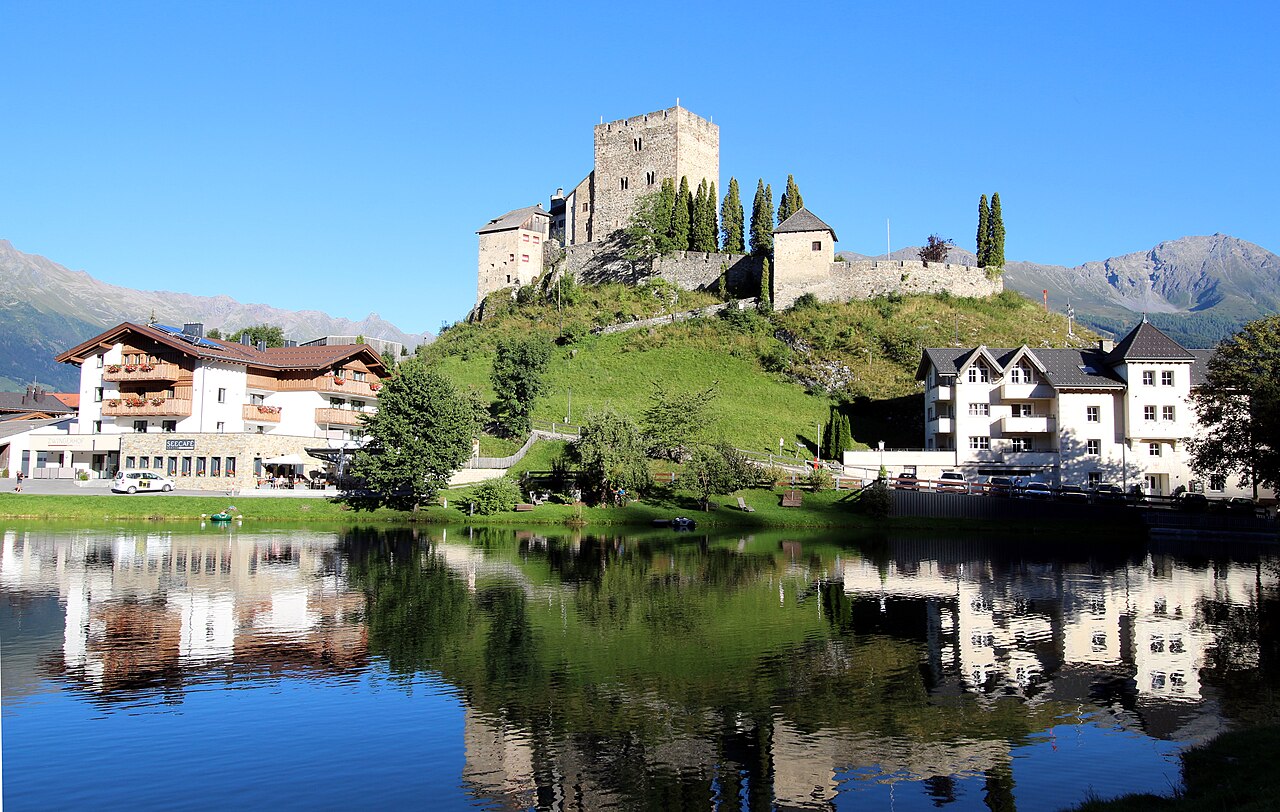
Sigmundsried Castle stands prominently next to the town hall of Ried im Oberinntal in Austria, embodying a rich history that spans several centuries. Originally constructed in the 14th century as a fortified three-storey tower house, it was strategically positioned to oversee the vital trade route across the Resia Pass, part of the historic Via Claudia Augusta. This location underscores the castle's initial military and administrative significance in controlling commerce and travel through the region.
Architectural evolution and historical significance
The castle's original structure was a robust tower house designed for defense and residence. Over time, it was expanded with an accommodation wing, reflecting the evolving needs of its occupants. In 1471, the castle entered a new phase when Sigismund, Archduke of Austria, acquired it. He transformed the fortress into a hunting château, renaming it 'Sigmundsried'. This renovation not only altered the castle's function but also its architectural character, blending defensive features with more comfortable living spaces suited for leisure and aristocratic pursuits.
Late medieval architecture and features
The castle is a representative example of late medieval architecture in the region, combining elements of a fortified tower with residential wings. The original tower's verticality and defensive design are characteristic of the period's tower houses, which served as noble residences with strongholds against potential attackers. The later additions introduced more domestic and administrative functions, adapting the castle to changing social and political contexts.
Function as a judicial and penal site
From 1841 until 1977, Sigmundsried Castle served as the county court for the area, marking its transition from a noble residence to a center of local governance and justice. This long period as a judicial building left a significant imprint on the castle's interior and public role. Notably, the castle housed a prison, with an underground room known as the Angstloch or "narrow hole," which functioned as a detention cell. This subterranean chamber is a stark reminder of the castle's role in law enforcement and punishment.
The angstloch and underground features
The Angstloch is reputed to have served as an underground entrance to the nearby Schwaiglhaus building, indicating a complex network of subterranean passages or strategic connections. This feature adds to the castle's intrigue and historical depth, highlighting its multifaceted use beyond mere residence or court functions.
Modern use and cultural significance
Since 1999, Sigmundsried Castle has been owned by the municipality of Ried im Oberinntal. It now serves as a cultural hub, managed by the cultural association SigmundsRied, which offers guided tours showcasing the castle's history and architecture. Visitors can explore the permanent exhibition 'The Evil Road', which delves into the darker aspects of the castle's past, including its judicial and penal history.
The castle also features an authentically equipped prison cell, giving visitors a tangible sense of its historical use as a place of incarceration. Recent additions include new display cases with archaeological findings and historical artifacts uncovered in and around the castle, enriching the narrative presented to the public.
Venue for cultural events
Beyond its museum functions, Sigmundsried Castle is a popular venue for concerts and cultural events. Its atmospheric halls and historic setting provide a unique backdrop for performances and gatherings, linking the castle's historical legacy with contemporary cultural life in the region.
Location and accessibility
Sigmundsried Castle is conveniently located along the Via Claudia Augusta Cycle Route, making it accessible to tourists and cycling enthusiasts exploring this historic path. Its proximity to the town hall of Ried im Oberinntal places it at the heart of the community, ensuring it remains a visible and integral part of the town's cultural landscape.
Visitors are encouraged to join guided tours offered by the cultural association to fully appreciate the castle's architectural details, historical context, and the stories embedded in its walls.
Frequently asked questions (FAQ)
- What are the opening hours for visiting Sigmundsried Castle?
- Sigmundsried Castle is generally open for guided tours during the warmer months. It is best to check with the local cultural association SigmundsRied for specific opening times and tour availability.
- Can I visit the prison cell known as the Angstloch at Sigmundsried Castle?
- Yes, the castle offers access to the authentically equipped prison cell called the Angstloch during guided tours, providing insight into its historical use as a detention site.
- What is the historical significance of Sigmundsried Castle?
- Sigmundsried Castle was originally a fortified tower house built in the 14th century to control the trade route across the Resia Pass. Later, it was transformed into a hunting château by Archduke Sigismund and served as a county court for over a century.
- Is the castle accessible via the Via Claudia Augusta Cycle Route?
- Yes, Sigmundsried Castle is located along the Via Claudia Augusta Cycle Route, making it an accessible stop for cyclists exploring this historic trade path.
- Are there cultural events held at Sigmundsried Castle?
- The castle hosts concerts and various cultural events, utilizing its historic halls to engage the community and visitors in arts and heritage activities.
Information
Current owner
Municipality
Loading map...
Visitor reviews
No reviews yet. Been here? Write the first review and help other travelers!
Write the first reviewVisited this castle? Share your experience
Your review helps other travelers and adds first-hand knowledge to our encyclopedia.