Laudegg Castle
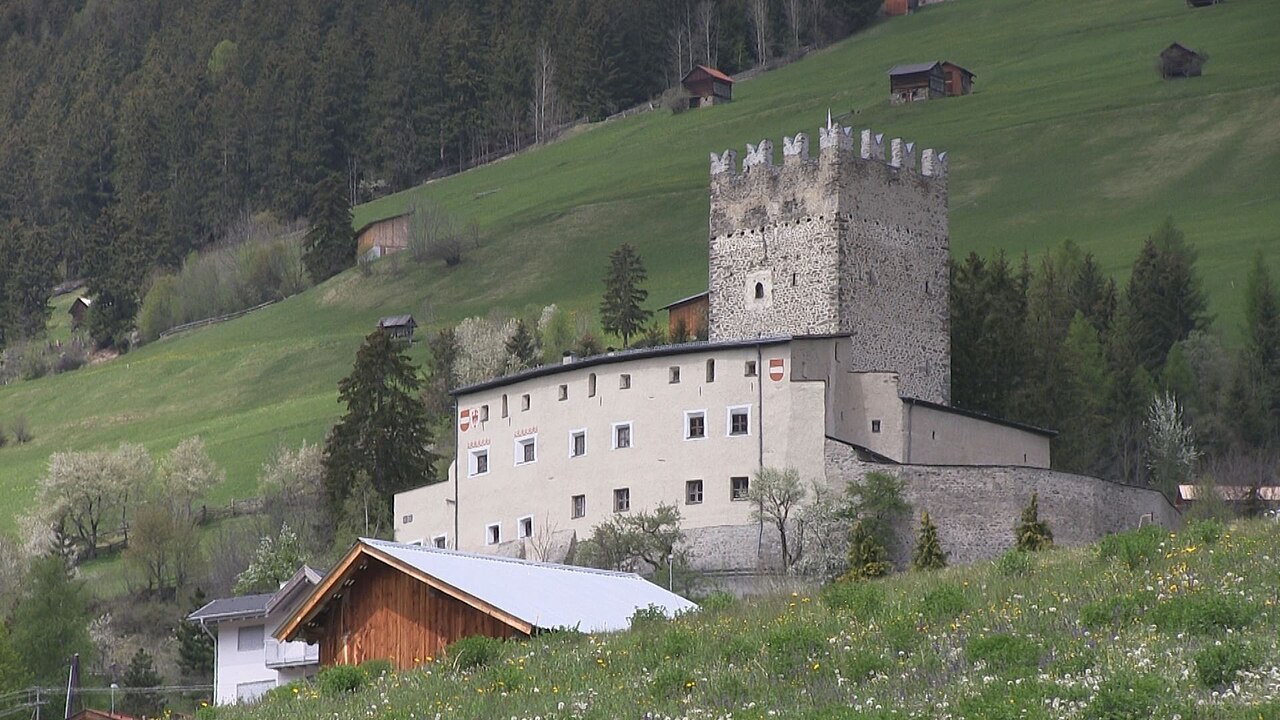
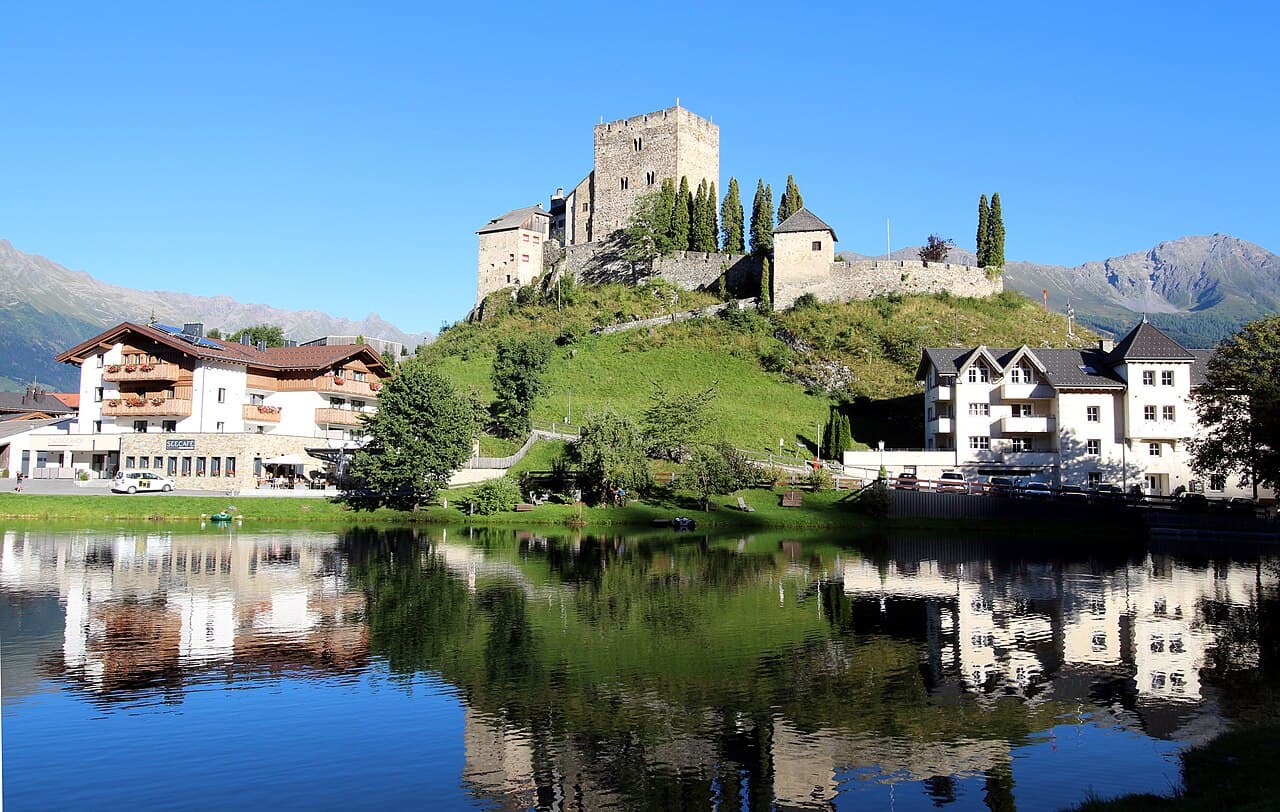
Laudegg Castle is a striking medieval fortress perched on a steep slate rock spur above the Oberinntal valley in the Austrian region of Tirol. Situated at an elevation of 1,176 metres above sea level, this hill castle commands sweeping views of the surrounding Samnaun Alps and the picturesque village of Ladis. The castle’s origins trace back to the 13th century, making it a significant example of high medieval fortification architecture in the region.
The castle was first documented in 1239, with earlier mentions of a local ministerial family named "Laudeck" appearing in 1232 within the court records of Duke Otto von Andechs in Innsbruck. This early association highlights the castle’s role as a seat of local feudal authority and administration. Throughout the Middle Ages, Laudegg Castle functioned as the administrative center for the Oberes Gericht (Upper Court) of the Upper Inn Valley, overseeing legal and judicial matters until the 17th century.
Medieval history and significance
The early 15th century was a turbulent period for Laudegg Castle. In 1406, during the Appenzell peasant uprising led by Ital Reding the Elder, the nearby village of Ladis was razed, and Laudegg Castle, along with its outer defensive position at Steinegg Castle, suffered significant damage from fire. This event marked the beginning of the castle's gradual decline.
Despite this, the castle retained its administrative importance for some time. Under the reign of Emperor Maximilian I, there were plans to restore and expand Laudegg Castle, partly due to its proximity to the famed Oblader Sauerbrunn spring. However, promised funds were never fully delivered, and only limited repairs were made.
By the mid-16th century, the castle’s role had shifted. The castle keeper moved his residence to the nearby Schloss Sigmundsried, built in 1471, and Laudegg Castle was repurposed primarily as a storage facility and armory. The administrative court eventually relocated to Ried im Oberinntal, signaling the end of Laudegg’s role as a center of governance.
In the late 17th century, the estate changed hands among noble families. It was pledged to Johann Freiherr von Spaur for 25,000 gulden. Upon his death in 1689, his daughter Maria Ursula inherited the castle and brought it into her marriage with Guidobaldo von Welsperg in 1693. Despite some renovation efforts, the castle gradually fell into ruin.
Architectural features and layout
The main residential tower
The centerpiece of Laudegg Castle is its imposing rectangular tower house, which rises approximately 21 meters high with a footprint of about 11 by 14 meters. Built with carefully layered masonry and mortar, the walls vary in thickness from 1.7 to 2 meters, providing formidable defense. A distinctive architectural detail is the use of reddish volcanic tuff blocks at the tower’s corners, alternating with regular stonework to reinforce structural stability.
The tower’s original entrance was located on the northeast side at the first-floor level, a common medieval defensive feature to hinder attackers. On the southeast side, an arched portal leads to a vaulted gallery inside. The western facade, facing the most likely direction of attack, is mostly solid with only narrow arrow slits and a small loophole in the basement, added later for defense.
Three Romanesque bifora windows—twin-arched openings separated by a central tuff stone column—decorate the western side. One of these windows dates from the original construction, while the other two were restored during the mid-20th century renovations. The battlements crowning the tower were also renewed in 1956, restoring the castle’s medieval silhouette.
Residential wing and chapel
Attached to the main tower on the northeast side is a residential wing originally constructed in the 13th century. This wing fell into ruin by the 17th century but was reconstructed between 1967 and 1969. Restoration preserved parts of the original southeastern outer wall and incorporated a large chimney, reflecting the domestic use of this section.
In the early 16th century, adjacent chambers within the castle were converted into a chapel, indicating the presence of religious practices on site. This adaptation reflects the castle’s evolving functions beyond military and administrative purposes.
Defensive outer structures
To the north lies the zwinger, an outer ward designed to improve the castle’s defenses. This area contains a tower-like residential building with a pointed-arch secondary exit framed in tuff stone, dating from the 15th century. Above this entrance, battlements have been bricked up but remain visible as masonry accented with red plaster blocks, evidence of 16th-century modifications.
South of the main complex stretches a large outer bailey, an enclosed courtyard area featuring a square gatehouse likely built in the 15th or 16th century. This gatehouse served both as the main entry point and a fortification element.
Between the castle and the nearby town, a fish pond once existed, mentioned in the fishing records of Emperor Maximilian I. This pond provided fresh fish to the castle occupants and reflects the self-sustaining nature of the estate.
Restoration and current status
After centuries of decline and ruin, restoration efforts began in the 20th century. In 1940, Harald Reinl, a future film director, and his family purchased the castle and initiated repairs. More extensive restoration was undertaken by musicologist Willi Apel after acquiring the property in 1964. These efforts stabilized the ruins and preserved the castle’s medieval character.
Today, Laudegg Castle remains on private property but is accessible to visitors once a week during the summer months of July and August. It is recognized as a protected historic monument and stands as a testament to the region’s medieval heritage and architectural ingenuity.
The castle’s combination of Romanesque architectural elements, high medieval defensive features, and its layered history from a feudal seat to a ruin preserved through modern restoration makes it a fascinating site for historians, architects, and visitors alike.
Frequently asked questions (FAQ)
- How do I get to Laudegg Castle?
- Laudegg Castle is located in the picturesque region of Serfaus-Fiss-Ladis in Austria. You can reach it by car, as there is ample parking available nearby, or you can use public transport options that connect to the area. Once in the vicinity, a short walk will lead you to the castle grounds.
- What is the historical significance of Laudegg Castle?
- Laudegg Castle dates back to the late Middle Ages and has played a crucial role in the region's history, serving as a defensive stronghold. It is an excellent example of medieval architecture and offers insight into the lifestyle and challenges faced during its time. The castle's history is intertwined with local nobility and various historical events that shaped the region.
- When was Laudegg Castle built?
- Laudegg Castle was constructed in the 13th century, making it over 800 years old. Its enduring structure reflects the architectural styles of the medieval period and provides a glimpse into the past. The castle has undergone several renovations throughout the centuries to preserve its historical integrity.
- Can I visit Laudegg Castle? What are the opening hours?
- Yes, visitors are welcome to explore Laudegg Castle. The opening hours can vary depending on the season, so it’s recommended to check the official castle website or local tourism information for the most current hours. Guided tours are often available, enhancing your experience of the castle's rich history.
- Is it possible to access Laudegg Castle with mobility challenges?
- While Laudegg Castle is a historic site, it may present some challenges for visitors with mobility issues due to its medieval architecture and terrain. However, there are efforts to accommodate all guests, including pathways that can be navigated with assistance. It is advisable to contact the castle administration ahead of your visit to inquire about specific accessibility options.
- What are the ticket prices for Laudegg Castle?
- Ticket prices for visiting Laudegg Castle are generally affordable, allowing a wide range of visitors to enjoy its historical significance. Discounts may be available for students, seniors, and families, making it an excellent destination for all. Always check the official website for the latest pricing information and any special offers.
- What is the best time to visit Laudegg Castle?
- The best time to visit Laudegg Castle is during the spring and summer months when the weather is pleasant, and the surrounding landscapes are in full bloom. This is also when the castle hosts various events and activities for visitors. Autumn can be beautiful as well, offering stunning foliage views, while winter may limit access due to snow.
- Are there any nearby attractions to explore after visiting the castle?
- Yes, the area surrounding Laudegg Castle offers a variety of attractions for visitors to enjoy. Nearby, you can find hiking trails, stunning alpine views, and the charming villages of Serfaus, Fiss, and Ladis. Additionally, the region is known for its outdoor activities, including skiing in winter and biking in summer.
Photo gallery

Information
Website
Visit websiteSources & official resources
Verify the information above using these authoritative references.
Loading map...
Visitor reviews
No reviews yet. Been here? Write the first review and help other travelers!
Write the first reviewVisited this castle? Share your experience
Your review helps other travelers and adds first-hand knowledge to our encyclopedia.