Berneck Castle
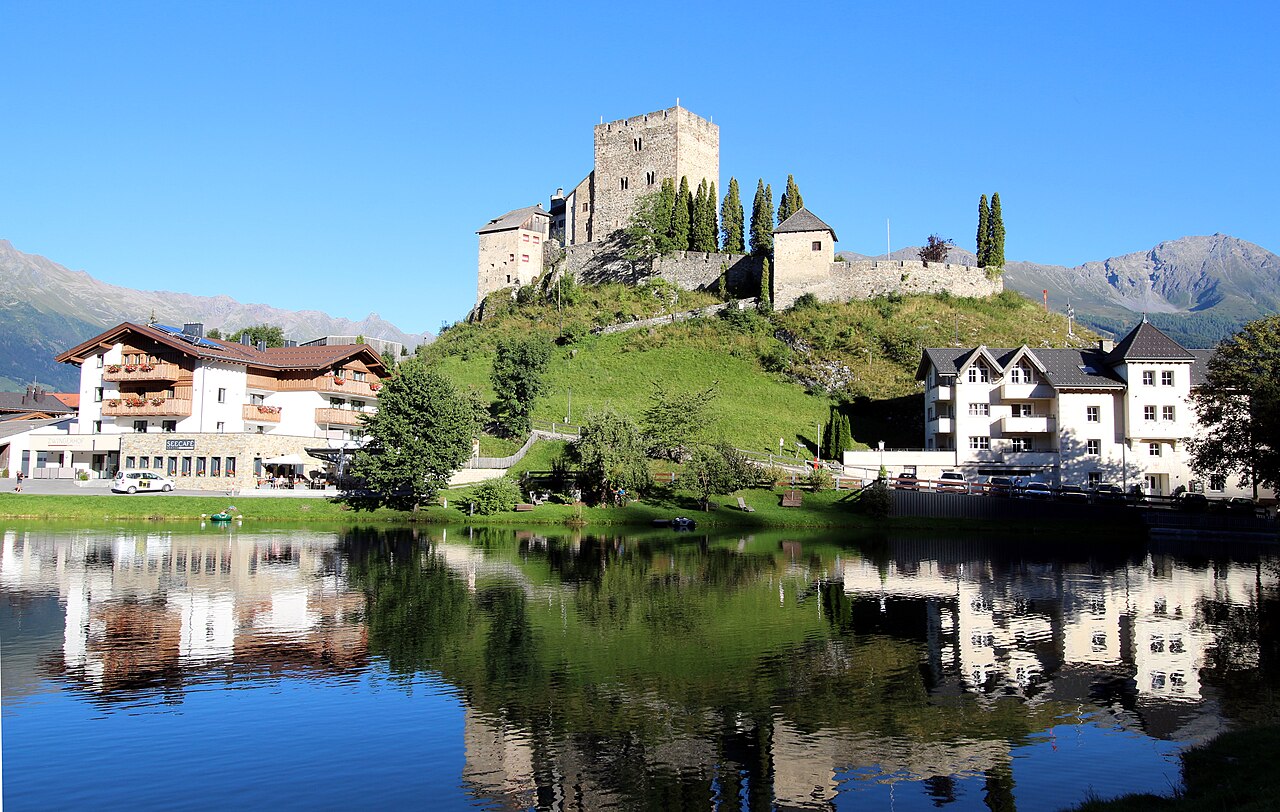
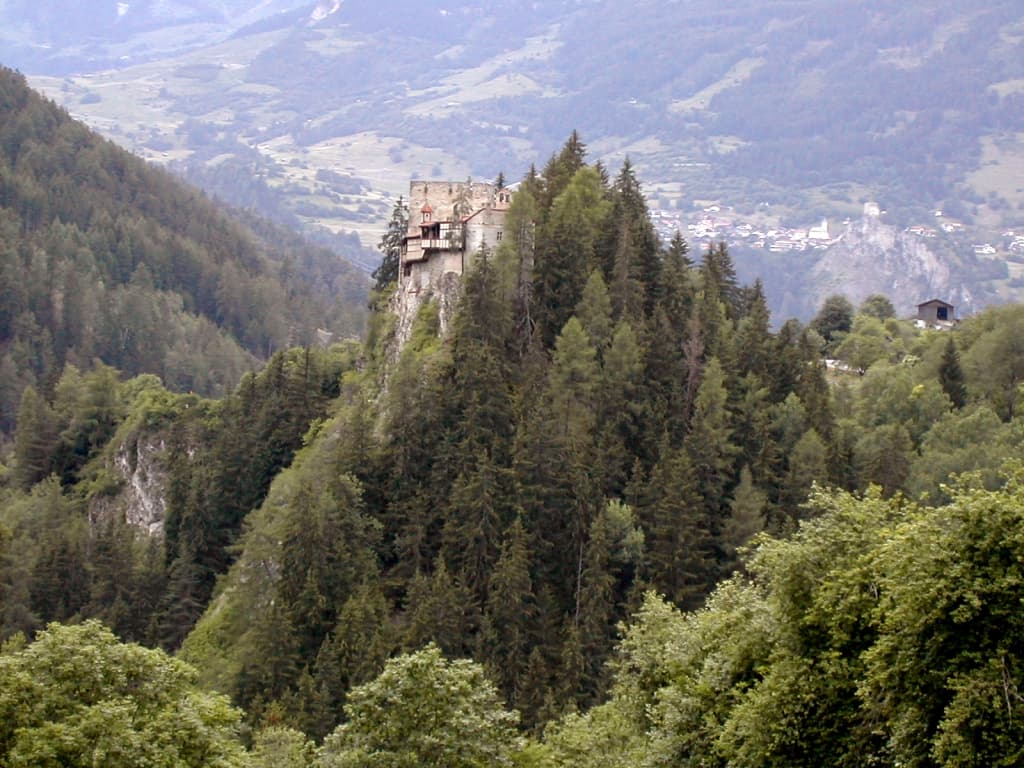
Berneck Castle stands as a remarkable example of a high medieval hill castle near the village of Kauns in Tirol, Austria. Perched at an elevation of 1,076 meters on a large rock overlooking the Faggenbach river and the Kaunertal valley, the castle commands a strategic position opposite Laudegg Castle across the Inn valley. Its location was historically significant for controlling the important traffic route over the Pillerhöhe mountain pass, a vital corridor in the region.
Constructed originally in the early 13th century by the Lords of Berneck, the castle first appears in written records in 1225. The early fortress was likely a robust defensive structure typical of the period, designed to oversee and protect the surrounding lands and trade routes. The lineage of the founding family ended with Blasius von Berneck in 1396, after which ownership passed through several noble families, reflecting the shifting political alliances and inheritances of medieval Tyrol.
Architectural evolution and gothic transformation
Berneck Castle underwent significant changes during its history, most notably in the 15th century when it was rebuilt and expanded by Hans Wilhelm von Mülinen, a Swiss nobleman who acquired the estate in 1435. This reconstruction transformed the fortress into a late Gothic residential castle, enhancing both its defensive capabilities and residential comfort. The castle became one of the largest and most beautiful in the area, distinguished by its use of yellow tuff stone for decorative elements such as window and door frames, window crosses, corner blocks, and corbels.
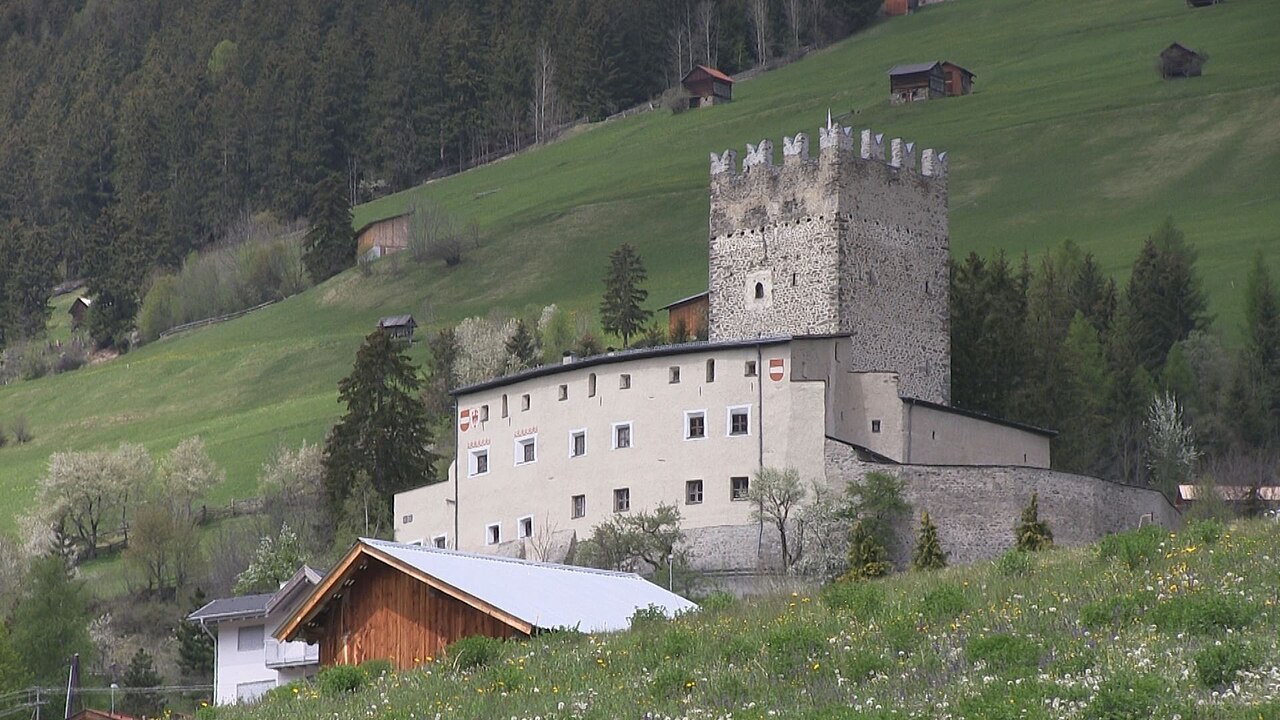
The castle's bergfried, a massive fortified tower originally two stories high, was raised twice—first by Emperor Maximilian I and later by Wilhelm von Mülinen—to reach its current height of approximately 20 meters with four stories. This tower is square-shaped and topped with battlements, serving as a dominant defensive feature and symbol of power.
The southern defensive wall is notable for its double timber-framed construction that projects over the steep valley, providing enhanced surveillance and protection. On the northern side, a long curtain wall approximately 80 meters in length and 9 meters high serves as a formidable barrier, featuring remnants of a latrine oriel—a small projecting medieval toilet structure.
Castle chapel and religious significance
One of the castle's most significant features is the chapel dedicated to Saint Bartholomew, located near the eastern end of the complex and separated from the main residential building by a courtyard. This late Gothic chapel contains important frescoes from the period and an altar uniquely carved directly from the rock beneath the castle. The courtyard also houses a rare free-standing pulpit, an architectural element offering a place for sermons and announcements.
Historical ownership and events
Following the extinction of the original Berneck family, the castle passed through various hands, including the Anneberg family, who suffered damage to the castle during their dispute with Duke Friedrich IV around 1417-1418. This conflict led to significant destruction, necessitating the later Gothic reconstruction.
The castle was owned by several notable families over the centuries, including Hans Kripp, Hilprant Rasp zu Laufenbach, and Albrecht Rindsmaul. In 1499, it was exchanged by Emperor Maximilian I for Schloss Tratzberg. The Zott salt merchant family acquired it in 1530, followed by the Fieger family in 1667, and later the Freiherren von Pach family in 1728.
The Pach family carried out renovations in 1775 funded by a loan of 1,500 guilders and transformed the castle into a summer residence by 1819. However, from the late 19th century onwards, the castle fell into decline, exacerbated during the 20th century.
Preservation and restoration efforts
Recognizing the castle's historical and architectural value, significant preservation efforts were undertaken in the late 20th century. In 1940, the oldest known Gothic chamber in North Tyrol, originally installed by Hans Wilhelm von Mülinen in 1437, was dismantled and relocated to the Tyrolean Folk Art Museum to protect it from further decay. This chamber was restored and reopened to the public in 2007.
The castle was purchased in 1976 by architect Ekkehard Hörmann, who led a comprehensive restoration from 1977 to 1983, saving Berneck from ruin. The castle chapel also benefited from restoration funded by the Munich Messerschmitt Foundation, completed in 1987, preserving its late Gothic frescoes and architectural features.
Architectural features and layout
Berneck Castle's layout extends in a gentle curve from west to east along the ridge. The western end is dominated by the bergfried tower, while the palas, or main residential building, lies along the northern wall. The thick eastern walls of the palas suggest incorporation of parts of the original bergfried structure during the 15th-century reconstruction.
The castle's northern curtain wall is a substantial defensive feature, approximately 80 meters long and 9 meters high, with windows added during later modifications. The main entrance is secured by a heavy iron-studded gate with a manhole and is followed by a zwinger, a narrow enclosed killing zone designed to trap attackers between two gates.
The southern wall's distinctive double timber-framed construction projects over the valley, providing both defense and a commanding view of the terrain. The use of yellow tuff stone throughout the castle, particularly in decorative elements like window frames and corbels, highlights the craftsmanship and aesthetic sensibilities of the late Gothic period.
Cultural and heritage significance
Berneck Castle is not only an architectural landmark but also a cultural treasure of Tyrol. Its well-preserved Gothic elements, including the chapel frescoes and the historic chamber, offer valuable insights into medieval residential and defensive architecture. The castle's survival through centuries of conflict, ownership changes, and decline, followed by dedicated restoration, underscores its importance as a symbol of regional history and heritage.
Today, Berneck Castle is accessible to visitors interested in medieval architecture, Tyrolean history, and Gothic art. Its dramatic setting, architectural features, and preserved interiors make it a compelling destination for cultural tourism in Austria.
Frequently asked questions (FAQ)
- How do I get to Berneck Castle?
- Berneck Castle is located in Kauns, Austria, and can be accessed by car or public transport from nearby towns. The closest major city is Landeck, which is about a 20-minute drive away. Adequate parking is available near the castle for visitors who choose to drive.
- What is the historical significance of Berneck Castle?
- Berneck Castle dates back to the 13th century and played an important role in the region's defense against invasions. It is a remarkable example of medieval architecture and has been a witness to many historical events in Tyrol. The castle's rich history makes it a significant landmark for both locals and tourists.
- When was Berneck Castle built?
- Construction of Berneck Castle began in the early 13th century, with its completion occurring later in that century. The castle has undergone various renovations over the years, allowing it to retain much of its original medieval charm. Its age and architectural features make it a fascinating site to explore.
- Can I enter Berneck Castle?
- Yes, visitors are welcome to explore Berneck Castle during its opening hours. There may be guided tours available to enhance your experience and provide deeper insights into the castle's history. Be sure to check the current visiting guidelines and any required tickets in advance.
- Why is Berneck Castle a popular tourist destination?
- Berneck Castle attracts visitors due to its stunning architectural features and breathtaking views of the surrounding Tyrolean landscape. The historical significance and well-preserved structure provide an educational experience for history enthusiasts. Additionally, the picturesque setting makes it a favorite spot for photography.
- Is it possible to host events at Berneck Castle?
- Yes, Berneck Castle can be rented for private events such as weddings, corporate functions, and special celebrations. The castle's enchanting atmosphere and scenic views create a memorable backdrop for any occasion. It is advisable to contact the castle management for details on availability and booking procedures.
- What are the opening hours for Berneck Castle?
- Berneck Castle typically operates from April to October, with varying hours depending on the season. During peak tourist months, the castle may have extended hours for visitors. It is recommended to check the official website or contact the castle directly for the most current opening times before your visit.
- Are there any nearby attractions to visit?
- Yes, there are several attractions near Berneck Castle, including the scenic hiking trails and the picturesque village of Kauns. Visitors can also explore other historical sites and natural parks in the region. These nearby attractions enhance the overall experience of visiting the castle.
- What are the ticket prices for Berneck Castle?
- Ticket prices for Berneck Castle vary depending on age and group size, with discounts often available for children and seniors. Admission fees typically include access to the castle grounds and guided tours, if available. It is best to check the castle's official website for the latest pricing information and any special offers.
Photo gallery

Information
Website
Visit websiteSources & official resources
Verify the information above using these authoritative references.
Loading map...
Visitor reviews
No reviews yet. Been here? Write the first review and help other travelers!
Write the first reviewVisited this castle? Share your experience
Your review helps other travelers and adds first-hand knowledge to our encyclopedia.